
Every summer, wildfire smoke blankets Edmonton for days or weeks at a time. That morning run along the North Saskatchewan becomes a health hazard. Your outdoor bootcamp in Hawrelak Park gets cancelled. The air quality index hits 10+ and suddenly your carefully planned outdoor fitness routine grinds to a halt.
Last reviewed:
You’re not alone if you struggle with this annual disruption. Most Edmontonians who exercise outdoors from May through September face the same challenge: how to maintain fitness momentum when smoke forces you inside. The good news? Edmonton has plenty of indoor alternatives if you know where to look and how to adapt your routine.
This guide walks you through practical strategies to transition outdoor fitness indoors during smoke season without losing progress or motivation. We’ll cover specific facilities, workout modifications, and scheduling tips that work for Edmonton’s unique smoke season patterns.
Understanding Edmonton’s Smoke Season Patterns
Before planning your indoor transition, it helps to understand when and how smoke typically affects our city. This knowledge lets you prepare proactively rather than scrambling when the air quality plummets.
Typical Smoke Season Timeline
Edmonton’s smoke season usually runs from mid-May through early September, with the worst periods hitting in July and August. Environment Canada’s Air Quality Health Index shows that we average 15-25 poor air quality days during summer months, though 2023 saw over 40 days with advisories.
Smoke intensity varies wildly. Some years bring light haze for a few days. Others, like 2023, deliver weeks of thick smoke that makes outdoor exercise dangerous. The smoke often arrives in waves – clearing for a few days before returning. This unpredictability makes having a flexible indoor backup plan essential.
How To Prevent Seasonal Wellness Routine Breakdowns In Edmonton covers this in more detail.
Morning exercisers face particular challenges. Smoke often settles overnight, making 6-9 AM workouts especially hazardous. Air quality typically improves slightly by afternoon as temperatures rise and winds pick up. But counting on these patterns leaves you vulnerable to missed workouts.
Health Risks of Exercising in Smoke
When you exercise, you breathe harder and deeper, pulling more air into your lungs. During smoke events, this means inhaling significantly more fine particulate matter (PM2.5) than someone at rest. Alberta Health Services warns that exercising in smoky conditions can cause immediate breathing problems and long-term health impacts.
The risks multiply for people with asthma, heart conditions, or other respiratory issues. But even healthy individuals experience decreased lung function, throat irritation, and reduced performance when exercising in smoke. One study found that athletes training in wildfire smoke showed measurable decreases in VO2 max that persisted for weeks after exposure.
Any outdoor activity becomes risky when the Air Quality Health Index hits 7 or higher. At level 10+ (which Edmonton frequently sees during bad smoke events), even walking your dog becomes inadvisable. These aren’t numbers to ignore – they represent real health hazards that compound with physical exertion.
Why Indoor Transitions Often Fail
Many outdoor fitness enthusiasts struggle when forced inside. The treadmill feels boring compared to River Valley trails. Gym crowds annoy runners used to solitary morning routes. The fluorescent lights and recycled air can’t match sunshine and fresh breezes.
Cost creates another barrier. Your free outdoor routine suddenly requires gym passes, drop-in fees, or class packages. Finding facilities with convenient hours and locations adds complexity. Some people simply give up, losing weeks of fitness progress while waiting for clear skies.
But the biggest challenge? Mental resistance. Outdoor exercisers often define themselves by their environment – “I’m a trail runner” or “I only do outdoor bootcamps.” This identity makes gym workouts feel like betrayal rather than adaptation. Successful transitions require both practical planning and mindset shifts.
Assessing Your Current Outdoor Routine
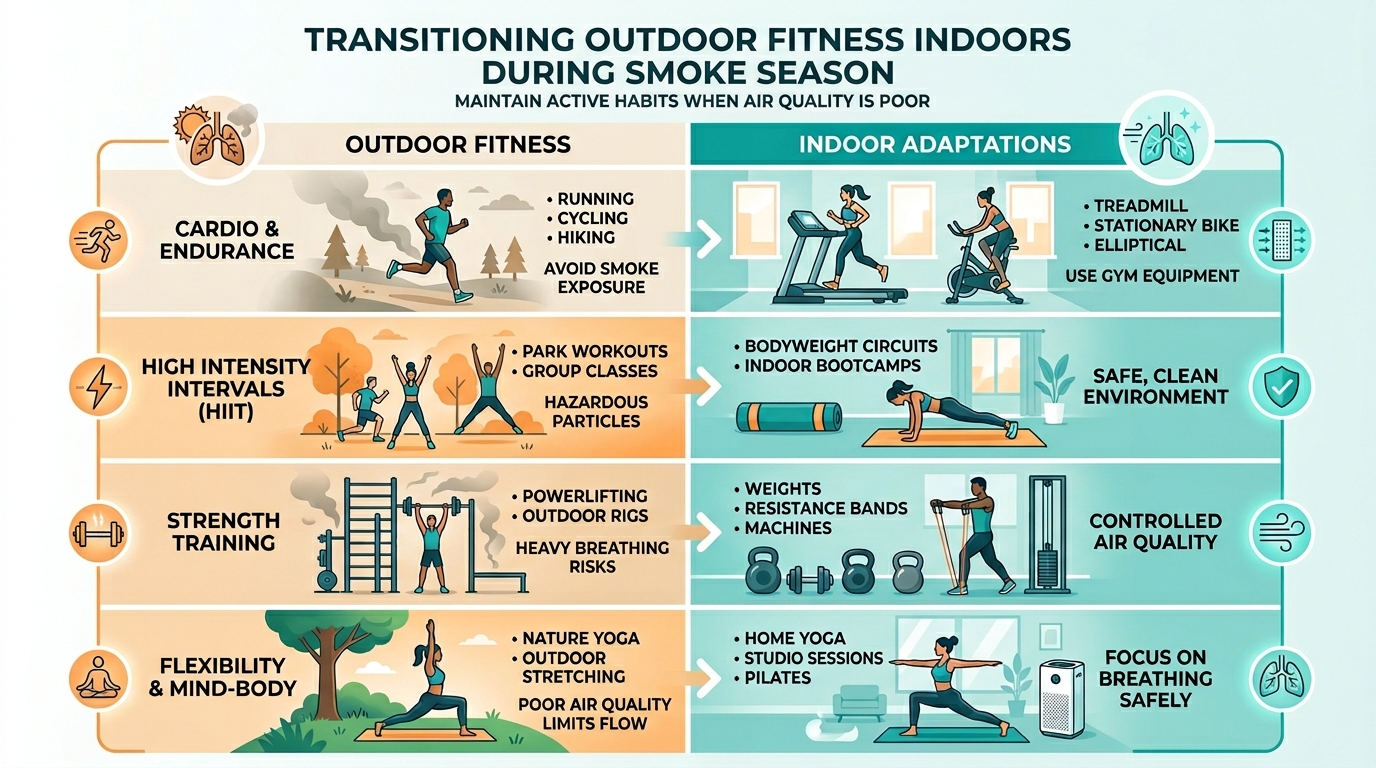
Before selecting indoor alternatives, take stock of what your outdoor workouts actually provide. This assessment helps you find indoor options that preserve the elements you value most.
Breaking Down Your Workout Components
Start by listing the specific elements of your outdoor routine. A typical River Valley run might include:
- 5K distance at 6:00/km pace
- Hill intervals on Groat Road stairs
- Natural terrain variation
- 45-minute duration
- Solo time for mental clarity
- Wildlife sightings and scenery
Your Hawrelak Park bootcamp might involve:
- Dynamic warmup on grass
- Bodyweight circuits
- Partner exercises
- Sprint intervals
- Core work on picnic tables
- Social interaction with regular crew
Notice how these lists include both physical and psychological elements. Indoor alternatives need to address both categories for sustainable transitions. A treadmill might match your running pace but miss the mental benefits of trail running. Group fitness classes could replace bootcamp intensity while lacking outdoor freedom.
Identifying Non-Negotiables vs. Nice-to-Haves
Separate your workout elements into two categories: must-haves and bonuses. Most runners absolutely need cardiovascular challenge and consistent scheduling. The riverside views? Nice but negotiable during smoke season.
Common non-negotiables include:
- Workout duration – maintaining your 45-60 minute sessions
- Intensity level – keeping heart rate in target zones
- Frequency – preserving your 4x/week schedule
- Convenience – finding locations within 15 minutes of home/work
- Equipment access – having necessary gear available
Nice-to-haves might include natural light, fresh air (when available), specific equipment brands, or workout buddies. You can temporarily sacrifice these for health and consistency. Some people discover they actually prefer certain indoor elements, like climate control or bathroom access.
Creating a Workout Inventory
Document your typical weekly routine in detail. Include:
- Days and times you typically exercise
- Specific locations (trail names, parks, outdoor gyms)
- Types of workouts (steady runs, HIIT, strength circuits)
- Equipment used (none, resistance bands, TRX straps)
- Typical weather conditions you train in
- Recovery activities (stretching spots, cool-down walks)
This inventory becomes your template for indoor planning. A Monday 6 AM River Valley run needs a Monday 6 AM indoor replacement. Your Thursday evening paddleboard session requires a Thursday evening alternative. Maintaining consistent workout times helps preserve habits even when locations change.
Finding the Right Indoor Facilities in Edmonton
Edmonton offers numerous indoor fitness options, but finding the right fit during smoke season requires strategic selection. Consider location, hours, capacity, and specific equipment when choosing your temporary training grounds.
City Recreation Centers Worth the Drive
City of Edmonton recreation centres provide affordable, complete fitness options across the city. The Commonwealth Community Recreation Centre stands out for serious athletes, featuring a 50-meter pool, indoor track, and extensive weight room. Located near Stadium LRT station, it’s accessible even without a car. Drop-in rates run $8-12, or grab a 10-visit pass for $65.
For southsiders, Terwillegar Community Recreation Centre offers similar amenities in a newer facility. The indoor track circles above four gymnasium courts, providing variety for interval training. Their fitness centre includes both cardio equipment and free weights. Parking is plentiful and free, unlike downtown options.
Kinsmen Sports Centre works well for central Edmonton residents. While older than Terwillegar, it maintains solid equipment and rarely gets overcrowded during smoke season morning hours. The indoor track is shorter but sufficient for tempo runs. Best feature: the schedule shows real-time facility usage, helping you avoid peak times.
Lesser-known gems include Peter Hemingway Fitness Centre (north side) and ACT Aquatic and Recreation Complex (southwest). Both offer full fitness facilities with smaller crowds than Commonwealth or Terwillegar. Peter Hemingway’s track connects to an indoor walking path through the building – perfect for longer easy runs.
Private Gyms with Specialized Equipment
When city facilities feel too crowded or lack specific equipment, private gyms fill the gap. Evolve Strength locations in Oliver and Downtown cater to serious strength trainers needing squat racks and platforms. Their 24-hour access means you can maintain early morning routines even during smoke season. Monthly rates start around $70.
Runners missing hill training should check out Altitude Gym on Calgary Trail. They specialize in simulated altitude training, which can maintain your cardio fitness when outdoor runs become impossible. Single sessions run $25-30, but package deals bring costs down for extended smoke seasons.
For functional fitness fans, GYMVMT facilities across Edmonton offer the equipment and space needed for circuit training. Their West Edmonton and Sherwood Park locations feature turf areas, battle ropes, and plenty of room for bodyweight movements. Day passes cost $20, reasonable for occasional smoke day workouts.
CrossFit boxes like CrossFit 780 (central) and Modu Performance (south) welcome drop-ins during smoke season. Even if you don’t normally do CrossFit, their equipped spaces and varied programming can replace outdoor bootcamps effectively. Expect $25-30 drop-in rates.
Alternative Indoor Spaces
Think beyond traditional gyms when smoke forces you inside. Millennium Place in Sherwood Park includes an indoor walking/running loop that circles the entire facility – nearly 400 meters per lap. The gradual inclines mimic outdoor terrain better than flat tracks. Admission costs less than $10.
Indoor climbing gyms like Vertically Inclined and Boulders Climbing Gym provide full-body workouts that rival outdoor training intensity. Climbing engages muscles differently than your usual routine, preventing overuse injuries during extended indoor periods. Day passes range from $18-25.
Several Edmonton malls open early for walkers. West Edmonton Mall welcomes walkers from 7 AM, offering climate-controlled routes through empty corridors. Southgate Centre and Kingsway Mall have similar programs. While not ideal for intense training, mall walking maintains movement habits during severe smoke events.
Don’t overlook condo and apartment building gyms. Many downtown and Oliver high-rises have surprisingly well-equipped fitness centres. If you know someone living in these buildings, ask about guest policies. Some allow temporary access for reasonable fees during air quality advisories.
Modifying Specific Outdoor Workouts

Successfully moving workouts indoors requires more than finding a gym. You need to adapt your specific training style to indoor constraints while maintaining intensity and progression.
Trail Running to Treadmill Training
Treadmill running gets a bad reputation among trail enthusiasts, but smart modifications can preserve most trail running benefits. Start by adding incline variations. Set the treadmill to 1-2% grade as your baseline (mimicking outdoor wind resistance), then incorporate hill intervals matching your favourite River Valley routes.
For Groat Road stairs simulation, try this workout:
- 10-minute warmup at 1% grade
- 2 minutes at 8% grade, hard effort
- 2 minutes at 1% grade, recovery
- Repeat 5-8 times
- 10-minute cooldown
Lateral movement matters on trails but disappears on treadmills. Add side shuffles between intervals or use the manual mode to vary your speed constantly. Some runners place a small mat beside their treadmill for lateral lunges every mile, breaking monotony while maintaining trail-specific muscles.
Mental engagement proves harder than physical adaptation. Try audiobooks or podcasts specifically saved for smoke season treadmill runs. Virtual running apps like Zwift or Peloton Digital create engagement through gamification. Or use smoke season as dedicated speed work time – shorter, focused intervals feel less tedious than long steady runs.
Outdoor Bootcamp to Indoor Circuits
Recreating outdoor bootcamp energy indoors challenges both space and equipment limitations. Start by claiming territory in your gym’s functional training area. Most Edmonton facilities have dedicated spaces with turf, TRX systems, and open floor areas.
Structure indoor circuits to match outdoor intensity:
- Dynamic warmup: jumping jacks, high knees, butt kicks in place
- Strength block: rotate through 3-4 exercises for 45 seconds each
- Cardio burst: 90 seconds high-intensity (burpees, mountain climbers)
- Recovery: 60 seconds active rest
- Repeat 4-5 rounds total
Replace outdoor elements creatively. Park bench step-ups become box jumps. Hill sprints translate to incline treadmill intervals. Partner exercises work with willing gym members or against wall resistance. Many bootcamp moves actually improve indoors – no wet grass for pushups or uneven ground throwing off your form.
If your outdoor bootcamp includes equipment like sandbags or sledgehammers, seek gyms with similar tools. Evolve Strength and many CrossFit boxes stock these items. Otherwise, adapt with available equipment. Cable machines can replace resistance bands. Medicine balls substitute for sandbags in many movements.
Cycling Routes to Spin Classes
Road cyclists forced indoors often resist spin classes, viewing them as aerobics on bikes rather than serious training. But structured indoor cycling can maintain or improve your outdoor performance during smoke season.
Choose classes matching your outdoor goals. YEG Cycle (Oliver and Windermere) offers power-based training that translates directly to outdoor performance. Their bikes display actual watts, cadence, and resistance levels – real metrics for serious cyclists. Classes like “Power Hour” mimic outdoor interval training.
For endurance-focused riders, seek longer format classes. Spinco locations offer 60-70 minute sessions that build aerobic capacity. Request bikes with SPD pedals to use your own shoes and maintain proper foot positioning. Arrive early to adjust bike geometry matching your outdoor setup.
Supplement classes with solo trainer sessions. Most spin studios offer discounted off-peak rates for self-directed workouts. Bring your phone with pre-programmed workouts from apps like TrainerRoad or Sufferfest. This hybrid approach balances group motivation with specific training needs.
Don’t ignore strength work during indoor transitions. Cyclists often neglect off-bike training, but smoke season provides perfect opportunity. Add 20-minute strength circuits after spin classes, focusing on core stability and single-leg movements that improve outdoor cycling power.
Building a Sustainable Smoke Season Schedule
Creating a realistic schedule for smoke season workouts prevents the all-or-nothing mentality that derails many fitness plans. The key lies in flexibility without sacrificing consistency.
Weekly Planning Strategies
Start each Sunday by checking the extended air quality forecast. Environment Canada’s predictive models give 48-72 hour outlooks that help plan your week. When good air quality appears, prioritize outdoor workouts you miss most. Save indoor-friendly workouts like strength training for guaranteed smoke days.
Build your base schedule around indoor options, then substitute outdoor workouts when possible. For example:
- Monday: Commonwealth Rec Centre track run (or River Valley if clear)
- Tuesday: GYMVMT strength circuits (always indoor)
- Wednesday: YEG Cycle class (or road ride if air quality under 5)
- Thursday: Yoga (indoor regardless)
- Friday: Treadmill intervals (or Groat stairs if possible)
- Weekend: Flexible based on air quality
This structure maintains consistency while allowing opportunistic outdoor sessions. Book indoor classes in advance but choose studios with lenient cancellation policies. Most Edmonton facilities waive fees during air quality advisories if you communicate plans to exercise outdoors instead.
Daily Decision Making
Develop a morning decision tree for smoke season workouts. Check air quality at 5:30 AM for 6 AM workouts. If the index reads:
- 1-3: Proceed with any outdoor plans
- 4-6: Moderate outdoor activity okay, avoid intervals
- 7-9: Indoor workout required
- 10+: Indoor easy workout only
Set up indoor backup plans the night before. Pack both outdoor and gym gear. Know exactly which facility you’ll use and what workout you’ll do indoors. This preparation removes morning decision fatigue when smoke disrupts plans.
For evening exercisers, check conditions at lunch to make afternoon decisions. Air quality often improves during the day but can worsen rapidly. Having drop-in passes pre-purchased for your backup facilities eliminates payment barriers when plans change.
Track your indoor/outdoor workout ratio throughout smoke season. Aim for at least 50% consistency with your normal schedule, whether inside or out. This metric focuses on showing up rather than perfect conditions, building mental resilience for future smoke seasons.Maintaining Motivation During Extended Smoke
When smoke lingers for weeks, indoor workout motivation plummets. Combat this with specific strategies proven effective during Edmonton‘s worst smoke seasons.
Create smoke season fitness challenges with friends. Track who maintains the most consistent workout schedule regardless of location. Or compete on specific metrics like total cardio minutes or strength progression. The Edmonton Wellness Guide community often organizes informal challenges during air quality advisories.
Use extended indoor periods for technique work. Hire a trainer for a few sessions to improve your running form on a treadmill where video analysis is easy. Take technique-focused classes like Olympic lifting workshops or swim stroke clinics. These skill improvements pay dividends when outdoor season returns.
Reward consistency with non-fitness treats. After every five indoor workouts, book a massage at Unity Wellness or Kingsway Wellness. Or try contrast therapy at RiverSpa to aid recovery. These rewards acknowledge the extra effort required to maintain fitness during challenging conditions.
Document your smoke season adaptations. Keep notes on which indoor workouts best replaced outdoor favourites. Rate facilities for smoke season suitability. Next year, you’ll have a personalized playbook ready when smoke arrives. Many Edmonton athletes report their second smoke season feels far easier than their first.
Equipment and Gear Adaptations

Transitioning indoors often requires different gear than your outdoor setup. Smart equipment choices ease the transition and might even improve your regular training year-round.
Essential Indoor Fitness Gear
Start with proper indoor footwear. Your trail running shoes work poorly on treadmills and can damage indoor tracks. Invest in dedicated indoor trainers with non-marking soles. The Running Room on Whyte Ave or Calgary Trail can recommend specific models for treadmill running that reduce impact compared to outdoor shoes.
Moisture management matters more indoors. Without wind to evaporate sweat, you’ll need more breathable clothing. Technical fabrics designed for hot yoga work well for intense indoor training. Winners and Marshall’s in South Common often stock quality athletic wear at reasonable prices for temporary smoke season needs.
Consider these indoor-specific items:
- Small towel: for equipment wiping and sweat management
- Water bottle with measurement marks: indoor dehydration sneaks up quickly
- Wireless earbuds: corded headphones tangle in gym equipment
- Indoor cycling shoes: if taking spin classes regularly
- Grip gloves: for pull-up bars and weight training
- Resistance bands: portable for home backup workouts
A good gym bag becomes essential when transitioning between outdoor and indoor workouts. Look for antimicrobial-lined bags that handle sweaty gear without developing odours. MEC and Sporting Life carry several options designed for Canadian climate transitions.
Tech Tools for Indoor Training
Technology bridges the gap between outdoor freedom and indoor structure. Heart rate monitors work better than perceived exertion in climate-controlled environments where you can’t gauge effort by breathing difficulty in fresh air.
GPS watches seem pointless indoors, but many offer indoor workout modes. Garmin’s indoor track setting uses accelerometer data to estimate distance reasonably accurately after calibration. The treadmill mode lets you manually input speed for accurate training logs. These features help maintain training data consistency across indoor and outdoor workouts.
Training apps change boring indoor sessions. Zwift turns treadmill runs into virtual races. Nike Run Club offers audio-guided treadmill workouts. Peloton Digital works without their equipment, providing structured classes for any cardio machine. Most apps offer free trials – perfect for testing during smoke season.
Simple tech helps too. A basic interval timer app replaces the natural markers you use outdoors (“sprint to that tree, recover to the bench”). Spotify’s running playlists match songs to your cadence. Even YouTube offers follow-along workout videos for days when you’re training solo at home.
Budget-Friendly Alternatives
Not everyone can afford new gear for temporary indoor transitions. Work with what you have through creative adaptations.
Skip expensive moisture-wicking clothes by wearing less. A sports bra and shorts work fine for indoor workouts where weather isn’t a factor. Your oldest, most worn outdoor gear often works perfectly indoors where appearance matters less than function.
Create home workout spaces with minimal investment. A yoga mat from Dollarama ($4) protects floors during bodyweight exercises. Fill laundry detergent jugs with water for makeshift weights. Use a backpack loaded with books for weighted exercises. Stairs replace box jump platforms.
Share resources with workout partners. Split the cost of a resistance band set or suspension trainer. Take turns buying day passes at different facilities to explore options affordably. Trade gear you’re not using – someone’s dusty indoor trainer might be perfect for your smoke season needs.
Check Facebook Marketplace and Kijiji for temporary equipment. Many Edmontonians sell barely-used fitness gear after January resolution failures. Smoke season coincides with garage sale season, offering opportunities to equip home gyms cheaply. Just clean everything thoroughly before use.
Recovery and Mental Health During Transitions
The physical aspects of moving workouts indoors get attention, but mental and recovery challenges often prove harder. Acknowledging these difficulties and addressing them directly prevents smoke season from derailing your overall wellness.
Managing Workout Anxiety and Frustration
Forced indoor workouts trigger genuine anxiety for many outdoor fitness enthusiasts. The claustrophobia is real. The frustration at changed plans is valid. Denying these feelings or pushing through them often backfires, leading to skipped workouts or injury from overcompensation.
Start by setting different goals for smoke season training. Instead of chasing outdoor personal records, focus on maintaining base fitness or exploring new movement patterns. Use indoor time to address weaknesses your regular routine ignores. Runners might emphasize strength training. Cyclists could improve flexibility. This reframing turns limitation into opportunity.
Practice radical acceptance of conditions outside your control. Smoke will come. Plans will change. Getting angry at wildfires won’t clear the air. Save emotional energy for adapting rather than resisting. Many Edmonton athletes find smoke season parallels winter training – another unavoidable challenge requiring flexibility.
Build rituals that ease transitions. Play specific music only during indoor workouts to create psychological separation from outdoor training. Arrive at facilities extra early to claim preferred equipment and settle in mentally. Develop post-workout rewards like good coffee or extra stretching time that only happen after indoor sessions.
Maintaining Social Connections
Outdoor group workouts build community through shared suffering and scenery. Indoor transitions can feel isolating, especially if your usual crew scatters to different facilities. Maintaining these social connections requires intentional effort during smoke season.
Organize group migrations to indoor facilities. If five runners usually meet for River Valley runs, book a group training session at Altitude Gym instead. Many facilities offer group rates that make indoor training more affordable while preserving social dynamics. Even treadmills feel less terrible with friends alongside.
Use technology to stay connected. Create smoke season chat groups where people share daily workout locations and times. Others might join spontaneously. Post sweaty gym selfies to prove you’re maintaining consistency. Virtual accountability replaces in-person meetups when everyone’s scattered across the city.
Schedule non-workout social time with fitness friends. Grab post-workout smoothies at Bloom Cookie Co. or tea at Credo Coffee. These connections matter as much as the workouts themselves for long-term adherence. Smoke season challenges become shared experiences that strengthen bonds.
Consider joining new communities temporarily. Drop-in yoga classes at studios with good air filtration introduce you to different fitness crowds. November Project Edmonton maintains workouts regardless of conditions, building hardcore community. Spin studios develop regular crews at specific class times. These temporary tribes support consistency during disrupted seasons.
Optimizing Recovery in Indoor Environments
Indoor training stresses your body differently than outdoor workouts. Without natural cooling from wind and varied terrain to distribute muscle load, you might need adjusted recovery protocols.
Hydration needs increase significantly indoors. Climate-controlled facilities feel comfortable but dry out your system faster than outdoor humidity. Aim for 20-30% more water intake during indoor workouts. Add electrolytes if sweating heavily – indoor sweat contains more minerals due to lack of evaporation.
Post-workout recovery requires attention to air quality inside facilities too. Some older gyms have poor ventilation that concentrates germs and chemicals. Choose newer facilities with good HVAC systems when possible. Spend minimal time in changerooms during peak hours. Get outside to whatever air quality exists rather than lingering in stale indoor environments.
Sleep patterns might shift when outdoor exercise routines change. Morning outdoor workouts provide light exposure that regulates circadian rhythms. Indoor dawn workouts under fluorescent lights don’t offer the same benefit. Consider light therapy lamps or ensure outdoor light exposure at other times to maintain sleep quality.
Active recovery looks different indoors. Replace trail walks with gentle yoga. Substitute easy bike rides with swimming at Commonwealth. Book massages more frequently to counteract the repetitive motions of treadmill running or spin classes. Float tanks at Modern Stress Management provide sensory variation after weeks of indoor stimulation.
Sources & References
Related Reading
- Best Outdoor Fitness Classes Edmonton Summer: Where to Train in…
- Why Edmonton Fall Weather Triggers Fitness Motivation Shifts:…
- Indoor Cycling vs Outdoor Biking Edmonton: Which Works Better…
Frequently Asked Questions
When should I start planning for smoke season fitness transitions?
Start preparing in early May before smoke arrives. Research indoor facilities near your home and work, checking their hours and drop-in rates. Buy any necessary indoor gear while stores have spring inventory. Having plans ready prevents scrambling when air quality suddenly plummets in June or July.
What’s the most affordable way to maintain fitness during extended smoke periods?
City recreation centers offer the best value at $8-12 per drop-in or $65 for 10-visit passes. Supplement with free mall walking at West Edmonton Mall (opens 7 AM) and bodyweight workouts at home. Many yoga studios offer karma classes by donation during air quality advisories – check Moksha Yoga Edmonton or Yogalife Studios.
How do I know if the air quality is safe enough for outdoor exercise?
Check Edmonton’s real-time Air Quality Health Index at airhealthtools.com before heading out. Anything under 4 is safe for all activities. Levels 4-6 mean moderate outdoor exercise only. Above 7 requires indoor workouts. Download the AQHI Canada app for push notifications when conditions change.
Should I lower my training intensity during smoke season?
Maintain your normal training intensity but adjust volume if needed. Indoor workouts often feel harder due to poor air circulation and mental fatigue. Listen to your body and add extra recovery days if needed. Use heart rate zones rather than pace to gauge effort, as indoor conditions affect performance metrics differently than outdoor training.
What if I can’t afford gym memberships during smoke season?
Focus on home workouts using free YouTube videos or apps like Nike Training Club. Apartment building stairs provide cardio options. Contact your employer about fitness benefits – many Edmonton companies offer gym subsidies or have corporate rates at facilities. Some condos allow temporary gym access for residents’ guests during air quality emergencies.