
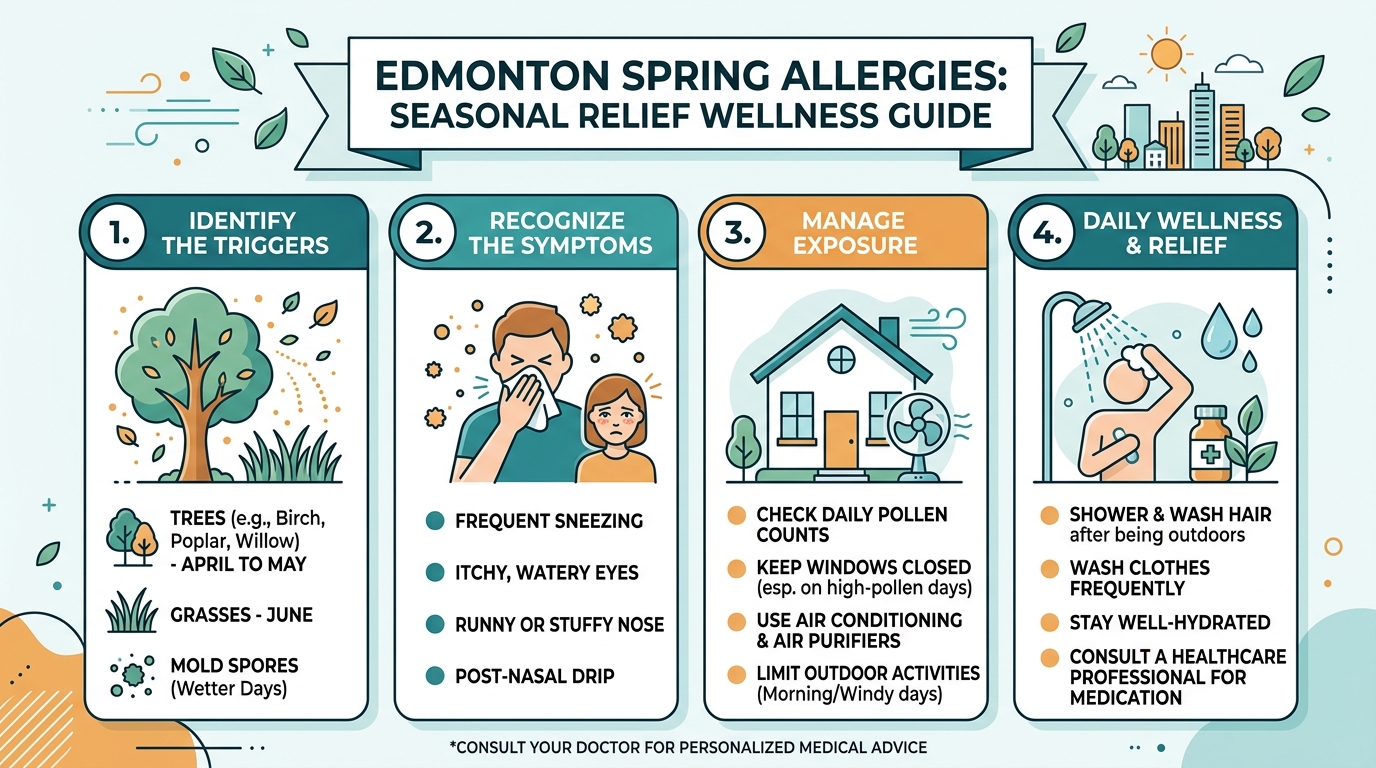
If you’ve lived in Edmonton through more than one spring, you know the drill. One day you’re celebrating the snow melting, the next you’re dealing with itchy eyes, constant sneezing, and that foggy feeling that makes you wonder if winter wasn’t so bad after all. Prairie pollen season hits Edmonton hard between April and June, and our unique mix of poplar, birch, and grass pollens creates a perfect storm for allergy sufferers.
Last reviewed:
The good news? You don’t have to hibernate indoors until July. Edmonton’s wellness community has adapted to help locals manage spring allergies through natural relief strategies, from HEPA-filtered yoga studios to local practitioners who specialize in seasonal allergy management. This guide covers everything from the best times to exercise outdoors (hint: it’s not when you think) to which local wellness spots have invested in serious air filtration systems.
For more on this, see our prevent seasonal wellness guide.
Understanding Edmonton’s Unique Allergy Season
The Prairie Pollen Timeline
Edmonton’s allergy season follows a predictable pattern that’s different from other Canadian cities. Starting in late March, tree pollens kick things off, with poplar and aspen leading the charge. These native species line our river valley trails and neighborhoods, releasing massive amounts of pollen that can travel kilometers on prairie winds.
By mid-April, birch joins the party. If you live near Glenora, Riverdale, or anywhere along the river valley, you’re probably familiar with the yellow dust that covers everything. Alberta Health Services tracks pollen counts daily during peak season, and birch consistently ranks as one of the most problematic allergens for Edmontonians.
May brings grass pollens into the mix. The vast prairie grasslands surrounding Edmonton mean we get hit from all directions when southwest winds pick up. Unlike coastal cities where ocean breezes can clear the air, our continental climate means pollen hangs around longer, especially during those calm, sunny days we wait all winter for.
How To Plan A Neighborhood Wellness Tour In Edmonton covers this in more detail.
Why Edmonton Allergies Hit Different
Our dry climate creates ideal conditions for pollen dispersal. Unlike Vancouver’s rain that washes pollen away, Edmonton’s spring is typically dry until late May. This means pollen accumulates day after day, creating higher concentrations than you’d find in more humid climates.
Old Strathcona Spas And Wellness Centers Guide covers this in more detail.
The urban heat island effect makes things worse downtown. Concrete and asphalt trap heat, creating updrafts that keep pollen suspended in the air longer. If you work downtown and live in the suburbs, you might notice your symptoms are worse during the workweek.
Best Hot Springs Near Edmonton For Winter Wellness Escapes covers this in more detail.
Add to this our love of non-native ornamental trees (looking at you, Mountain Ash), and you’ve got an extended allergy season that can last well into June. Some neighborhoods like Laurier Heights and Parkview have particularly high concentrations of allergenic trees due to landscaping choices made decades ago.
Indoor vs Outdoor Allergen Exposure
Here’s something most people don’t realize: indoor pollen levels in Edmonton homes can be higher than outdoor levels during peak season. Our forced-air heating systems, which run well into May some years, circulate pollen throughout the house if filters aren’t changed regularly.
Standard furnace filters only catch about 20% of pollen particles. Upgrading to a MERV 11 or higher filter (available at most hardware stores on 99 Street or at Canadian Tire locations) can make a significant difference. Change them monthly during allergy season, not quarterly like the package suggests.
Open windows feel great after a long winter, but they’re pollen highways. If you must air out the house, do it early morning before 10 AM when pollen counts are lowest, or during rain when pollen is grounded. Never leave windows open overnight during peak season – that’s when trees release most of their pollen.
Natural Wellness Approaches for Allergy Relief
Local Practitioners Specializing in Allergies
Several Edmonton practitioners have built their practices around helping locals manage seasonal allergies without relying solely on antihistamines. Dr. Analisa Morano at Pure Life Naturopathic on 142 Street takes a complete approach, starting treatment in February before symptoms appear. Her pre-season protocol includes specific supplements and dietary modifications tailored to prairie allergens. Initial consultations run about $185, with follow-ups at $95.
For those interested in Traditional Chinese Medicine, Dr. Wei Chen at River Valley Health on 82 Avenue has over 20 years experience treating Edmonton allergies with acupuncture and herbs. Many patients report significant improvement after 4-6 sessions, particularly with sinus pressure and headaches. Sessions cost $90-120, and some insurance plans cover acupuncture.
The team at Nourish Integrative Health in Old Strathcona combines nutritional counseling with targeted supplementation. They’ve found that many Edmontonians have underlying gut health issues that amplify allergy symptoms. Their three-month allergy program costs $450 and includes complete testing and personalized meal plans focusing on anti-inflammatory foods available at local farmers’ markets.
Breathing Techniques and Classes
Proper breathing can significantly reduce allergy symptoms, and several Edmonton studios offer specialized classes. Breathe Yoga Studio on Whyte Ave runs weekly “Pranayama for Allergies” sessions every Tuesday at 7 PM during allergy season. The class focuses on nasal breathing techniques that filter pollen naturally and reduce mouth breathing that bypasses your body’s filtration system. Drop-in rate is $25.
The Salt Room in Sherwood Park offers halotherapy (salt therapy) sessions that many allergy sufferers swear by. The micro-particles of pharmaceutical-grade salt help clear sinuses and reduce inflammation. A 45-minute session costs $45, with packages available for regular visitors. Book afternoon sessions during high pollen days for immediate relief.
Modo Yoga on Jasper Ave has adapted their hot yoga classes for allergy season by upgrading their air filtration and maintaining optimal humidity levels. The heat and humidity help open sinuses naturally while the HEPA filtration removes airborne allergens. Their “Gentle Flow for Allergy Season” runs Wednesday and Friday mornings at 9:30 AM.
Herbal and Nutritional Support
Earth’s General Store on 124 Street stocks local bee pollen from Chinook Honey Company. Starting with small doses in February can help build tolerance to local pollens. Begin with just a few granules and gradually increase to a teaspoon daily. A 250g jar costs about $18 and lasts the entire season.
Nutter’s Bulk & Natural Foods (multiple locations) carries stinging nettle tea, quercetin supplements, and local honey from producers within 100km of Edmonton. The theory behind local honey for allergies is controversial, but many locals report improvement when consuming honey from Sturgeon County or Leduc area beekeepers.
Planet Organic Market stocks homeopathic allergy remedies specific to tree and grass pollens. Their wellness consultants can recommend products based on your specific triggers. Popular options include Boiron’s Sabadil ($15) and combination remedies that target prairie allergens ($18-25).
Exercise and Movement During Allergy Season
Best Times and Places for Outdoor Activity
Health Canada’s pollen monitoring data shows that Edmonton pollen counts peak between 5 AM and 10 AM, then again at dusk. Plan outdoor workouts for mid-afternoon when counts drop, or immediately after rain when pollen is washed from the air.
Choose your routes wisely. The river valley trails are beautiful but can be pollen hotspots. Better options during peak season include the LRT trail system, which has fewer trees, or residential areas in newer neighborhoods like Windermere or Ellerslie where younger trees produce less pollen.
If you’re a dedicated runner, consider the indoor track at the Kinsmen Sports Centre (open to public certain hours, $7 drop-in) or the Butterdome at U of A campus. Both offer climate-controlled environments with good air circulation.
Indoor Fitness Alternatives
Edmonton’s fitness scene has embraced allergy season with numerous indoor options. Rockwall Climbing Centre in the west end maintains excellent air quality with industrial HEPA filtration. Their $22 day pass includes equipment rental, and the physical challenge provides a great alternative to outdoor hiking.
YEG Cycle in Oliver uses medical-grade air purifiers in their spin studio. Classes run $25-30, and the dark room environment means your watery eyes won’t stand out. They added extra morning classes during allergy season recognizing that many people struggle with evening workouts when symptoms peak.
For something different, try SUP Fitness YEG’s indoor paddleboard classes at their 170 Street location. The humidity from the pools helps with sinus symptoms while providing a full-body workout. Classes are $35 and include all equipment.
Yoga Studios with Superior Air Filtration
Not all yoga studios are created equal For air quality. Bikram’s Yoga Edmonton on Gateway Boulevard invested in hospital-grade HVAC systems that completely exchange air every 20 minutes. The controlled humidity in hot yoga also helps flush nasal passages naturally.
Prana Yoga Studio on 104 Street specifically markets their “Allergy-Friendly Environment” with HEPA filtration, no scented products policy, and prop cleaning between every class. Their Yin classes on Sunday mornings are particularly popular with allergy sufferers as the gentle stretches help lymphatic drainage.
One Yoga in Ritchie takes air quality seriously, using a combination of HEPA filters and UV sanitization. They also offer private sessions ($90) for severe allergy sufferers who need to avoid group classes during peak pollen days. Their infrared heated classes provide symptom relief similar to a sauna session.
Creating Allergy-Safe Spaces

Home Environment Modifications
Start with your bedroom since you spend 8 hours there daily. Costco on 149 Street stocks allergen-proof mattress and pillow covers for under $50 per set. Wash bedding weekly in hot water (over 60°C) to kill pollen particles. Keep windows closed and use a fan for air circulation instead.
Invest in a quality air purifier for the bedroom. London Drugs carries several models suitable for Edmonton homes. Look for ones with true HEPA filters and a CADR (Clean Air Delivery Rate) appropriate for your room size. Expect to pay $200-400 for a unit that actually works. Run it on high while at work, then low overnight for white noise.
Create a “pollen-free zone” near your front entrance. Place a bench or chair where you can remove shoes and outer clothing before entering living spaces. Keep a lint roller handy to remove pollen from pets’ fur – they’re walking pollen magnets during spring walks in places like Mill Creek Ravine or Terwillegar Park.
Vehicle and Commute Strategies
Your car’s cabin air filter is probably overdue for replacement. Most people don’t know these exist, but they filter air entering through your vehicle’s ventilation system. Canadian Tire or Kal Tire locations can replace them for $30-60, or DIY with a filter from Lordco for about $20.
Keep car windows closed and use recirculation mode during commutes. Pre-cool your car while it’s still in the garage to avoid that blast of pollen-laden air when you first get in. If you park outside at work, especially near the Legislature grounds or University area with mature trees, consider a windshield sunshade to reduce interior heating and the need to blast AC.
For those taking transit, the newer LRT cars have better filtration than buses. If possible, avoid stops near major pollen sources like the trees at Churchill Square or Corona Station. Wearing wraparound sunglasses helps protect eyes from airborne pollen while waiting at stops.
Workplace Wellness During Allergy Season
Talk to your employer about workspace accommodations. Many Edmonton offices already have HEPA filters for wildfire smoke season – these work equally well for pollen. If you work downtown in older buildings like the Petroleum Building or Phipps-McKinnon, air quality can be particularly poor due to aging HVAC systems.
Keep allergy supplies at your desk: extra antihistamines, saline spray, and tissues. The Shoppers Drug Mart in Commerce Place or City Centre Mall can fill prescriptions during lunch breaks. Some employers offer flex time during peak allergy season – working 7 AM to 3 PM avoids the evening pollen spike during commutes.
If your workplace has a wellness room, use it for midday sinus rinses or breathing exercises. No wellness room? The bathroom at Starbucks in Bell Tower or Tim Hortons in Edmonton City Centre works in a pinch for quick relief rituals.
Nutrition and Diet for Allergy Management
Anti-Inflammatory Foods Available Locally
The Old Strathcona Farmers’ Market is a goldmine for allergy-fighting foods. Riverbend Gardens sells fresh turmeric root and ginger – both powerful anti-inflammatories. Grate fresh turmeric into smoothies or golden milk lattes for natural allergy relief. Their booth is near the south entrance every Saturday.
Sunworks Farm offers grass-fed beef high in omega-3s, which help reduce inflammatory responses to allergens. Their weekend booth at the Bountiful Farmers’ Market also stocks pasture-raised eggs rich in vitamin D – important for immune regulation during allergy season.
Stock up on local berries when they arrive in June. Saskatoon berries from Prairie Gardens contain quercetin, nature’s antihistamine. U-pick season typically starts mid-June, and frozen berries retain their anti-allergy properties year-round. The Garlic Farm at St. Albert Farmers’ Market sells purple garlic varieties with higher allicin content, shown to reduce allergy symptoms.
Foods to Avoid During Peak Season
Oral allergy syndrome affects many Edmonton tree pollen sufferers. If birch pollen triggers your allergies, avoid raw apples, cherries, and carrots during peak season – they contain proteins similar to birch pollen. Cooking denatures these proteins, so cooked versions are usually fine.
For more on this, see our edmonton fall weather guide.
Dairy can increase mucus production for some people. If you notice worse congestion after your morning latte, try plant-based alternatives. Earth’s General Store carries local oat milk from Prairie Maid that works well in coffee. Their 124 Street location has a full dairy-alternative section with knowledgeable staff who understand allergy connections.
Alcohol, particularly wine and beer, can worsen allergy symptoms. They contain histamines and can dilate blood vessels in your nose. If you do drink during allergy season, clear spirits with lots of water are your best bet. The Bothy Wine and Whisky Bar on 104 Street has bartenders who understand low-histamine drink options.
Hydration and Supplement Protocols
Dehydration thickens mucus and worsens congestion. Aim for 3 liters of water daily during allergy season. Add electrolytes if plain water is boring – Nutter’s carries sugar-free options that don’t trigger inflammatory responses.
Key supplements for Edmonton allergies include vitamin C (1000mg twice daily), quercetin (500mg with meals), and omega-3s (2-3g daily). Supplements Plus on Calgary Trail has competitive prices and knowledgeable staff who understand dosing for allergies. Their practitioner-grade products often work better than drugstore versions.
Start supplements at least two weeks before your typical symptom onset. Most Edmontonians with tree allergies should begin protocols by mid-March. Keep a symptom diary to track what works – our bodies respond differently to various interventions.
Alternative Therapies and Treatments
Salt Therapy and Halotherapy Options
Beyond the Salt Room in Sherwood Park, Kingsway Mall’s Himalayan Salt Cave offers walk-in sessions for $40. The microclimate mimics natural salt caves, with dry aerosol salt particles that help clear airways and reduce inflammation. Best results come from twice-weekly sessions during peak allergy season.
For budget-conscious options, several Edmonton spas have added salt rooms. Elements Physical Therapy’s Windermere location includes salt therapy in their wellness packages. A monthly membership at $120 includes unlimited salt room access plus discounts on other services.
DIY salt therapy works too. Get a Himalayan salt inhaler from Sangster’s Health Centre (multiple locations) for about $40. Use it for 10-15 minutes daily while watching TV or reading. Replace the salt chunks every few months for maximum effectiveness.
Acupuncture and Traditional Chinese Medicine
Besides Dr. Chen mentioned earlier, the Acupuncture Health Centre on 111 Avenue specializes in allergic rhinitis treatment. They use a combination of facial points and body points to address both symptoms and underlying imbalances. Treatment plans typically involve 8-10 sessions over 4-6 weeks, starting at $85 per session.
Chinese herbs can complement acupuncture. Ping’s TCM Clinic near Chinatown stocks formulas specifically for wind-heat patterns (the TCM diagnosis for many spring allergies). Their Yu Ping Feng San formula has helped many locals reduce reliance on antihistamines. Expect to pay $30-40 for a two-week supply.
The MacEwan University Acupuncture Clinic offers reduced-rate treatments by supervised students. Sessions cost $35 and include complete intake and personalized treatment plans. Book early in the season as appointments fill quickly once word spreads about their effectiveness.Lymphatic Drainage and Massage
Manual lymphatic drainage can significantly reduce facial puffiness and sinus pressure associated with allergies. RnR Wellness Spa in South Edmonton Common has therapists certified in lymphatic drainage specifically for allergies and sinusitis. A 60-minute session costs $120 and many clients book weekly during peak season.
Kingsway Wellness offers a specialized “Allergy Relief Massage” combining lymphatic drainage with acupressure points. The 45-minute treatment ($95) focuses on the face, neck, and chest to encourage drainage and reduce congestion. They use only unscented, hypoallergenic oils.
For self-massage, Elements Pharmacy on 109 Street sells jade gua sha tools perfect for at-home lymphatic drainage. Their staff can demonstrate the proper technique for sinus relief. Daily 5-minute sessions in the shower can help prevent fluid buildup that worsens allergy symptoms.
Building Your Personal Allergy Action Plan
Tracking Symptoms and Triggers
Download the WeatherX app and enable pollen notifications for Edmonton. Cross-reference bad days with your activities to identify patterns. Many people discover their worst days coincide with specific activities like morning runs through Mill Creek or weekend trips to Elk Island.
Keep a simple symptom diary rating daily severity from 1-10. Note weather conditions, foods eaten, and stress levels. After two weeks, patterns emerge. Some Edmontonians find symptoms worse on Chinook days, others during temperature inversions that trap pollen at ground level.
Consider allergy testing through your family doctor or the Dynalife locations across Edmonton. Knowing your specific triggers helps target treatment. The standard Alberta Health panel tests for common prairie allergens including various tree pollens, grasses, and weeds. Results take about two weeks.
Creating a Seasonal Wellness Calendar
Mark key dates on your calendar: when specific trees pollinate in your neighborhood, when to start preventive supplements, and when to book practitioner appointments. Most birch-sensitive Edmontonians need to start preparations by March 15.
Schedule major outdoor projects for early spring or late summer to avoid peak pollen. If you’re planning events like weddings or reunions, consider indoor venues or dates outside May-June. The Muttart Conservatory or Art Gallery of Alberta offer beautiful, pollen-free event spaces.
Plan vacations strategically. Mountain destinations like Jasper often have lower pollen counts than Edmonton during spring. The coast can provide relief too – many locals find a week in Vancouver or Victoria during peak season helps reset their immune system.
Emergency Kit Essentials
Build allergy kits for home, car, and office. Include antihistamines (both sedating for nighttime and non-drowsy for day), nasal spray, eye drops, and tissues. London Drugs sells travel-sized versions perfect for emergency kits.
Add natural options: peppermint essential oil for sinus pressure (from Escents Aromatherapy on 124 Street), portable air purifier for the office, and electrolyte packets. Include a list of your triggers and what works for relief – brain fog during reactions makes it hard to remember your protocol.
Keep prescription medications current. Many walk-in clinics now offer virtual appointments for prescription renewals, saving exposure to waiting rooms full of allergens. Telus Health MyCare app connects you with Alberta doctors who understand local allergy patterns.
Sources & References
Related Reading
- Best Massage Therapy on Whyte Avenue Edmonton: Your Guide to the…
- How to Plan a Neighborhood Wellness Tour in Edmonton: A Complete Guide
- Meditation Studios vs Gyms in River Cree Edmonton: Which Fits Your…
Frequently Asked Questions
When do spring allergies typically start and end in Edmonton?
Tree pollen season usually begins in late March with poplar and aspen, peaks in late April through May with birch, and transitions to grass pollens by late May. Most people experience relief by early July, though grass allergies can persist through August. The Salt Room in Sherwood Park offers pre-season packages starting in March to help prevent severe symptoms.
Which Edmonton neighborhoods have the highest pollen counts?
River valley neighborhoods like Riverdale, Cloverdale, and Rossdale typically see highest counts due to mature tree populations. Areas with lots of birch trees like Glenora and older parts of St. Albert are particularly challenging for those with birch allergies. Newer developments in south Edmonton generally have lower pollen levels. Prana Yoga Studio on 104 Street is centrally located but maintains excellent air filtration for those living in high-pollen areas.
Are there any Edmonton-specific natural remedies that work for allergies?
Local bee pollen from Chinook Honey (available at Earth’s General Store) helps many people build tolerance to regional pollens when started before season. Saskatoon berries, abundant in Edmonton, contain natural antihistamines. The Acupuncture Health Centre on 111 Avenue has protocols specifically designed for prairie allergens that differ from standard treatments.
How much should I budget for natural allergy management in Edmonton?
A complete natural approach typically costs $150-300 monthly during peak season. This includes supplements ($50-80), practitioner visits ($90-120), and specialized fitness classes or salt therapy ($100-150). Many extended health plans cover naturopathic visits and acupuncture, reducing out-of-pocket expenses significantly.
Can children use the same natural allergy approaches as adults?
Most natural approaches work for children with adjusted doses and modifications. Nourish Integrative Health in Old Strathcona offers pediatric programs starting at age 5. The Salt Room welcomes children over 3, and many yoga studios like Modo on Jasper Avenue have family classes suitable during allergy season. Always consult healthcare providers for children under 12.