
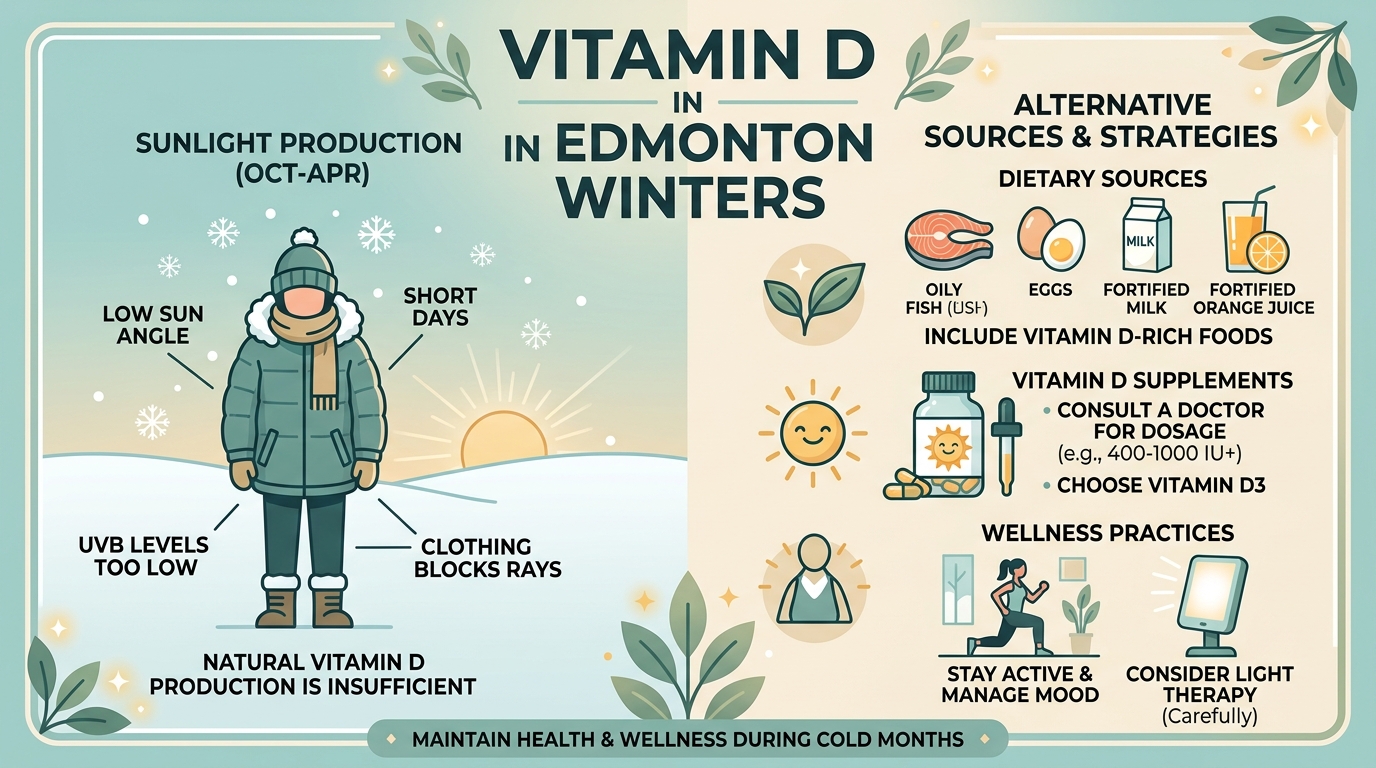
Between October and March, the sun in Edmonton sits too low in the sky to trigger vitamin D production in human skin. This isn’t about cloudy days or staying indoors too much. At our latitude of 53.5 degrees north, the angle of UVB rays makes vitamin D synthesis physically impossible for nearly half the year.
For more on this, see our salt caves float guide.
Last reviewed:
Most Edmonton residents develop some degree of vitamin D deficiency by February. Alberta Health Services data shows that 40% of Albertans test below optimal vitamin D levels during winter months. The number jumps to 75% for people who work indoors year-round.
Understanding how to get vitamin D in Edmonton during winter months means accepting that supplements aren’t optional — they’re necessary. This guide breaks down the science, testing options, and practical strategies for maintaining healthy vitamin D levels through our long winters.
The UV Index Problem: Why Edmonton’s Latitude Blocks Winter Vitamin D
Understanding the Solar Angle at 53 Degrees North
Vitamin D synthesis requires UVB radiation to penetrate the atmosphere and reach your skin. The key number here is a UV index of 3 or higher. Edmonton’s UV index drops below 3 from mid-October through early March.

How To Prevent Seasonal Wellness Routine Breakdowns In Edmonton covers this in more detail.
During December and January, our noon sun sits at just 13.5 degrees above the horizon. Compare that to Phoenix at 35 degrees or Miami at 42 degrees. The shallow angle means UVB rays travel through more atmosphere, where they get absorbed or scattered before reaching ground level.
Even on the sunniest January day in Edmonton, standing outside in shorts and a tank top won’t produce any vitamin D. The wavelengths simply aren’t there. Health Canada’s UV monitoring data confirms that cities above the 52nd parallel experience a “vitamin D winter” lasting 5-6 months.
Edmonton Spring Allergies Wellness Guide For Seasonal Relief covers this in more detail.
The Shadow Rule and Seasonal Changes
Here’s a simple test: If your shadow is longer than you are tall, the sun angle is too low for vitamin D production. In Edmonton’s winter, your shadow stays longer than your height all day long, even at solar noon.
The transition happens fast. In early September, you can make vitamin D from 11 AM to 3 PM on clear days. By October 15, that window closes completely. It doesn’t reopen until mid-March, when the spring equinox brings the sun angle back above the critical threshold.
Some Edmontonians think they can “stock up” on vitamin D during summer to last through winter. While the body does store vitamin D in fat tissue, those reserves typically deplete within 6-8 weeks without ongoing sun exposure or supplementation.
Indoor UV and Tanning Beds: A Dangerous Misconception
Window glass blocks 100% of UVB radiation, the type needed for vitamin D synthesis. Sitting by a sunny window in your Oliver condo or Windermere office might improve your mood, but it won’t boost vitamin D levels.
Some people turn to tanning beds, thinking they’re a vitamin D solution. Most commercial tanning beds emit primarily UVA radiation, which doesn’t produce vitamin D but does increase skin cancer risk. The few beds that emit UVB radiation would require such frequent use for vitamin D production that the cancer risk far outweighs any benefit.
Newer UV lamps designed specifically for vitamin D production do exist, but they’re medical devices that require careful dosing. At $300-500 per unit, they’re also significantly more expensive than a year’s supply of vitamin D supplements.
Testing Your Vitamin D Levels in Edmonton
Where to Get Tested Locally
Getting your vitamin D levels checked in Edmonton is straightforward. Your family doctor can order a 25-hydroxyvitamin D blood test, the standard measurement for vitamin D status. If you don’t have a family doctor, walk-in clinics on Jasper Avenue and in Mill Woods Shopping Town Centre offer testing with same-day appointments.
Private testing is available at DynaLIFE Medical Labs locations throughout the city, including their main facility near the University of Alberta Hospital. Expect to pay $65-80 for private testing. Some extended health plans cover vitamin D testing if your doctor indicates medical necessity.
Naturopathic clinics in Old Strathcona and along 124 Street also offer complete vitamin D testing as part of broader wellness panels. These typically run $150-300 but include additional markers like vitamin B12, iron, and thyroid function.
Understanding Your Test Results
Vitamin D levels are measured in nanomoles per litre (nmol/L) in Canada. Here’s what the numbers mean:
- Below 30 nmol/L: Deficient. Increased risk of bone problems, muscle weakness, and immune dysfunction
- 30-50 nmol/L: Insufficient. May be adequate for bone health but suboptimal for other functions
- 50-125 nmol/L: Sufficient for most people. The sweet spot for overall health
- Above 125 nmol/L: High. Generally safe but unnecessary
- Above 250 nmol/L: Potentially harmful. Risk of kidney stones and calcium imbalance
Most health professionals in Edmonton aim for levels between 75-100 nmol/L year-round. This provides a buffer against the natural decline that happens through winter months.
When and How Often to Test
The best times to test vitamin D levels in Edmonton are early October and late February. The October test shows your peak levels after summer sun exposure. The February test reveals your winter low point.
If you’re starting supplementation, retest after 3 months to ensure your dose is appropriate. Once you find a maintenance dose that keeps your levels stable, annual testing in late winter is usually sufficient.
Certain groups should test more frequently: people over 65, those with osteoporosis, anyone taking medications that affect vitamin D metabolism, and people with absorption issues like celiac disease or Crohn’s disease.
Supplementation Strategies for Edmonton Winters
Choosing the Right Type and Dose
Vitamin D3 (cholecalciferol) is the preferred supplement form. It’s the same type your body produces from sunlight and is more effective than vitamin D2 at raising blood levels. You’ll find D3 supplements at every pharmacy in Edmonton, from the Shoppers Drug Mart on Whyte Ave to the Rexall in Kingsway Mall.
Dosing depends on your starting levels and individual factors. Health Canada recommends 600-800 IU daily for adults, but many Edmonton health practitioners suggest higher doses during winter:
- Maintenance dose: 1000-2000 IU daily for adults with normal levels
- Correction dose: 4000-5000 IU daily for those testing below 50 nmol/L
- Loading dose: Some doctors prescribe 10,000 IU daily for 2-3 months to correct severe deficiency
Liquid drops offer the most flexibility for dosing. Tablets and gummies work well for consistent daily doses. Weekly high-dose supplements (25,000-50,000 IU) are available by prescription for people who struggle with daily routines.
Timing and Absorption Tips
Vitamin D is fat-soluble, meaning it absorbs better when taken with dietary fat. Take your supplement with breakfast if you’re eating eggs or adding cream to coffee. If you practice intermittent fasting, take it with your first meal containing fat.
Morning dosing may support natural circadian rhythms, as vitamin D plays a role in melatonin regulation. Some people report better sleep when switching from evening to morning supplementation.
Magnesium helps convert vitamin D to its active form. Many Edmontonians are also low in magnesium, especially during winter when fresh local produce is limited. Consider a magnesium supplement or increase intake of pumpkin seeds, dark chocolate, and spinach.
Special Considerations for Different Groups
Older adults need higher doses due to decreased skin production and absorption. People over 70 should aim for at least 800-1000 IU daily, with many needing 2000 IU or more to maintain adequate levels.
Shift workers at facilities like the Royal Alexandra Hospital or Syncrude sites face double challenges: limited sun exposure even in summer, plus disrupted circadian rhythms that may affect vitamin D metabolism. These workers often need year-round supplementation at winter doses.
People with darker skin tones require more sun exposure to produce the same amount of vitamin D. In Edmonton’s winter, this becomes irrelevant since no one can make vitamin D from sunlight. However, baseline supplementation needs may be higher year-round.
Pregnant and breastfeeding women need careful monitoring. Low maternal vitamin D affects both mother and baby. The Society of Obstetricians and Gynaecologists of Canada recommends 2000 IU daily during pregnancy, with some women needing up to 4000 IU.
Food Sources: Limited But Helpful
Natural Food Sources Available in Edmonton
While supplements do the heavy lifting for winter vitamin D, certain foods provide modest amounts. Wild salmon from the Edmonton City Market contains about 450 IU per 3-ounce serving. Farmed salmon, more common at Save-On-Foods and Superstore, has about half that amount.
Other fish options at local stores include:
- Rainbow trout: 150-200 IU per serving
- Canned sardines: 150 IU per serving
- Canned tuna: 40-80 IU per serving
- Pickled herring: 110 IU per serving
Egg yolks contain about 40 IU each, but only from chickens given vitamin D-supplemented feed. Look for omega-3 enriched eggs at the Old Strathcona Farmers’ Market, as these chickens typically receive vitamin D supplementation.
Mushrooms exposed to UV light can contain vitamin D2. Some Edmonton grocery stores now carry UV-treated mushrooms labeled as “vitamin D mushrooms.” A half-cup serving provides about 400 IU, though D2 is less effective than D3 at raising blood levels.
Fortified Foods in the Canadian Market
Canada mandates vitamin D fortification in milk and margarine. One cup of milk contains 100 IU, whether it’s skim or whole milk. Plant-based milk alternatives like soy, almond, and oat milk are also fortified to similar levels.
Other fortified options include:
- Orange juice: 100 IU per cup (fortified brands only)
- Yogurt: 80 IU per serving (varies by brand)
- Breakfast cereals: 40-100 IU per serving
- Infant formula: 400 IU per liter
Check labels carefully. Not all brands fortify their products, and amounts vary significantly. The President’s Choice and Kirkland brands at Real Canadian Superstore and Costco typically offer good fortification levels at lower prices.
Building a Vitamin D-Rich Winter Diet
Even eating vitamin D-rich foods daily won’t meet your full winter needs in Edmonton. A realistic dietary target is 400-600 IU from food, with supplements covering the remaining 1000-2000 IU needed.
Here’s a sample day that maximizes dietary vitamin D:
| Meal | Foods | Vitamin D Content |
|---|---|---|
| Breakfast | 2 eggs + 1 cup fortified milk | 180 IU |
| Lunch | Tuna sandwich + vitamin D mushrooms | 280 IU |
| Dinner | Grilled salmon + fortified yogurt | 530 IU |
| Total | 990 IU |
This represents an unusually vitamin D-rich day. Most people get 200-400 IU from their regular diet, making supplementation essential for meeting the 2000-3000 IU total that many Edmontonians need in winter.
The Mental Health Connection

Vitamin D and Seasonal Affective Disorder in Edmonton
Edmonton’s long winters and short daylight hours create perfect conditions for Seasonal Affective Disorder (SAD). While light exposure is the primary factor, vitamin D deficiency may worsen symptoms. Research published in the Journal of Affective Disorders found that people with SAD often have lower vitamin D levels than those without seasonal mood changes.
The connection makes sense. Vitamin D receptors exist throughout the brain, particularly in areas that regulate mood. Low levels correlate with increased risk of depression, though researchers still debate whether it’s cause or correlation.
Local mental health professionals at the Grey Nuns Community Hospital and University of Alberta Hospital often check vitamin D levels as part of SAD assessment. While vitamin D supplementation alone won’t cure SAD, optimizing levels removes one potential contributor to winter mood changes.
Combining Light Therapy with D Supplementation
Many Edmontonians use light therapy boxes during winter months. These devices emit 10,000 lux of bright light but no UV radiation, so they don’t trigger vitamin D production. Think of light therapy and vitamin D supplementation as complementary strategies, not alternatives.
For best results, use your light box within 30 minutes of waking while eating breakfast and taking your vitamin D supplement. This combination supports both circadian rhythm regulation and vitamin D absorption.
Light boxes are available at London Drugs locations across Edmonton, typically ranging from $100-300. The Wellness Guide’s seasonal routine tips can help you integrate both interventions effectively.
Supporting Overall Winter Mental Health
Optimal vitamin D is one piece of the winter wellness puzzle in Edmonton. Regular exercise at facilities like the Kinsmen Sports Centre or YMCA locations helps maintain mood and may improve vitamin D metabolism. The endorphin boost from movement compounds the mood-supporting effects of adequate vitamin D.
Social connection also matters. Vitamin D deficiency can contribute to fatigue and low motivation, creating a cycle of isolation. Joining winter activities at the Edmonton Ski Club or taking classes at MacEwan University’s fitness center provides both movement and social interaction.
Some people find that scheduling a February escape to nearby hot springs provides a mental health boost that supplements their vitamin D routine. While a weekend in Jasper won’t fix vitamin D deficiency, the combination of warm water, relaxation, and change of scenery supports overall winter resilience.
Special Populations and Risk Factors
Edmonton’s Aging Population
Seniors in Edmonton face multiple vitamin D challenges. Aging skin produces less vitamin D from sun exposure, even during summer months. Add limited mobility during icy conditions and you have a recipe for severe deficiency.
Residents in senior communities like Chartwell Laurier House or Revera’s Riverbend Retirement Residence often need higher supplement doses year-round. Many facilities now include vitamin D levels in routine health monitoring.
Fall risk increases dramatically with vitamin D deficiency. For seniors navigating Edmonton’s icy sidewalks from November through March, maintaining levels above 75 nmol/L becomes a safety issue, not just a health optimization strategy.
Cultural and Lifestyle Factors
Edmonton’s diverse population includes many people who cover their skin for religious or cultural reasons. Women wearing hijab or men in traditional Sikh turbans have limited skin exposure even during summer months. Year-round supplementation at winter doses often makes sense for these communities.
Shift workers represent another high-risk group. Nurses at the Misericordia Hospital working night shifts, or oil patch workers on evening rotations miss prime sunshine hours even in summer. These workers should treat vitamin D supplementation as a year-round necessity, not just a winter consideration.
Vegetarians and vegans have fewer food options for vitamin D, as most natural sources are animal-based. Fortified plant milks and UV-treated mushrooms help, but supplements become even more critical. Earth’s General Store on 124 Street and Noorish locations carry vegan D3 derived from lichen.
Medical Conditions Affecting Vitamin D
Several conditions common in Edmonton affect vitamin D absorption or metabolism. People with inflammatory bowel diseases like Crohn’s or ulcerative colitis may need doses 2-3 times higher than standard recommendations. The IBD clinic at the University of Alberta Hospital routinely monitors vitamin D in these patients.
Obesity affects vitamin D availability because the vitamin gets sequestered in fat tissue. People with BMI over 30 often need 2-3 times the standard dose to achieve the same blood levels as someone with normal weight.
Certain medications interfere with vitamin D:
- Anticonvulsants: Increase vitamin D breakdown
- Glucocorticoids: Impair vitamin D metabolism
- Weight-loss drugs: May reduce absorption of fat-soluble vitamins
- Cholestyramine: Binds to vitamin D in the gut
If you take any of these medications, work with your pharmacist at locations like the Medicine Shoppe on 109 Street to determine appropriate vitamin D dosing.
Practical Implementation: Your Winter Vitamin D Plan
Month-by-Month Strategy for Edmontonians
September marks the transition month. You can still make some vitamin D on sunny afternoons, but production drops rapidly. Start supplementing by September 15 with 1000 IU daily if you haven’t been taking summer supplements.
October through February represents peak supplementation season. Most Edmonton adults need 2000-3000 IU daily during these months. If you’re dealing with smoke season limiting outdoor time, you might need these doses even earlier.
March and April are transition months again. The sun returns to vitamin-D-producing angles by mid-March, but unpredictable weather and spring allergies might keep you indoors. Continue supplementing at winter doses through April, then reassess based on your outdoor time.
May through August offers the only reliable window for natural vitamin D production in Edmonton. If you spend 15-30 minutes outside between 11 AM and 3 PM with arms and legs exposed, you might produce enough vitamin D without supplements. Many people continue taking 1000 IU daily as insurance.
Building Sustainable Habits
The biggest challenge with vitamin D supplementation is consistency. Link your vitamin D routine to an existing habit. Keep supplements next to your coffee maker, toothbrush, or car keys — wherever you’ll see them daily.
Set phone reminders for the key transition dates: September 15 to start winter dosing, and May 15 to reassess summer needs. Many Edmonton pharmacies offer automatic refill programs that align with these seasonal changes.
Track your levels with a simple note in your phone. Record test dates and results, supplement doses, and any symptoms you notice. This personal data becomes invaluable for fine-tuning your approach with your healthcare provider.
Cost Considerations and Budgeting
Vitamin D supplementation costs approximately $10-20 per month for quality supplements. Buying in bulk at Costco’s Winterburn location brings the price down to about $8 monthly. Compare this to the cost of treating vitamin D deficiency complications: bone fractures, chronic pain, or depression treatment.
Testing costs vary:
- Through Alberta Health Care: Free with doctor’s requisition
- Private testing: $65-80 per test
- complete panels: $150-300
Some extended health plans cover vitamin D supplements with a doctor’s note stating medical necessity. Check with your provider — many Edmonton employers now recognize vitamin D as essential preventive care for our latitude.
For those on tight budgets, prioritize consistent daily supplementation over expensive testing. A year’s supply of vitamin D costs less than two restaurant meals on Whyte Ave. It’s one of the most cost-effective health interventions available.
Sources & References
Related Reading
- How to Deal with Seasonal Depression in an Edmonton Winter
- Edmonton Spring Allergies Wellness Guide: Natural Relief for…
- Best Hot Springs Near Edmonton for Winter Wellness Escapes: Your…
Related Reading
Related Reading
Related Reading
Frequently Asked Questions
Can I get enough vitamin D from a sunny vacation in Mexico during Edmonton winter?
A week in the sun can temporarily boost your vitamin D levels, but it won’t sustain you through an Edmonton winter. Your body might produce 10,000-20,000 IU daily with full sun exposure, but those stores deplete within 6-8 weeks. Continue supplementing when you return, though you might reduce your dose for a few weeks after significant sun exposure.
Do SAD lamps or grow lights produce vitamin D?
No, therapeutic light boxes and grow lights don’t emit UV radiation, so they can’t trigger vitamin D production. Light therapy helps with seasonal mood and circadian rhythms, while vitamin D supplements address the nutritional deficiency. Use both strategies together for complete winter wellness support in Edmonton.
Is it possible to take too much vitamin D living in Edmonton?
Yes, though it requires very high doses over extended periods. Toxicity typically occurs at doses above 10,000 IU daily for several months. Symptoms include nausea, confusion, and kidney problems. Stick to 1000-4000 IU daily unless your doctor prescribes higher doses based on blood tests.
Should children in Edmonton take vitamin D supplements year-round?
Health Canada recommends 400 IU daily for infants and 600 IU for children year-round. During Edmonton winters, many pediatricians suggest 1000 IU daily for school-age children. Kids who spend summer days at outdoor camps or city pools might not need summer supplementation, but most benefit from consistent year-round dosing.
Which local Edmonton doctors specialize in vitamin D optimization?
Most family physicians in Edmonton understand vitamin D needs at our latitude. For specialized care, the Bone and Joint Health Institute at the University of Alberta focuses on vitamin D’s role in bone health. Integrative health clinics along 124 Street and in Sherwood Park offer complete vitamin D assessment as part of wellness optimization programs.