The Real Cost of Driving Across Edmonton for a Spa Day
Edmonton is a big city stretched thin. It covers more than 685 square kilometres, according to the City of Edmonton’s own facts and figures page, which makes it geographically larger than cities with twice the population. That matters more than most people think when you’re deciding where to book a massage or a facial. Choosing a local spa over driving across Edmonton isn’t just a matter of preference. It’s a math problem involving time, money, and, for about five months of the year, ice.
Last reviewed:
Time You Don’t Get Back: Mapping Edmonton’s Drive Times
A trip from Windermere to a spa in Old Strathcona during weekday traffic can easily run 35 to 45 minutes each way. Add Anthony Henday construction, which has been a near-permanent feature of Edmonton driving for years, and you’re looking at closer to an hour some days. Now double it, because you have to drive home too. A 60-minute massage suddenly costs you two hours of round-trip driving on top of the treatment itself. That’s not a spa day. That’s a part-time job with a hot stone bonus.
Compare that to a spa four blocks from your house on 124 Street or a quick walk from your Oliver condo. Ten minutes there, ten minutes back. You’ve just recovered 60 to 80 minutes you can spend actually relaxing, or, more realistically, getting the rest of your Saturday back.
Parking, Gas, and the Hidden Dollar Costs
Downtown Edmonton parking runs $3 to $6 an hour at most surface lots, and some Jasper Avenue stalls push higher during events. A two-hour spa visit downtown can add $10 to $15 in parking alone, on top of gas. At current prices, a 25-kilometre round trip across the city burns close to $4 to $6 in fuel depending on your vehicle. None of that shows up on the spa’s price list, but it comes out of your pocket every single time.
How To Plan A Neighborhood Wellness Tour In Edmonton covers this in more detail.
Do that twice a month for a year and you’ve spent $250 to $500 just getting to and from appointments; money that could have covered two or three extra treatments at a neighborhood spot instead.
Free Wellness Resources Edmonton Apps Local Community covers this in more detail.
Winter Driving Risk: Why -30°C Changes the Math
Edmonton winters aren’t a minor inconvenience. Cold snaps below -30°C show up most years, and Alberta Health Services publishes cold weather advisories reminding residents that exposed skin can develop frostbite in minutes at those temperatures. Driving across the city in a whiteout on the Henday, or scraping a windshield in a parkade before an 8 a.m. appointment, is not most people’s idea of self-care. A spa fifteen minutes from home means less time on icy roads, less time idling in a cold car, and a lower chance you cancel the appointment altogether because the drive feels like too much.
How To Choose A Wellness Service By Edmonton Location covers this in more detail.
What Local Actually Means in Edmonton’s Spa Scene
Edmonton doesn’t have one wellness district. It has a dozen small ones, each with its own character, price point, and parking situation. Understanding your own neighborhood’s options is the first step before deciding whether a cross-town drive is worth it.
What Wellness Amenities Does Your Edmonton Neighborhood Have covers this in more detail.
Neighborhood Spa Density: Whyte Avenue, Oliver, 124 Street, Downtown
Old Strathcona and Whyte Avenue have one of the densest concentrations of independent spas, massage clinics, and yoga studios in the city, largely because of foot traffic from the University of Alberta and Old Strathcona’s mix of walk-up retail. Oliver has quietly built out a similar cluster along 124 Street and around Jasper Avenue, with several boutique spas serving the condo towers that have gone up over the last decade. Downtown itself skews toward quick-access options built for lunch-hour appointments: express facials, 30-minute massages, and reflexology spots tucked into office towers near Churchill Square and Rice Howard Way.
Suburban Options: Windermere and Sherwood Park
West Edmonton and Windermere have grown fast, and the spa scene there has grown with it, often inside strip malls near big anchor retailers rather than standalone storefronts. These tend to have free surface parking, which downtown and Whyte Avenue locations rarely offer. Sherwood Park, technically outside Edmonton proper but functionally a satellite neighborhood for a lot of readers, has its own strong cluster of day spas that draw people who don’t want to fight Anthony Henday traffic at all.
Why Proximity Beats Prestige for Regular Self-Care
People assume the “best” spa is worth any drive. For a once-a-year anniversary treatment, maybe. For the massage you should be getting every four to six weeks to manage tension headaches or lower back pain, proximity wins almost every time. A good local spa that you actually visit consistently beats a slightly better spa you visit twice a year because the drive feels like too much effort. Our guide to what wellness amenities your Edmonton neighborhood has breaks down what’s realistically available block by block, which is a useful gut check before you assume you need to leave your area at all.
The Science of Why Distance Kills Follow-Through
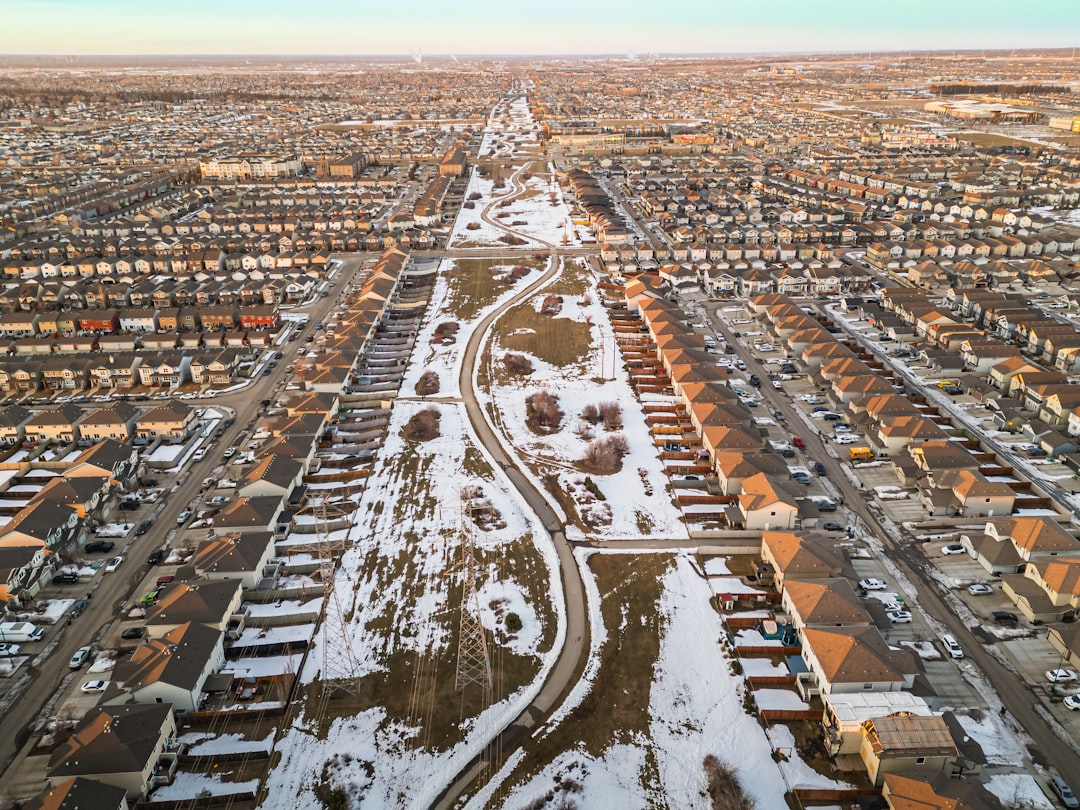
This isn’t just an Edmonton problem, but Edmonton’s geography and climate make it worse than most cities. Behavioral research on habit formation backs up what a lot of locals already feel in their bones: distance is the single biggest predictor of whether a healthy habit sticks.
The 20-Minute Rule and Habit Formation
Research on physical activity adherence, including studies referenced by the CDC’s physical activity guidance, consistently finds that convenience and proximity are among the strongest predictors of whether people stick with a wellness routine. The general pattern holds across gyms, clinics, and yes, spas: once a round trip pushes past 20 to 25 minutes, no-show and cancellation rates climb. It’s not that people don’t value the appointment. It’s that friction adds up, and on a cold Tuesday in January, a 45-minute drive is an easy excuse to reschedule, then reschedule again, then quietly stop going.
How the Drive Itself Cancels Out the Relaxation
There’s an irony in driving 40 minutes through rush hour traffic to “de-stress.” Traffic congestion is a well-documented stressor. Improved cortisol from a tense commute doesn’t just disappear the moment you walk through a spa door. It takes time to come down, which means you spend the first 15 to 20 minutes of a 60-minute massage still partly wound up from the drive. A short local trip skips that entirely. You show up closer to baseline, which means more of your appointment actually counts as recovery time instead of decompression time.
What Edmonton Commute Data Actually Shows
Edmonton’s average commute time sits above the national average for mid-sized Canadian cities, and Statistics Canada’s commuting duration data shows one-way commutes in the 20 to 30 minute range are common across the region, before winter conditions or road construction add extra time. That’s before you even leave your regular commute pattern to go somewhere new. Layer a discretionary spa trip on top of an already long workday commute and you can see why so many Edmontonians default to whatever is closest, not whatever ranks highest on a review site.
Local Spa vs Cross-City Spa: A Practical Comparison
Numbers make this easier to see than opinions do. Here’s a realistic side-by-side for a typical Edmonton resident booking a 60-minute massage or facial, comparing a spa within 10 minutes of home against one 30 to 40 minutes across the city.
| Factor | Local Spa (under 10 min) | Cross-City Spa (30-40 min) |
|---|---|---|
| Round-trip driving time | 10-20 minutes | 60-80 minutes |
| Fuel cost per visit | $1-2 | $5-8 |
| Parking cost per visit | Free to $2 | $8-15 (downtown) |
| Winter driving risk | Low | Moderate to high |
| Likelihood of rebooking within 6 weeks | High | Lower, tends to slip |
| Typical treatment price (60-min massage) | $95-130 | $100-160 |
Cost Comparison
The treatment itself is often priced similarly across the city; a 60-minute massage generally runs $95 to $130 whether you’re in Oliver or Windermere. The real cost difference comes from the drive: gas, parking, and the extra time that has a dollar value even if you don’t put a number on it. Over a year of regular visits, the local option can save $200 to $600 depending on how far the cross-city option actually is.
Time Comparison
the gap is biggest. A local spa turns a 60-minute treatment into roughly a 75 to 90 minute outing. A cross-city spa can turn that same 60-minute treatment into a two-and-a-half-hour commitment once you factor in traffic, parking, and walking from a parkade. For anyone squeezing a spa visit into a lunch break or a single free evening, that difference decides whether the appointment happens at all.
Is Cross-City Ever Actually Better Quality
Sometimes, yes. A handful of Edmonton spas have built reputations around specific specialties: medical-grade skin treatments, advanced hot stone certifications, or niche modalities like traditional Thai massage. If a spa has genuinely rare expertise, the drive can be worth it occasionally. But for standard Swedish massage, basic facials, or routine manicure and pedicure services, the quality gap between a well-reviewed local spa and a famous cross-city one is usually small. You’re often paying in time and parking for a name, not a meaningfully better outcome.
When Driving Across Edmonton Is Worth It
None of this means you should never leave your neighborhood. It means the drive should be a deliberate choice, not a default habit.
Specialized Treatments That Justify the Drive
Some services are genuinely rare in Edmonton. Float tanks, certain types of medical aesthetics, and specialized prenatal massage certifications aren’t available everywhere. If your neighborhood doesn’t have a specific service you need, a cross-city trip makes sense, the same way you’d drive across town for a specialist doctor rather than settling for whoever is closest.
Special Occasions vs Routine Maintenance
A bachelorette party, an anniversary, or a birthday spa day is a one-off event. Driving 40 minutes for that is a reasonable trade because it’s not something you’re trying to build a habit around. Routine maintenance, like a monthly massage for chronic tension or a biweekly facial as part of a skincare plan, is a different category entirely. Habits need low friction. Special occasions can absorb a bit of friction because they only happen once or twice a year.
A Quick Decision Checklist
- Is this a one-time event or a recurring appointment? One-time trips can justify a longer drive. Recurring ones shouldn’t.
- Does the treatment exist within 15 minutes of home? If yes, there’s rarely a good reason to drive further for a standard service.
- Is it winter? Between November and March, weigh road conditions heavily. A great massage isn’t worth a white-knuckle drive on the Henday.
- Are you replacing a habit or adding an outing? Habits should be built around convenience. Outings can be built around novelty.
- What’s the total time cost, not just the appointment length? Add driving, parking, and traffic before deciding.
How to Vet a Great Local Spa Before You Book
The hesitation a lot of people have about staying local is a fear that “local” means “lower quality.” That’s rarely true in Edmonton, where independent spas often outperform bigger, more distant operations on service because they depend entirely on repeat neighborhood customers.
What to Check in Reviews and Credentials
Look for registered massage therapists (RMTs) if you plan to submit receipts to an extended health plan; Alberta’s regulatory colleges require specific training hours, and a legitimate spa will list credentials openly. Check Google reviews for consistency rather than just star averages; a spa with 150 reviews averaging 4.6 stars is usually more reliable than one with 12 reviews at 5.0 stars. Pay attention to how a business responds to negative reviews. A thoughtful, non-defensive response says more about management than the complaint itself.
Trial Visits, Packages, and Membership Deals
Most Edmonton spas offer a first-visit discount or an introductory package, often 15 to 25 percent off a first massage or facial. Use it. A single trial visit tells you more about fit, table comfort, and staff professionalism than ten reviews ever will. Once you find a local spot that works, ask about package pricing; many neighborhood spas offer five- or ten-visit packages that knock $10 to $20 off each session, which narrows the price gap with cross-city competitors even further.
Using Local Guides to Compare Options Without Guessing
Trying to manually compare every spa in a 20-block radius is exhausting and usually leads people back to whatever showed up first on a search engine. Our guide on how to choose a wellness service by Edmonton location walks through a more systematic way to shortlist options block by block, rather than relying on ad placement or name recognition. It’s a faster way to find a good fit than the trial-and-error approach most people default to.
Building a Wellness Routine You’ll Actually Keep
The whole point of choosing a local spa over driving across Edmonton is sustainability. A routine only works if it survives a busy month, a cold snap, or a stretch of long workdays. Distance is one of the easiest variables to control, so controlling it pays off disproportionately.
Seasonal Shifts: Winter Spa Habits vs Summer Ones
Winter is when proximity matters most. Between December and February, a 10-minute local drive beats a 30-minute cross-city one by a wide margin, both for safety and for motivation on a dark 4:30 p.m. evening. Summer changes the equation slightly. Long daylight hours and better road conditions make a slightly longer drive more tolerable, and some people use a summer spa visit as an excuse to explore a studio near the River Valley trails or combine it with a Farmers’ Market stop. Even then, a spa within your own neighborhood is still the lower-friction default for anything recurring.
Stacking Spa Visits With Other Neighborhood Wellness Stops
One underrated benefit of staying local: you can build a whole wellness afternoon out of a small radius instead of scattering appointments across the city. A massage on Whyte Avenue, followed by a walk through Old Strathcona, followed by coffee before heading home, uses less time and less gas than three separate cross-town trips. If you’re new to this kind of neighborhood-based planning, our guide to planning a neighborhood wellness tour in Edmonton lays out how to string together a few close-by stops without wasting a whole day driving. And if you want a broader sense of what’s available across different parts of the city before committing to one area, the neighborhood wellness guides and local discovery hub is a good starting point, along with the roundup of free wellness resources, apps, and local community options for people who want to build a routine without adding cost on top of the driving they’re trying to cut.
Related Articles
- Best Massage Therapy in Whyte Avenue Edmonton: Your Complete Guide to Old Strathcona’s Top Clinics
- Best Yoga Studios Near Oliver Edmonton With Parking: A Local’s Guide to Stress-Free Practice
- Best Salt Caves and Float Therapy Near West Edmonton Mall: A Local’s Guide to Deep Relaxation
Sources & References
Find Trusted Wellness Spots in Edmonton
Browse our independent guide to Edmonton’s spas, fitness studios, and wellness services. Local. Honest. Free.
Frequently Asked Questions
Is it actually cheaper to choose a local spa over driving across Edmonton?
Usually, yes. While treatment prices are often similar citywide, a local spa saves $5 to $15 per visit in gas and parking alone. Over a year of regular visits, that adds up to $200 or more, money better spent on an extra massage or facial.
How do I find a good spa in my own Edmonton neighborhood?
Start with Google reviews filtered by proximity, then check for registered massage therapist credentials if you plan to claim it on insurance. Book a first-visit discount to test the space before committing to a package, and compare two or three local options rather than assuming the first search result is the best fit.
Is it worth driving across Edmonton for a specific spa in winter?
Only for genuinely specialized services that aren’t available closer to home, like a specific medical aesthetics treatment or a niche massage modality. For standard services like Swedish massage or basic facials, the risk of icy roads and reduced visibility outweighs the benefit, especially on Anthony Henday or Whitemud Drive during a snow event.
What Edmonton neighborhoods have the most spa options within walking distance?
Whyte Avenue and Old Strathcona have the densest cluster, followed closely by Oliver and the 124 Street area. Downtown Edmonton has strong lunch-hour options near Churchill Square, while Windermere and Sherwood Park offer suburban alternatives with easier, often free, parking.
How often should I visit a local spa to actually see benefits?
For chronic tension or stress management, massage therapists commonly recommend every four to six weeks. That kind of recurring schedule is exactly where a local spa’s convenience matters most, since a 45-minute cross-town drive every month is far more likely to get skipped than a 10-minute local trip.