If you live here, you know our lives are shaped by the Edmonton Alberta climate. It’s the force that dictates whether we hibernate through a -30°C January or squeeze every last drop of daylight from a 17-hour summer day. Our local climate is a technical continental, northern prairie climate, which is just a fancy way of saying we get wild temperature swings and some of the most extreme shifts in daylight you'll find anywhere.
For more on this, see our prepare body edmonton guide. For more on this, see our prepare body edmonton guide.
What the Edmonton Alberta Climate Really Feels Like
To thrive here, you have to learn to read the weather beyond the numbers. It’s about developing that sixth sense that knows -15°C with a bright sun is a gift, while that same -15°C with a biting wind feels like a personal insult from the universe. That's the difference between a great day for a skate at the Victoria Park Oval and a day you don't leave the house.
This kind of local knowledge is the foundation for wellness strategies that actually work for us—not generic advice that falls apart the second it meets a real Edmonton winter.
For more on this, see our edmonton spring allergies guide. For more on this, see our edmonton spring allergies guide.
Our city’s latitude is what defines this experience. We’re a textbook example of a northern prairie city, with official data showing a massive swing from a typical January mean temperature around −12°C to a July mean of 17°C. And then there's the light. We get over 17 hours of daylight at the summer solstice, a phenomenon that fuels our incredible festival season but can also seriously mess with our circadian rhythms.
This huge seasonal shift is the core of the Edmonton experience.
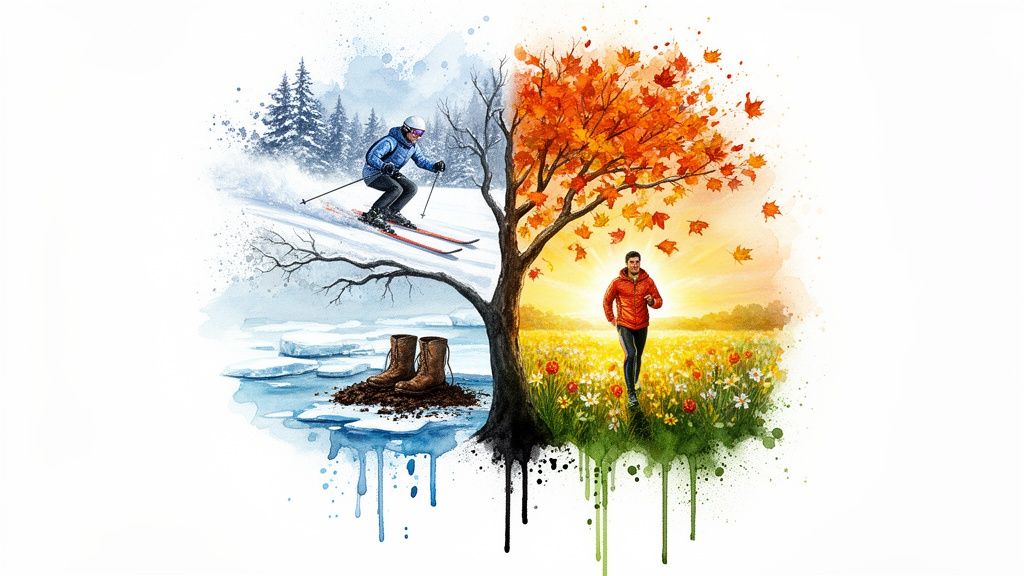
This infographic breaks down some of the key numbers that define our year.
These numbers really drive home the contrasts we navigate every year—from a deep, biting cold to glorious warmth, and from short, dark days to nearly endless summer light.
A City Shaped by Four Distinct Seasons
Each season here brings its own set of challenges and joys, asking for different things from our bodies and minds. Our social calendars, our activity levels, even what we feel like eating are all deeply connected to the weather outside our window.
We don't just put up with the climate here; we adapt to it. In a lot of ways, we even celebrate it. Our river valley transforms from a cross-country ski paradise to a runner's haven, and our community spirit is forged just as much in the chill of Silver Skate as it is in the warmth of a Folk Fest evening.
This guide is built on that local, lived experience. We’ll break down how to work with our climate, not against it, giving you practical, Edmonton-specific strategies for feeling your best. For those looking to dive deeper, you can explore our comprehensive guide to health and wellness in Edmonton to get a broader picture of local resources.
For more on this, see our health wellness edmonton guide. For more on this, see our health wellness edmonton guide.
The goal is simple: to feel good all year round, whether you’re layering up for a walk in Mill Creek Ravine in February or enjoying a late sunset from a patio on Whyte Ave in July.
To help you anticipate what's coming, here’s a quick snapshot of what to expect from each season in Edmonton.
Edmonton's Climate At a Glance: A Seasonal Overview
This table offers a quick summary of the key climate characteristics that define each Edmonton season, helping us anticipate and plan for the year ahead.
| Season | Typical Temperature Range (°C) | Key Climate Feature | Wellness Focus |
|---|---|---|---|
| Spring | -5 to 15 | Rapid melting, the "mud season," unpredictable snow | Transitioning activity levels, managing allergies, dressing in layers |
| Summer | 15 to 25+ | 17+ hours of daylight, risk of smoke, thunderstorms | Sun protection, hydration, managing sleep with extended light, air quality awareness |
| Autumn | 0 to 15 | Rapidly decreasing daylight, crisp air, first frosts | Adapting to less light, maintaining outdoor activity, preparing for winter |
| Winter | -25 to -10 | Short days, deep cold snaps (-30°C), significant snow | Vitamin D, light therapy for SAD, proper winter gear, indoor/outdoor activity balance |
Understanding these seasonal rhythms isn't just about knowing when to put on a warmer coat. It's about proactively managing your energy, mood, and health as our city cycles through its dramatic annual changes.
Winter Wellness: Embracing the Cold and Finding the Light
Let’s be honest: an Edmonton winter is a marathon, not a sprint. It’s a season that asks a lot from us, and simply saying "dress warmly" doesn't begin to cover it. The deep freeze and the persistent darkness are real hurdles. Acknowledging that this is hard is the first step.
A huge part of that is acknowledging the mental health challenges that come with our northern latitude. The significant drop in daylight hours isn't a minor inconvenience; it can directly disrupt our mood and energy levels.
For many of us, this shows up as the "winter blues." For others, it’s more pronounced. This is where we need to be real about Seasonal Affective Disorder (SAD), a type of depression tied directly to the seasons. The lack of sunlight can disrupt our internal clocks and reduce serotonin levels. It's an evidence-based, physiological response to our environment.
If you find the darkness hits you particularly hard each year, it’s worth digging into. You can get a better sense of what Seasonal Affective Disorder is and how it's managed.
Our collective goal shouldn’t be to just endure winter, but to find ways to engage with it. Hibernation is tempting, but connection and movement are what truly get us through. It's about shifting our mindset from seeing winter as an obstacle to seeing it as an opportunity for a different kind of joy—even if it takes more effort.
This means finding practical ways to stay active, even when the forecast makes you want to live under a blanket.
Moving Your Body When It’s -20°C
That unofficial "Edmonton cold" threshold of -20°C is when many outdoor plans halt. But with the right gear, there’s still plenty to do. This is where our river valley truly becomes the city’s gym, offering a stunning backdrop for winter activities.
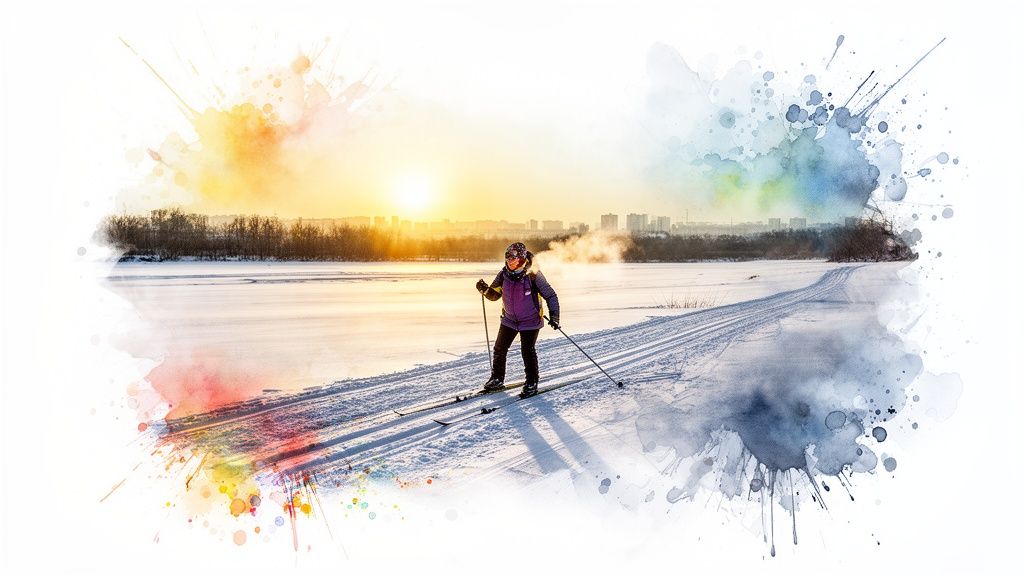
- Embrace the Snow: Trails in places like Gold Bar Park and the Victoria Golf Course are expertly groomed for cross-country skiing. It’s a fantastic full-body workout that lets you soak up that precious winter sun.
- Find Your Ice: From the freezeway in Victoria Park to the local rink in neighbourhoods like Windermere or Crestwood, skating is a classic Edmonton pastime. Festivals like Silver Skate turn a simple activity into a community celebration.
- Head Indoors (Strategically): On days when the wind chill is just too much, city-run rec centres are your best friend. Places like the Kinsmen Sports Centre offer everything from indoor tracks to pools, providing a much-needed escape from the cold.
Fueling for the Freeze
What we eat plays a massive role in our winter wellness. This isn't about restrictive diets; it's about giving your body the nutrients it needs to support immunity and mood during the colder, darker months.
Think hearty, warming foods. Soups, stews, and roasted root vegetables aren't just comforting; they're also packed with the vitamins and minerals your immune system needs.
The other non-negotiable for us is Vitamin D. Because of our northern latitude, our bodies can't produce enough of it from sunlight between roughly October and April. This is a scientific fact. Supplementing is essential for most Edmontonians to support everything from bone health to mood regulation. It’s always best to chat with a healthcare provider to find the right dosage for you, but consider it a fundamental part of your winter wellness routine.
Ultimately, thriving through an Edmonton winter is about being proactive. It's about scheduling that ski with a friend, making that nourishing soup, and turning on that light therapy lamp. It’s about finding light and connection in the darkest days of the year.
Spring Awakening: Navigating the Melt
Ask anyone who’s lived here, and they’ll tell you: spring in Edmonton isn’t a gentle transition. It’s a season of hopeful chaos, a messy, unpredictable, and often frustrating melt. We call it the "mud season" for a reason. The sun finally has some real warmth, but the ground becomes a battlefield of shrinking snowbanks, stubborn ice patches, and an astonishing amount of mud. Navigating this season is all about patience and embracing the glorious mess.
This is especially true for our beloved river valley. After months as a snowy wonderland, it morphs into a network of slushy, muddy, and icy trails. Getting back out there requires a tactical approach—both to avoid injury and to preserve the pathways we all share.
Getting Back on the Trails Safely
Come April, the itch to hit the trails is a universal Edmontonian feeling. But jumping the gun can damage the pathways and your ankles. The key is to choose your route wisely. Paved multi-use trails, like those in Kinsmen Park or along Victoria Promenade, are almost always the first to clear up, offering a safe, stable surface.
If you're itching to get back to the dirt paths, look for trails with good sun exposure. South-facing slopes in places like Mill Creek Ravine often dry out weeks faster than the deeply shaded sections. This is also the perfect season for a good pair of waterproof trail shoes with an aggressive tread—they’re a game-changer for navigating that 'in-between' terrain.
Think of spring as the city’s collective exhale. We've been holding our breath through the cold, and now there’s a palpable sense of release. It's a time to shed the heavy layers, both physically and mentally, and re-align our energy with the promise of longer, brighter days ahead.
This season also invites a much-needed shift in our routines, starting right in the kitchen.
A Nutritional and Mental Reset
After a winter of heavy stews and roasted vegetables, our bodies often crave lighter, fresher foods. Spring is the perfect time for a nutritional reset. This isn't about some restrictive cleanse, but rather a gentle shift toward incorporating more greens and early seasonal produce as it starts to appear at markets like the one in Old Strathcona.
Making this shift helps support your energy levels and bolsters an immune system that’s been working hard all winter. For more ideas on this, check out our guide on how to boost immunity naturally with simple, whole foods.
This sense of renewal extends to our mental well-being, too. Here are a few practical ways to do a mental 'spring clean':
- Reset Your Sleep Cycle: The rapidly increasing daylight can throw our circadian rhythms for a loop. Start re-establishing a consistent bedtime now to prepare your body for the extremely long days of summer.
- Reconnect with Your Community: As the weather improves, so do the opportunities for easy social connection. A simple walk with a friend through a neighbourhood like Glenora, watching the melt happen in real-time, can do wonders for shedding any lingering winter isolation.
- Declutter Your Space: The physical act of clearing out your home can have a powerful impact on your mental state. It creates a sense of calm and readiness for the vibrant, busy season to come.
Spring in Edmonton definitely tests our patience. But the reward is getting to watch the incredible transformation from a frozen landscape to a green and thriving city, right before our eyes.
Summer Vitality: Maximizing Our Short and Glorious Season

There’s an energy that hits Edmonton in June you just don’t find anywhere else. Our summers are intense, bright, and fleeting, and there's a collective, unspoken agreement not to waste a single second. With over 17 hours of daylight at the solstice, the city buzzes with an almost frantic energy. We pack our schedules, stay out late, and try to soak it all in before it’s gone.
This abundance of light is a gift, but it comes with a trade-off. The risk of burnout and seriously disrupted sleep is very real. The key to a great Edmonton summer isn't just about maximizing the fun; it's about harnessing that incredible energy in a sustainable way, so you don't crash and burn by August.
Protecting Your Sleep in the Land of the Midnight Sun
One of the biggest wellness challenges of an Edmonton summer is managing sleep when the sun doesn't set until after 10 p.m. Our internal clocks—our circadian rhythms—get seriously confused by the prolonged daylight, making it tough to wind down. This is a real, latitude-specific problem.
As someone who has managed countless outdoor summer events, I’ve seen firsthand how the long days can wear people down. It’s not just about feeling tired; chronic sleep disruption can impact everything from mood to immune response.
The single most effective tool for a good summer night's sleep in this city is a set of quality blackout blinds. It's a non-negotiable for creating an "artificial sunset" in your bedroom, signalling to your brain that it's time to rest even when the sky is still bright.
Beyond that, a consistent wind-down routine is crucial. This means dimming the lights, putting away screens, and creating a calm environment an hour or two before you plan to sleep. Sticking to a schedule, even on weekends, helps anchor your body's rhythm in a season of endless light.
Embracing Our Festival and Food Culture
Summer is when Edmonton truly comes alive, and our world-class festival season is a core part of our community's wellness. From the creative chaos of the Fringe in Old Strathcona to the magical vibes of Folk Fest downtown, these events are where we connect, recharge, and celebrate our city. They are our collective therapy after a long winter.
This is also the season of bounty. Our short but intense growing season produces some of the most incredible food you'll ever taste. Hitting up a local farmers' market, like the one on 104th Street or in Callingwood, is a weekly ritual for many of us.
Here’s how to make the most of the season's harvest:
- Keep It Cool: Focus on simple, no-cook or low-cook meals to avoid turning on the oven during a heatwave. Think big salads with fresh berries, grilled veggies, and simple proteins.
- Hydration is Key: Our summer heat is often a very dry heat. Keep a water bottle with you everywhere, and infuse it with local mint, cucumbers, or saskatoons for a refreshing twist.
- Get Out There: Grab your market haul and have a picnic. The river valley is our city's backyard, offering endless spots. For a deeper dive, this guide to the river valley Edmonton trails is perfect for planning a post-dinner stroll or a weekend adventure.
Summer vitality in Edmonton is about finding a balance. It's about saying yes to that late-night patio visit or that extra Fringe show, while also fiercely protecting the rest and nourishment your body needs to keep going. We know this season is a gift, and with a little intention, we can enjoy every last sun-drenched moment.
The Autumn Reset: Preparing for the Inevitable Winter
Fall in Edmonton is our collective deep breath before the plunge. The days get noticeably shorter, the air turns crisp, and the river valley puts on a stunning, but fleeting, show of gold and orange. This season isn't just a countdown to winter; it's a crucial window for a proactive reset, preparing our bodies, minds, and homes for the cold and dark that we know is coming.
This is the time to mindfully shift our routines, not just react when the first flakes fly. We’ve spent months living outside, and the transition indoors can be jarring if we don’t approach it with intention. It's about getting grounded, nourished, and mentally fortified for the marathon ahead.
Shifting Your Movement and Environment
As the temperature drops, that evening run through Strathcona or a bike ride in Terwillegar Park loses its appeal. The key is to find indoor alternatives you genuinely enjoy before the snow flies, so you aren't left with that "what now?" feeling in November.
This could mean:
- Re-familiarizing yourself with a local rec centre: Explore the indoor track at a place like The Meadows or Clareview.
- Trying a new class: This is the perfect time to finally sign up for that yoga or spin class you were curious about all summer.
- Setting up a home workout space: Even a small corner dedicated to movement can make a huge difference on a frigid morning.
Just as we shift our activities, we need to shift our environment. Creating a cozy, inviting home space—a sanctuary, really—is a powerful tool against the winter blues. Think warm lighting, comfortable textiles, and decluttering to create a sense of calm before we start spending a lot more time inside.
In my event experience, I've seen how powerful atmosphere can be. The same principle applies at home. When your space feels like a refuge rather than a cage, you're better equipped to handle the psychological weight of a long winter. It's about creating intentional comfort.
Nourishing for the Season Ahead
Our cravings naturally shift in the fall for a good reason. After a summer of salads and grilled foods, our bodies start asking for heartier, warming meals. This isn't a weakness; it's an intuitive response to the changing Edmonton Alberta climate. Leaning into this with nutrient-dense choices is one of the best ways to support your immune system.
Think about incorporating:
- Warming spices: Ginger, cinnamon, and turmeric not only add flavour but also have anti-inflammatory properties.
- Root vegetables: Squash, sweet potatoes, and carrots are abundant right now and packed with vitamins.
- Hearty soups and stews: These are easy to make in big batches and provide comforting, sustained energy.
Fortifying Your Mental Health
Perhaps the most critical part of the autumn reset is reinforcing our mental health habits. The rapid decrease in daylight can be a real shock to the system, making this the ideal time to get serious about sleep hygiene again.
Re-establishing a consistent bedtime and wake-up time now helps regulate your circadian rhythm, which is your first line of defence against the winter blues and the more serious impacts of Seasonal Affective Disorder (SAD). By entering the darker months with a solid sleep foundation and a well-nourished body, we set ourselves up not just to survive the winter, but to find the peace and resilience within it.
Living With Wind, Smoke, and Ice

The temperature on your phone app only ever tells part of the story here. As any Edmontonian knows, our climate throws more at us than just numbers. We live with a wind that can cut through your best parka, ice that turns a simple walk to the mailbox into a treacherous expedition, and a wildfire smoke season that is becoming an unfortunate new normal.
These elements aren't minor inconveniences; they directly shape our health, our safety, and our daily routines. Learning to navigate them is a core part of living well in this city. It’s about understanding the real risks and having a practical plan.
The Truth About Wind Chill and Ice
Wind chill isn’t just a feeling—it’s a serious measure of how quickly your body loses heat. A calm -20°C day can be beautiful, but add a strong wind, and the risk of frostbite skyrockets. This is why layering isn't a fashion choice; it's a critical safety strategy. A moisture-wicking base layer, an insulating mid-layer, and a windproof outer shell are our essential winter armour.
Then there’s the ice. A sudden melt followed by a deep freeze can coat every sidewalk in a sheer, invisible layer of danger. Fall prevention is a real concern. Investing in a good pair of ice grips or cleats for your boots can be the difference between a pleasant winter walk and a trip to the emergency room. It's a small, practical thing that makes a huge difference.
Navigating the Haze of Smoke Season
Wildfire smoke has become an unavoidable part of our late spring and summer. The hazy skies and the smell of smoke are cues that we need to shift our routines to protect our respiratory health. Getting familiar with the Air Quality Health Index (AQHI) is the first, most important step.
The AQHI is a simple scale from 1-10+ that helps us understand the immediate health risk. Here’s a simple way to use it:
- 1-3 (Low Risk): Business as usual. It’s a great day for that run in the river valley.
- 4-6 (Moderate Risk): If you have asthma or other respiratory issues, consider scaling back strenuous outdoor activities.
- 7+ (High Risk): Everyone should reduce or reschedule strenuous outdoor plans. This is the time to move your workout indoors.
When the AQHI is high, your indoor air becomes a safe haven. Closing your windows and running a high-quality air purifier with a HEPA filter can make a massive difference in how you feel. For anyone looking to create a healthier indoor environment, our guide on how to improve indoor air quality offers practical, local tips.
Taking these small, proactive steps allows us to maintain our well-being even when the world outside is less than ideal.
An Edmontonian's Wellness FAQ
We get a lot of questions about how to stay well in our city's unique climate. The extremes can feel intimidating, but thriving here is entirely possible once you know how to work with the seasons instead of fighting them. Here are some straightforward answers to the questions we hear most often, based on years of living it.
Is Taking Vitamin D in Winter Really Necessary Here?
Yes. For most of us, it's non-negotiable. Because Edmonton sits at a northern latitude of 53.5°N, the sun's angle is simply too low from about October to April for our bodies to synthesize its own Vitamin D. This is a scientific reality of our location, true even on those brilliant, sunny winter days.
Supplementing is essential for supporting everything from immune function to mood regulation. It's always best to chat with your doctor or pharmacist to find the right dose for you, but you should absolutely consider it a fundamental part of your winter wellness kit.
What's the Best Way to Stay Active When It's Below -20°C?
Honestly, the "best" way is whatever you'll actually do consistently. It's about having options so moving your body never feels like a punishment.
Plenty of Edmontonians fully embrace the cold—the key is just dressing in smart, breathable layers.
- Cross-country skiing: Our groomed trails in places like Gold Bar Park offer a fantastic full-body workout.
- Skating: From the scenic Victoria Park Oval to your local community rink, skating is a classic for a reason.
- Walking: A brisk walk through a neighbourhood like Strathcona on a crisp, sunny -15°C day can feel surprisingly incredible.
And for those truly frigid days when the wind bites? Think beyond the gym. Mall walking at West Edmonton Mall is popular for a reason—it’s warm, safe, and accessible. Our city's recreation centres also have fantastic indoor tracks and pools. The goal isn't heroism; it's just consistent movement.
It's less about forcing a specific workout and more about building a menu of choices. Having a go-to indoor plan and an outdoor plan means the weather never becomes a valid excuse.
How Do You Handle the Endless Daylight in Summer?
It’s a genuine challenge to our sleep cycles. The single most effective tool you can own is a set of high-quality blackout curtains. They are a complete game-changer for summer sleep in this city, and not an exaggeration.
Beyond that, you have to create your own "artificial sunset." An hour or two before you actually want to sleep, start dimming the lights, put away the screens, and do something calming. Sticking to a consistent bedtime, even when the sun is still high in the sky, is crucial for sending the right signals to your body that it's time to rest.
At Edmonton Wellness Guide, our whole philosophy is about working with our climate, not against it. We focus on practical, season-specific guidance to help you feel your best all year round. Learn more at Edmonton Wellness Guide.
Related Reading
- How to Stay Active During Edmonton’s Winter Smoke Season: A…
- Why Does Edmonton Summer Daylight Affect Sleep Schedules:…
- Can You Get Vitamin D in Edmonton During Winter Months: A Local’s…