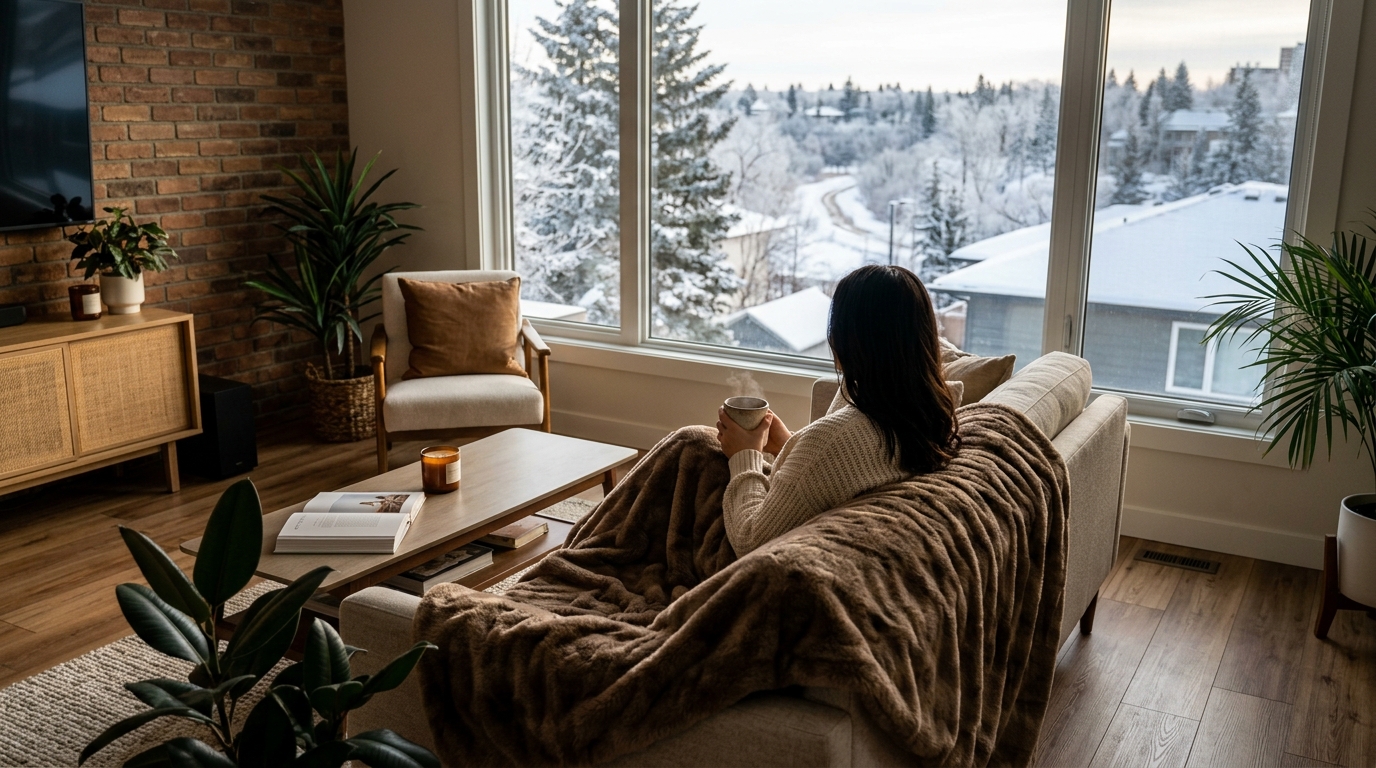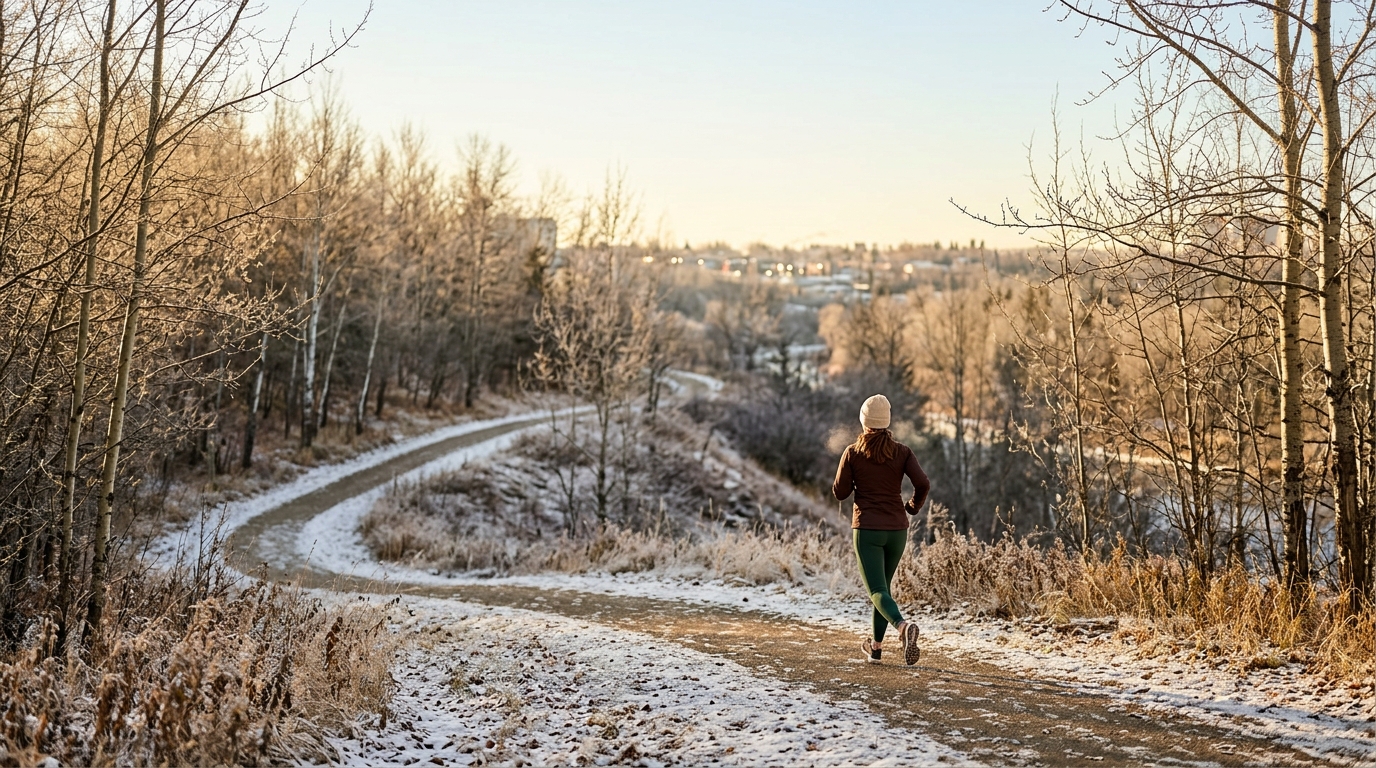
Edmonton throws temperature curveballs like no other city. One week you’re bundled up at -35°C waiting for the bus on Jasper Ave, the next you’re sweating through a chinook at +10°C. These wild swings hit your body hard. Most Edmontonians just suffer through the headaches, fatigue, and joint pain. But you can actually train your body to handle these transitions better.
Last reviewed:
Living here means dealing with 70-degree temperature swings in a single season. Sometimes in a single week. Your cardiovascular system, immune response, and energy levels all take a beating when the mercury bounces around. The good news? Simple preparation strategies can help your body adapt faster and suffer less.
Understanding Edmonton’s Temperature Patterns and Your Body’s Response
Why Edmonton’s Climate Hits Different
Edmonton sits in a unique weather pocket. We get Arctic air masses colliding with Pacific chinook winds. The result? Temperature whiplash that would make other Canadian cities jealous. Or terrified.
For more on this, see our edmonton fall weather guide.
In January, we might see -40°C with windchill on Monday and -5°C by Friday. Your blood vessels, sinuses, and joints feel every degree of that swing. Environment Canada’s cold weather health data shows that rapid temperature changes stress your cardiovascular system more than steady cold.
How To Prevent Seasonal Wellness Routine Breakdowns In Edmonton covers this in more detail.
The River Valley creates its own microclimate too. You can leave your Oliver apartment at -20°C and hit -25°C by the time you reach the Muttart Conservatory trails. That five-degree drop changes how your lungs process cold air.
Edmonton Spring Allergies Wellness Guide For Seasonal Relief covers this in more detail.
Physical Symptoms of Temperature Shock
Your body sends clear signals when it’s struggling with temperature changes:
How To Plan A Neighborhood Wellness Tour In Edmonton covers this in more detail.
- Joint stiffness and pain – barometric pressure changes make arthritis flare
- Headaches – blood vessel constriction and expansion trigger migraines
- Fatigue – your metabolism works overtime to regulate temperature
- Sinus pressure – dry winter air to humid chinook conditions = congestion
- Skin irritation – rapid humidity changes crack and dry your skin
- Mood changes – temperature swings affect serotonin production
These aren’t just inconveniences. They affect your work performance, workout consistency, and overall quality of life through our long winters.
Old Strathcona Spas And Wellness Centers Guide covers this in more detail.
The Science Behind Temperature Adaptation
Your body has two main systems for handling temperature: immediate response and long-term adaptation. Immediate responses include shivering, sweating, and blood vessel changes. These kick in within minutes.
Long-term adaptation takes 10-14 days of consistent exposure. Your body increases blood plasma volume, improves sweat efficiency, and adjusts metabolic rate. But Edmonton’s yo-yo temperatures don’t give you 14 steady days of anything.
For more on this, see our edmonton summer daylight guide.
That’s why we need targeted strategies to help our bodies cope with constant change rather than steady adaptation.
Pre-Season Body Conditioning Strategies
Fall Prep for Winter’s Arrival
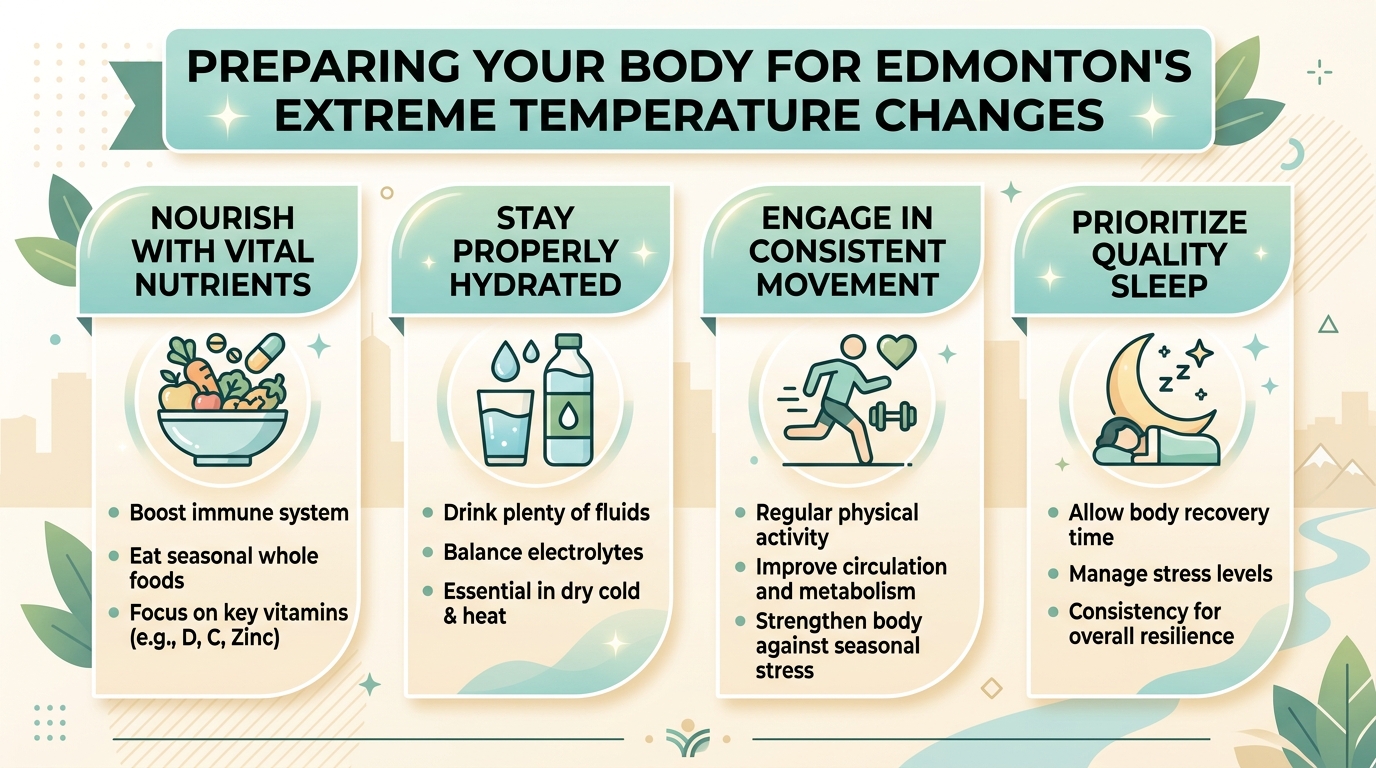
September is your window to prepare for the temperature nosedive ahead. Start with gradual cold exposure while you can still control it. Take your morning coffee on the deck. Walk to the 124 Street Farmers Market without a jacket when it’s 10°C. Your body needs these gentle challenges.
Cold showers work, but most people quit after three days. Try this instead: End your regular shower with 30 seconds of cool water. Not freezing. Just uncomfortable. Increase by 10 seconds each week until you hit two minutes. This trains your blood vessels to respond quickly to temperature drops.
Book infrared sauna sessions at Float + Wellness Spa in Sherwood Park or Kneipp Spa in West Edmonton Mall. The heat exposure followed by cool-down periods mimics temperature swings in a controlled environment. Aim for twice weekly sessions through October and November.
Spring Training for Summer Heat
March and April in Edmonton mean preparing for the opposite extreme. Your winter-adapted body needs to remember how to cool itself efficiently. Start with hot yoga classes at studios that keep their rooms properly heated.
Moksha Yoga Edmonton on 109 Street runs their hot classes at 38-40°C. That’s perfect for teaching your sweat response to kick in faster. Hit one class per week in March, two per week by April. Your body learns to start sweating earlier and more efficiently.
Add outdoor interval training as soon as the River Valley trails clear. Short bursts of effort in cool air train your cardiovascular system to handle temperature stress better than steady-state cardio. The stairs at Saskatchewan Drive work perfectly for this.
Year-Round Baseline Fitness
Fit bodies handle temperature changes better. Period. Your cardiovascular fitness directly impacts how well you regulate temperature. A strong heart pumps blood to your extremities more efficiently in cold weather. Better circulation means warmer hands and feet on those -30°C mornings.
Strength training matters too. Muscle tissue generates heat. More muscle mass means better cold tolerance. Hit the weight room at Evolve Strength downtown or GYMVMT locations across the city. Two strength sessions per week maintains the muscle you need for temperature regulation.
Don’t neglect flexibility work. Cold muscles get stiff and injury-prone. Regular stretching or yoga keeps your tissues pliable despite temperature swings. YEG Yoga studios offer specific classes for winter flexibility maintenance.
Nutrition and Hydration for Temperature Resilience
Winter Fuel Requirements
Your calorie needs jump 10-15% in extreme cold. Your body burns extra fuel just maintaining core temperature. But most Edmontonians actually eat worse in winter. We hibernate with comfort food instead of fueling properly.
Focus on warming foods that support metabolism. Think hearty soups with bone broth from DOSC on 109 Street. Load up on root vegetables from the Old Strathcona Farmers Market. These foods provide slow-burning energy for temperature regulation.
Increase your healthy fat intake by 20% from November through March. Omega-3s from wild salmon, walnuts, and ground flax help maintain skin barrier function. When the humidity drops to 20% in January, your skin needs all the help it can get.
Specific winter nutrition targets:
- Vitamin D: 2000-4000 IU daily (we get zero from sun October-March)
- Iron: Women need 18mg daily for energy and circulation
- B-complex: Supports energy metabolism in cold
- Zinc: 15mg daily for immune function
Summer Hydration Strategy
Edmonton’s dry summer heat sneaks up on you. We don’t have humidity warnings like Toronto. You can lose 2-3 liters of fluid on a hot day without noticing. By the time you feel thirsty, you’re already down 2% body weight in water.
Start hydrating the night before any summer outdoor activity. Drink 500ml of water with a pinch of sea salt before bed. Wake up and down another 500ml before coffee. This pre-loading strategy prevents the afternoon crash during Folk Music Festival or a River Valley bike ride.
During summer activities, aim for 150-250ml of fluid every 15-20 minutes. Plain water works for activities under 60 minutes. Add electrolytes for anything longer. Planet Organic locations carry quality electrolyte powders without the sugar bomb of commercial sports drinks.
Transition Season Nutrition
Spring and fall challenge your body differently. These seasons bring the wildest temperature swings. One day you need winter calories, the next you’re sweating like July. Your nutrition needs to be flexible.
Keep easy-to-digest foods on hand for rapid weather changes. When a chinook hits and the temperature jumps 20 degrees overnight, heavy foods make you feel worse. Stock up on:
- Light proteins: rotisserie chicken, hard-boiled eggs, Greek yogurt
- Quick carbs: bananas, rice cakes, dried fruit
- Hydrating foods: cucumbers, watermelon, oranges
- Warming spices: ginger, turmeric, cinnamon
Meal prep becomes important during transition seasons. When the temperature swings wildly, you won’t want to figure out dinner. Batch cook on Sundays and have options ready.
Clothing and Layering Systems for Rapid Adaptation
The Edmonton Layering Formula
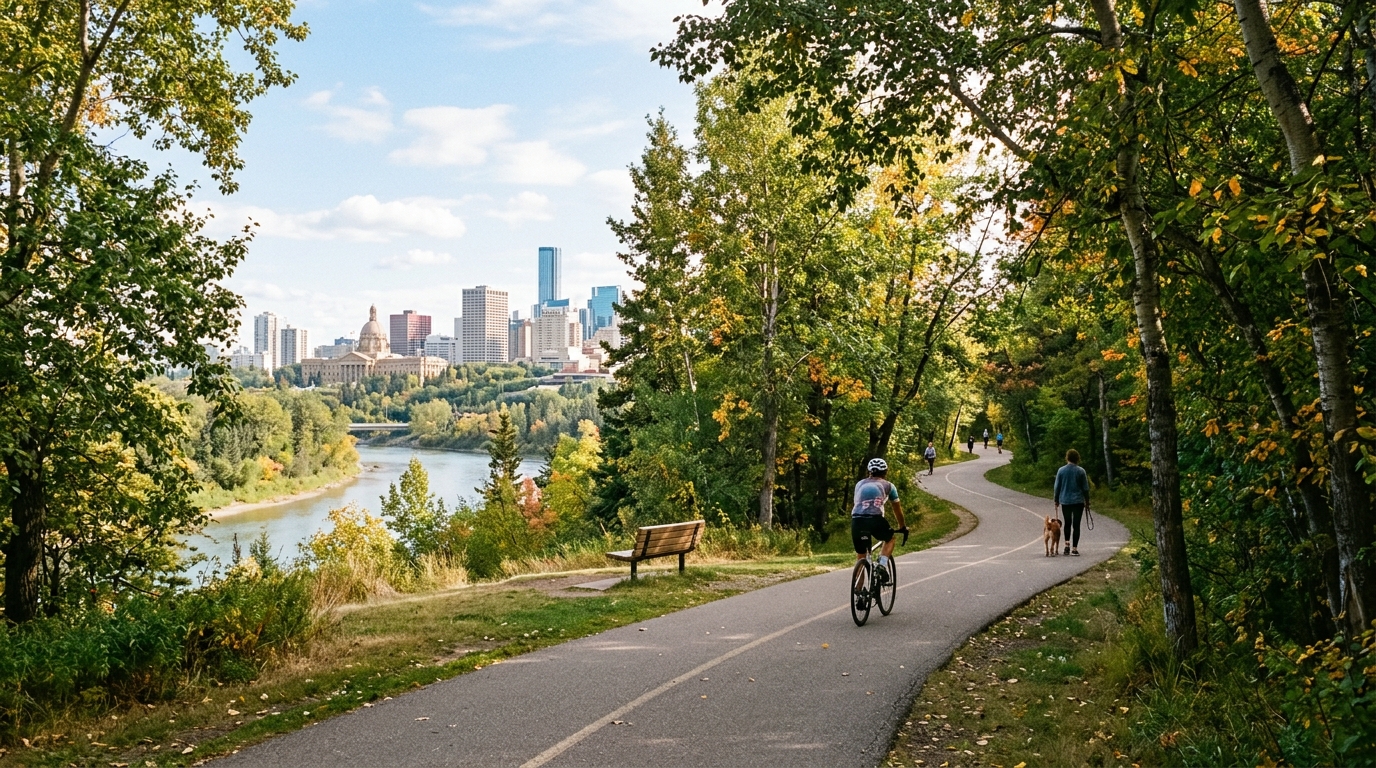
Forget what outdoor magazines tell you about layering. Edmonton requires its own system. You need clothes that work at -40°C and can adapt when a chinook brings it to -5°C by lunch.
Base layer is everything. Merino wool or quality synthetic that wicks moisture. Cotton kills in our climate. Mountain Equipment Co-op on Gateway Boulevard stocks proper base layers. Spend the money here. One good set beats five cheap ones.
Your mid-layer needs to breathe and compress. Down puffers trap too much heat when temperatures rise. Try synthetic insulation or fleece that you can stuff in a backpack. The goal is quick adjustment without going home to change.
Outer shell should handle wind and snow but breathe well. Edmonton’s dry snow doesn’t require full waterproofing. A good soft shell with pit zips for ventilation works better than that ski jacket collecting dust in your closet.
Strategic Clothing Placement
Keep gear staged strategically around the city. Your car needs a full clothing change including shoes. Your office desk drawer should have extra layers. Gym locker at the downtown YMCA? Stock it with transition clothes.
This isn’t paranoid. It’s practical. When the temperature drops 15 degrees while you’re at West Edmonton Mall, you’ll thank yourself for that emergency layer in the trunk.
Key pieces for your car kit:
- Insulated boots (rated to -40°C)
- Spare toque and mitts (not gloves)
- Emergency parka or blanket
- Extra base layer set
- Hand/foot warmers
Transition Accessories That Matter
Small accessories make huge differences in temperature adaptation. A good neck warmer beats a scarf every time. You can adjust coverage instantly without unwrapping layers. Campers Village stocks Buff brand tubes that work from -30°C to +20°C.
Invest in quality extremity protection. Your hands and feet feel temperature changes first. Mittens outperform gloves below -20°C. Layer thin liner gloves inside mittens for dexterity when needed. For feet, wool socks with synthetic liners prevent blisters and maintain warmth even when damp.
Don’t overlook your head. You lose 40% of body heat through an uncovered head. But wearing a winter toque during a chinook makes you sweat. Keep a lightweight merino beanie for mild days and a windproof option for those -40°C wind chill mornings.
Indoor Environment Optimization
Home Climate Control Strategies
Your home should be your temperature stability sanctuary. But most Edmonton houses fight you on this. Drafty windows, inconsistent heating, and dry air make indoor comfort challenging.
Set your thermostat for gradual changes, not instant comfort. When you come in from -30°C, resist cranking it to 25°C. Your body needs time to adjust. Keep indoor temps at 20-21°C in winter, 23-24°C in summer. This smaller indoor-outdoor differential reduces shock.
Humidity control changes everything. Edmonton winters can drop indoor humidity below 20%. Your sinuses hate this. Alberta Health Services recommends maintaining 30-50% humidity for respiratory health. A good humidifier costs $150-300 but saves you from months of sinus infections and dry skin.
Create temperature transition zones in your home. Your mudroom or entrance should be cooler than living spaces. This gives your body a adjustment period between outdoor and indoor temperatures. If you don’t have a mudroom, keep your entrance area 3-5 degrees cooler than the rest of your home.
Workplace Temperature Management
Office buildings in Edmonton are notorious for temperature extremes. Freezing in summer from AC, roasting in winter from overactive heating. You need personal climate control strategies.
For more on this, see our summer winter running guide.
Keep a desk fan and small heater at work. Yes, both. When the building management can’t figure out reasonable temperatures, take control. A ceramic heater under your desk and a USB fan for your workspace let you create your own microclimate.
Dress in removable layers even indoors. A light cardigan or zip-up hoodie at your desk lets you adjust without changing clothes. Keep slippers or indoor shoes in your desk drawer. Cold feet make your whole body feel cold, especially on those concrete downtown office floors.
Sleep Environment Optimization
Quality sleep helps your body handle temperature stress better. But sleeping well during temperature swings takes planning. Your bedroom should stay cooler than the rest of your house – aim for 16-18°C year-round.
Invest in temperature-regulating bedding. Sleep Country locations across Edmonton carry cooling mattress toppers and moisture-wicking sheets. These help when chinook conditions make your usual winter bedding too warm.
Use a white noise machine or fan year-round. The consistent sound masks outdoor noise, but the air circulation also helps regulate temperature. Position it to create gentle air movement without direct breeze on your body.
Exercise and Movement Strategies
Cold Weather Movement Prep
Exercising in Edmonton’s cold requires special preparation. Your muscles need 50% longer to warm up when it’s below -20°C. Skip this and risk injury that sidelines you all winter.
Start warming up indoors. Five minutes of dynamic stretching in your living room before heading out for a winter run. Focus on leg swings, arm circles, and gentle twisting. Get your heart rate slightly improved before facing the cold.
The River Valley stairs become treacherous in winter, but they’re still the best workout in the city. Hit them during midday when temperatures peak. Start with one set and build gradually. Your lungs need time to adapt to processing cold air during intense exercise.
Indoor alternatives matter when it’s genuinely dangerous outside. City of Edmonton rec centers offer track running when it’s below -25°C. The Kinsmen Sports Centre has the best indoor track – less crowded than the bigger facilities. Annual pass pays for itself by February.
Heat Adaptation Workouts
Preparing for summer heat starts in late spring. You can’t wait until July to start heat training. Your body needs 2-3 weeks to develop efficient cooling mechanisms.
Hot yoga serves double duty – flexibility and heat adaptation. Hot Yoga Wellness on Whyte Ave keeps their studio at proper hot yoga temperatures. Start with one class per week in May, build to 2-3 by June. Your sweat response improves dramatically.
Add outdoor workouts as temperatures climb. Early morning River Valley runs when it’s 15-20°C train your body for hotter afternoons. Start with 20 minutes and add 5 minutes weekly. By July, you’ll handle Folk Fest heat like a champ.
Don’t forget recovery. Heat stress accumulates faster than cold stress. Plan easy days after intense hot weather workouts. Your body needs time to adapt between sessions.
Transition Season Training
Spring and fall offer the best training weather but the most unpredictable conditions. Use these seasons to build your overall temperature resilience. Mix indoor and outdoor workouts based on daily conditions, not a rigid schedule.
Keep workout clothes for multiple temperature ranges in your gym bag. What works at 6am might be wrong by your lunch workout. Lululemon stores stock technical fabrics that work across temperature ranges – worth the investment for transition seasons.
Focus on workout timing during transition seasons. Early morning tends to be coldest, mid-afternoon warmest. Plan intense workouts for stable temperature times. Save flexibility work for when temperatures swing – your body handles gentle movement better during weather changes.
Recovery and Wellness Support Systems
Sauna and Cold Therapy Benefits
Regular sauna use trains your body’s temperature regulation systems. The heat stress followed by cooling mimics Edmonton’s temperature swings in a controlled way. Nordic cultures figured this out centuries ago.
Kneipp Spa at West Edmonton Mall offers authentic hot-cold therapy. Their protocol involves 15 minutes in the sauna followed by cold plunge or shower. Do this twice weekly and watch your temperature resilience improve dramatically. The spa scene in Old Strathcona also offers several options for contrast therapy.
Can’t afford regular spa visits? Create your own protocol. Hit the sauna at any city rec center, then take a cold shower. Start with 10 minutes heat, 30 seconds cold. Build to 20 minutes heat, 2 minutes cold over several weeks.
Massage and Bodywork for Climate Stress
Temperature changes create physical tension. Your muscles contract in cold, blood vessels constrict, joints stiffen. Regular bodywork helps your body release this accumulated stress.
Elements Physical Therapy & Wellness clinics understand Edmonton-specific issues. They see the pattern – neck and shoulder tension from hunching against cold wind, lower back pain from shoveling, joint stiffness from barometric pressure changes.
Book monthly maintenance massage during transition seasons. Spring and fall tax your body more than stable winter or summer. A skilled RMT can release tension patterns before they become chronic pain.
Consider specialized treatments during extreme weather. Hot stone massage in winter warms deep tissue. Cooling treatments with peppermint or menthol help in summer heat. Many spas adjust their treatment menus seasonally – take advantage.
Sleep Recovery Optimization
Poor sleep makes temperature adaptation harder. When you’re exhausted, your body can’t regulate temperature efficiently. Edmonton’s extreme seasons already challenge sleep quality – you need active strategies.
Create a consistent pre-bed cooling routine in summer. Lukewarm shower 60-90 minutes before bed lowers core temperature. Keep a fan running all night for air circulation. Silk Road Aromatherapy on 124 Street carries cooling pillow sprays with peppermint and eucalyptus.
Winter requires the opposite approach. Warm bath with Epsom salts before bed raises then drops body temperature, triggering sleepiness. Keep bedroom cooler but use adequate bedding. Your body needs to thermoregulate during sleep for proper recovery.
Track your sleep quality during weather transitions. Many Edmontonians sleep poorly during chinooks without realizing why. Apps or wearables help identify patterns. When you know a weather change is coming, adjust your sleep setup proactively.
Sources & References
Related Reading
- Health and Wellness in Edmonton: A Real-World Guide
- Why Does Edmonton Summer Daylight Affect Sleep Schedules:…
- Edmonton Spring Allergies Wellness Guide: Natural Relief for…
Frequently Asked Questions
How long does it take to adapt to Edmonton’s temperature changes?
Full adaptation to steady temperatures takes 10-14 days, but Edmonton rarely gives you steady conditions. Most people notice improved tolerance after 3-4 weeks of consistent exposure and preparation strategies. Using contrast therapy at facilities like Kneipp Spa can speed this process to 2-3 weeks with twice-weekly sessions.
What supplements help with temperature adaptation?
Vitamin D (2000-4000 IU daily) is important during our dark winters. Iron supports circulation and energy in cold weather. Omega-3s (2-3g daily) help maintain skin barrier function. Planet Organic on Jasper Ave carries quality brands that actually absorb properly.
Should I exercise outdoors when it’s below -25°C?
Most health professionals recommend moving indoors below -25°C, especially with windchill. The Kinsmen Sports Centre and Commonwealth Recreation Centre have excellent indoor tracks. If you must exercise outside, limit exposure to 20-30 minutes and cover all skin to prevent frostbite.
How do I handle chinook headaches?
Chinook headaches result from rapid barometric pressure changes. Stay hydrated, maintain consistent indoor temperatures, and consider preventive massage therapy. Elements Physical Therapy locations offer specific treatment for barometric pressure headaches. Some people find relief with consistent sauna use during chinook season.
What’s the best neighborhood for temperature-sensitive people?
Oliver and Downtown offer the most climate-controlled options with underground pedways and close amenities. Planning a wellness tour by neighborhood helps identify areas with easy access to indoor fitness and wellness facilities for year-round comfort.