
Every September, something strange happens in Edmonton gyms. The same people who skipped workouts all summer suddenly flood fitness studios. Orange Theory on Jasper Ave sees membership spikes. Yoga classes in Old Strathcona fill up. Even the River Valley trails get crowded again despite cooler temperatures.
Last reviewed:
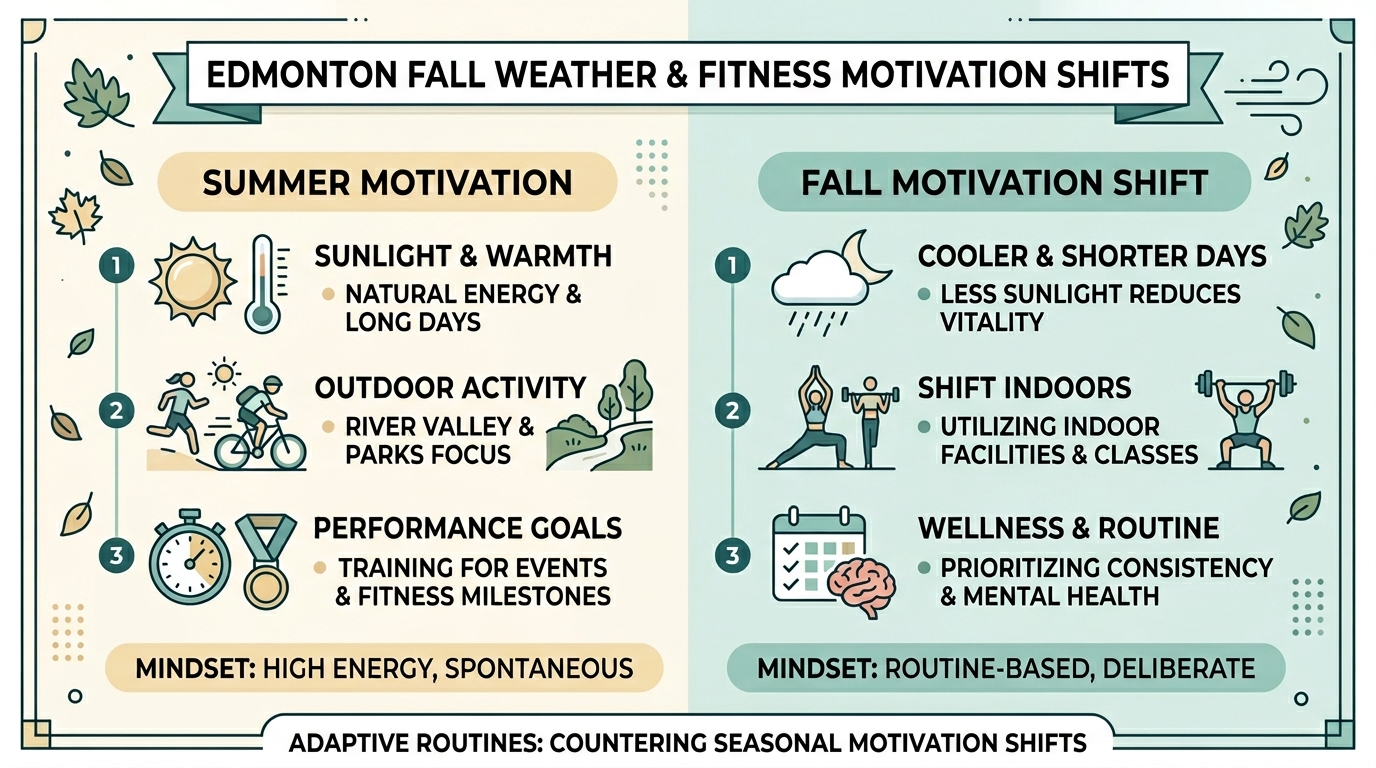
This isn’t just anecdotal. Fall weather triggers predictable fitness motivation shifts in northern cities like Edmonton. The combination of temperature drops, changing daylight, and psychological factors creates a perfect storm for renewed exercise habits. Understanding these patterns helps you ride the wave instead of fighting it.
After tracking local fitness trends for years, we’ve noticed distinct patterns in how Edmontonians approach exercise as seasons change. The shift starts around Labour Day and peaks in early October. By November, those who understand these natural rhythms have established routines that carry them through winter. Those who don’t often struggle until January’s resolution rush.
The Temperature Sweet Spot: Why 5-15°C Feels Perfect for Movement
Physiological Comfort Zone
Edmonton’s September and October temperatures hit a biological sweet spot for exercise. When daytime highs hover between 10-15°C, your body doesn’t work as hard to regulate temperature. Summer’s 28°C days force your cardiovascular system to prioritize cooling over performance. Winter’s -20°C demands extra energy just to stay warm.
How To Prevent Seasonal Wellness Routine Breakdowns In Edmonton covers this in more detail.
Fall temperatures match what exercise physiologists identify as optimal for endurance activities. Your core temperature rises naturally during exercise. Cool air helps dissipate heat without the shock of winter cold. This explains why River Valley runners report better times in October than July.
Edmonton Spring Allergies Wellness Guide For Seasonal Relief covers this in more detail.
Local running coach Sarah Chen from Mill Creek Ravine Running Club tracks member performance across seasons. “We consistently see personal records in fall. The temperature is part of it, but there’s more happening psychologically too.”
Outdoor Fitness Classes Edmonton Summer covers this in more detail.
Humidity and Breathing Patterns
Edmonton’s fall air carries less humidity than summer. Dry air feels easier to breathe during cardio activities. The absence of smoke from forest fires also helps. After a summer of air quality warnings, clear September skies invite deeper breathing.
How To Plan A Neighborhood Wellness Tour In Edmonton covers this in more detail.
CrossFit Kingsway reports members completing workouts 15-20% faster in fall compared to humid July sessions. The combination of comfortable temperatures and clean air removes common exercise barriers. Your lungs work more efficiently. Your sweat evaporates properly. Everything feels easier.
Natural Cooling Without Extremes
Fall weather provides natural post-workout cooling without the shock of winter. You can walk from F45 Training in Windermere to your car without immediately freezing. This temperature gradient helps your body transition from exercise to rest more smoothly.
The moderate temperatures also mean less gear hassle. No need for multiple layers like winter. No excessive sweating like summer. Just throw on a light jacket over workout clothes. This simplicity removes friction from exercise routines.
Daylight Changes and Circadian Rhythm Shifts
The September Light Signal
Edmonton loses nearly 4 minutes of daylight each September day. This rapid change triggers deep biological responses. Your circadian rhythm notices. Alberta Health Services research shows that decreasing daylight affects melatonin production, sleep patterns, and energy levels.
Counter-intuitively, this light reduction can boost morning exercise motivation. As sunrise shifts later, many people naturally wake earlier relative to dawn. That 6 AM workout class at Orangetheory suddenly aligns better with your body clock. You’re not fighting pre-dawn darkness like summer’s 4:30 AM sunrise.
The quality of fall light also differs. Lower sun angles create different wavelengths than summer’s overhead rays. These wavelengths influence serotonin production differently, affecting mood and energy patterns throughout the day.
Evening Exercise Windows
Fall’s earlier sunsets create urgency around evening workouts. When darkness arrives by 7:30 PM instead of 10 PM, people feel pressure to exercise immediately after work. This constraint actually helps motivation. Limited options force decisions.
Studios along 124 Street report their 5:30 PM classes filling faster in September than any summer month. People know they need to move before darkness falls. Summer’s endless evenings paradoxically enable procrastination. Fall’s deadline drives action.
Biological Programming for Activity
Humans evolved with seasonal activity patterns. Fall traditionally meant harvest time – intense physical work before winter. This programming remains in our biology. Edmonton fall weather triggers fitness motivation shifts partly because our bodies expect increased activity during this season.
Modern life doesn’t require harvest labor, but the biological drive remains. Channel it into structured exercise instead of fighting it. Your body wants to move more in fall. Listen to that signal.
Psychological Factors: Fresh Start Effect and Social Momentum
September Psychology and Academic Calendars
Edmonton’s connection to academic calendars runs deep with University of Alberta, MacEwan University, and NAIT all starting fall terms. Even adults without school connections feel September’s fresh start energy. This temporal landmark effect makes behavior change feel more natural.
Psychologists identify three key times for fresh starts: New Year, birthdays, and September. In university cities like Edmonton, September often surpasses January for behavior change success. The back-to-school mindset affects everyone, creating collective momentum for new routines.
Fitness studios capitalize on this timing. Pure Yoga in Oliver offers September membership specials. GoodLife Fitness locations across the city run “back to fitness” campaigns. They understand the psychological window opens widest in early fall.
Social Proof and Herd Behavior
When your coworkers start talking about their new spin class, you pay attention. Fall fitness momentum builds through social networks. One person starts, tells friends, who tell friends. By October, missing out feels uncomfortable.
This social proof effect intensifies in Edmonton’s close-knit neighborhoods. Whyte Ave runners recognize each other. Sherwood Park moms coordinate gym schedules. The visible increase in fitness activity creates pressure and permission simultaneously. You see others prioritizing exercise, making your own efforts feel normal rather than exceptional.
Preemptive Winter Planning
Edmontonians know winter is coming. This knowledge drives fall fitness urgency. People understand that establishing routines before snow flies increases winter success rates. Why Edmonton fall weather triggers fitness motivation shifts often comes down to winter preparation anxiety.
Smart fitness planning means starting indoor routines while outdoor options remain. You can still run the River Valley trails in October while testing different gym classes. By the time snow sticks, you’ve found your winter fitness home. Those who wait until January face icy sidewalks and crowded gyms simultaneously.
Seasonal Affective Patterns and Exercise as Medicine

Early SAD Prevention
Seasonal Affective Disorder affects up to 15% of Albertans according to Health Canada estimates. Symptoms often begin in fall as daylight decreases. Exercise provides powerful prevention, but timing matters.
Starting exercise routines in September or October, before full SAD symptoms develop, proves more effective than waiting until winter depression sets in. Movement boosts serotonin naturally. Regular exercise can match antidepressant effectiveness for mild to moderate seasonal depression.
Mental health professionals at the Grey Nuns Community Hospital consistently recommend fall exercise programs for SAD-prone patients. Building habits while motivation remains high creates protective routines for darker months ahead.
Endorphin Banking
Think of fall exercise as endorphin banking for winter. Each workout builds resilience reserves. The mood benefits compound over time. By maintaining consistent exercise through fall, you enter winter with higher baseline mood and energy.
Hot yoga studios like Moksha Yoga Edmonton see enrollment spikes from people specifically seeking mood management. The combination of heat, movement, and meditation provides multi-layered mental health support. Starting these practices in fall, when motivation comes easier, creates sustainable winter wellness strategies.
Community Connection Benefits
Group fitness in fall serves double duty: exercise and social connection before winter isolation. Edmonton winters can feel long and lonely. Building fitness friendships in September provides social support through dark months.
November Project Edmonton demonstrates this perfectly. Their free outdoor workouts continue year-round, but September sees the biggest new member influx. People join for fitness but stay for community. These connections matter more as daylight dwindles.
The Post-Summer Reset: Why Bodies Crave Structure
Summer Chaos Recovery
Edmonton summers pack intense activity into short months. Between Folk Music Festival, K-Days, weekend lake trips, and patio seasons, routine disappears. By September, bodies crave predictability again. This natural desire for structure explains why Edmonton fall weather triggers fitness motivation shifts so reliably.
Summer’s irregular sleep schedules, festival food, and drinks take their toll. Fall offers recovery opportunity. Cooler weather reduces patio temptations. Earlier darkness encourages consistent bedtimes. These factors combine to make healthy routines feel appealing rather than restrictive.
Metabolic Shifts
Temperature changes trigger metabolic adaptations. As external temperatures drop, your body prepares for winter by slightly increasing base metabolic rate. This creates natural energy for movement. You literally have more fuel for exercise in fall.
Nutritionists at Save-On-Foods wellness centers report clients naturally gravitating toward warmer, protein-rich foods in fall. These dietary shifts support exercise recovery better than summer’s lighter fare. Your body knows what it needs seasonally.
Routine Anchoring
Fall schedules provide better routine anchors than summer. Kids return to school. Work projects resume normal pace. Social calendars stabilize. These external structures make consistent exercise timing easier.
Successful fitness habits need environmental support. Fall provides that naturally. The same 6 PM yoga class that competed with summer barbecues faces fewer conflicts in October. Reduced options paradoxically increase adherence.
Environmental Factors Unique to Edmonton

River Valley Transformation
Edmonton’s River Valley becomes magical in fall. The trail system changes into a corridor of gold and orange. Running or cycling through falling leaves provides sensory rewards summer can’t match. This natural beauty pulls people outdoors before winter locks down access.
Popular trails like Mill Creek Ravine and Whitemud Park see traffic surges in September and October. The combination of comfortable temperatures and stunning scenery creates perfect exercise conditions. Local photographers often combine trail runs with autumn photography, doubling their outdoor motivation.
The valley’s elevation changes feel easier in cool weather too. Climbing the Glenora stairs or Groat Road hill demands less cardiovascular stress at 12°C than 28°C. Natural interval training becomes more appealing when you’re not overheating.
Indoor Air Quality Advantages
After a summer of wildfire smoke, Edmonton’s fall air quality improves dramatically. Indoor fitness spaces also benefit. Gyms can open windows without letting in smoke or extreme heat. Fresh air circulation improves naturally.
This matters more than people realize. Poor air quality decreases exercise performance and enjoyment. When you can breathe freely again, workouts feel better. The contrast from smoke season makes fall fitness particularly appealing.
Festival Fitness Culture
Edmonton’s fall festival calendar includes numerous fitness events. The Edmonton Marathon, Grindstone Ultra Trail Race, and various charity runs cluster in September and October. These events create community momentum around movement.
Training for fall events provides structure through summer. Even casual participants feel the energy. Seeing runners throughout the city normalizes public exercise. The cultural acceptance peaks during event season, making personal fitness goals feel achievable.
Harnessing Natural Motivation: Practical Strategies
Timing Your Fitness Launch
Understanding why Edmonton fall weather triggers fitness motivation shifts helps you time new routines strategically. Start exploring options in early September when motivation runs highest. Visit different studios. Try various class times. Use natural momentum for experimentation.
Don’t wait for perfect conditions. Begin when you feel the first fall energy surge. This usually hits around Labour Day weekend but varies by individual. Trust your body’s signals over calendar dates.
Book commitments through November while September motivation remains strong. Prepaying for classes or training sessions creates accountability for when natural motivation dips. Use present enthusiasm to support future consistency.
Location Selection for Sustainability
Choose fitness locations considering winter accessibility. That beautiful Terwillegar Park trail might become inaccessible by December. Better to establish routines at places like:
- Studios with good parking (important for -30°C days)
- Gyms near LRT stations for transit access
- Neighborhood facilities you can walk to
- Places with covered drop-off zones
Consider joining facilities in areas you naturally frequent. A gym near your Whyte Ave office or Oliver apartment removes commute barriers. Convenience matters more in winter than summer.
Building Weather-Flexible Routines
Create exercise routines with built-in weather flexibility. Combine outdoor fall activities with indoor alternatives. When River Valley trails become icy, you’ll transition smoothly to treadmills or indoor tracks.
Many Edmonton fitness enthusiasts maintain dual memberships: outdoor running groups for fall and hot yoga for winter. This isn’t indecisive – it’s strategic. Different seasons require different approaches.
Start testing winter gear during fall outdoor workouts. October provides perfect conditions for finding the right layers, shoes, and accessories. By true winter, you’ll have systems dialed in.
Quick Reference: Edmonton Fall Fitness Calendar
| Time Period | Natural Motivation Level | Recommended Actions |
|---|---|---|
| Early September | Highest | Try new classes, experiment with schedules |
| Late September | High | Commit to regular schedule, prepay programs |
| Early October | Moderate-High | Establish indoor backup plans, test winter gear |
| Late October | Moderate | Focus on consistency, join accountability groups |
| November | Low-Moderate | Rely on established habits, add light therapy |
Understanding these patterns helps you ride natural waves rather than swimming against current. Fall fitness motivation isn’t random – it follows predictable patterns based on temperature, light, and psychology.
The key is starting before motivation peaks, then building systems to sustain through inevitable dips. Edmonton’s harsh winters demand preparation. Fall provides the perfect window for building resilient fitness habits.
Next September, when you feel that familiar exercise urge, you’ll understand why. More importantly, you’ll know how to channel it effectively. The same fall weather that triggers fitness motivation shifts can launch sustainable year-round wellness practices – if you time it right.
Sources & References
Related Reading
- Edmonton Spring Allergies Wellness Guide: Natural Relief for…
- How to Maximize River Valley Activities During Edmonton’s Short…
- Best Outdoor Fitness Classes Edmonton Summer: Where to Train in…
Frequently Asked Questions
When exactly does fall fitness motivation typically peak in Edmonton?
Most Edmontonians experience peak fall fitness motivation between September 10-25, coinciding with back-to-school energy and comfortable 10-15°C temperatures. Fitness studios like Orange Theory on Jasper Avenue report their highest new member registrations during this two-week window. Schedule your fitness exploration during this natural high to maximize success.
How can I maintain fall exercise momentum through Edmonton’s winter transition?
Book winter fitness commitments while September motivation runs high – prepay for January classes or hire a trainer through March. Preventing seasonal wellness routine breakdowns requires bridging the November motivation dip with accountability systems. Consider joining social fitness groups like November Project Edmonton that maintain energy through peer support.
Should I switch from outdoor to indoor exercise gradually or all at once in fall?
Gradual transition works better for most Edmonton fitness enthusiasts. Continue River Valley runs through October while adding one indoor class weekly at places like YEG Cycle in Old Strathcona. This overlap period helps you find indoor activities you actually enjoy before winter forces the switch, preventing the January gym-shopping scramble.
What temperature range makes fall Edmonton’s ideal outdoor exercise season?
The 5-15°C range offers optimal exercise conditions – cool enough to prevent overheating but warm enough to avoid extensive layering. Track temperatures at popular spots like Hawrelak Park or Mill Creek Ravine typically hit this sweet spot from mid-September through mid-October. Morning workouts might need light gloves, but afternoon sessions often need just basic athletic wear.
How do I know if my fall fitness surge is sustainable or just temporary enthusiasm?
Sustainable fall fitness focuses on routine-building rather than intensity. If you’re gradually increasing consistency at accessible locations like neighborhood studios or transitioning from summer outdoor classes to indoor alternatives, you’re building lasting habits. Temporary enthusiasm usually involves extreme commitments at inconvenient locations without considering winter logistics.