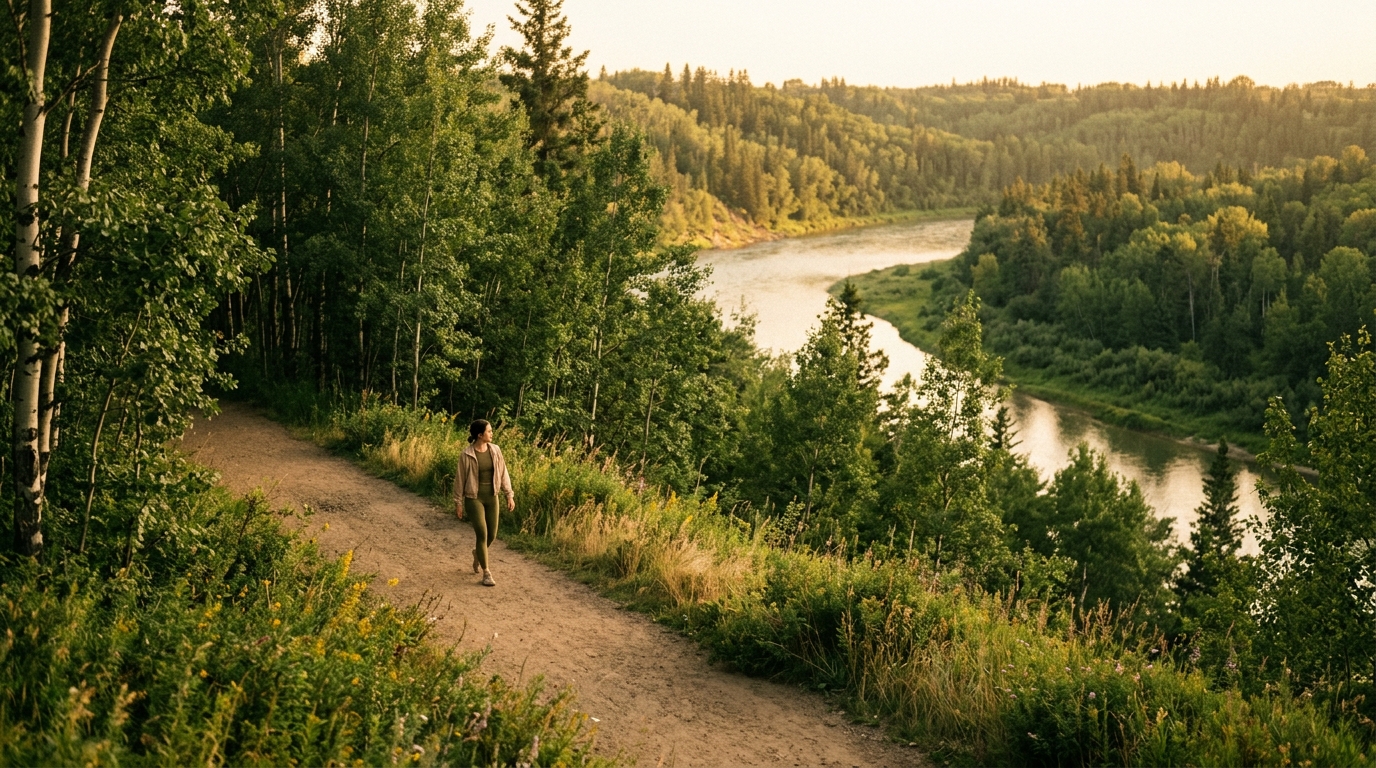
Edmonton’s summer feels like it’s over before it starts. You get maybe 12 weeks of reliable warm weather between June and August, and suddenly it’s September again. The River Valley — North America’s largest urban parkland — changes into prime outdoor territory during these precious months. But with 160 kilometers of trails and dozens of access points, most people stick to the same three spots and miss out on what makes our valley system special.
Last reviewed:
This guide breaks down exactly how to maximize River Valley activities during Edmonton’s short summer, from lesser-known trail entrances to timing your visits around crowds and weather patterns. We’ll cover the logistics that trip people up: parking, trail conditions after rain, and which activities work best at different times of day. Plus, we’ll tackle the reality of smoke season and how to pivot your outdoor plans when the air quality tanks.
Understanding Edmonton’s Summer Window for River Valley Activities
When Summer Actually Starts (and Ends) in the River Valley
Forget the calendar. Summer in Edmonton’s River Valley runs from the May long weekend through Labour Day, with the sweet spot hitting mid-June through mid-August. The trails dry out by late May, though shaded sections near Whitemud Creek stay muddy into June. By September, morning temperatures drop below 10°C and daylight shrinks fast.
For more on this, see our hiking trails near guide.
The City of Edmonton’s trail condition updates show that most paved paths clear of winter debris by May 15, while natural surface trails need another two weeks to firm up. Plan your first valley adventures for June 1 to avoid the disappointment of closed trails and soggy conditions.
Peak summer conditions run from June 20 to August 20. During this window, you get 17 hours of daylight, warm evenings until 10 PM, and (usually) minimal rain. The river water warms up enough for paddling by July, hitting 18-20°C by month’s end.
How To Prevent Seasonal Wellness Routine Breakdowns In Edmonton covers this in more detail.
Working Around Edmonton’s Weather Patterns
Summer weather follows predictable patterns in the valley. Morning fog sits in the river basin until 8 AM on humid days, especially near the Terwillegar footbridge and Gold Bar areas. Afternoon thunderstorms build between 3-6 PM about twice a week in July. Smart planning means morning activities before noon or evening sessions after 6 PM.
Does Edmontons Long Summer Daylight Improve Mental Wellness covers this in more detail.
The valley creates its own microclimate — it runs 2-3 degrees cooler than street level and holds humidity. Pack layers even on hot days. The temperature difference hits hardest in shaded ravines like Mill Creek and Whitemud, where it stays 5 degrees cooler.
Edmonton Spring Allergies Wellness Guide For Seasonal Relief covers this in more detail.
Wind patterns matter for cyclists and paddlers. Prevailing westerlies strengthen after 2 PM, making eastbound rides easier in the afternoon. Plan your routes accordingly — ride west in the morning, east after lunch.
The Smoke Season Reality Check
Wildfire smoke disrupts valley activities for 2-3 weeks most summers, typically hitting in late July or August. Alberta Health Services recommends avoiding outdoor exercise when the Air Quality Health Index exceeds 7. The valley traps smoke worse than higher elevations, so check readings specific to river level, not just general Edmonton forecasts.
Download the WeatherCAN app and set air quality alerts. Have backup plans ready: the Kinsmen Sports Centre offers indoor tracks when outdoor running becomes unhealthy. River Valley activities during Edmonton’s short summer require flexibility — some years you lose prime August weeks to smoke.
Essential River Valley Trail Systems and Access Points
Lesser-Known Access Points Worth the Drive
Skip the crowded Hawrelak Park entrance. These access points offer better parking and unique trail experiences:
- Buena Vista Park (Saskatchewan Drive at 142 Street): 20 parking spots, connects to single-track mountain bike trails and the quieter west section of river paths. No washrooms but rarely full.
- Oleskiw River Valley Park (Rabbit Hill Road): Massive parking lot, boat launch, and access to both paved and natural trails. Best sunrise spot in the valley.
- Highlands Golf Course entrance (112 Avenue at 63 Street): Free parking after 6 PM, direct access to riverside trails heading east toward Rundle Park.
- Fort Edmonton Footbridge (Fox Drive): Park at the Fort Edmonton lot and walk across. Connects to Wolf Willow trails without the Terwillegar crowds.
Transit access works best at Government Centre Station (connects to Louise McKinney Park) and University Station (short walk to Emily Murphy Park). The Valley Line LRT will add river valley access at Muttart and Quarters stops when it opens.
Trail Conditions and Seasonal Considerations
Paved trails handle rain better than natural surfaces. After summer thunderstorms, stick to the main spine along the river for 24 hours while side trails dry. The Victoria Park loop and Dawson Park paths drain fastest. Mill Creek Ravine stays muddy for days — avoid after rain unless you like slippery boardwalks.
Natural surface trails peak in late June through July when the dirt packs firm but stays dust-free. By August, popular sections like Terwillegar’s mountain bike trails turn dusty. Early morning rides beat the dust clouds kicked up by afternoon traffic.
River flooding affects low-lying trails most years. The section between Dawson Bridge and Capilano Bridge floods first, usually in late June during mountain snowmelt. Check the city’s trail closure map before heading out — detours add significant distance.
Matching Trails to Your Summer Goals
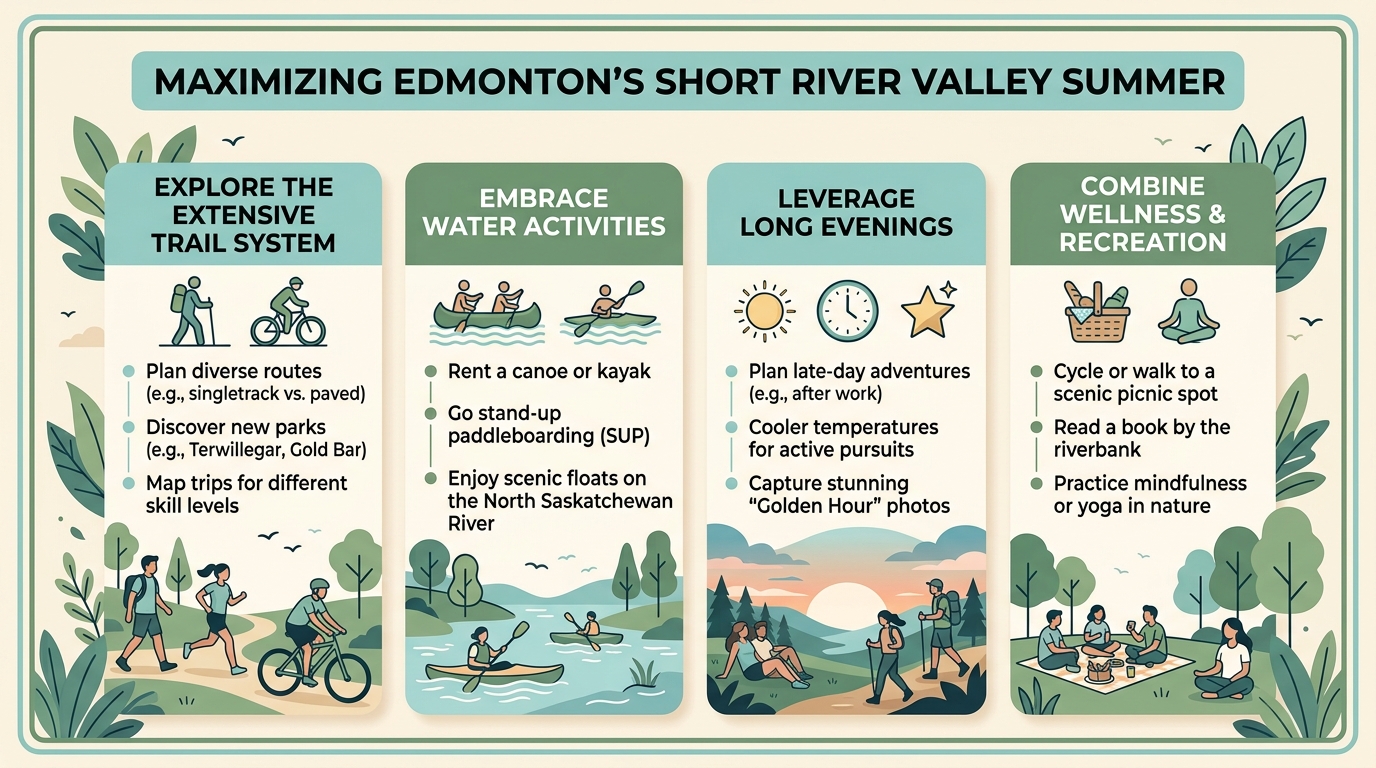
Different trail systems serve different purposes. For maximizing River Valley activities during Edmonton’s short summer, match your goals to the right terrain:
| Activity Goal | Best Trail System | Key Features | Parking/Access |
|---|---|---|---|
| Fast road cycling | River Valley Road | Closed to cars, 7km smooth pavement | Victoria Park or Groat Road |
| Trail running | Mill Creek Ravine | Shaded, varied terrain, water fountains | Muttart or Cloverdale |
| Family biking | Rundle Park to Hermitage | Flat, wide paths, playgrounds | Rundle Park lots |
| Mountain biking | Terwillegar Park | Technical singletrack, skill progression | Rabbit Hill Road lot |
| Walking/hiking | Wolf Willow to Fort Edmonton | Natural paths, river views, less crowded | Wolf Willow stairs |
Planning Your Summer River Valley Activities
Building a Weekly River Valley Routine
Consistency beats intensity when you’re working with a 12-week summer window. A sustainable routine might look like: Monday evening bike ride (90 minutes), Wednesday morning trail run (45 minutes), Saturday long adventure (3+ hours), plus one spontaneous midweek paddling or hiking session when weather cooperates.
Start early in June to build fitness before peak summer heat. The best running trails in Edmonton’s River Valley stay cooler before 8 AM. Evening activities work better for working folks — sunset at 10 PM means post-dinner rides stay light until late July.
Mix activities to prevent burnout and see different parts of the valley. Alternate between north and south side trails, paved and natural surfaces, solo and group activities. The River Valley becomes more enjoyable when you’re not grinding the same Hawrelak loop every visit.
Equipment and Gear for Edmonton Valley Conditions
Summer valley adventures need specific gear. Bug spray ranks essential from June through July — mosquitoes concentrate near water and shaded areas. DEET-based sprays work best, though picaridin offers a less greasy alternative. The worst bugs hit Fort Edmonton Park and Gold Bar areas after rain.
Hydration becomes critical on exposed sections like the LRT bridge and Government House Park hills. One water bottle won’t cut it for rides over an hour. Fill up at fountains in Hawrelak, Victoria Park, and Rundle Park. Natural trail systems lack water access — pack accordingly.
Essential summer valley gear checklist:
- Two water bottles or hydration pack (minimum 1L for 2+ hour activities)
- Bug spray and sunscreen (reapply after swimming)
- Small first aid kit with bandages and antihistamine
- Rain jacket — afternoon thunderstorms arrive fast
- Spare tube and pump for cyclists
- Bear bell for early morning Whitemud Ravine runs
- Phone with downloaded offline maps
Group Activities and Valley Events
Solo valley time has its place, but group activities add motivation and safety. The Edmonton Road and Trail Running Association hosts free Wednesday evening runs from various valley locations all summer. River Valley Cycle runs no-drop group rides Tuesday and Thursday evenings from Emily Murphy Park.
Major valley events concentrate in July and August. The Servus Edmonton Marathon takes over paths the last weekend in August. Folk Music Festival affects Gallagher Park area access for five days. Heritage Festival closes some Hawrelak trails. Plan around these or embrace the festival atmosphere — nothing beats a post-run snow cone at Heritage Festival.
Smaller weekly events offer consistent community: parkrun happens Saturday mornings at 9 AM in Victoria Park (free 5K timed run), SUP yoga launches from Rundle Park Tuesdays at 6 PM, and Mountain Equipment Co-op leads trail maintenance volunteer sessions monthly.
Water-Based River Valley Activities
Paddling the North Saskatchewan River
The river becomes paddleable by late June when water levels drop and temperatures rise above 15°C. Popular launch points include Rundle Park (easiest vehicle access), Terwillegar Park (quieter launch), and Devon’s Voyageur Park (for longer downstream trips). The current runs 4-6 km/hour, making upstream paddling a serious workout.
Rent equipment from Totem Outdoor Outfitters in Old Strathcona or Haskin Canoe at Rundle Park. Rentals run $40-60 for half-day canoe or kayak use. Stand-up paddleboards cost slightly more but offer a better workout. Book ahead for weekends — inventory sells out by noon on hot days.
Safety matters on the North Saskatchewan. The water stays cold all summer, hypothermia hits fast if you flip. Wear a properly fitted PFD (the city enforces this with $250 fines). Avoid paddling alone, especially as a beginner. The river contains deadheads and shallow sections — scout your route from shore first.
Swimming Spots and Water Safety
Official swimming happens at Accidental Beach near the old power plant. This sandy stretch fills with families on hot days, though no lifeguards patrol. Water quality varies — check the city’s E. coli monitoring data before swimming. Levels spike after heavy rain when storm sewers overflow.
Better swimming exists outside the city. Head to Wabamun Lake (45 minutes west) or Elk Island National Park’s Astotin Lake (45 minutes east) for cleaner water and actual beaches. The investment in driving time pays off with better water quality and proper facilities.
Never swim in the river outside designated areas. The current deceives — it’s stronger than it looks. Undertows form near bridge pilings. Every summer brings preventable drownings from people underestimating the river. Respect the North Saskatchewan’s power.
Fishing Opportunities in the Valley
The North Saskatchewan holds walleye, pike, and goldeye, with best fishing from shore at Gold Bar Park, Rundle Park, and below the Dawson Bridge. Alberta fishing licenses cost $28 annually for residents. Buy online or at Canadian Tire to avoid lineups.
Early morning and evening produce best results. Walleye bite on jigs tipped with minnows or soft plastics. Pike hit spoons and spinners cast near weed edges. Goldeye — an underrated sport fish — take small hooks with worms fished under a bobber.
Catch and release works best in the city stretch due to mercury advisories. Alberta Health advises limiting consumption of river fish, especially for pregnant women and children. For eating, head to stocked ponds like Hermitage or Rundle Park.
Timing Your Valley Visits for Maximum Enjoyment
Best Times to Avoid Crowds
Valley traffic follows predictable patterns. Weekday mornings before 7 AM offer empty trails and wildlife sightings. Lunch hours (11 AM-1 PM) bring office workers to central trails but leave outlying areas quiet. Evening rush starts at 5 PM and peaks by 6:30 PM on popular routes.
Weekends flip the pattern. Early Saturday mornings stay quiet until 9 AM when running groups and cyclists emerge. Sunday afternoons become family time — expect congestion at Hawrelak, Rundle, and Terwillegar parks. Long weekends magnify everything: arrive before 8 AM or after 7 PM for parking and trail space.
Weather drives crowds more than anything. First nice weekend after a rainy spell? The valley explodes with people making up for lost time. Conversely, the day after a hot weekend often stays empty as people recover indoors. Maximize River Valley activities during Edmonton’s short summer by zigging when others zag.
Seasonal Wildlife Patterns
Summer brings active wildlife to the valley. Beavers work most visibly at dusk near Gold Bar and Whitemud Creek. Coyotes hunt early morning and late evening — keep dogs leashed and close. Deer concentrate in Whitemud Ravine and the river valley between Terwillegar and Fort Edmonton.
Bird life peaks June through July. Great blue herons fish the shallows morning and evening. Pelicans — yes, pelicans in Alberta — gather on river sandbars during migration. Bald eagles nest near Hermitage and hunt year-round. Bring binoculars for best viewing.
Black bears occasionally wander into the valley, especially the Whitemud Ravine and river valley west of Anthony Henday. Make noise on narrow trails, especially early morning. If you see a bear, don’t run — back away slowly while facing the animal. Report sightings to 311.
Photography and Scenic Viewpoints
Golden hour photography in the valley happens twice given our long summer daylight. Morning golden hour runs 5:30-7 AM in June, perfect for mist rising off the river. Evening golden hour stretches from 8-10 PM, ideal for illuminating the downtown skyline from Ezio Faraone Park.
Best photo spots change with conditions. The Walterdale Bridge offers symmetrical architecture shots. Ezio Faraone Park gives the classic skyline-over-river view. The High Level Bridge provides dramatic perspectives looking east or west. For nature shots, the pond at Hermitage reflects morning light beautifully.
Skip the obvious viewpoints for hidden gems: the cliff edge trail above Concordia University, the river bend view from Dawson Park, or the tree-framed river vista from Gold Bar Park’s upper trails. Early morning fog changes ordinary spots into magical scenes.
Advanced Summer Valley Strategies
Multi-Activity Valley Days
Combine activities for full valley days. Park at Kinsmen Sports Centre, run the trails to Louise McKinney, grab coffee at the Riverfront Plaza, then bike back via a different route. Or paddle from Rundle to Dawson Park, lock the boat, trail run Gold Bar, then paddle back.
Popular combinations that work:
- Morning SUP at Rundle + afternoon mountain biking at Terwillegar
- Sunrise photography + breakfast picnic + leisurely bike ride
- Trail run + river float + patio lunch at Snow Valley
- Bike to farmer’s market + paddle rental + bike home with groceries
The key is staging gear properly. Invest in good locks for bikes and boats. Pack changes of clothes in waterproof bags. Scout parking that accommodates your full plan — nothing ruins a valley day like a parking ticket.
Valley Fitness Progression Through Summer
Build fitness systematically across the short season. June focuses on base building: easy rides and runs, getting reacquainted with trails. July adds intensity: hill repeats on Groat Road, tempo runs on River Valley Road, longer paddles against current.
August brings peak fitness challenges. The River Valley 100 (bike 100km of valley trails in one day) becomes achievable. Multi-hour trail runs through the entire ravine system test endurance. Dawn-to-dusk valley days combine every activity possible.
Track progress with Strava segments or simple time trials. The Walterdale to High Level bridge run, parking lot to parking lot at Mill Creek, or Terwillegar to Hawrelak bike times show fitness gains. Set personal challenges — visit every valley park, ride every trail, or paddle the entire city river section.
Preparing for Post-Summer Transitions
Smart valley users prepare for fall while enjoying summer. Preventing seasonal wellness routine breakdowns means planning the transition. Late August becomes critical: maintain fitness while acknowledging changing conditions.
Start carrying extra layers by mid-August. Morning temperatures drop fast after August 15. Invest in good lights for bikes — darkness creeps in by September. Consider joining a gym or fitness studio for rainy fall days while maintaining valley visits when weather allows.
Document your summer valley adventures. Photos, Strava data, and journal entries help during dark January days. Build connections with valley activity groups that continue through winter. The bonds formed during summer valley adventures sustain motivation through the cold months ahead.
Sources & References
Related Reading
- Summer vs Winter Running Routes in Edmonton: A Year-Round Comparison
- Why Edmonton Fall Weather Triggers Fitness Motivation Shifts:…
- Best Indoor Wellness Activities When Edmonton Air Quality Drops:…
Related Reading
Frequently Asked Questions
What are the best River Valley trails for beginners in Edmonton?
Start with the paved loop around Hawrelak Park — it’s flat, well-marked, and has washrooms plus water fountains. The Victoria Park loop offers similar ease with better skyline views. For dirt trails, try the wide paths through Gold Bar Park. All three have good parking and stay busy enough to feel safe while learning the valley layout.
Where can I rent bikes or paddleboards in the River Valley?
River Valley Adventure Co. operates from Rundle Park with SUPs, canoes, and kayaks from May through September. Revolution Cycle rents quality bikes from their 109 Street location, a short ride from river trails. The U of A Bike Library offers cheap rentals for students. Book ahead for summer weekends — gear disappears fast on hot days.
How do I check if River Valley trails are open after rain?
The City of Edmonton posts trail conditions on their website and the 311 app shows real-time closures. Natural surface trails close automatically after 5mm of rain. Paved paths stay open unless flooded. Rule of thumb: wait 24 hours after rain for dirt trails to dry, 48 hours for trails with wooden features.
What should I do if I encounter wildlife in the River Valley?
Most wildlife avoids humans. For coyotes, maintain eye contact and back away slowly — don’t run. Make noise to announce your presence on blind corners. If you see a bear (rare but possible), don’t approach for photos. Back away while facing the bear and report to 311. Keep dogs leashed always — off-leash dogs trigger most negative wildlife encounters.
Are there any guided tours or groups for River Valley activities?
River Valley Adventure Co. runs guided paddle tours Wednesday evenings and Saturday mornings. The John Janzen Nature Centre offers free guided walks focusing on ecology and wildlife. MEC hosts trail running clinics monthly. For cycling, ERTC (Edmonton Road and Trail Cycling) welcomes new riders to their Tuesday/Thursday group rides from Emily Murphy Park.