When wildfire smoke blankets Edmonton every summer, your outdoor yoga practice comes to an abrupt halt. The air quality index shoots into the red zone, and suddenly that riverside vinyasa class feels more like breathing through a campfire. But your practice doesn’t have to suffer just because the air outside does.
Last reviewed:
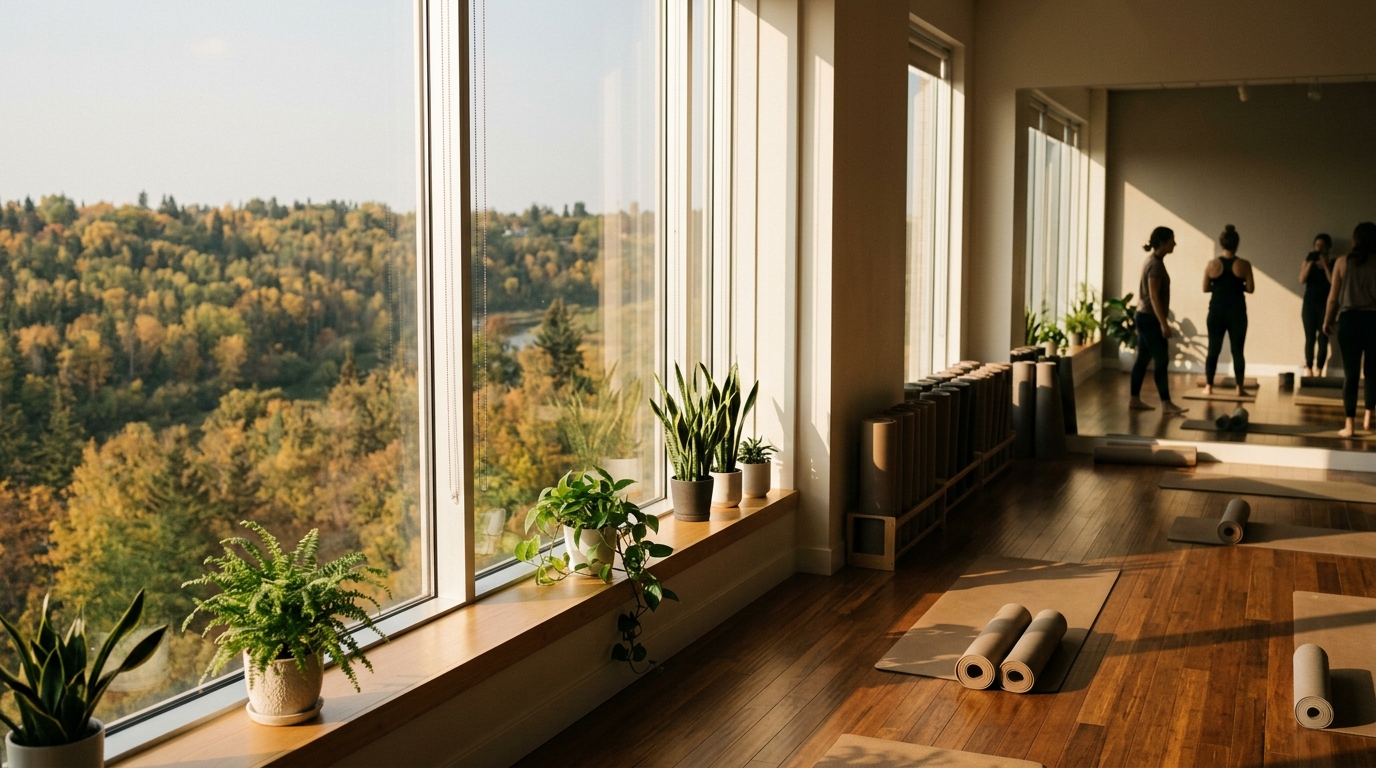
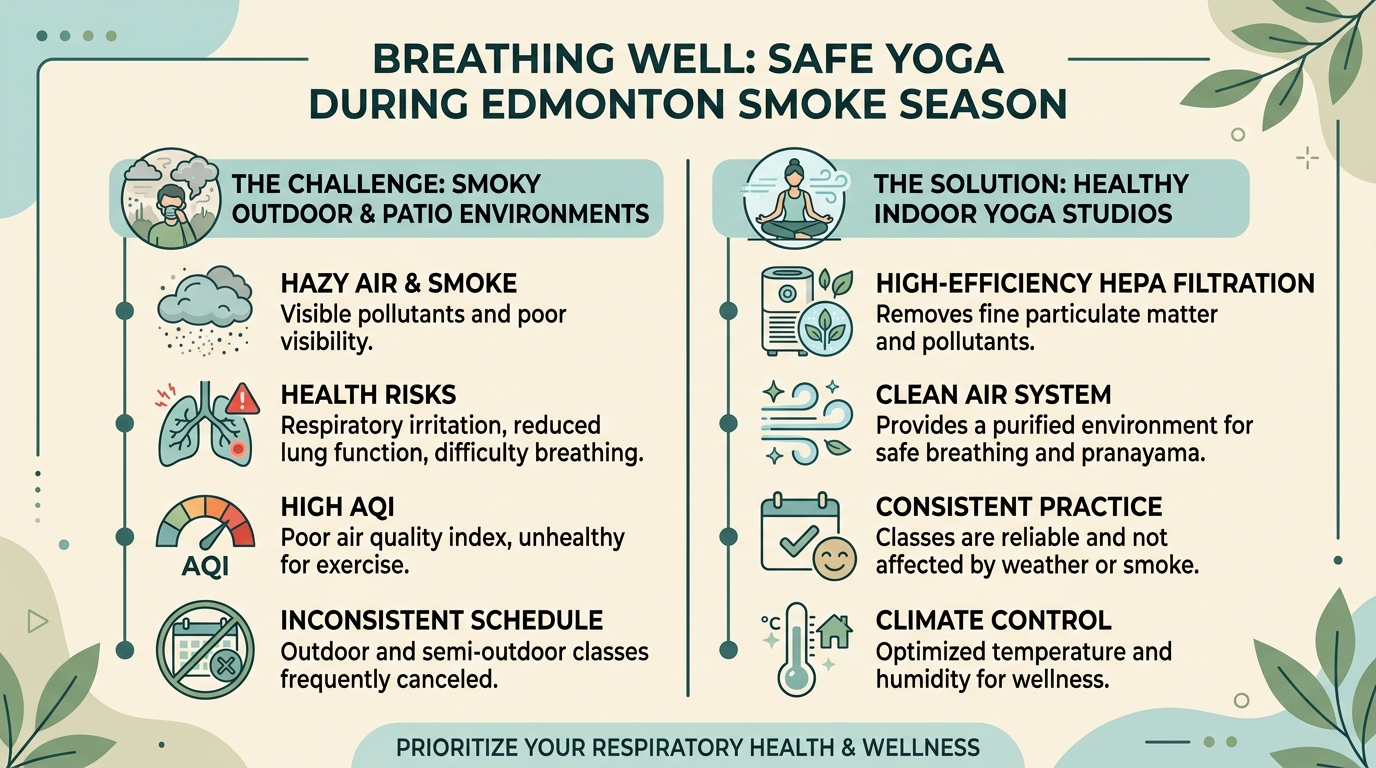
Edmonton’s indoor yoga studios have adapted to our new reality of annual smoke seasons. The best ones run HEPA filtration systems that actually clean the air while you practice. Some even monitor air quality in real-time and adjust their ventilation accordingly. These aren’t just backup options for bad air days — they’re purpose-built sanctuaries that keep your lungs happy year-round.
This guide covers studios across Edmonton that excel at indoor patio yoga studios Edmonton smoke season alternatives. From converted warehouses in Old Strathcona to boutique spaces along 124 Street, each offers something different. We’ll tell you which ones have the best air systems, where to find parking, and what you’ll actually pay for a drop-in class.
Why Indoor Air Quality Matters More Than You Think
The Science Behind Smoke and Your Lungs
Wildfire smoke contains PM2.5 particles — microscopic bits that penetrate deep into your lungs. During yoga, you’re breathing deeper and more frequently than normal. That means you’re pulling more of these particles into your respiratory system. Alberta Health Services recommends avoiding outdoor exercise when the Air Quality Health Index hits 7 or higher.
Most Edmonton homes don’t have the filtration systems needed to clean smoke from indoor air. Your furnace filter catches dust, not smoke particles. That’s why practicing at home during smoke season often leaves you feeling congested and sluggish. Professional studios invest in commercial-grade air purification that your home setup can’t match.
For more on this, see our stay active during guide. How To Prevent Seasonal Wellness Routine Breakdowns In Edmonton covers this in more detail.
What Makes a Studio Smoke-Season Ready
Not all indoor studios are created equal For air quality. The best ones run HEPA filtration systems rated to capture particles down to 0.3 microns — small enough to grab most smoke particulates. Look for studios that mention their air systems on their websites or social media. If they don’t talk about it, they probably don’t have it.
Edmonton Spring Allergies Wellness Guide For Seasonal Relief covers this in more detail.
Ventilation matters too. Studios need fresh air exchange, not just recirculation. The good ones balance this carefully — bringing in enough fresh air to keep CO2 levels down while filtering out smoke. Some studios along Jasper Avenue have upgraded their HVAC systems specifically for smoke season. They’re worth the extra drive from the suburbs.
Best Indoor Wellness Activities When Edmonton Air Quality Drops covers this in more detail.
Temperature control becomes tricky during smoke season. Hot yoga studios can’t just open windows when the air outside is hazardous. The best hot studios have invested in systems that maintain temperature while keeping air clean. If you notice windows cracked open during a smoky day, find another studio.
Reading Air Quality Like a Local
Edmonton’s air quality can change hourly during fire season. Download the AQHI Canada app and check it before heading to class. Anything under 4 is ideal for outdoor practice. Between 4-6, sensitive folks should head indoors. Above 7, everyone needs filtered air.
The River Valley often traps smoke, making downtown and river-adjacent neighborhoods smokier than areas like Windermere or Sherwood Park. Studios in these improved areas sometimes have better ambient air quality to start with. But don’t assume — even Sherwood Park gets socked in during major smoke events.
Top Studios With Advanced Air Filtration Systems
Prana Yoga Studio (Old Strathcona)
Prana invested $40,000 in a commercial air purification system after the 2018 smoke season left classes half-empty for weeks. Their setup includes HEPA filters changed monthly and real-time air quality monitoring displayed in the lobby. You can actually see the indoor vs outdoor readings before class.
Located just off Whyte Ave, parking is tight but there’s a lot behind Save-On-Foods two blocks away. Drop-in classes run $22, with better rates on class packs. Their Hatha and Yin classes are perfect for smoke days when your breathing already feels compromised. The instructors understand respiratory limitations and offer modifications.
What sets Prana apart: They run their air system 24/7 during smoke season, not just during classes. This means the air is already clean when you walk in, not playing catch-up. Their smaller studio room has its own dedicated purifier, making it ideal for private sessions or small groups seeking the best indoor wellness activities when Edmonton air quality drops.
Breathe Hot Yoga (Oliver)
Breathe solved the hot yoga ventilation problem with a $50,000 HVAC overhaul in 2021. Their system maintains 40°C heat while filtering air through medical-grade purifiers. The result: hot yoga that doesn’t leave you gasping from smoke exposure.
Their Oliver location has underground parking ($5 flat rate) and sits right on the 5 bus route. Classes cost $25 for drop-ins, but their intro month special ($65 unlimited) lets you test whether their air quality works for your lungs. During severe smoke days, they cap classes at 75% capacity to ensure adequate air circulation.
The studio’s owner personally monitors air quality and posts updates on Instagram. When outdoor AQI hits dangerous levels, they sometimes offer free community classes to give people a safe place to move. Their Bikram-inspired sequence stays consistent, so you know exactly what you’re getting even on hazy-headed smoke days.
Shanti Yoga (124 Street)
Shanti occupies a converted character home where every room has its own air purifier. They can’t match the industrial systems of larger studios, but their intimate setting means better air quality control. Maximum class size of 12 ensures everyone gets clean air.
Street parking is usually available on 124 Street or side streets. Drop-ins run $20, making them one of the more affordable options. They specialize in restorative and gentle flow classes — perfect when smoke has been affecting your sleep and energy levels. Their prenatal classes provide essential clean-air exercise for expecting mothers during smoke season.
The studio provides personal air quality monitors you can place next to your mat. It’s a small touch that shows they take respiratory health seriously. Their Tuesday evening Yoga Nidra sessions have become a smoke season favorite — deep relaxation without deep breathing.
Studios That Simulate Outdoor Environments Safely Indoors
Urban Jungle Yoga (Downtown)
This downtown studio recreates outdoor vibes without outdoor air. Floor-to-ceiling windows provide natural light while triple-sealed glass keeps smoke out. They’ve installed full-spectrum LED panels that mimic sunlight on especially hazy days. Live plants throughout the space are chosen for their air-purifying properties.
Located in the Bell Tower, parking runs $15-20 depending on time of day. The LRT stops two blocks away at Central Station. Classes cost $24 for drop-ins, with monthly unlimited passes at $140. Their “Forest Flow” classes incorporate nature sounds and essential oil diffusers (eucalyptus and pine) to complete the outdoor illusion.
What makes them special for smoke season: They adjust their class themes based on what we’re missing outdoors. When River Valley runs are impossible, they offer “Trail Run Yoga” — a vigorous flow that mimics the cardiovascular challenge of hill running. Their weekend “Sunrise Sessions” use those LED panels to simulate dawn light, helping maintain circadian rhythms when real sunrises are obscured by smoke.
Solstice Yoga (Windermere)
Solstice built their studio with smoke season in mind. Their “Sky Room” features a retractable roof (closed and sealed during smoke events) and walls of windows with UV-filtering glass. Advanced ventilation systems can completely exchange the air every 15 minutes while maintaining temperature.
Free parking surrounds this Windermere shopping complex location. Drop-ins are $23, with first-timers getting three classes for $40. They’re known for power vinyasa that’ll make you forget you’re not practicing outside. Saturday morning classes often sell out, so book ahead.
The studio partnered with the University of Alberta’s environmental science department to test their air quality systems. Results showed their filtration removes 99.7% of smoke particles — better than some medical facilities. They post these test results in their lobby, updated monthly during fire season.
Greenhouse Yoga Collective (Jasper Avenue)
True to its name, Greenhouse fills a former commercial greenhouse space with yoga instead of plants (though they kept some of the plants too). The glass structure could be a liability during smoke season, but they’ve installed state-of-the-art air curtains at all entrances and commercial extractors that create positive pressure, keeping smoke out.
Parking is metered on Jasper Ave ($3/hour) with free spots on side streets after 6pm. Classes run $22 for drop-ins, $15 for students. Their “Garden Flow” series weaves between potted plants and hanging gardens, offering the closest thing to outdoor practice when actual outdoor air is toxic. Essential to note: yoga studios near Oliver Edmonton with parking can be tricky to find, but Greenhouse validates at the Brewery District parkade on weekends.
Budget-Friendly Options That Don’t Skimp on Air Quality
YMCA Downtown and Branches
Don’t overlook the Y for smoke season yoga. Their downtown location underwent major HVAC upgrades in 2022, installing hospital-grade filtration throughout. Yoga classes are included with membership ($65/month) or available as $15 drop-ins. The Castle Downs and Jamie Platz locations have equally impressive air systems.
The downtown Y validates parking at City Centre Mall (2 hours free). Multiple bus routes stop within a block, and the LRT is a 5-minute walk. Their yoga schedule runs deep — usually 3-4 classes daily including gentle, flow, and power options. Instructors are trauma-informed and understand that smoke stress affects practice.
Best feature for smoke season: Their app shows real-time capacity for all fitness areas. When outdoor runners flood the track during smoke days, you’ll know whether the yoga studio has space. They also offer virtual classes you can stream at home with their air quality tips for creating cleaner indoor spaces.
For more on this, see our transition outdoor fitness guide.
Seva Yoga (McCauley)
Seva operates on a pay-what-you-can model, making clean-air yoga accessible to everyone. Don’t let the donation basis fool you — they’ve invested seriously in air quality. Local HVAC companies donated a complete filtration system after the 2019 smoke season highlighted the need.
Street parking is plentiful in McCauley. Suggested donation is $15-20, but they turn no one away for lack of funds. Their community classes Monday and Wednesday evenings often draw 30+ people seeking refuge from smoke. The space is basic but clean, with excellent air flow thanks to the building’s industrial past.
They coordinate with other indoor patio yoga studios Edmonton smoke season alternatives to ensure someone offers classes every day during heavy smoke. Check their Instagram for the community schedule. Their “Breathe Easy” workshops teach pranayama techniques adapted for compromised air quality — valuable skills for Edmonton summers.City Recreation Centers
Edmonton’s rec centers stepped up their air quality game after public pressure. Meadows, Terwillegar, and Clareview centers now run HEPA filtration in their studio spaces. Drop-in yoga classes cost just $8.50, or free with a leisure access pass.
Each center offers different styles — Meadows leans toward gentle and senior-friendly, Terwillegar runs power flow, and Clareview hosts family yoga Sundays. Check the city website for schedules. Parking is always free and plentiful. These aren’t boutique experiences, but the air is clean and the price is right.
Pro tip: Buy a 10-visit pass ($77) during spring and save it for smoke season. The passes don’t expire for a full year. When August hits and private studios are packed, you’ll have affordable options ready. The rec centers also offer ways to prevent seasonal wellness routine breakdowns in Edmonton with consistent, affordable classes year-round.
Specialty Studios for Specific Needs During Smoke Season
Prenatal and Postnatal Safe Spaces
Pregnant and new mothers need extra-clean air during smoke season. Bloom Prenatal Yoga in St. Albert runs medical-grade purifiers and keeps classes small (maximum 8). Their instructors are trained in pregnancy-safe modifications for when breathing feels harder. Drop-ins are $25, with package deals available.
MamaFit in South Edmonton Common takes a different approach. They’ve installed UV-C lights in their ventilation system along with HEPA filters — a belt-and-suspenders approach to air quality. Their prenatal yoga runs gentler during smoke season, with more supported poses and longer rest periods. Baby-wearing yoga classes let new parents practice while keeping infants in filtered air.
Both studios monitor carbon dioxide levels along with particulates. High CO2 makes you feel foggy and tired — the last thing you need when smoke already has you dragging. They’ll cap class sizes or add extra ventilation breaks when needed.
Therapeutic and Restorative Focus
Yoga for chronic conditions requires pristine air quality. Elements Physical Therapy on 109 Street offers therapeutic yoga in medical-grade clean rooms. Their physio-yoga hybrid classes help folks whose asthma or COPD flares during smoke season. Classes run $30 but may be covered by insurance.
Restore Yoga in Sherwood Park specializes in yin and restorative practices. They’ve added salt therapy rooms where you practice gentle poses while breathing micro-particles of pharmaceutical-grade salt. Sounds woo-woo, but research suggests salt therapy may help clear respiratory passages. Sessions cost $40 but include 90 minutes versus typical 60-minute classes.
The Nook on 124 Street offers trauma-informed yoga with exceptional air quality. Many people find smoke season triggers anxiety — memories of evacuation, climate grief, health fears. Their instructors understand this connection and adapt classes accordingly. Small groups (maximum 6) ensure personalized attention and optimal air quality.
Kids and Family Options
Kids’ developing lungs need protection from smoke. Little Warriors Yoga in Millwoods invested in child-height air purifiers after parents expressed concerns. Their family classes ($30 for one adult and up to two kids) keep everyone active when outdoor play isn’t safe.
Riverbend Community League runs donation-based family yoga Saturdays with solid air filtration. The volunteer instructors keep things playful — animal poses, partner work, and games that make kids forget they’re stuck inside. Check their Facebook page for smoke season schedule changes.
Several studios offer “smoke day camps” when day cares close outdoor programs. Breathing Space in Glenora runs half-day kids’ programs combining yoga, crafts, and quiet play in filtered air. At $45 per morning, it’s cheaper than scrambling for childcare and gives kids structure during disrupted routines.
What to Look for When Choosing Your Smoke Season Studio

Air Quality Indicators and Red Flags
Walk into any studio and take a deep breath. Smell anything? Mustiness, cleaning products, or yesterday’s hot yoga class means inadequate ventilation. Good air systems leave spaces smelling neutral. If you detect any smokiness during fire season, leave immediately.
Check the windows. Sealed and closed during smoke events? Good. Cracked for “fresh air”? Run away. Look for air quality monitors — studios serious about respiratory health display them prominently. No visible air monitoring usually means no serious air management.
Watch for warning signs: condensation on windows (poor ventilation), dust on ceiling fans (irregular cleaning), or portable air purifiers (band-aid solution). Professional studios invest in built-in systems, not hardware store units. If they’re running box fans, they’re not ready for smoke season.
Questions to Ask Before Committing
Call ahead and ask specific questions. What type of air filtration do you use? How often are filters changed? Do you monitor indoor air quality? Vague answers suggest they haven’t thought it through. Good studios will enthusiastically share their air quality protocols.
Ask about capacity limits during smoke season. Studios that pack classes wall-to-wall when air quality is poor don’t understand respiratory health. Look for places that reduce capacity to ensure adequate air exchange per person. Some studios offer “smoke season memberships” with guaranteed space in smaller classes.
Inquire about their smoke season policies. Do they offer online classes when air quality is dangerous? Will they extend memberships if they need to close? How do they communicate air quality decisions? Studios with clear policies have experience managing smoke seasons.
Making the Most of Indoor Practice
Treat smoke season as an opportunity to deepen your practice differently. Without mountain views or river breezes to distract, you’ll focus more on breath and body awareness. Use this time to work on challenging poses that require concentration.
Many Edmonton yogis develop “smoke season sequences” focusing on gentle breathing and lung support. Forward folds, supported twists, and chest openers can help you feel less constricted. Avoid intense pranayama when your respiratory system is already stressed. Save the breath of fire for cleaner air days.
Consider this your annual invitation to try new styles. That meditation class you’ve been avoiding? Perfect for smoke days when vigorous practice feels too hard. Yin yoga you thought was too slow? Ideal when your energy is low from poor air quality. Spring allergies and smoke sensitivity often go hand-in-hand, so gentle practices serve double duty.
Planning Ahead for Future Smoke Seasons
Building Your Smoke Season Toolkit
Start preparing for next summer’s smoke season now. Research studios during clear-air months when you can think objectively. Visit your top three choices and assess their air quality systems without urgency. Buy class packages during spring sales and save them for August.
Create a home practice backup plan. Invest in a quality air purifier for one room (expect to spend $400-800 for HEPA filtration). Stock up on yoga props during off-season sales. Download videos from instructors you trust. When studios are packed or air quality is borderline, you’ll have options.
Build relationships at multiple studios. Smoke affects different parts of the city differently. Having memberships in both downtown and suburban studios gives you flexibility. When the River Valley is socked in but Sherwood Park is clearer, you can adjust your practice location.
Community Resources and Support
Edmonton’s yoga community rallies during smoke season. The YEG Yoga Facebook group shares real-time air quality reports and class availability. Studios coordinate to ensure somewhere always offers clean-air classes. During severe smoke events, some studios offer free community classes in their filtered spaces.
The city runs a smoke season text alert system. Sign up at edmonton.ca for notifications when air quality deteriorates. Some studios piggyback on this system, texting members when they’re adding extra classes or adjusting schedules. Ask your preferred studio if they offer smoke season communications.
Consider starting a neighborhood yoga share. Find 4-5 locals interested in practicing together and rotate hosting duties. Pool resources for a good air purifier that travels between homes. When studios are full or too far during heavy smoke, you’ll have a close-to-home option.
Long-Term Health Considerations
Repeated smoke exposure has cumulative effects. Protecting your lungs during yoga is part of a bigger health picture. Health Canada’s wildfire smoke guidelines emphasize limiting all outdoor exposure during smoke events, not just exercise.
Track your respiratory symptoms during smoke season. Note which studios leave you feeling clear versus congested. Some people are more sensitive to poor air quality — respect your body’s signals. If certain ventilation systems don’t work for you, find alternatives rather than pushing through.
Consider year-round lung health support. Regular yoga practitioners who maintain their practice through smoke season using clean-air studios report fewer respiratory issues overall. The combination of movement, breathwork, and clean air helps your lungs recover from outdoor smoke exposure.
Sources & References
Related Reading
- Best Yoga Studios Near Oliver Edmonton with Parking: Your Complete…
- How to Improve Indoor Air Quality: An Edmonton-Specific Guide
- Breathing Easier in Edmonton: A Realistic Guide to Indoor Air…
Frequently Asked Questions
How much extra should I expect to pay for studios with advanced air filtration?
Studios with serious air filtration typically charge $2-5 more per drop-in class than basic studios. Most range from $22-26 per class versus $18-20 at studios without specialized systems. The investment in your respiratory health is worth the price difference, especially if you practice regularly during the 6-8 weeks of typical smoke season.
Do any Edmonton studios offer outdoor classes that quickly move indoors when smoke arrives?
Sangha Yoga on Saskatchewan Drive runs a “Smoke-Flex” summer schedule. They default to their riverside patio but can move the entire class indoors within 5 minutes. Students receive a text by noon if that evening’s class is moving inside. Their dual-space setup means you get outdoor yoga when possible but guaranteed clean air when needed.
What’s the best time of day to practice yoga during smoke season?
Air quality often improves overnight as temperatures drop and winds calm. Early morning classes (6-8am) sometimes catch better outdoor air quality if studios ventilate before smoke rebuilds. However, once you’re inside a properly filtered studio, timing matters less. Focus on finding consistently clean air rather than chasing marginally better outdoor conditions.
Can I trust portable air purifiers in smaller yoga studios?
Portable units work for spaces under 500 square feet with limited capacity. Look for medical-grade HEPA purifiers, not consumer models. The unit should be rated for at least double the room’s square footage. If you see one small purifier trying to clean a large studio, find somewhere else to practice. Multiple units strategically placed can work for boutique studios that limit class sizes.
Are there any Edmonton studios that specifically cater to people with asthma or respiratory conditions?
Elements Physical Therapy runs a “Therapeutic Breath” program designed for people with chronic respiratory conditions. Classes max out at 6 people in their medical-grade clean room. Breathing Space in Glenora also offers “Asthma-Safe Yoga” with modified pranayama techniques and extra-long rest periods. Both require intake forms and may recommend consultation with your respirologist before joining.