Edmonton gets nearly 17 and a half hours of daylight at the summer solstice. That’s sunrise at 5:04 AM and sunset at 10:07 PM. For anyone who’s lived through our dark winters, those endless summer days feel like nature’s apology. But does Edmonton’s long summer daylight improve mental wellness? The answer is more complex than you’d think.
Last reviewed:
While extended sunlight exposure can boost vitamin D production and improve mood, our extreme daylight hours can also disrupt sleep patterns and trigger anxiety in some people. Understanding how to harness the benefits while avoiding the pitfalls makes the difference between a rejuvenating summer and three months of exhaustion.
The Science of Light and Mental Health in Northern Cities
Living at 53.5 degrees north latitude puts Edmonton in unique territory. We experience some of the most extreme seasonal light variations in North America. Health Canada’s vitamin D guidelines acknowledge that Canadians living above the 40th parallel face special challenges in maintaining adequate levels year-round.
For more on this, see our prepare body edmonton guide.
How Sunlight Affects Your Brain Chemistry
Sunlight exposure triggers a cascade of neurochemical changes. Your retinas contain special cells that detect light and send signals directly to your brain’s hypothalamus. This process regulates:
How To Prevent Seasonal Wellness Routine Breakdowns In Edmonton covers this in more detail.
- Serotonin production – Your brain produces more of this mood-stabilizing neurotransmitter during daylight hours
- Melatonin suppression – Light exposure blocks the sleep hormone, keeping you alert during the day
- Cortisol regulation – Morning light helps establish healthy stress hormone patterns
- Vitamin D synthesis – UV exposure allows your skin to produce this important vitamin
Research from the University of Alberta’s Department of Psychiatry shows that seasonal light variations significantly impact mental health outcomes in northern Alberta. Their studies indicate that residents experience measurable mood improvements as daylight hours increase from March through June.
Edmonton Spring Allergies Wellness Guide For Seasonal Relief covers this in more detail.
Edmonton’s Unique Light Profile
Our city experiences a 12-hour difference in daylight between winter and summer solstices. Compare that to Vancouver’s 8-hour variation or Toronto’s 9-hour swing. This extreme range creates both opportunities and challenges for mental wellness.
During peak summer, Edmonton receives:
- 17 hours and 27 minutes of daylight on June 21
- Morning twilight beginning around 4:30 AM
- Evening twilight lasting until nearly 11 PM
- Only about 5 hours of true darkness
This abundance of light can feel overwhelming if you’re not prepared. Many newcomers to Edmonton report difficulty adjusting to the late sunsets their first summer here.
The Vitamin D Factor
Alberta Health Services recommends that adults get 600-800 IU of vitamin D daily, with higher amounts for seniors. During summer, just 15-30 minutes of midday sun exposure can help your body produce adequate vitamin D. But here’s the catch – many Edmontonians work indoors during peak UV hours.
Downtown office workers particularly struggle with this. If you’re in one of the towers along Jasper Avenue, you might arrive at work after sunrise and leave before sunset, yet still miss the important midday exposure window. That’s why places like the outdoor plaza at City Centre Mall become impromptu lunch spots on sunny days.
Mental Health Benefits of Extended Daylight
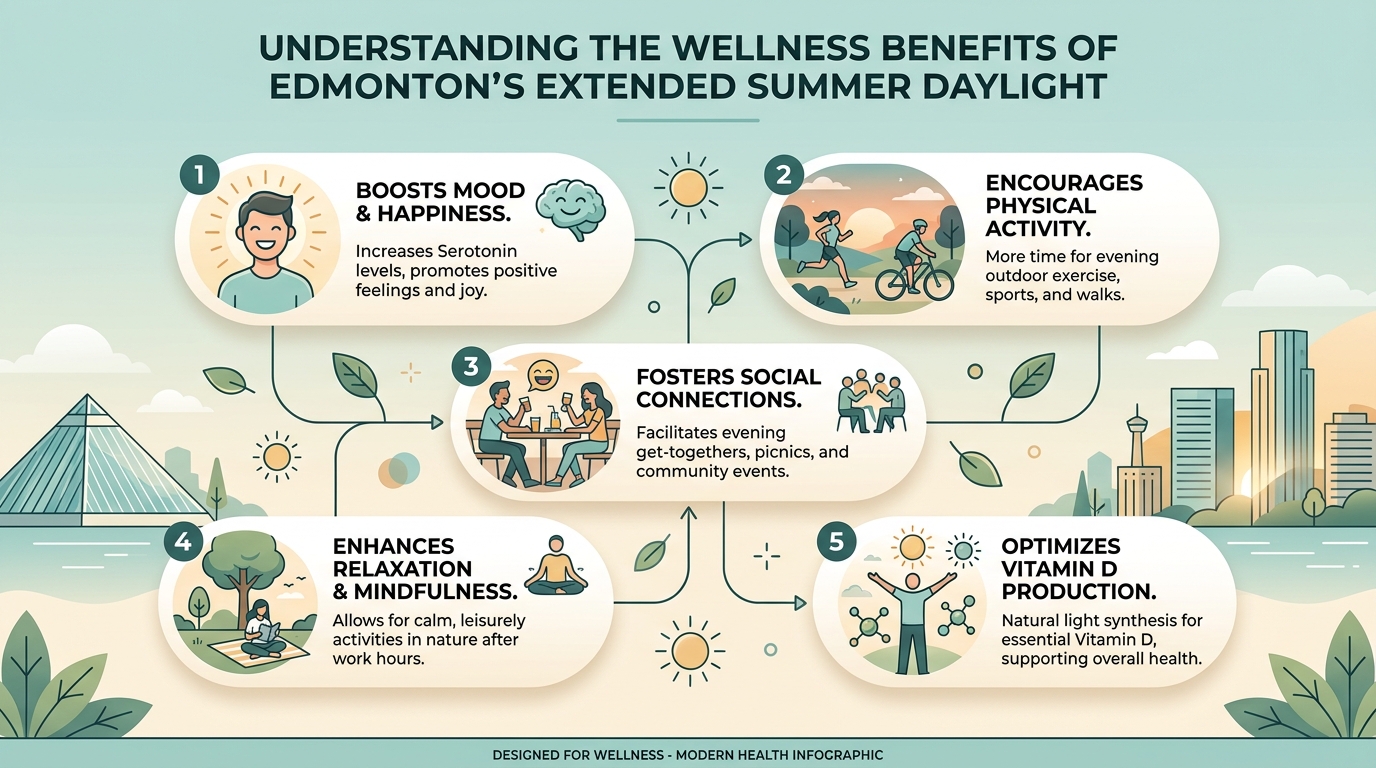
The psychological boost from our long summer days is real and measurable. After months of leaving for work in darkness and returning home in darkness, the extended light feels liberating. But maximizing these benefits requires intentional habits.
Mood Improvement and Energy Levels
Most Edmontonians report significant mood improvements by late May. The combination of warmer temperatures and extended daylight creates ideal conditions for outdoor activities. River Valley trails see peak usage between 6 PM and 9 PM on summer evenings – times that would be dark during winter months.
Local mental health practitioners note distinct seasonal patterns in their practices. Dr. Sarah Chen at the Whyte Avenue Wellness Centre reports that anxiety and depression cases typically decrease by 30-40% during summer months. “Patients who struggle through winter often experience natural symptom relief once we hit those 16+ hour days,” she explains.
The energy boost is particularly noticeable for:
- Shift workers who can enjoy daylight before and after work
- Parents who have evening hours for outdoor activities with kids
- Students who can study in natural light well into evening
- Seniors who benefit from extended safe walking hours
Social Connection Opportunities
Extended daylight changes Edmonton’s social space. The Farmers’ Markets stay bustling until late evening. Patios along 124 Street and Whyte Avenue remain packed until closing. This increased social interaction directly impacts mental wellness.
Popular summer evening activities that boost mental health include:
- River Valley picnics – Hawrelak Park and Louise McKinney Riverfront Park host impromptu gatherings until 9 PM
- Outdoor fitness classes – Many outdoor fitness classes in Edmonton run until 8 PM in summer
- Community leagues – Softball, soccer, and outdoor volleyball leagues play until sunset
- Festival participation – From Folk Music Festival to Fringe, extended daylight enables longer event days
The Oliver and Strathcona neighborhoods particularly benefit from this extended social window. Coffee shops with patios report staying busy until 9 PM, creating natural gathering spaces for community connection.
Exercise and Outdoor Activity Boost
Edmonton’s long summer days remove the biggest barrier to outdoor exercise: darkness. Morning runners hit the River Valley trails as early as 5 AM in full daylight. Evening cyclists can complete the entire river loop after dinner without needing lights.
Local fitness data shows dramatic seasonal variations:
- River Valley trail usage increases 300% from February to July
- Outdoor pool attendance at facilities like Queen Elizabeth Pool peaks during extended evening hours
- Bike share programs report highest usage between 5-8 PM on summer weekdays
- Golf courses stay booked until last tee times at 8 PM
This increased activity directly correlates with improved mental health outcomes. The combination of exercise, nature exposure, and vitamin D creates what researchers call a “wellness multiplier effect.”
The Dark Side: When Too Much Light Becomes Problematic

Not everyone thrives under Edmonton’s marathon summer days. Does Edmonton’s long summer daylight improve mental wellness for everyone? Unfortunately, no. Some residents experience increased anxiety, sleep disruption, and even manic episodes triggered by excessive light exposure.
Sleep Disruption and Circadian Rhythm Chaos
Your body relies on darkness to trigger melatonin production. When sunset comes after 10 PM, many people struggle to wind down for sleep. The problem compounds for shift workers, parents with young children, and anyone with existing sleep issues.
Common sleep complaints during Edmonton summers include:
- Difficulty falling asleep before midnight despite early work schedules
- Waking too early due to 5 AM sunlight
- Feeling “wired” or overstimulated in the evenings
- Children resisting bedtime because “it’s still light outside”
The Millwoods Sleep Clinic reports a 40% increase in insomnia consultations during June and July. Many patients don’t realize their sleep issues stem from light exposure rather than stress or other factors.
Managing summer sleep schedules in Edmonton requires deliberate strategies and sometimes professional help.
Anxiety and Overstimulation
For some people, constant daylight creates pressure to be perpetually productive. The feeling that you “should” be outside enjoying every moment can paradoxically increase anxiety. This particularly affects:
- People with social anxiety who feel exposed during extended daylight hours
- Those recovering from burnout who need rest but feel guilty staying indoors
- Individuals with bipolar disorder who may experience manic triggers
- Highly sensitive persons who become overstimulated by constant light
Mental health professionals at the Grey Nuns Community Hospital note increased crisis calls during early summer as some patients struggle with the sudden light increase. The transition period from May to June proves especially challenging.
The Pressure to Maximize Summer
Edmonton’s short summer creates unique psychological pressure. After enduring six months of winter, many residents feel compelled to squeeze every possible moment from the warm, bright months. This “summer FOMO” (fear of missing out) can lead to:
- Overcommitment to social events and activities
- Financial stress from trying to “do everything”
- Exhaustion from maintaining an unsustainable pace
- Guilt when choosing rest over activity
The Whyte Avenue business district exemplifies this phenomenon. Patios stay packed every evening, regardless of weekday or weekend. Many residents report feeling obligated to participate in the summer rush even when they need downtime.
Local Resources for Summer Mental Wellness
Edmonton offers numerous resources to help residents navigate the mental health impacts of our extreme summer daylight. From specialized therapy to community programs, support exists for various needs and budgets.
Mental Health Services with Seasonal Expertise
Several Edmonton practitioners specialize in seasonal mental health challenges:
Momentum Counselling (Multiple Locations)
Specializes in seasonal adjustment issues. Offers both in-person and virtual sessions. Their Oliver location (10135 124 Street) has evening appointments to accommodate summer schedules. Session rates: $180-220. Direct billing available for many insurance plans.
Edmonton Mental Health Clinic (Southside)
Located at 9509 156 Street. Provides specialized light therapy consultations and circadian rhythm assessments. They offer sliding scale fees starting at $50 for low-income residents. Free parking available.
InSight Psychological (Downtown)
10169 104 Street, near Corona LRT station. Their team includes therapists trained in sleep hygiene and anxiety management specific to northern climates. Standard sessions: $200. They run summer wellness groups on Tuesday evenings.
Community Programs and Support Groups
Free and low-cost options exist throughout the city:
CMHA Edmonton
The Canadian Mental Health Association’s Edmonton branch runs free “Seasons of the Mind” workshops at their 10010 105 Street location. Topics include sleep hygiene, managing summer anxiety, and creating sustainable routines. Drop-in sessions Wednesdays at 6 PM during summer months.
City of Edmonton Wellness Programs
Various recreation centres offer mental wellness programming. The Terwillegar Community Recreation Centre hosts “Sunset Meditation” sessions on their outdoor deck. Free with facility admission ($7.50 for adults). Similar programs run at Commonwealth and Kinsmen centres.
University of Alberta Community Programs
The U of A offers public access to certain wellness resources. Their Steadward Centre provides adaptive programs for those managing mental health conditions. Summer programs include outdoor mindfulness walks through campus. Fees vary by program, typically $40-80 for 4-week sessions.
Light Management Resources
Several local businesses specialize in light management solutions:
The Sleep Factory (West Edmonton)
17803 90 Avenue. Carries blackout curtains, sleep masks, and specialized alarm clocks that simulate sunrise. Staff trained in sleep hygiene can recommend products for managing summer light. Blackout solutions range from $50-300.
Home Depot and Rona
Multiple locations carry blackout window films and cellular blinds. The Windermere Home Depot (1716 Windermere Way SW) has knowledgeable staff who understand Edmonton’s unique light challenges. Window films start around $30 per window.
Restored Wellness (124 Street)
10344 124 Street. Sells blue light blocking glasses, specialized sleep supplements, and circadian rhythm support products. Also offers consultations with their naturopath about natural sleep solutions. Glasses range $80-150.
Practical Strategies for Optimizing Summer Daylight Benefits
Successfully navigating Edmonton’s long summer days requires intentional strategies. The goal is maximizing benefits while preventing overwhelm and maintaining healthy sleep patterns.
Creating a Sustainable Summer Routine
The key to summer wellness lies in consistency rather than extremes. Preventing seasonal routine breakdowns starts with realistic planning.
Effective summer routine elements include:
- Morning light exposure: 10-15 minutes of outdoor time before 9 AM helps set your circadian rhythm
- Midday break: Even 20 minutes outside during lunch provides vitamin D and mood benefits
- Evening wind-down: Begin dimming lights and avoiding screens by 9 PM, despite outdoor brightness
- Weekend structure: Maintain some routine rather than completely abandoning schedules
Many successful Edmontonians adopt a “summer bedtime” that’s 30-60 minutes later than winter, rather than drastically shifting their entire schedule. This modest adjustment acknowledges the light while maintaining stability.
Sleep Hygiene for Northern Summers
Quality sleep during white nights requires specific tactics:
Bedroom Environment:
- Install blackout curtains or blinds (important for bedrooms facing west)
- Use white noise machines to mask late evening street activity
- Keep bedroom temperature below 20°C despite warm evenings
- Consider eye masks if complete darkness isn’t achievable
Evening Routine:
- Wear sunglasses after 8 PM to reduce light exposure
- Take warm showers or baths 90 minutes before desired sleep time
- Use amber lightbulbs in bedroom and bathroom
- Avoid alcohol, which disrupts sleep quality despite initial drowsiness
Morning Management:
- Use sunrise alarm clocks to wake gradually, even in full daylight
- Keep curtains closed until you’re ready to fully wake
- Maintain consistent wake times within 30 minutes, even on weekends
- Get outside within an hour of waking to reinforce circadian rhythms
Balancing Activity and Rest
The secret to summer wellness is saying no strategically. Create a “summer budget” for activities:
- Social events: Limit to 2-3 per week maximum
- Exercise: Maintain regular schedule rather than doubling workouts
- Festivals: Choose 3-4 for the entire summer rather than attempting all
- Rest days: Schedule deliberate downtime, marking it in your calendar
Consider adopting the Scandinavian concept of “summer peace” – intentionally slower pace despite longer days. Several Edmonton businesses now close earlier on Fridays in summer, acknowledging that more daylight doesn’t require more work hours.
Preparing for the Transition: Spring to Summer Wellness

The shift from Edmonton’s dark winters to bright summers can feel jarring. Gradual adaptation starting in April or May prevents the shock of sudden 17-hour days. Does Edmonton’s long summer daylight improve mental wellness? Yes, but preparation determines whether you’ll thrive or merely survive.
Gradual Light Exposure Increase
As daylight hours extend through spring, incrementally increase your exposure:
April Strategy:
- Add 15 minutes of morning outdoor time weekly
- Begin opening curtains earlier each week
- Start shifting bedtime later by 10-minute increments
- Resume outdoor exercise routines gradually
May Preparation:
- Test your bedroom’s darkness levels and add blackout solutions if needed
- Experiment with evening routines while days are medium-length
- Begin vitamin D supplementation tapering if you’ve been taking winter doses
- Schedule any needed mental health check-ins before peak summer
Many Edmontonians find the May long weekend an ideal checkpoint for summer preparation. The combination of extended daylight and symbolic season start makes it perfect for establishing new routines.
Managing Spring Challenges
Spring brings its own wellness hurdles that can impact summer readiness. Managing spring allergies becomes important as they can affect sleep quality and outdoor enjoyment.
Additional spring considerations:
- Energy fluctuations: Expect tiredness as your body adjusts to longer days
- Mood swings: Rapid weather changes can trigger emotional volatility
- Social pressure: FOMO begins as outdoor events restart
- Budget planning: Summer activities can strain finances without preparation
Building Your Summer Wellness Toolkit
Assemble resources before you need them:
Physical Tools:
- Quality sunglasses (especially important for evening light management)
- Appropriate sun protection (minimum SPF 30 for extended exposure)
- Portable shade solutions for outdoor activities
- Insulated water bottles for hydration
Mental Health Resources:
- Therapist or counselor contact information
- List of indoor refuge spaces for overwhelming days
- Meditation apps with specific sleep programs
- Backup plans for social events you might need to skip
Schedule Foundations:
- Non-negotiable rest times blocked in calendar
- Regular check-ins with accountability partners
- Flexible workout plans for various weather conditions
- Meal prep strategies for busy summer weeks
Making the Most of Edmonton’s Midnight Sun
Despite the challenges, Edmonton’s long summer days offer unique opportunities for mental wellness. Understanding how to harness this natural resource while respecting your limits creates sustainable well-being that lasts beyond summer.
Unique Edmonton Summer Wellness Activities
Take advantage of experiences only possible with extended daylight:
Evening River Valley Programs:
- Sunset yoga at Victoria Park (7:30 PM classes June-August)
- Twilight paddleboarding on the North Saskatchewan (rentals until 9 PM)
- Late evening trail runs with Running Room groups (8 PM departures)
- Outdoor meditation circles at various parks (typically 7-9 PM)
Extended Patio Culture:
- Healthy dinner options on Whyte Avenue until 10 PM
- Tea ceremonies at Steeps on 124 Street during golden hour
- Smoothie bars with evening hours in Oliver and Downtown
- Outdoor book clubs meeting in beer gardens until sunset
Nature Immersion:
- Elk Island stargazing (though limited to after 11 PM in midsummer)
- Urban forest bathing in Whitemud Ravine during evening hours
- Photography walks capturing golden hour until 9:30 PM
- Outdoor art classes in various parks through city programs
Community Connection in the Light
Edmonton’s summer light creates natural gathering opportunities. Community leagues host outdoor movie nights starting at 10 PM when darkness finally arrives. Neighborhood barbecues extend well into evening. These connections provide important mental health support.
Popular community wellness events include:
- Parkland Community League: Weekly outdoor fitness classes at 7 PM
- Ritchie Community: Tuesday evening garden tours until 9 PM
- Bonnie Doon: Outdoor seniors’ programs taking advantage of comfortable evening temperatures
- Mill Creek: Family bike rides departing at 6:30 PM
Creating Your Personal Summer Wellness Plan
Design a plan that acknowledges both opportunities and limitations:
| Time of Day | Wellness Activity | Mental Health Benefit | Practical Tips |
|---|---|---|---|
| 5-7 AM | Morning walk or run | Mood boost, energy increase | Start with 20 minutes, build slowly |
| 12-1 PM | Lunch outside | Vitamin D, social connection | Find shaded spots on very hot days |
| 5-7 PM | After-work decompression | Stress relief, transition time | Avoid scheduling immediately after work |
| 8-10 PM | Evening wind-down | Better sleep preparation | Indoor activities, dimmed lights |
Remember that Edmonton’s long summer daylight improves mental wellness most effectively when you approach it mindfully. Create boundaries, honor your needs, and view the extended days as a resource rather than an obligation.
Sources & References
Related Reading
- A Wellness Guide to the Edmonton Alberta Climate, from a Lifelong…
- Summer vs Winter Running Routes in Edmonton: A Year-Round Comparison
- Health and Wellness in Edmonton: A Real-World Guide
Frequently Asked Questions
How many hours of daylight does Edmonton get in summer compared to winter?
Edmonton receives approximately 17.5 hours of daylight at the summer solstice (June 21) compared to just 7.5 hours at the winter solstice (December 21). This 10-hour difference is one of the most extreme in major North American cities. The long summer days provide ample opportunity for outdoor activities and vitamin D synthesis, though they require careful sleep management.
What are the best blackout solutions for Edmonton bedrooms?
The most effective solutions combine cellular blackout blinds with blackout curtains for complete darkness. The Sleep Factory on 90 Avenue carries specialized products designed for northern latitudes. Many Edmontonians also use blackout window film (available at Home Depot) as an affordable addition. For renters, portable blackout curtains with tension rods work well without permanent installation.
When should I seek help for summer-related sleep issues?
Consider professional help if sleep problems persist beyond two weeks or significantly impact daily functioning. The Millwoods Sleep Clinic accepts physician referrals and offers complete sleep assessments. Warning signs include inability to fall asleep before 2 AM, less than 5 hours of sleep nightly, or daytime fatigue affecting work performance. Many extended health plans cover sleep consultations.
Are there specific mental health resources for seasonal light sensitivity?
Yes, several Edmonton practitioners specialize in light-related mental health issues. Momentum Counselling offers specific programs for managing seasonal transitions and light sensitivity. The Edmonton Mental Health Clinic provides circadian rhythm assessments and creates personalized light exposure plans. CMHA Edmonton also runs free support groups for those struggling with summer adjustment.
How can shift workers manage Edmonton’s extreme summer daylight?
Shift workers face unique challenges with 17-hour summer days. Key strategies include installing complete blackout solutions at home, wearing wraparound sunglasses during commutes home, and maintaining consistent sleep schedules even on days off. The Workers’ Health Centre near Kingsway offers specialized consultations for shift workers dealing with circadian disruption. Many find success with rigid sleep hygiene routines and melatonin supplementation under medical guidance.