
Let’s be honest, figuring out how to manage work stress in Edmonton isn’t just about deadlines. It’s about facing those deadlines when it's -30°C and your car won't start, or when summer wildfire smoke means another week stuck inside.
This guide skips the generic advice. We're getting straight to what actually works for us, right here in YEG.
Why Managing Stress Looks Different in Edmonton
Living and working here means our stress levels are tied to more than just our inboxes. The intense rhythm of our city—from the frantic energy of Fringe season to the quiet, sometimes isolating, dark of a deep winter—directly impacts our well-being. A tough day at the office feels a lot tougher when you haven’t seen the sun in days.

This isn’t just a feeling; it’s a widespread issue. It's no surprise that in a recent Canadian survey, nearly half of professionals (47%) reported feeling burned out. The biggest culprits were heavy workloads, long hours, and poor work-life balance—all things our unique seasons can amplify.
That’s why our approach to stress management has to be different. It needs to be practical, local, and acknowledge the realities of our northern city life.
Our City, Our Strategies
We have to build our stress-relief toolkit around what Edmonton actually offers. This isn't about complicated wellness trends; it’s about using our own city as a resource.
Forget generic advice that tells you to "go for a walk." We need strategies that work when it’s -25°C and the sidewalks are pure ice, or when it's +30°C and the river valley trails are calling your name. It's about building resilience that is distinctly Edmontonian.
Here’s what that looks like in practice:
- Using the River Valley: It’s our collective gym and therapy office. A quick lunchtime walk through Mill Creek Ravine or a bike ride in Terwillegar Park after work isn’t just exercise; it's a vital mental reset.
- Adapting to the Light: Our extreme daylight hours mess with our internal clocks. This means being intentional about light exposure—using a SAD lamp on your desk in December and investing in blackout curtains for June.
- Embracing the Seasons: Instead of just surviving winter, we can use it for cozy, restorative activities. Think less "hibernation" and more skating at the Victoria Park Oval or cross-country skiing. We can then use the burst of summer energy for connecting with community at Fringe or Folk Fest.
The core idea is simple: our environment shapes our stress, so our coping strategies should, too.
Throughout this guide, we'll explore actionable tips that fit into the life of a busy Edmontonian, because your well-being shouldn’t feel like another item on your to-do list. For more ideas tailored to our city, check out our collection of articles on Edmonton wellness topics.
Building a Stress-Resilient Daily Routine
A solid daily routine is your best defence against work stress, but let's be real—in Edmonton, that routine has to be as flexible as our weather. A rigid schedule that works on a perfect July day will completely fall apart by the first real snowfall. The key is to build a rhythm that works with our city’s extreme seasons, not against them.
This isn’t about chasing some perfect, Instagram-worthy morning. It’s about creating small, consistent anchors that ground you, whether it’s pitch black at 8 AM in December or still bright at 10 PM in June.

Anchor Your Morning (Without Relying on the Sun)
When your alarm goes off in the winter darkness, the temptation to hit snooze is overwhelming. That’s precisely why a morning routine here can't depend on sunlight. Instead, we have to focus on sensory cues to wake our body and mind gently.
Think of it as creating your own sunrise. Before you even glance at your phone or let a single work email into your brain, try one of these:
- Light Therapy: A SAD lamp on your kitchen table while you have your coffee can be a game-changer. Just 20-30 minutes of exposure helps regulate your body clock and fight off the winter blues.
- Warmth and Hydration: Start with a big glass of water, followed by a warm drink like tea or lemon water. It’s a simple, comforting ritual that physically signals the start of the day.
- A Gentle Stretch: You don't need a full yoga session. Five minutes of stretching is enough to wake up your muscles and ease the stiffness that comes from huddling against the cold.
This small investment of time before the workday chaos begins creates a buffer. It gives you a sense of control before you’ve even walked out the door.
Fueling Your Body the Edmonton Way
Our food choices have a massive impact on our stress levels, and our local seasons offer a natural guide for what our bodies need. Trying to force down light salads in the dead of winter is a recipe for feeling unsatisfied and drained.
A stress-resilient eating plan for an Edmontonian isn't about restriction; it's about adaptation. It means leaning into hearty, warming foods when it's -30°C and embracing fresh, local produce during our short but glorious growing season.
Here’s how that looks in practice:
- Winter: This is prime time for meal-prepping. Think big batches of soups, stews, and chili that you can freeze. These meals are not only comforting but are also packed with the nutrients you need to stay resilient through the long, cold months.
- Summer: Take full advantage of the bounty. A Saturday morning trip to the Strathcona Farmers' Market or any of the smaller community markets can stock you up for the week. Grilling, making huge salads, and eating fresh berries are easy ways to get energizing, nutrient-dense food without spending hours in a hot kitchen.
By eating with the seasons, you’re not just supporting local producers; you're giving your body the specific fuel it needs to handle the unique demands of our climate. That, in turn, helps you manage work stress more effectively.
Move Your Body Year-Round
The temptation to hibernate from November to March is strong, but movement is one of the most powerful tools we have for stress management. The "all or nothing" mindset—where you either run 10k in the river valley or do nothing at all—is what gets us into trouble.
The goal is consistency, not intensity.
- Embrace the "Edmonton Cold": We all know that -15°C with no wind is actually pretty nice for a walk. A brisk lunchtime stroll through a neighbourhood like Glenora or a weekend snowshoe in Terwillegar Park provides fresh air, sunlight (crucial for Vitamin D), and a necessary mental break.
- Have an Indoor Backup Plan: For those truly brutal -40°C days or smoky summer afternoons, you need a go-to indoor option. This could be a membership at a city rec centre, a YouTube fitness channel you like, or even just climbing the stairs in your apartment building. The point is to have a plan B, so bad weather is never an excuse to do nothing.
Winding Down When the Sun Won't
Just as our mornings can be dark, our summer evenings are incredibly long, which can seriously mess with our sleep. An effective wind-down routine is crucial for signalling to your brain that it’s time to rest, even if the birds are still chirping outside. For a deeper dive into this, you can explore our guide on why sleep in Edmonton is so complicated and what to do about it.
Create a "shutdown" ritual that you can stick to year-round. An hour before bed, dim the lights, put your phone away, and switch to a relaxing activity like reading a book, listening to a podcast, or doing some light stretching. This consistency helps regulate your circadian rhythm, making it easier to fall asleep and stay asleep—giving your body and mind the deep rest they need to process daily stressors.
Setting Boundaries to Protect Your Well-Being
Saying "no" at work can feel fundamentally wrong, especially in Edmonton’s collaborative, get-it-done culture. But it's one of the single most important skills you can build to manage stress and keep burnout at bay.
This isn’t about becoming unhelpful or difficult. It’s about honestly assessing your own capacity so you can continue to produce high-quality work over the long haul.
Think of your personal energy like a phone battery. Every extra task you take on, every "quick question" that lands in your inbox after 5 PM, and every weekend email you feel obligated to answer drains it a little more. Without clear boundaries, you eventually end up running on empty, which is a fast track to exhaustion and resentment.
The Real Cost of "No Boundaries"
A lack of boundaries doesn't just make us feel frazzled; it has a tangible financial impact. A workplace mental-health report calculated that burnout costs Canadian employers thousands of dollars per affected employee each year.
The research is clear: prevention programs, including training on how to set healthy boundaries, can dramatically reduce burnout rates and lead to massive savings. Setting a boundary is a preventative measure, not a reactive one. It’s about treating your time and energy as finite resources—just as critical as any project budget.
Practical Scripts for Saying No (Without Sounding Like a Jerk)
Knowing you should set a boundary is one thing. Actually finding the right words in the moment is another. The goal is to be clear, polite, and firm without creating unnecessary conflict.
Here are a few real-world scenarios and some scripts you can adapt.
Scenario 1: You're asked to take on a new project when your plate is already overflowing.
- What to avoid: A flat "No, I'm too busy." This can come across as uncooperative and shut down the conversation.
- A better approach: "Thank you for thinking of me for this. My focus is currently on [Project X and Y] to meet their deadlines. To give this new project the attention it deserves, could we look at my current priorities and see what could be shifted or delegated?"
This response shows you’re a team player and you’re thinking strategically. Crucially, it puts the ball back in your manager's court to prioritize your workload.
Scenario 2: A colleague constantly pops by for "five minutes" that always turns into thirty.
- What to avoid: Ignoring them, sighing dramatically, or letting your frustration build until you snap.
- A better approach: "I can't step away right now, but I have a 15-minute window free at 2 PM. Can we connect then? If you could send me a quick summary of what you need ahead of time, I can come prepared."
This respects their request while protecting your own focused work time. It sets a clear, scheduled, and time-limited expectation.
Protecting Your Off-Hours
In a city where our summer days stretch past 10 PM, it's dangerously easy for the line between work and personal life to dissolve completely. Protecting your evenings and weekends isn't a luxury; it's essential for recovery.
A boundary isn't a wall you build to keep people out. It's a line you draw to protect the time and space you need to recharge, so you can show up as your best self—at work and at home.
Here are a few simple ways to reclaim your personal time:
- Use your out-of-office reply. Even if you’re just stepping away for a long walk in the river valley, set an auto-reply. It manages expectations and frees you from the guilt of not responding instantly.
- Delete work apps from your phone. If you don't absolutely need Slack or email notifications on a Saturday, get rid of the apps. You can always reinstall them Monday morning. The mental freedom is immediate.
- Schedule your downtime. Treat your personal time with the same respect you give a work meeting. If you plan a ski day at Snow Valley or a trip to the Strathcona Farmers' Market, put it in your calendar and honour that commitment to yourself.
Building these habits takes practice. It might feel uncomfortable at first, especially if you’re used to being "always on." But every time you set a healthy boundary, you’re making a direct investment in your own sustainability. The river valley is our city's greatest free resource for this kind of reset.
Using Edmonton's Seasons to Beat Burnout
If you live and work in Edmonton, you know you can't just ignore the seasons—you have to live with them. The stress from your job doesn't exist in a vacuum. It gets amplified by those pitch-black commutes in December and the frantic, sun-drenched energy of July.
But what if, instead of fighting this natural rhythm, we learned to use it to our advantage?
The trick is to stop seeing our seasons as obstacles and start seeing them as cues for how to manage our energy and stress. Our bodies and minds naturally want to slow down and restore in the winter, and they crave connection and activity in the summer. Leaning into that is one of the most practical things we can do for our well-being.
Winter: The Great Restoration
Let's be blunt: our winters are long and dark. The temptation to just grit your teeth and power through is strong, but fighting your body’s need to slow down is a recipe for burnout. This is our season for cozy, restorative activities that recharge our batteries for the year ahead.
It's also when we need to be most vigilant about our mental health. That persistent low mood many of us feel isn't just in our heads; it’s often a real, physiological response to the lack of light.
Seasonal Affective Disorder (SAD) is a genuine challenge at our latitude. The combination of short days and extreme cold can disrupt our circadian rhythms and tank our Vitamin D levels, making even minor work stressors feel monumental.
To combat this, we need to get intentional:
- Get a SAD Lamp. Seriously. Using a light therapy lamp on your desk for 20-30 minutes each morning while you check your first emails mimics the sunrise our bodies are missing. It’s a small habit with a huge payoff for your energy and mood.
- Embrace "Hygge". Make your home a true sanctuary. Think less "hibernation" and more intentional comfort. This is the time for slow-cooked meals, borrowing a good book from the EPL, or rediscovering a quiet hobby that calms your mind.
- Move Smartly. You don’t have to run in a blizzard. This is the perfect season for cross-country skiing at Gold Bar Park or trying a drop-in class at a local yoga studio. The goal is gentle, consistent movement, not punishing, high-intensity training.
If you find the winter blues are hitting you particularly hard, it’s worth learning more about the condition. You can start with our simple guide that explains what Seasonal Affective Disorder is and how it specifically affects those of us in northern cities.
For more on this, see our hot springs near guide. For more on this, see our prevent seasonal wellness guide. For more on this, see our hot springs near guide.
Summer: The Energy Burst
Then, summer arrives. Suddenly, we have 17 hours of daylight, and the city just explodes with energy. Folk Fest, Fringe, patio season—it feels like we have to do it all before the snow flies again. This abundance of energy is amazing, but it can also lead to a different kind of burnout if we're not careful.
The key to a stress-free Edmonton summer is to harness that energy without letting it completely drain you.
- Schedule Rest. It sounds counterintuitive when the sun is still up at 10 PM, but you need to block off downtime. If your weekend is packed with festivals and social events, make sure Monday and Tuesday evenings are protected for quiet recovery.
- Use the Light Wisely. A late-night bike ride through the river valley or a 9 PM walk through a neighbourhood like Windermere is a fantastic way to decompress after a long day. But on the flip side, make sure your bedroom is a dark cave. Blackout curtains are non-negotiable for getting the deep sleep your body actually needs.
This screenshot from the City of Edmonton's website shows just a fraction of the green space available to us. Each of those parks and trails is an opportunity for a free, powerful mental health break after a stressful workday.
The Transitions: Spring and Autumn
The shoulder seasons are just as important. Spring, with its notorious mud and unpredictable weather, is a perfect time for a mental reset. It’s a great time to declutter your workspace (and your mind) and set intentions for the energetic summer ahead.
Autumn, with its crisp air and golden light, often feels like a second New Year. That back-to-routine feeling can be incredibly grounding after a chaotic summer. Use this motivating energy to establish the healthy habits—like meal prepping or a consistent workout schedule—that will carry you through the coming winter.
By aligning your self-care with the world outside your window, managing work stress becomes a much more natural, intuitive process.
Finding Local Support When You Need It
Sometimes, trying to manage work stress on your own just isn't cutting it. That’s okay. Reaching out for support is a sign of strength, but let’s be honest—navigating the system can feel like another full-time job when you're already maxed out.
The good news is that Edmonton has a solid network of resources. You don’t have to figure it all out alone. Think of this as a curated, no-nonsense guide to finding the right fit for your needs and budget, right here in our city.
Professional Mental Health Services
When you need to talk to a professional, knowing where to start is half the battle. Edmonton has a few key entry points for mental health support, and each one serves a different need.
- Access 24/7: This is your primary, publicly funded starting point for a reason. It's a single point of contact for addiction and mental health services in Edmonton. You can call them any time at 780-424-2424, and they will help connect you with the right community resources or AHS programs. It's the first call to make when you're not sure what call to make.
- Psychology Today Directory: If you have benefits or are looking for a private practice therapist, this is an excellent tool. You can filter by neighbourhood (from Strathcona to Windermere), specialty (like work stress or anxiety), and even the type of therapy offered. It gives you a feel for the therapist's approach before you even pick up the phone.
- Community Counselling Centres: Organizations like The Family Centre or Momentum Walk-In Counselling offer accessible, often sliding-scale, counselling services. They are fantastic options if you don't have extensive benefits or are facing a long wait for public services.
It's also worth noting that our long, dark winters can take a serious toll. If you feel your work stress spikes every year between November and March, it's a good idea to learn about the signs of seasonal depression. We’ve put together a guide on how to deal with seasonal depression that breaks down what it is and what you can do about it.
Beyond the Therapy Office
Support doesn’t always look like a formal counselling session. Sometimes, the best medicine for work stress is connecting with others and engaging in activities that fill your cup. Our city is built on community, and there are countless ways to tap into that energy.
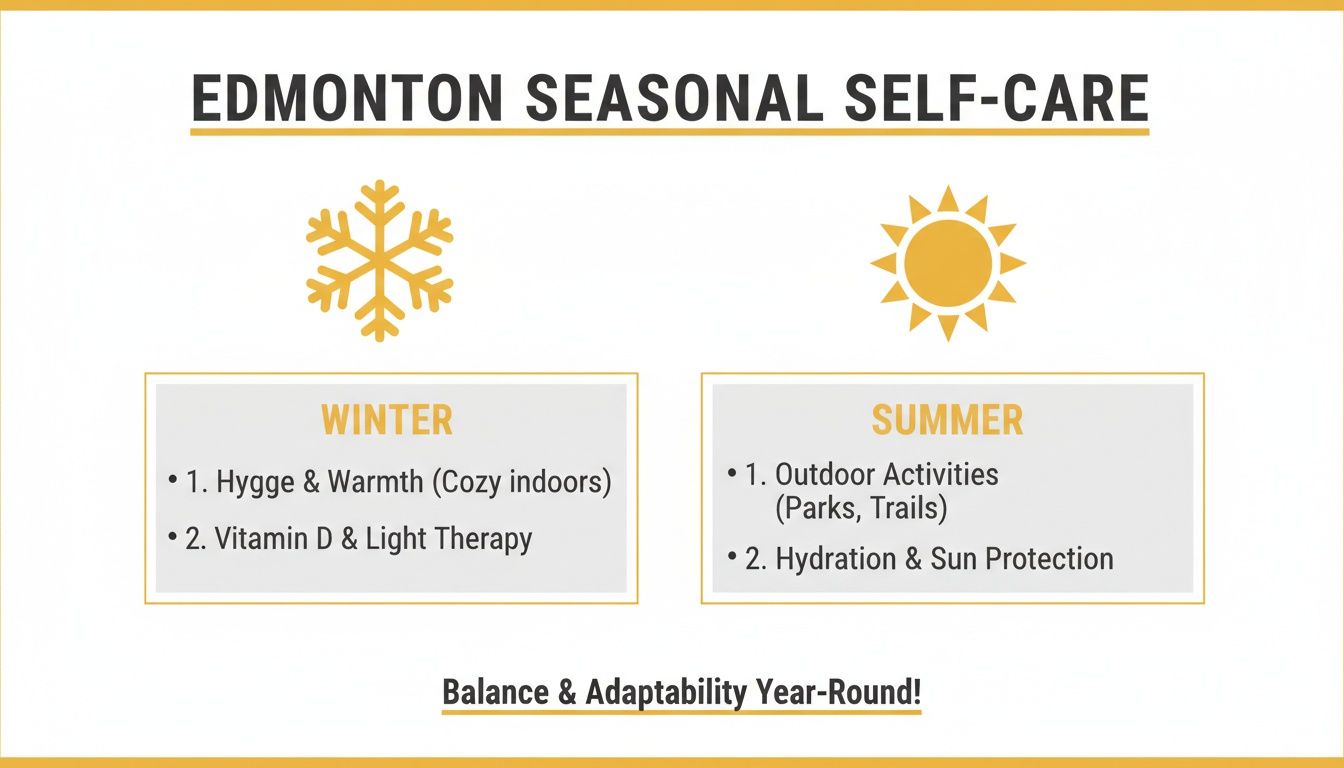
Here's a quick look at how you can adapt your self-care to our city's distinct seasons, helping you stay grounded year-round.
For more on this, see our summer winter running guide. For more on this, see our summer winter running guide.
This visual guide is a great reminder to align our self-care with Edmonton's seasons—embracing restorative indoor activities in winter and maximizing outdoor connection in our glorious, light-filled summers.
For more on this, see our winter light guide. For more on this, see our winter light guide.
Finding Your Community
Building connections outside of your workplace is a powerful antidote to professional burnout. It reminds you that your identity is much bigger than your job title.
Finding a "third place"—a spot that isn't home or work, where you can connect with like-minded people—is crucial for mental well-being. It could be a yoga studio, a running group, a book club, or even your local community league hall.
Consider these less conventional but highly effective resources:
- Community Leagues: Check your local league's website. Many offer low-cost yoga, art classes, or sports leagues. It's a fantastic, affordable way to meet neighbours and build those hyper-local connections that make a neighbourhood feel like home.
- Running and Walking Groups: Groups like the Running Room host free weekly runs from their stores. For something more casual, walking groups often pop up on social media, organizing meetups for strolls through the river valley.
- Hobby and Volunteer Groups: The Edmonton Public Library (EPL) hosts tons of free events and clubs, from language circles to tech workshops. Volunteering for a cause you care about—whether it's at the Edmonton Food Bank or during a festival like Fringe—can provide a profound sense of purpose and perspective that work often can't.
Finding the right support is a personal journey. To make it a little easier, here's a quick reference table of some of the key resources available right here in Edmonton.
Edmonton Mental Wellness Resource Guide
| Resource Type | Examples in Edmonton | Best For… | How to Access |
|---|---|---|---|
| Crisis & Urgent Support | Access 24/7, 211 Alberta | Immediate mental health needs, finding the right service when you're unsure where to start. | Phone (780-424-2424 for Access 24/7, or 211) |
| Private Therapy | Psychology Today Directory | Those with insurance benefits looking for a specific type of therapist or specialty. | Online directory, self-referral. |
| Affordable Counselling | Momentum Walk-In Counselling, The Family Centre | Low-cost, accessible counselling without long wait times or the need for benefits. | Website, walk-in, or phone. |
| Community Connection | Edmonton Community Leagues, EPL Programs | Building social networks, finding hobbies, and reducing isolation outside of work. | Local community league websites, EPL.ca |
This table isn't exhaustive, but it's a solid starting point for a few different pathways. The most important step is simply taking the first one.
Your Questions, Answered
We get it. Trying to manage work stress in Edmonton comes with its own unique challenges. Here are a few of the questions we hear most often from fellow locals trying to find a bit of balance in our busy, beautiful city.
It’s Too Cold to Go Outside. How Do I Deal With Work Stress Then?
When a river valley walk is off the table because it’s a soul-crushing -35°C, you need a solid “indoor reset” strategy. The goal is simple: physically and mentally separate yourself from your desk, even if it's just for five minutes.
Find a quiet corner or an empty meeting room. A short, guided meditation on an app can genuinely help, as can some simple desk stretches to release that built-up tension in your shoulders and neck.
The real key here is signalling a proper break to your brain. It’s not about not working; it’s about actively doing something else. That small act of stepping away is what actually disrupts the stress cycle.
You might even try what I call an "indoor commute." Take a quick walk up and down a few flights of stairs or do a full lap around your office floor. If you work downtown, the pedway system is perfect for a climate-controlled walk that gets you out of your immediate workspace without needing a parka.
My Work Stress Gets So Much Worse in the Winter. What Can I Do?
You are definitely not alone on this one. The winter blues, and its more serious cousin Seasonal Affective Disorder (SAD), are a real and pressing reality for so many of us at this latitude. The relentless lack of light has a direct impact on our biology, making everyday work pressures feel ten times heavier.
Here’s a practical, three-part approach that actually works:
- Prioritize Light: A proper SAD lamp on your desk for 20-30 minutes each morning can be a legitimate game-changer. It helps regulate your circadian rhythm, which our dark mornings throw completely out of whack.
- Supplement Wisely: It's a safe bet that most of us here are low on Vitamin D in the winter. Talk to your doctor about the right dosage for you—it’s a simple supplement that can have a surprisingly big impact on your mood and energy.
- Fight the Urge to Hibernate: It is so easy to fall into a pattern of just going from work to home and never seeing anyone. You have to be intentional about scheduling social connection. A coffee with a friend, joining a winter sports league, or even a weekly video call can combat the isolation that makes stress so much worse.
Finally, try to shift your mindset from merely enduring winter to actively engaging with it. A skate at the Victoria Park Oval or a snowshoe through Terwillegar Park can make you feel like you’re a part of the season, not just a victim of it.
What Are Some Free or Low-Cost Ways to Manage Stress in Edmonton?
Thankfully, you don’t have to spend a lot of money to manage stress here. Our city has a wealth of accessible options if you know where to look.
The river valley is, without a doubt, our greatest free resource. A walk, a run, or even just sitting on a bench in a place like Hawrelak Park costs nothing and provides an immediate mental health boost. It just works.
Don't forget the Edmonton Public Library (EPL). It’s so much more than books. They offer countless free programs, classes, and quiet, welcoming spaces where you can simply sit and decompress. Many community leagues also host very low-cost yoga or fitness classes that are far more affordable than a private studio.
For more direct mental health support, remember that Access 24/7 (780-424-2424) is a free, confidential service that acts as a central hub. They can listen and connect you with the right AHS or community resources for your specific situation.
At Edmonton Wellness Guide, we're committed to providing practical, science-backed guidance to help you thrive right here in our city. For more localized tips, resources, and wellness plans, visit us at https://www.edmontonwellnessguide.com.
Related Reading
- How to Deal with Seasonal Depression in an Edmonton Winter
- What is Seasonal Affective Disorder? An Edmonton Guide to the…
- Health and Wellness in Edmonton: A Real-World Guide