
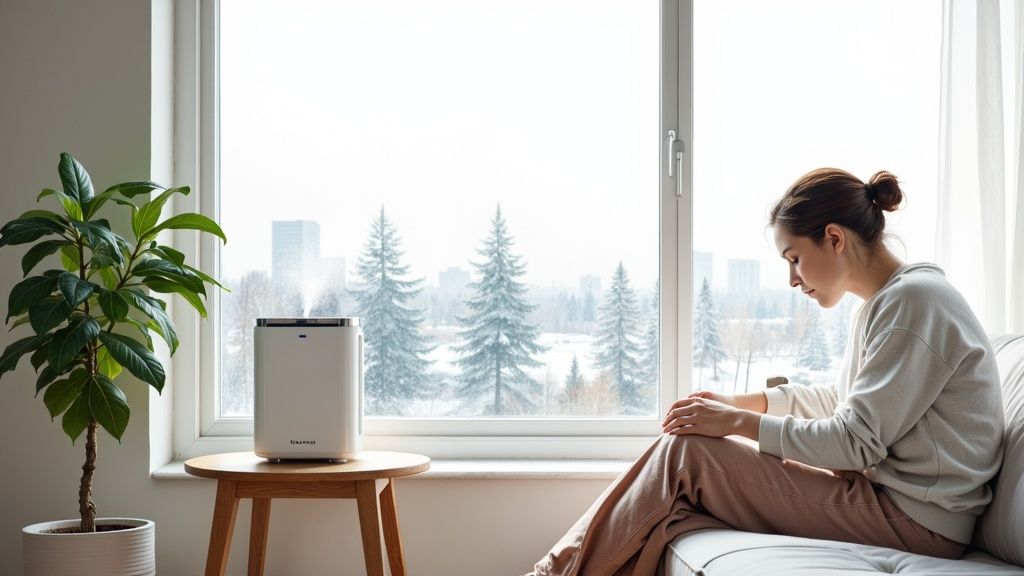
Improving your indoor air starts with a three-pronged approach: ventilation, filtration, and source control. It’s a simple concept, really. You need to bring fresh air in, capture the junk floating around, and stop creating so many pollutants in the first place.
The Unique Challenges of Edmonton's Indoor Air
Let's be honest, we Edmontonians seal our homes up tighter than a drum for a huge part of the year. From the first real snowfall in November until the mud season finally ends in April, our windows are locked and the furnace is humming. This creates a unique set of challenges for the air we breathe day in and day out.
Think about it: when it’s hitting that true "Edmonton cold" of -30°C, the last thing anyone is doing is cracking a window. Our homes, whether they're newer builds out in Windermere or classic character homes in Strathcona, become sealed environments. Everything we produce inside—cooking fumes from dinner, dust bunnies under the couch, pet dander from the dog who just came in from a snowy walk in the river valley—gets trapped and recirculated.
Our Climate Creates a Perfect Storm
It’s a well-known fact that the air inside our homes is often much more polluted than the air outside. We spend around 90% of our time indoors, and that number probably climbs even higher during our long winters. This creates a few specific problems for us:
- Bone-Dry Winter Air: Furnace heat strips every last bit of moisture from the air. This leads to dry sinuses, scratchy throats, and an environment where viruses can thrive.
- Trapped Pollutants: Without natural ventilation, everyday pollutants like VOCs from cleaning products, smoke from a searing steak, and allergens build up to surprisingly high concentrations.
- Summer Smoke Season: Just as we're finally ready to throw the windows open and enjoy those 17-hour summer days, the wildfire smoke often rolls in. Suddenly, we're sealing our homes up again, trapping ourselves with poor air quality both inside and out.
Improving the air isn't about achieving perfection. It’s about taking practical, informed steps to make our homes a healthier sanctuary, especially when the weather outside is doing its best to keep us cooped up.
Luckily, we have some very effective tools at our disposal. Simple actions like swapping in a high-efficiency furnace filter or running a portable HEPA air cleaner can dramatically lower indoor pollutants. In fact, studies from public health experts like the American Lung Association often show that proper filtration can slash fine particulate matter (the nasty stuff in smoke and dust) by 50–80% when used correctly.
Understanding these local realities is the first step. It frames why a generic list of tips just won't cut it for us. We need a strategy that works for our specific climate and lifestyle. For ongoing updates and tips tailored for our city, you can check our resources on Edmonton air quality.
For more on this, see our edmonton spring allergies guide. For more on this, see our edmonton spring allergies guide.
Mastering Filtration, Ventilation, And Humidity
Alright, so we’ve established that our tightly sealed Edmonton homes can become petri dishes for stale air. Now for the good part: taking back control.
Getting serious about your indoor air quality doesn't require a science degree or a massive renovation. It really boils down to mastering three key areas—filtration, ventilation, and humidity—and knowing how to apply them to our unique northern climate.
This infographic breaks down the common cycle we see in Edmonton homes, from dry furnace air trapping pollutants to wildfire smoke making its way inside.
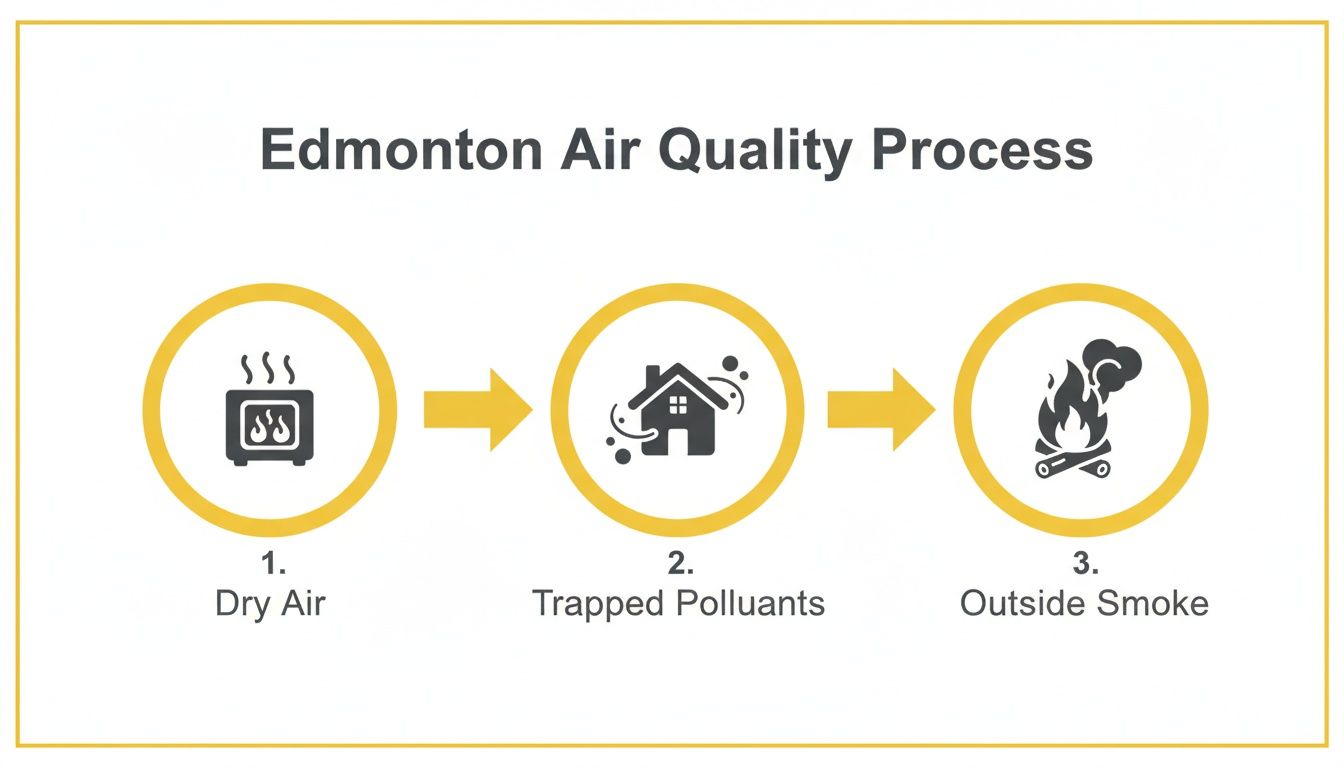
This cycle shows just how easily our indoor environment gets compromised, which is exactly why a layered approach to air quality is so essential for us. Let's break down how to tackle each of these challenges head-on.
Your First Line Of Defence: Furnace Filters
Your furnace isn't just for heating; it's the lungs of your home, constantly circulating air. That makes the filter your single most powerful tool for capturing airborne junk—but only if you choose the right one and change it often. This is where MERV ratings come in.
MERV stands for Minimum Efficiency Reporting Value. It's a scale from 1 to 16 that tells you how well a filter traps tiny particles. A cheap, flimsy MERV 4 filter might catch large dust balls, but it lets microscopic particles from smoke and viruses sail right through. On the other hand, a super-high MERV 16 filter can be so dense it restricts airflow, forcing your furnace to work overtime. That’s the last thing you want during a polar vortex.
For most Edmonton homes, the sweet spot is a MERV 11 or MERV 13 filter. These are efficient enough to capture a ton of dust, pollen, pet dander, and even some smoke particles without choking your HVAC system.
Edmonton Pro-Tip: Check your filter monthly during the winter. With the furnace running almost non-stop from November to March, filters get clogged surprisingly fast. A dirty filter doesn't just stop cleaning the air; it makes your furnace less efficient, driving up your energy bills.
For more on this, see our summer winter running guide.
To help you choose, I've put together a quick guide. It's easy to get overwhelmed by the options at the hardware store, but this table breaks it down for our specific needs.
Your Edmonton HVAC Filter Guide
| Filter Type (MERV Rating) | Best For | Pros | Cons / Edmonton Considerations |
|---|---|---|---|
| MERV 8 | Basic dust, pollen, and lint control. | Affordable and widely available. Puts very little strain on your furnace. | Ineffective against wildfire smoke, viruses, and finer allergens. |
| MERV 11 | Homes with pets, mild allergies, or general air quality improvement. | A great balance of filtration and airflow. Captures pet dander and some mould spores. | A good all-rounder, but not a smoke-season specialist. |
| MERV 13 | Homes with moderate allergies, asthma, or a need for smoke filtration. | The best choice for most Edmontonians. Captures smoke particles, bacteria, and virus carriers. | Slightly more expensive. May slightly reduce airflow in older HVAC systems. |
| MERV 14+ | Homes with severe respiratory issues or compromised immune systems. | Hospital-grade filtration that captures the smallest particles. | Can be too restrictive for many residential furnaces, leading to high energy bills and potential damage. Consult an HVAC pro first. |
The key takeaway? A MERV 13 is a fantastic investment for smoke season and general winter air quality, but even a fresh MERV 8 is better than a clogged, dirty filter of any rating.
When To Call In The Reinforcements: HEPA Purifiers
Sometimes, your furnace filter needs backup. This is where a portable HEPA (High-Efficiency Particulate Air) purifier becomes a game-changer, especially for specific rooms or situations.
HEPA is a certification, not a brand. A True HEPA filter is certified to capture 99.97% of particles as small as 0.3 microns. That's the gold standard.
This is non-negotiable during wildfire smoke season. When the air quality index outside is grim, a HEPA purifier running in your bedroom creates a clean-air sanctuary, which is crucial for restorative sleep. Look for a unit with a CADR (Clean Air Delivery Rate) that matches your room size. The higher the CADR, the faster it cleans the air.
Where should you put it?
- The Bedroom: This is priority number one. We spend a third of our lives here, and breathing clean air while you sleep can have a massive impact on your health.
- The Living Room: If you have a main living area where the family gathers, this is another strategic spot, especially if someone has allergies or asthma.
- Home Office: For those of us still working from home, having one in your office can improve focus and reduce exposure to pollutants throughout the workday.
The Ventilation Puzzle: How To Get Fresh Air At –30°C
"Just open a window" is fantastic advice if you live in Vancouver. Here in Edmonton, it's a bit more complicated. We absolutely need to exchange stale indoor air for fresh outdoor air, but we can't risk frozen pipes or a heating bill that looks like a mortgage payment.
For more on this, see our indoor cycling outdoor guide.
Newer homes often come equipped with an HRV (Heat Recovery Ventilator). This brilliant device pulls fresh air from outside while simultaneously pushing stale air out. In the process, it transfers heat from the outgoing air to the incoming air, so you get fresh air without the icy blast. If you have an HRV, make sure it's running and the filters are clean.
For those of us in older homes, we have to be more hands-on.
The best method is "shock ventilation." Instead of cracking a window for hours, throw a few windows wide open for just 5-10 minutes, once or twice a day. This rapidly exchanges the entire volume of air in a room without letting the walls and furniture get cold, so your home heats back up much more quickly and efficiently.
Taming The Dryness: The Humidity Factor
That dry, staticky feeling of an Edmonton winter is no joke. Our furnaces bake all the moisture out of the air, leading to dry skin, scratchy throats, and an environment where viruses seem to hang around forever.
The ideal indoor humidity level during winter is between 30% and 50%. A good quality portable or whole-home humidifier is an essential piece of equipment. It makes your home feel warmer at a lower temperature—potentially saving on heating costs—and provides much-needed relief for your respiratory system.
Just be careful not to overdo it. As spring approaches and temperatures hover around zero, too much indoor humidity can lead to condensation on your windows, which is a perfect breeding ground for mould. A simple, inexpensive device called a hygrometer will help you monitor your home's levels accurately.
Reducing Indoor Pollutants At The Source
Filtering the air is a great defensive strategy, but the best offence is stopping pollutants before they even get a chance to float around. This is all about source control—tackling the things inside our homes that are quietly making our air dirtier. It's less about buying fancy gadgets and more about tweaking our daily habits.
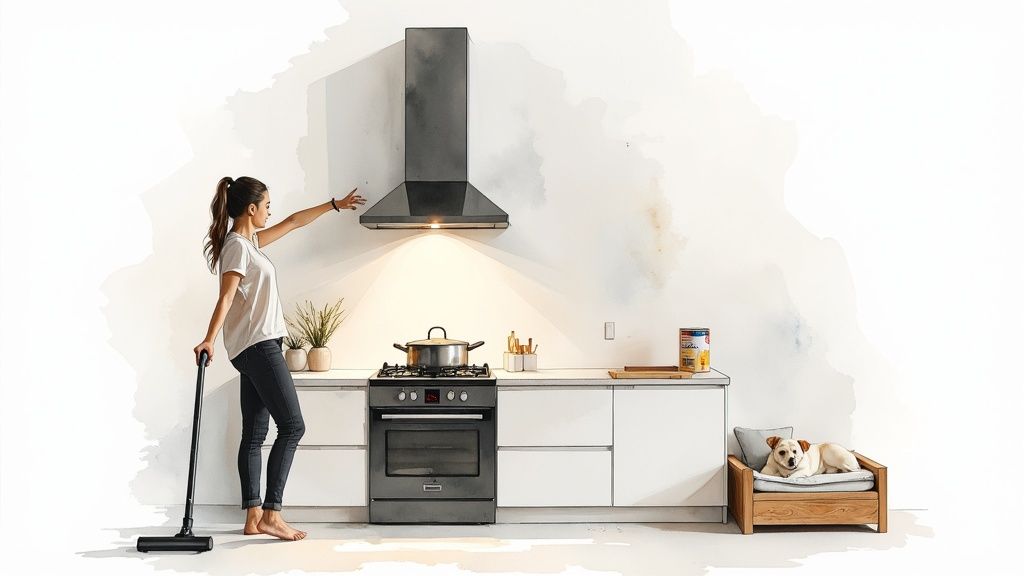
This starts in the kitchen. We all know someone who sees their range hood as more of a light fixture than a fan. But when you’re cooking, especially on a gas stove, you're releasing a cocktail of fine particles and gases like nitrogen dioxide. Making a habit of flipping that fan on—every single time—is one of the most effective ways to vent those pollutants directly outside.
Making Smarter Choices About What We Bring Home
Next up are the products we use. Many paints, cleaning supplies, and even new furniture release Volatile Organic Compounds (VOCs) into the air. That "new paint smell" or "new car smell" is actually off-gassing, and we breathe it in for weeks or even months.
Let’s be honest: hunting down low-VOC or zero-VOC products can feel like a chore, and sometimes they cost more. But the market is getting better. When it's time to repaint the living room or buy a new mattress, simply looking for a "low-VOC" label can make a big difference over the long term.
It's not about being perfect. It's about making a slightly better choice when you can.
A simple rule of thumb: If it has a strong chemical smell, it's likely releasing something into your air. This goes for scented candles, plug-in air fresheners, and heavy-duty cleaners.
While a nice candle can feel cozy during a dark January evening, many release soot and synthetic fragrances. Opting for unscented beeswax candles or a high-quality essential oil diffuser can give you the ambiance without the added pollutants.
Taming Dust And Dander
For those of us with pets—or just a classic case of Edmonton dust—a good cleaning routine is fundamental. But it's about cleaning smarter, not just harder. Your vacuum cleaner is a key player here.
- Invest in a HEPA Filter Vacuum: A standard vacuum can just kick fine dust and allergens back into the air. A vacuum with a sealed system and a HEPA filter actually traps those microscopic irritants for good.
- Embrace Microfiber: Microfiber cloths are brilliant because they grab and hold onto dust instead of just pushing it around like a traditional feather duster.
- Manage Pet Dander: Regular grooming (ideally outside during the warmer months) and washing pet bedding frequently can significantly cut down on dander.
These actions not only improve air quality but can provide a lot of relief for anyone dealing with allergies, which can feel especially challenging when we're all cooped up.
Your Seasonal Air Quality Plan For Edmonton
Living in Edmonton means you become an expert in seasons. It’s not just a date on the calendar; it’s a fundamental shift in how we live and breathe. Our indoor air quality needs are no different—what works during a -30°C cold snap is the opposite of what we need when wildfire smoke rolls into the river valley.
A one-size-fits-all approach just doesn't cut it here. Instead, let's build a practical plan that moves with the rhythm of our city's dramatic seasons.
Winter: The Great Seal-Up
From November until March, our homes are in lockdown. The furnace is the hero, running almost constantly to keep the Edmonton cold at bay. Opening a window isn't really an option, which means we're marinating in whatever air is already inside.
The primary focus during these long, dark months is twofold: fighting extreme dryness and managing indoor pollutants.
- Check Your Furnace Filter Monthly: This is non-negotiable. With your furnace working overtime, that filter is your home's only lung. A clogged filter stops cleaning the air and puts a huge strain on your system. Set a calendar reminder. Now.
- Balance Your Humidity: Bone-dry furnace air is tough on our sinuses and makes it easier for viruses to hang around. You want to aim for an indoor humidity level between 30% and 40%. Too low, and you'll feel it in your throat; too high, and you'll see condensation on the windows, which is an open invitation for mould.
- Minimize Indoor Pollutants: Since you can't just air things out, be mindful of what you're adding to the air. Use your range hood fan every time you cook, avoid heavily scented candles, and maybe hold off on that big interior painting project until spring.
Spring: The Great Thaw
Ah, spring in Edmonton. The snow finally melts, revealing five months of accumulated winter grime. The air fills with dust, pollen, and the smell of damp earth. This is the season for a major air quality reset.
As the city thaws, our focus shifts to deep cleaning and tackling incoming allergens.
The mud and moisture tracked inside can become a breeding ground for mould and a magnet for dust mites. This is the perfect time for a deep clean—not just for tidiness, but for the air you breathe.
Think of spring cleaning as a core air quality intervention. It’s your chance to physically remove the allergens and dust trapped inside all winter, giving you a fresh start before summer hits.
Your key actions should include washing curtains, steam cleaning carpets, and wiping down walls and baseboards where dust has settled. It’s also the ideal time to check your outdoor vents (for your dryer, furnace, and HRV) to ensure they aren't blocked by leftover snow, ice, or debris from the melt.
Summer: Smoky Skies and Cool Relief
Our glorious, long summer days now come with their own unique challenge: wildfire smoke. We wait all year for the chance to throw the windows open, only to be met with an orange haze and an air quality advisory. For a deep dive, you can learn more about the health effects of wildfire smoke in our detailed guide.
Summer strategy is all about proactive defence against outdoor pollutants.
- Prep Your Clean Air Station: Have your HEPA air purifier ready to go. Don't wait until the smoke is already thick. The moment an air quality warning is issued, seal up the windows, turn off any fresh air intakes like your HRV, and get your purifier running in the bedroom or main living area.
- Keep Your AC Maintained: If you have central air conditioning, make sure its filter is clean. The AC recirculates indoor air, so a clean filter is crucial for not spreading dust and dander around when you’re sealed up against the smoke.
- Know When to Seal vs. Ventilate: On clear days, take advantage of cooler overnight temperatures to air out your house. But when the smoke hits, your home becomes a clean air shelter. Keep windows and doors shut tight.
Autumn: The Fall Reset
As the leaves turn in Mill Creek Ravine and the days get shorter, we instinctively start preparing to hunker down again. This is the perfect time for a pre-winter air quality check-up, ensuring your home is ready for another long season indoors.
The focus in autumn is on maintenance and preparation.
This is your last best chance to tackle bigger tasks before the snow flies. Schedule your annual furnace inspection to make sure it’s running safely and efficiently. If your home has felt particularly dusty, you might consider getting your ducts cleaned. Finally, check your HRV or humidifier to ensure they're clean and ready for another season of hard work. A little prep in September can make for a much healthier and more comfortable winter.
To make it even easier, here's a scannable checklist you can use to stay on top of your indoor air quality as the Edmonton seasons change.
For more on this, see our breathing easier edmonton guide. For more on this, see our breathing easier edmonton guide.
Edmonton Seasonal Air Quality Checklist
| Season | Primary Focus | Key Actions |
|---|---|---|
| Winter | Humidity Control & Pollutant Trapping | • Check furnace filter monthly • Maintain humidity at 30-40% • Run range hood fan when cooking • Limit use of scented products |
| Spring | Allergen & Dust Removal | • Deep clean carpets, curtains, and surfaces • Check outdoor vents for blockages • Open windows on clear, low-pollen days |
| Summer | Wildfire Smoke Defence | • Prep HEPA purifier • Check AC filter • Seal home during smoke advisories • Ventilate overnight on clear days |
| Autumn | System Maintenance & Preparation | • Schedule furnace inspection • Consider duct cleaning if needed • Clean HRV/humidifier filters |
A little seasonal awareness goes a long way. By aligning your air quality tasks with Edmonton's unique rhythm, you can create a healthier indoor environment all year round.
How to See What’s Actually in Your Home’s Air
You can’t manage what you don’t measure. For years, we’ve relied on our senses to judge our home’s air—does it feel stuffy? Does it smell musty? But that’s a pretty limited toolkit. The reality is that the most common indoor air pollutants are completely invisible and odourless.
This is where an indoor air quality monitor comes in. It’s less complicated than it sounds.
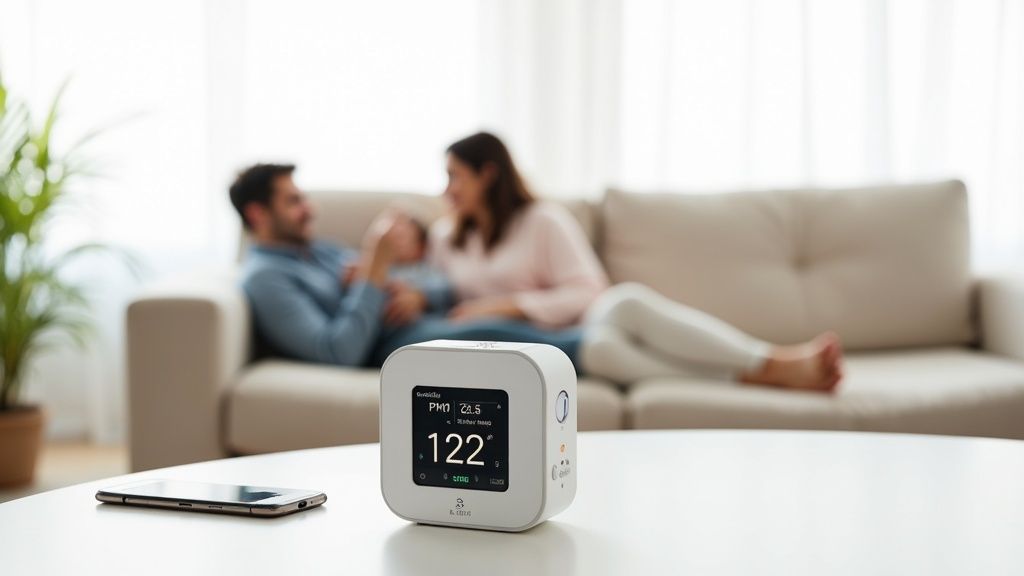
Think of it like a smoke detector for everything else floating around. These devices give you real-time, objective data, connecting the dots between your actions and the quality of the air you’re breathing. It’s not about obsessing over numbers; it’s about finally seeing cause and effect in action.
What the Numbers Actually Mean
You don’t need a science degree to make sense of the readouts. Most decent monitors track a few key metrics that tell a surprisingly clear story.
- PM2.5 (Particulate Matter): This is the big one for us, especially during smoke season. These are the microscopic particles from wildfire smoke, dust, cooking, and candles that can get deep into your lungs. A monitor will show you, in real-time, just how dramatically that HEPA purifier drops the particle count when you turn it on.
- CO2 (Carbon Dioxide): This is what we all breathe out. When CO2 levels climb, it’s a direct sign that your air is stale and you need to get some fresh air circulating. Watching the CO2 number tick up after having a few friends over is the clearest possible sign to crack a window or turn up your HRV for a few minutes.
- VOCs (Volatile Organic Compounds): These are gases released from everyday items like new furniture, paint, cleaning products, and even air fresheners. A sudden spike in VOCs right after you’ve cleaned the bathroom is an unmistakable cue to run the fan and get some ventilation going.
Using a monitor isn't about chasing perfect numbers. It's about getting objective feedback to build better habits. It's the proof that running the range hood really does clear the air after searing a steak, or that it’s definitely time to change that furnace filter.
A monitor is an optional tool, not a mandatory one. But if you’re a data-driven person or are managing a specific health concern like asthma or allergies, they can be incredibly powerful. You can find solid options online starting around a hundred dollars, all the way up to more advanced systems.
Ultimately, everything we’ve talked about—from filters to ventilation—is part of a larger strategy to make our homes the sanctuaries we need them to be. It’s about taking smart, manageable steps to feel better in the spaces where we spend so much of our time, riding out whatever our unique Edmonton climate throws at us. For more insights on how outdoor conditions translate indoors, you can explore our resources on the air quality index.
A Few Common Air Quality Questions From Edmontonians
Even once you have the basics down, a few practical questions always seem to pop up. Here are some straightforward answers to the things we hear most often from fellow Edmontonians just trying to clear the air in their homes.
Are Expensive Air Purifiers Really Worth It For An Edmonton Home?
Honestly, not always. The features that actually matter are a True HEPA filter and a Clean Air Delivery Rate (CADR) that’s properly sized for your room. A moderately priced unit with the right specs humming away in your bedroom will do infinitely more good than some oversized, overpriced machine sitting in a hallway.
During wildfire season? A good HEPA purifier is one of the best investments you can make for your health, full stop. But for managing everyday dust and allergens, consistently changing your furnace filter and keeping up with smart cleaning habits are just as crucial—and a whole lot cheaper.
How Often Should I Really Change My Furnace Filter In Edmonton?
It definitely depends on the specific filter and your household, but here’s a solid rule of thumb for our city: check it monthly and plan to replace it every 60-90 days. This is especially true during the winter when your furnace is running almost constantly.
If you have pets, live anywhere near a busy road like the Henday, or it's smoky outside, you need to be checking that filter every single month. A clogged filter doesn't just stop cleaning the air; it puts a huge strain on your furnace, which is the last thing anyone needs when it's -25°C.
Can I Just Open A Window In Winter To Get Fresh Air?
Yes, but you have to be smart about it. Forget leaving a window cracked for hours on end—that just creates miserable cold drafts and forces your furnace to work way too hard.
A much better strategy is something called "shock ventilation."
- Open your windows wide in one or two rooms for just 5-10 minutes.
- This quickly swaps the stale, CO2-heavy indoor air with fresh outdoor air.
- Because it happens so fast, the walls and furniture don't have time to lose their residual heat, meaning your home warms back up much more efficiently.
Just be mindful during those extreme cold snaps (think below our usual -20°C threshold) to avoid putting too much stress on your heating system. For those few brutal weeks a year, it’s probably best to just rely on your HRV or bathroom fans to get the air moving.
At Edmonton Wellness Guide, we're committed to providing practical, science-backed advice that fits the realities of our northern city. From seasonal nutrition to stress management, we offer resources to help you build sustainable health habits that work for you. Learn more and find your guide at https://www.edmontonwellnessguide.com.
Article created using Outrank
Related Reading
- Why Does Smoke Season Affect Outdoor Fitness Edmonton: The Science…
- Summer vs Winter Running Routes in Edmonton: A Year-Round Comparison
- Why Edmonton Fall Weather Triggers Fitness Motivation Shifts:…