
If you live here, you know the feeling. It creeps in around October, after the Folk Fest posters have come down and the sun starts dipping below the horizon on your drive home. By November, when it’s dark at 4:30 PM and the river valley is frozen solid, a certain heaviness can settle in.
For many of us, this is more than just the "winter blues"—it's a predictable shift in our mood and energy that arrives with the darkness and lifts with the spring thaw.
This is the reality of seasonal affective disorder, or SAD, in a northern city like ours. It's a specific type of depression tied directly to the seasonal shift. Living this far north means we experience some of the most dramatic light variations on the planet, from our glorious 17-hour summer days during Fringe season to the brief few hours of daylight we get in deep winter.
For more on this, see our summer winter running guide. For more on this, see our edmonton summer daylight guide. For more on this, see our summer winter running guide.
That extreme swing is what makes us particularly susceptible.
Winter Blues Or Something More?
So, how do you know if what you're feeling is the typical Edmonton winter drag or something more serious? Let’s be honest, most of us feel a bit sluggish when it hits -30°C for the third week in a row. But the difference between the winter blues and clinical SAD is about severity and impact.
For more on this, see our prevent seasonal wellness guide. For more on this, see our edmonton fall weather guide.
It’s the difference between wanting to stay in and watch the Oilers versus feeling unable to connect with friends for weeks on end.
Research shows that populations in northern latitudes have a much higher incidence of SAD, with some estimates suggesting up to 10% of the population is affected, compared to much lower rates closer to the equator. This isn't a coincidence; it highlights how directly our environment and lack of sunlight can affect our mental health.
To help you tell them apart, here's a look at how these feelings often show up in our day-to-day lives.
Winter Blues vs SAD: How It Feels in Edmonton
| Symptom | Typical Winter Blues | Potential SAD Symptoms |
|---|---|---|
| Energy Levels | Feeling a bit tired and less motivated to go out when it's cold and dark. | Overwhelming fatigue that makes daily tasks feel impossible; sleeping much more than usual but never feeling rested. |
| Mood | A general sense of being "down" or "blah." Missing the summer. | A persistent low mood, feelings of hopelessness or worthlessness, and losing interest in activities you usually enjoy. |
| Social Life | You might turn down a few invitations in favour of a cozy night in. | Withdrawing from friends and family for weeks at a time; feeling too drained to socialize at all. |
| Appetite | Craving more comfort foods like perogies or soup. | Significant changes in appetite, often with intense cravings for carbohydrates, leading to noticeable weight gain. |
| Daily Functioning | You can still get to work, meet deadlines, and manage responsibilities, even if it feels like more of a grind. | Difficulty concentrating, making decisions, and performing at work or school. Your ability to function is clearly impaired. |
This table isn't for self-diagnosis, but it helps illustrate the gap between a common feeling and a clinical condition.
The key takeaway is that while the winter blues can make life feel a bit grey, SAD significantly interferes with your ability to function and enjoy life. Recognizing these patterns is the first step toward managing them.
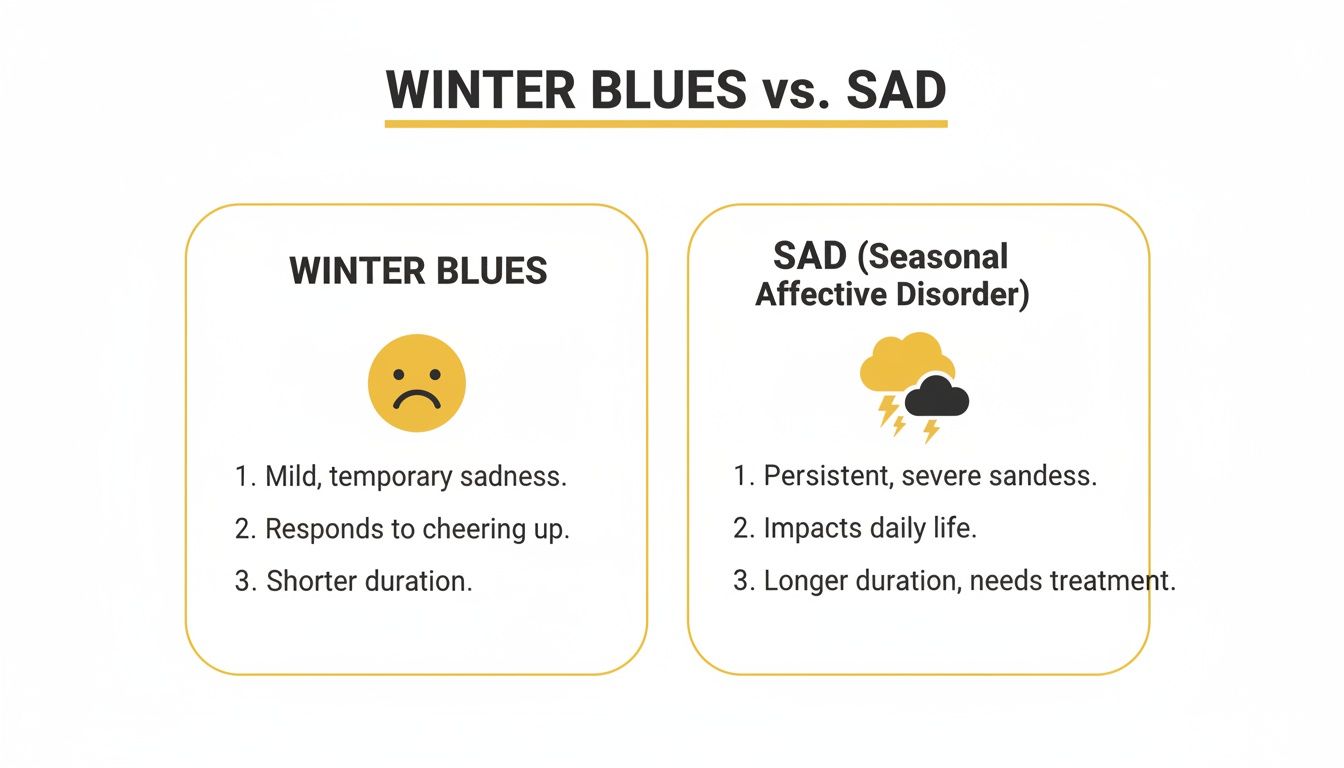
For those looking for more resources, you can read our other articles about seasonal affective disorder.
For more on this, see our prevent seasonal wellness guide.
Why Our Northern City Gets Hit So Hard by SAD
Let's dig into the why behind Seasonal Affective Disorder in a way that makes sense for us here. This isn’t just in our heads; our biology is hardwired to respond to light, and our geography at 53.5°N puts that system to the test every single year.
Think of your internal body clock—your circadian rhythm—as being perfectly calibrated for those long, glorious summer days of Fringe and Folk Fest season. Our bodies get used to 17 hours of daylight. Then, seemingly overnight, the switch flips. We plunge into short, dim days where the sun is a low, weak arc in the sky, and our internal system gets completely thrown off.
It's like our body's chemistry is scrambling to adapt to an abrupt shift from a feast of light to a famine. This confusion triggers a cascade of biological changes that directly hit our mood and energy.
The Brain Chemistry Behind the Winter Slump
When we talk about what causes SAD, two key players in our brain chemistry are front and centre: serotonin and melatonin. They work together like a seesaw, and the lack of sunlight in an Edmonton winter knocks their balance way off.
- Serotonin, the "Feel-Good" Chemical: Sunlight helps our brain produce serotonin, a neurotransmitter that regulates mood, appetite, and sleep. When our sun exposure plummets, so do our serotonin levels, contributing to feelings of depression.
- Melatonin, the "Sleepy" Hormone: Our brain produces melatonin in response to darkness to make us feel tired. In the winter, the extended darkness can cause our bodies to overproduce it, leading to that heavy, sluggish feeling that makes it hard to get out of bed, even after a full night's sleep.
This isn’t just a theory. Brain imaging studies have shown that people experiencing winter SAD often have higher levels of a protein that removes serotonin from the brain. At the same time, some research suggests they produce too much melatonin, which explains the constant sleepiness. It becomes a difficult cycle, and you can learn more about how our city's light patterns disrupt rest in our article on why sleep in Edmonton is complicated.
In essence, our brains are getting the signal to 'power down' for far too long each day. The result is a biological mismatch: our internal clock is screaming "hibernate," while the demands of modern life—work, family, shovelling the walk—keep going.
The Vitamin D Dilemma
On top of the brain chemistry changes, there’s the Vitamin D factor. Our skin produces this essential nutrient when exposed to sunlight, which is why it's often called the "sunshine vitamin." Vitamin D plays a crucial role in mood regulation, and a deficiency is directly linked to symptoms of depression.
Here in Edmonton, this becomes a major problem.
From roughly October to April, the sun's angle is too low for its UVB rays to be strong enough for our skin to make Vitamin D. Even on a bright, crisp winter day, we’re simply not getting what we need from the sun.
Add to that the practical reality of an "Edmonton cold" day. When it's -30°C, we're bundled up from head to toe. The tiny bit of exposed skin on our face isn’t enough to do the job. This makes supplementation a non-negotiable for many of us just to maintain baseline levels during the long winter. This biological reality, combined with the disruption to our internal clocks, creates a perfect storm for SAD to take hold.
For more on this, see our vitamin edmonton during guide. For more on this, see our vitamin edmonton during guide.
Spotting the Signs of SAD in an Edmonton Winter
It’s one thing to feel a bit sluggish when the first real snowfall hits and the commute along the Henday turns into a crawl. That’s just part of the deal of living here. But when that feeling settles in and doesn't leave for weeks, or even months, it might be more than just the winter blues.
Knowing what Seasonal Affective Disorder actually looks like in our daily lives is the first step toward managing it. The key difference is the impact. A passing grumpy mood is normal; consistently feeling too drained to do things you normally love is a red flag. It’s about recognizing a persistent pattern, not just a few off days.
Common Signs Framed for an Edmonton Reality
Think of these signs less as a clinical checklist and more as real-life scenarios that might feel familiar. This isn’t about self-diagnosing. It's about noticing when the seasonal shift is hitting you, or someone you care about, particularly hard.
- Losing Interest in Your Usual Go-Tos: Maybe you're a regular at the Strathcona Farmers' Market or love grabbing a coffee on Whyte Ave. If the thought of these simple pleasures now feels exhausting and you consistently say no, that’s a significant shift.
- A Pervasive Low Mood: This isn't just feeling sad about the dark evenings. It's a persistent feeling of hopelessness or worthlessness that colours your entire day, from the moment you wake up in the dark to when you get home in the dark.
- Major Changes in Sleep and Appetite: Are you sleeping for 10 hours and still waking up feeling like you could stay in bed all day? Are you craving carbs relentlessly? This goes beyond wanting a bowl of soup on a cold day; it's a powerful physical pull toward oversleeping and overeating starchy foods.
- The Urge to Hibernate Socially: We all have moments where we’d rather stay home than bundle up to go out. But with SAD, this becomes a deep withdrawal. You might find yourself turning down every invitation to skate at Hawrelak Park or meet friends at a pub, preferring to isolate yourself instead.
This infographic from the Centre for Addiction and Mental Health (CAMH) provides a great visual summary of these common symptoms.
As the graphic shows, the combination of physical and emotional symptoms—from fatigue and weight gain to irritability—creates a powerful cycle that can be tough to break.
When the 'Winter Drag' Becomes Unmanageable
The most critical factor is how these symptoms affect your ability to function. Are they making it hard to concentrate at work? Are they putting a strain on your relationships? Is the thought of another snowy commute not just annoying but completely overwhelming?
If your answers are yes, you’re not just "being dramatic" or "failing to tough it out." You’re experiencing legitimate symptoms of a recognized medical condition. Acknowledging this is the most important step.
Understanding these signs can help you start a conversation with your doctor or explore strategies to feel better. If you're looking for next steps, our guide on how to deal with seasonal depression offers practical tips tailored for getting through an Edmonton winter.
The goal is to move from just surviving the season to finding ways to live well within it, even when the sun feels like a distant memory.
Your Edmonton Toolkit for Fighting Back Against SAD
Alright, we know what SAD is and why it hits us so hard here. Now for the most important part: what can we actually do about it? Talking about the science is one thing, but getting through a long, dark Edmonton winter requires a practical game plan.
This isn't about finding a magic cure. It's about building a toolkit of realistic strategies that work for our specific climate and lifestyle. Some of these are small adjustments, others are bigger commitments, but they're all designed to help you reclaim some light and energy when the sun isn't cooperating.
Light Up Your Life—Literally
One of the most effective, evidence-based tools for fighting SAD is light therapy. The idea is simple: since a lack of light is at the core of the problem, we have to supplement it. A SAD lamp isn't just any bright light; it's a specific device designed to mimic natural sunlight.
To actually work, a therapy lamp needs to provide 10,000 lux of exposure. The standard advice is to sit in front of it for 20-30 minutes every morning, shortly after waking up. This helps reset your internal clock and gives those feel-good brain chemicals a much-needed boost. Think of it as a concentrated dose of a bright June morning, right in your living room.
You can find them at many local pharmacies or online, but make sure it’s a dedicated therapy lamp that filters out harmful UV rays. For a deeper dive into choosing and using one, check out our practical guide to managing SAD in Edmonton.
Reframe Your Thinking with CBT
While light therapy addresses the biological side, Cognitive Behavioural Therapy (CBT) tackles the psychological patterns that SAD reinforces. A specialized form, known as CBT-SAD, helps you identify and challenge the negative thoughts that often arrive with the first snowfall.
It’s about actively reframing thoughts like, "Winter is miserable and I can't do anything I enjoy," into something more balanced and actionable, like, "It's hard when it's cold, but I can still meet a friend for coffee or go for a walk when it's sunny."
This approach also emphasizes behavioural activation—a fancy term for deliberately scheduling enjoyable activities, especially during the winter. It’s a proactive way to fight the powerful urge to just hibernate.
CBT-SAD empowers you to change your relationship with winter. Instead of seeing it as a season to be endured, you develop skills to engage with it on your own terms.
Lean into Our Winter City Culture
We live in a city that has decided to embrace its winter reality. This is a huge advantage. Leaning into our festival culture and winter activities can be a powerful antidote to the impulse to withdraw and isolate.
- Embrace the Outdoors (Strategically): We know "just go outside" is useless advice when it's -30°C. But on those bright, crisp -10°C days? A walk through Mill Creek Ravine or along the trails in Terwillegar Park can be a game-changer. The key is dressing for it—good layers are everything.
- Schedule 'Social Sunshine': Isolation makes SAD worse. Make a point to schedule regular meetups, even if you don't feel like it. It doesn’t have to be a huge event. Grab a coffee at a cozy spot in Strathcona, meet for brunch in Windermere, or visit the Muttart Conservatory to soak in some green.
- Find an Indoor Activity You Don't Hate: For the truly "Edmonton cold" days, having an indoor hobby is essential. This could be anything from joining a climbing gym or a pottery class to exploring the Art Gallery of Alberta. The goal is to have something that gets you out of the house.
- Go to a Festival: We're the festival city for a reason. Events like the Silver Skate Festival or Flying Canoe Volant are designed to get us outside and celebrating together in the dark and cold.
Edmonton-Friendly SAD Management Strategies
Making a plan can feel overwhelming, so here’s a quick breakdown of where you can start. The best approach often involves combining a few of these strategies to see what sticks.
| Strategy | What It Is | Edmonton-Specific Tip | Cost/Effort |
|---|---|---|---|
| Light Therapy | Using a 10,000 lux lamp for 20-30 minutes each morning. | Place it by your coffee maker or desk to easily build it into your morning routine. | Moderate cost ($50-$200+), low daily effort. |
| CBT-SAD | Working with a therapist to change negative thought patterns about winter. | Find a local therapist who understands our northern climate and the challenges it presents. | High cost (unless covered), moderate effort. |
| Movement | Regular physical activity, both indoors and outdoors. | Layer up for a sunny river valley walk or find a class at a community rec centre for frigid days. | Low to moderate cost, moderate effort. |
| Social Connection | Proactively scheduling time with friends and family. | Make a recurring weekly date at a local cafe or plan to attend a winter festival together. | Low cost, moderate effort. |
Ultimately, fighting back against SAD in Edmonton is about being intentional. It requires acknowledging the challenge of our climate while actively choosing to build light, connection, and activity into our darkest months. It's not always easy, but it is always possible.
When to Talk to Someone: Edmonton Resources That Can Help

There’s a certain stoicism that comes with living in Edmonton. We pride ourselves on toughing out the -30°C days and just getting on with it. But when it comes to mental health, "toughing it out" isn't a badge of honour, especially when the winter darkness feels like it’s completely taken over.
Knowing when to move from self-care to professional support can be tricky. A good rule of thumb is to look at the impact. If your symptoms are seriously affecting your work, straining your relationships, or just making it impossible to get through the day, it's time to talk to someone.
This isn’t about weakness. It’s about recognizing that what you're experiencing is a legitimate health condition that deserves proper care.
Taking the First Step in Edmonton
The idea of seeking help can feel overwhelming, particularly when your energy is already at rock bottom. The good news is that the first step is usually the simplest: talk to your family doctor.
Your doctor is the best starting point. They can:
- Rule out other conditions that might be causing similar symptoms.
- Provide a formal diagnosis of seasonal affective disorder.
- Discuss treatment options with you, from light therapy and vitamin D to medication or a referral for therapy.
When you go, try to be specific. Tell them how long you’ve been feeling this way and how it's impacting your daily life—your sleep, your job, your social connections. This helps them understand the full picture.
Reaching out for help is a sign of strength and self-awareness. It's acknowledging that you don't have to navigate the long Edmonton winter alone and that effective support is available.
Local Resources to Guide You
If you're unsure where to turn or don't have a family doctor, Edmonton has a strong network of resources designed to help you find your footing. You don't have to figure it all out by yourself.
Even small variations in geography can influence mental health outcomes. Studies show significant regional differences in depression rates based on local environmental factors. Discover more insights about these geographic health links.
Here in Edmonton, these resources are your starting points:
- Alberta 211: This is an essential service. By simply dialling 2-1-1 (or visiting their website), you can connect with a community resource specialist who will guide you to mental health services, counselling, and support groups right here in the city. They can help find options based on your location, needs, and budget.
- Primary Care Networks (PCNs): Edmonton's PCNs often have mental health professionals, like behavioural health consultants, embedded within their teams. They can provide short-term support and help you develop coping strategies. Ask your family doctor if they are part of a PCN and what services are available to you.
- Accessible Counselling Services: Several local organizations offer counselling on a sliding scale, meaning the fee is adjusted to your income. Places like The Family Centre or Momentum Walk-In Counselling provide immediate, accessible support without a long waitlist.
The most important thing to remember is that you have options. Whether it’s starting with your doctor or calling 211, taking that first step can be the beginning of feeling like yourself again.
Living with the Light: A Year-Round Edmonton Perspective
Living well in Edmonton isn’t just about getting through the winter; it’s about learning to ride the waves of our extreme seasons all year. We're a city built on a certain kind of resilience. We hold festivals in the snow and cherish our river valley trails because we’ve figured out how to make the most of whatever our climate throws at us.
This means shifting from a reactive mindset to a proactive one. Instead of waiting for the November darkness to hit like a brick wall, we can reframe autumn as a crucial "fall reset" period.
The Proactive Fall Reset
As the leaves change and the air gets crisp, it’s the perfect time to start building your winter wellness toolkit. This isn't about dreading what’s to come; it’s about preparing with intention so you feel more in control when the deep freeze settles in.
- Audit Your Gear: Dig out your SAD lamp and make sure it still works. Stock up on Vitamin D. Find your warmest layers before the first real cold snap.
- Schedule Social Time: Before everyone’s calendar fills up, proactively book a few coffee dates or activities for January and February. Having something on the books can make a huge difference.
- Plan Your Movement: Decide now what your cold-weather activity plan will be. Maybe it’s committing to a weekly skate at the Victoria Park Oval, finding an indoor class, or just getting the right traction aids for winter trail walks.
The key is to treat winter preparation with the same importance as we treat our summer plans. We don’t wait until July to think about Folk Fest tickets; we shouldn't wait until December to think about our mental health.
Managing the Shift Back to Light
Just as the transition into darkness can be jarring, so can the return of our glorious, 17-hour summer days. For some people, that intense, prolonged light can disrupt sleep schedules and even trigger a rarer form of summer-onset SAD.
Managing this flip side means gradually adjusting your routines to align with the changing light, using blackout curtains, and sticking to a consistent bedtime even when the sun is still up.
Living with the light in Edmonton is a continuous cycle. We’re experts at finding joy in a perfectly groomed cross-country ski trail in January and celebrating a sunset over the High Level Bridge at 10 PM in June. By accepting and preparing for the rhythm of our seasons, we do more than just get through them. We learn to thrive in them. It's a mindset that reinforces that no matter the season, the river valley is your gym, and it’s free.
Related Reading
Related Reading
- How to Stay Active During Edmonton Winter Months: A Survival Guide…
- Winter Light: A Practical Guide to Managing SAD in Edmonton
- How to Manage Work Stress in Edmonton (Without Just “Surviving”…
Related Reading
- How to Stay Active During Edmonton Winter Months: A Survival Guide…
- Winter Light: A Practical Guide to Managing SAD in Edmonton
- How to Manage Work Stress in Edmonton (Without Just “Surviving”…
Related Reading
Related Reading
Frequently Asked Questions About SAD in Edmonton
We get a lot of questions about what Seasonal Affective Disorder means for us here in the capital region. Below are some straightforward answers to the most common ones we hear, framed for our specific, northern reality.
Can I Get Enough Vitamin D from the Sun During an Edmonton Winter?
Honestly, it’s nearly impossible. From about October to April, the sun sits so low in the Edmonton sky that its UVB rays are too weak for our skin to produce any meaningful amount of Vitamin D. This is true even on a bright, clear day.
Factor in that we’re usually bundled up in layers from head to toe, and the amount of skin exposed to the sun is minimal at best. This is precisely why most health professionals in Alberta recommend a daily Vitamin D supplement during the fall and winter. It’s always a good idea to chat with your doctor to figure out the right dosage for you.
Are SAD Lamps Really Effective, and Are They Expensive?
Yes, for many people, light therapy is one of the most effective tools for managing SAD. These lamps are designed to mimic natural outdoor light, which helps regulate the brain chemistry responsible for your mood and energy levels.
A proper therapy lamp provides 10,000 lux of light. The standard protocol is to use it for 20-30 minutes each morning, ideally shortly after you wake up, to kickstart your internal clock.
The cost can range from around $50 to over $200. While it’s an investment, many find it an indispensable part of their winter wellness toolkit. Just make sure you choose a lamp specifically designed for therapy—one that filters out harmful UV light.
Does SAD Go Away Completely in the Summer?
For most people with the classic winter-pattern SAD, the symptoms do lift as the days get longer and brighter. That distinct seasonal cycle is a hallmark of the disorder, and it’s why the shift into spring can feel so liberating.
However, if you find your depressive symptoms are sticking around well into the spring and summer, it’s crucial to talk to a healthcare provider. There might be something else going on. It’s also worth noting that a much rarer form of the condition exists, called 'summer-onset SAD,' where depressive symptoms emerge during the summer months instead of the winter. Understanding your own patterns is key to getting the right support.
At Edmonton Wellness Guide, we're here to help you navigate every season with practical, local, and science-backed advice. Find more resources and support tailored for our city at Edmonton Wellness Guide.