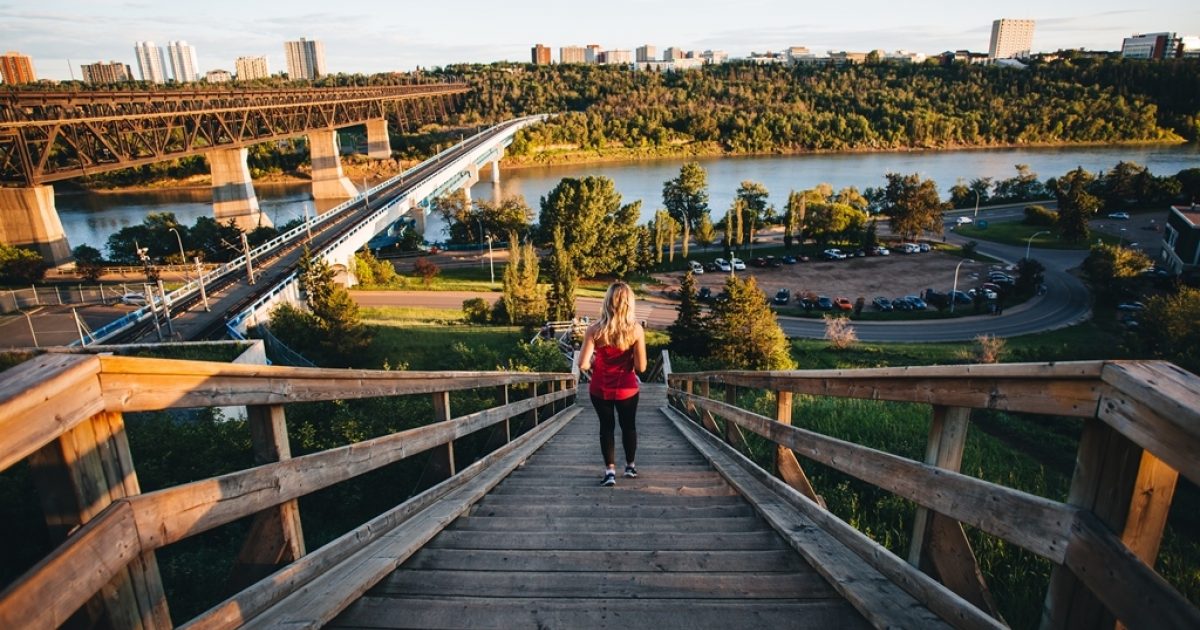
Living well in Edmonton isn't about chasing the latest wellness trend; it's about adapting to our unique northern reality. Real health and wellness in Edmonton means embracing the deep freeze of a -30°C January, making the most of our glorious 17-hour summer days, and finding balance in a city defined by its demanding seasons. As a lifelong Edmontonian with years in the wellness field, I've learned that advice written for Vancouver or Toronto just doesn't cut it here.
For more on this, see our finding footing guide.
Embracing an Edmonton-Centric Approach to Wellness
Let's be honest—generic wellness advice falls apart when you’re scraping your car in the dark for the fifth month in a row. Our lives are shaped by this rhythm of extremes, from the winter darkness that can bring on Seasonal Affective Disorder (SAD) to the endless summer sun that throws our sleep schedules into chaos. This guide is built for us.
We're not talking about fleeting fads or expensive retreats. We're talking about practical, real-world health and wellness that works for people who actually live here. It’s about knowing which river valley trails are passable during the spring mud season, how to fuel your body for a long day at Folk Fest, and why connecting with our community is one of the best things we can do for our mental health, especially when the temperature plummets.
For more on this, see our prepare body edmonton guide. For more on this, see our prepare body edmonton guide.
An effective wellness plan for an Edmontonian isn't just about diet and exercise; it's about resilience. It’s about building the physical and mental strength to not just survive our seasons, but to actually thrive in them.
What Makes Our Wellness Journey Unique?
Our approach has to be different because our environment is different. We have to consider latitude-specific factors that many other places don't. A few core pillars of an Edmonton-specific wellness plan include managing extreme light variation, adapting activity to the season, and leveraging our incredible community spirit.
To get a clearer picture of what we're up against and where our opportunities lie, here's a quick look at the seasonal breakdown.
Edmonton Seasonal Wellness At a Glance
| Season | Primary Challenge | Key Opportunity | Local Focus |
|---|---|---|---|
| Winter | Lack of sunlight, cold-induced inactivity, social isolation. | Building indoor routines, embracing winter sports, community festivals. | Vitamin D, light therapy, cross-country skiing, Silver Skate Festival. |
| Spring | Unpredictable weather ("false springs"), muddy trails, allergies. | Transitioning to outdoor activity, planting a garden. | Layering clothing, finding dry trails, local farmers' markets. |
| Summer | Wildfire smoke, disrupted sleep from long daylight hours. | Maximizing outdoor time, local food abundance. | Air purifiers, blackout curtains, river valley activities, fresh produce. |
| Autumn | Decreasing daylight, return-to-routine stress. | Ideal temperatures for exercise, enjoying the fall colours. | Re-establishing routines, hiking the river valley, preparing for winter. |
This table gives you a framework for thinking about the year, helping you anticipate the shifts and prepare accordingly.
This visual summary highlights the primary categories we'll explore for building a robust, season-proof wellness strategy right here in YEG.
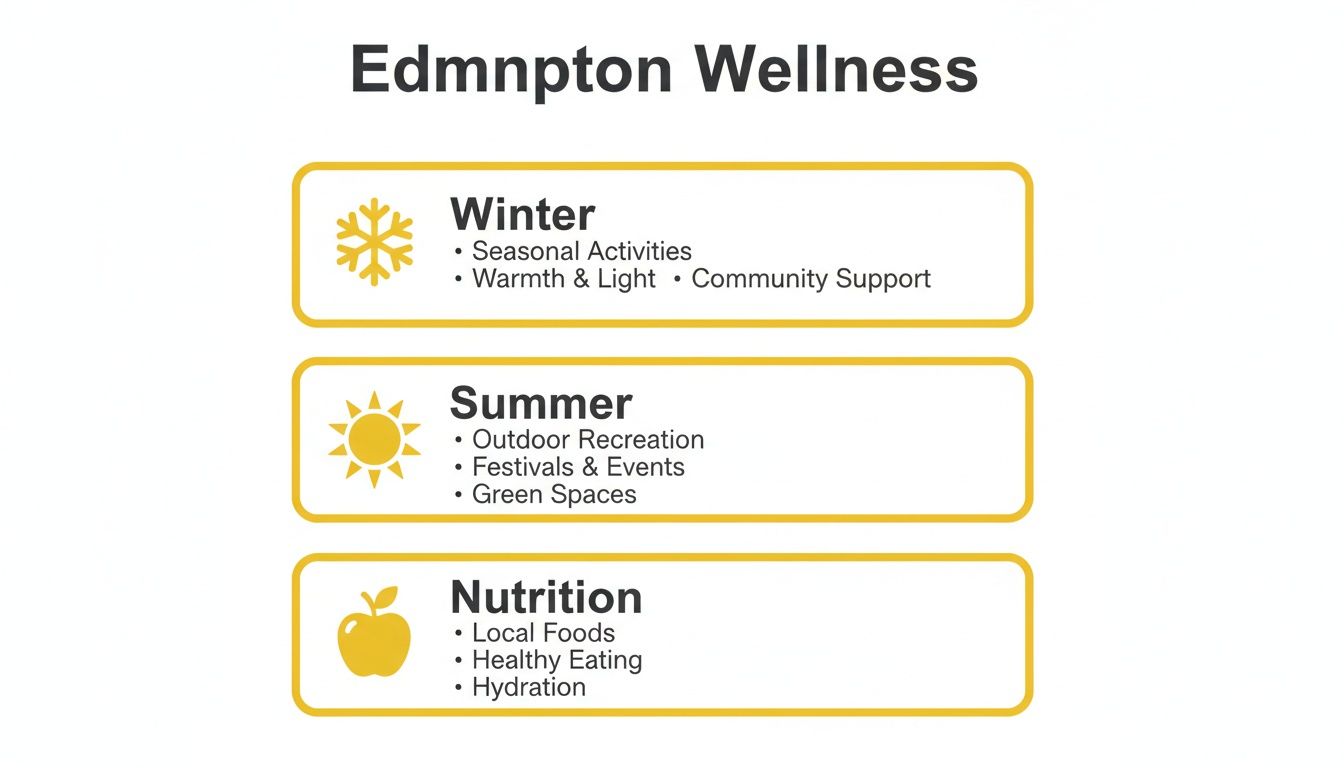
Each element—from navigating winter's challenges to optimizing summer's energy—requires a thoughtful, localized approach.
- Seasonal Adaptation: This is non-negotiable. We'll cover how to manage Seasonal Affective Disorder (SAD) and why Vitamin D is a must for us. We’ll also talk about protecting ourselves during wildfire smoke season without locking ourselves indoors all summer.
- Leveraging Our Landscape: The North Saskatchewan River Valley is the heart of our city and our greatest wellness asset. Learning how to use its vast network of trails year-round is a game-changer. For a deep dive, you can explore our complete guide to the river valley Edmonton trails and find your new favourite route.
- Community Connection: From winter festivals to neighbourhood rinks, Edmontonians know how to come together. Fostering these connections is a powerful tool against the isolation that a long, cold winter can sometimes bring.
Conquering the Cold: A Practical Guide to Winter Wellness

Let's be direct: an Edmonton winter is a marathon, not a sprint. Getting through November to April isn't just about owning a good parka. It requires a specific toolkit for dealing with our biggest challenge—not the cold, but the darkness.
The short, dim days can take a serious toll on our energy and mood. For many of us, this shows up as the "winter blues." For others, it can slide into something more significant. It’s a biological response to our latitude.
This is where understanding our unique northern environment becomes essential. We have to be proactive about managing the very real hurdles our long winters throw at us.
Battling the Darkness: SAD and Vitamin D
The most common complaint we hear is about the lack of sunlight, and for good reason. The dramatic drop in daylight hours messes with our internal clocks and can lead to Seasonal Affective Disorder (SAD), a type of depression directly linked to the changing seasons. Even if you don't have a formal diagnosis, the effects are real. Waking up in the dark and leaving work in the dark is draining. For a deeper dive into the symptoms and science, our guide on what is Seasonal Affective Disorder has you covered.
The key to winter wellness in Edmonton isn't about ignoring the darkness—it's about actively counteracting its effects. This means creating your own light and supplementing what the sun can't provide.
Two non-negotiable tools in any Edmontonian's winter survival kit are light therapy and vitamin D. Yes, they cost money, but they can be a game-changer.
- Light Therapy: Using a 10,000-lux SAD lamp for 20-30 minutes each morning can make a world of difference. It mimics natural sunlight and helps reset your body clock. Think of it as your personal sunrise on a dark December morning.
- Vitamin D: Often called the "sunshine vitamin," we simply can't produce enough of it naturally during an Edmonton winter. Health Canada recommends a daily supplement for most Canadians, and it's especially critical for us up north to support immune function and mental health.
Staying Active When It's "Edmonton Cold"
When the temperature drops to what we call "Edmonton cold"—that is, below -20°C—the motivation to move can evaporate. But staying active is one of the most powerful ways to beat back the winter blues. The trick is having a flexible plan that works with the weather, not against it.
Your Winter Movement Plan
| Condition | Activity Suggestion | Local Example |
|---|---|---|
| Warmish (-15°C to 0°C) | Outdoor Cardio | A brisk walk or run on the packed trails in Mill Creek Ravine. |
| Properly Cold (-20°C to -15°C) | Sheltered Outdoor Fun | Cross-country skiing in Gold Bar Park, where the trees offer some wind protection. |
| Deep Freeze (Below -20°C) | Go Indoors | A swim or workout at a city facility like the Kinsmen Sports Centre or Terwillegar Rec Centre. |
Embracing winter also means finding some joy in it. Instead of just enduring it, lean into the activities that are uniquely ours. Go for a skate at the Victoria Park Oval, explore the Ice Castles, or join a community league shinny game. It’s all about building resilience and finding the light in the darkest months.
Harnessing the Sun: Spring and Summer Strategies

When the snow finally melts, you can feel a collective sigh of relief across Edmonton. That shift from our long winter to the first real days of spring is powerful, and it’s the perfect time for a ‘spring reset’ to shake off that hibernation-mode sluggishness.
This isn't about some drastic overhaul. We're talking about small, intentional shifts that match the city’s changing energy. It might mean swapping your indoor workout for a run along the river valley trails (once the mud dries, of course) or making your first trip to the Old Strathcona Farmers' Market for early-season produce.
The idea is to re-energize your routine and get your body in sync with the lengthening days, gearing up for the full-throttle energy of an Edmonton summer.
Taming the Midnight Sun
By the time June rolls around, we’re gifted with glorious, 17-hour days. While it’s fantastic for long evenings at Folk Fest or late nights at the Fringe, that endless daylight can seriously mess with our sleep.
Your body's internal clock, or circadian rhythm, relies on darkness to produce melatonin and signal that it's time to rest. When the sun is still high in the sky at 10 p.m., that signal gets confused. This circadian disruption is a classic problem for us northerners, but it's manageable.
The trick to summer sleep in Edmonton is to create your own sunset. You have to be deliberate about signalling to your body that the day is over, even when the sky disagrees.
A few practical steps can make a huge difference:
- Invest in Blackout Curtains: This is non-negotiable. Making your bedroom as dark as possible is the single most effective way to support natural melatonin production.
- Establish a "Wind-Down" Routine: An hour before you want to be asleep, dim the lights, put away bright screens, and do something calming like reading a book or some gentle stretching.
- Maintain a Consistent Schedule: Try to go to bed and wake up around the same time every day, even on weekends. This helps anchor your body clock and makes it easier to fall asleep.
Fueling for Festival Season and Facing the Smoke
Summer is our season for getting out there. From marathon days exploring Hawrelak Park to evenings spent wandering through Taste of Edmonton, our activity levels soar. This means we need to fuel our bodies properly.
Thankfully, summer also brings an abundance of local food. Instead of relying solely on festival food, plan to visit a local market like the 124 Grand Market to stock up on healthy snacks and meals. Think fresh berries, crisp vegetables, and local proteins that provide sustained energy.
Unfortunately, our summers now come with an unavoidable challenge: wildfire smoke. Poor air quality can turn a beautiful day into a serious health risk. It’s a frustrating reality, but ignoring it isn’t an option.
It's critical to stay informed. This means knowing when to move your river valley run indoors and how to keep your indoor air clean. To get a handle on the risks, it's worth reading our detailed guide on the health effects of wildfire smoke. Keeping an eye on the Air Quality Health Index (AQHI) should become a daily summer habit for every Edmontonian.
Fueling Your Body the Edmonton Way

Eating well in Edmonton is a tale of two seasons. There's winter, when we naturally lean on hearty, warming foods, and then there's summer—a vibrant explosion of fresh, local abundance. Forget restrictive, one-size-fits-all diets. True nutritional wellness here is about learning to eat with our climate, not against it.
For more on this, see our wellness edmonton alberta guide. For more on this, see our wellness edmonton alberta guide.
This means adapting what’s on your plate to what’s realistically available and what your body needs to handle everything from a -30°C day to a long run through the river valley.
Making these smart choices year-round is also the cornerstone of a strong immune system. You can learn more about how to support your body's defenses in our guide to the best foods to boost your immune system.
The Winter Pantry Philosophy
When fresh produce gets scarce and expensive, we have to get strategic. Winter nutrition in Edmonton is all about embracing the long-storage heroes of the food world—the powerhouse ingredients that are both nourishing and locally accessible.
Think of it as adopting a "winter pantry" mindset, where your meals are built around:
- Root Vegetables: Carrots, beets, parsnips, and potatoes are our winter staples for a reason. They’re packed with vitamins and complex carbs that deliver sustained energy.
- Pulses and Legumes: Lentils, chickpeas, and beans are inexpensive, protein-rich, and incredibly versatile for making the soups and stews that warm you from the inside out.
- Quality Local Meats: Alberta is known for its high-quality proteins. Sourcing from local farms can provide nutrient-dense options for those who include meat in their diet.
- Frozen Produce: Don't sleep on the freezer aisle. Frozen fruits and vegetables—especially local berries picked in the summer—retain nearly all their nutritional value.
Celebrating Summer's Bounty
Once summer arrives, our entire nutritional landscape transforms. This is our window to indulge in the incredible variety of fresh foods grown right here in our region. It’s a time for lighter meals and vibrant colours.
The best way to embrace summer eating is to let the farmers' markets be your guide. Plan your meals around what's fresh and in-season, rather than sticking to a rigid grocery list.
Visiting markets like the iconic Old Strathcona Farmers' Market or the lively 124 Grand Market becomes more than just shopping—it's a key part of your wellness routine. Stock up on leafy greens, crisp cucumbers, sweet peas, and juicy berries. This is the time to fill your plate (and your freezer) with the nutrients that will help carry you through the rest of the year.
Fueling for the River Valley
For those of us who use the river valley as our personal gym, timing nutrition is key to performance and recovery. Whether you're a cyclist grinding up the hills in Emily Murphy Park or a runner training for a fall marathon, what you eat truly matters. A simple approach is to focus on easily digestible carbohydrates about 60-90 minutes before a workout—think a banana or a small bowl of oatmeal. Afterwards, aim for a combination of protein and carbs within the hour to help repair muscle and replenish your energy stores.
Managing Stress and Mental Health in Our City
Let’s be honest, living in Edmonton comes with its own unique set of stressors. From the daily grind of an icy commute on the Whitemud to the subtle mental weight of another long, dark winter, our environment asks a lot of us. Managing our mental health here isn't just about generic advice; it's about building practical, local strategies that acknowledge our reality.
The good news is that our city is full of built-in opportunities to find balance. Sometimes, the most effective tool is finding small, accessible moments of calm right where we are. This could be a quick ten-minute walk through a neighbourhood ravine like Kinnaird or Whitemud Creek on your lunch break. It could be five mindful minutes watching the river flow from a bench in Louise McKinney Park. These brief resets can do wonders to interrupt the stress cycle.
Finding Strength in Community
One of the best things about Edmonton is our deep-seated sense of community. We show up for each other, whether it's for a festival or during a deep freeze. This connection is one of our most powerful, and often overlooked, tools for mental wellness.
When the days get short, isolation can creep in. Actively pushing back against that is crucial. The key is to find your people, and thankfully, our city offers endless ways to do it.
- Community Leagues: These are the heartbeats of our neighbourhoods. They offer everything from low-cost yoga classes to garden clubs. It's a fantastic way to meet neighbours and build a local support system.
- Shared Interest Groups: Whether you're into running, board games, or crafting, there's a group for it. Places like the running rooms in Windere or on 109th Street host free run clubs that are as much about socializing as they are about fitness.
- Volunteering: Giving your time to a cause you care about, like helping out at the Fringe or a local food bank, fosters a profound sense of purpose and connection that is incredibly beneficial for mental health.
Accessible Resources and Realistic Support
True mental wellness isn't just about individual coping skills; social determinants like job security and income play a massive role. It's important to acknowledge that life can be hard and support is available when you need it.
Acknowledging that this is hard is the first step. You don’t have to pretend to be relentlessly positive. Our winters are long, life can be stressful, and it's okay to not be okay. The goal is resilience, not perfection.
When stress feels overwhelming, knowing where to turn for professional support is vital. Edmonton has a strong network of resources, from free walk-in counselling services to specialized therapists. The important thing is to take that first step and reach out when you need it, because support is available and you don't have to navigate these challenges alone.
Building Lifelong Wellness for Every Age
What keeps you healthy isn’t a static formula. The routine that works for a twenty-something training for a river valley marathon is worlds away from what a family with young kids needs on a frigid February weekend. True health and wellness in Edmonton isn’t a one-size-fits-all prescription; it’s about adapting your approach as you move through life.
Our needs change. A young professional might be focused on squeezing in efficient workouts, while a new parent is just trying to find five minutes of peace. As we get older, the focus naturally shifts again—towards mobility, preventive health, and staying socially connected.
The goal isn't to find one perfect routine and cling to it forever. It's to build a foundation of healthy habits that can bend and adapt with you.
For Families and Working Professionals
Keeping kids active through a long Edmonton winter is a challenge every local parent understands. The key is to have a roster of reliable indoor go-to spots. Think beyond the massive recreation centres and explore neighbourhood options like indoor playgrounds or the local community league rink for a family skate.
For busy professionals, wellness can often feel like just another to-do. The secret here isn’t finding more time—it's about efficiency. A quick workout at a downtown gym on your lunch break or a mindful walk through the Legislature grounds can reset your day. It’s not about adding more hours, but about making the most of the minutes you have.
A Focus on Our Aging Population
Our city is changing. With Alberta's median age now at 38 and a significant chunk of residents aged 65 or older, Edmonton's wellness landscape has to support our aging population. This demographic shift makes age-appropriate fitness and preventive health more crucial than ever. You can dig into the numbers over at Alberta Health Services.
This isn’t about slowing down; it’s about staying strong, mobile, and engaged for decades to come.
Lifelong wellness is less about hitting peak fitness and more about maintaining consistent, joyful movement. It's about finding activities you love that keep you connected to your body and your community.
For older adults, this means embracing activities that specifically support balance, strength, and social connection.
- Low-Impact, High-Reward Activities: There's a reason pickleball has exploded. It’s incredibly social, fun, and easy on the joints. You'll find leagues and drop-in games at community halls and recreation centres all over the city, from Windermere to the northeast.
- City-Run Programs: The City of Edmonton offers excellent senior-focused fitness classes. These range from aqua-fit to strength training classes designed to maintain bone density and muscle mass.
- Preventive Health Focus: Beyond fitness, lifelong wellness means getting serious about regular health screenings and proactive care. It’s about managing chronic conditions and prioritizing well-being to ensure a high quality of life for years to come.
Your Edmonton Wellness Questions Answered
We get it—living well in Edmonton means dealing with a unique set of challenges. Here are our answers to some of the most common questions we hear, with practical advice built for right here at home.
What Is the Best Way to Stay Active During an Edmonton Winter?
The trick is to have a plan for both the "good" winter days and the truly cold ones. Think of it as a hybrid approach.
When the temperature is hovering around -15°C or warmer, get outside. Cross-country skiing in Gold Bar Park or snowshoeing in the river valley are fantastic ways to stay active. But when that deep freeze hits, you need an indoor backup plan. This could be a membership to a city rec centre or a local yoga studio.
One thing that is absolutely non-negotiable for any winter outing is proper layering. A moisture-wicking base layer, an insulating mid-layer, and a windproof outer shell will make the difference between a great day and a miserable, potentially dangerous one.
Where Can I Find Local, Healthy Food in the Winter?
It's easier than you think. Our year-round farmers' markets, like the ones in Old Strathcona or the Bountiful Market, are gold mines for root vegetables, preserves, local meats, and artisanal goods long after the first snowfall.
A great winter strategy is to look into a CSA (Community Supported Agriculture) box from a local farm or use a delivery service that sources regionally. It’s a fantastic way to guarantee you’re still getting high-quality, local food even when the ground is frozen solid.
Don't forget the simple stuff, either. Focusing on frozen local berries picked at peak freshness in the summer and stocking up on hearty vegetables like squash, potatoes, and cabbage is a smart and budget-friendly way to eat well all winter long.
How Do I Manage the Extreme Daylight Changes Affecting My Sleep?
For anyone living at this latitude, consistency is the key to surviving our wild swings in daylight.
- In summer: Blackout blinds are not a luxury here; they're essential. You have to create your own darkness. Stick to a regular bedtime, even when the sun is still up at 10 p.m. This is how you signal to your body that it’s actually time to wind down.
- In winter: The moment you wake up, get some bright light. This is crucial for anchoring your internal clock. A quick walk outside or even just 20 minutes with a SAD lamp while you have your morning coffee can kickstart your system and give you the energy you need for the day.
At Edmonton Wellness Guide, our goal is to give you practical, season-specific advice that actually works in our city. To start building your own personalized plan for year-round well-being, visit our main site at https://www.edmontonwellnessguide.com.
Related Reading
- 10 Workplace Wellness Program Ideas That Actually Work in Edmonton
- Best Indoor Wellness Activities When Edmonton Air Quality Drops:…
- Edmonton Spring Allergies Wellness Guide: Natural Relief for…