
Managing work stress is about more than deep breathing. Here, it’s about knowing the difference between a tough deadline and a tough deadline when it's -30°C and you haven't seen the sun in days. It’s about building routines that work with our wild Edmonton seasons and having a few tricks up your sleeve for when things get overwhelming.
This isn’t generic wellness advice. This is a practical, Edmonton-specific toolkit for dealing with both the root causes of stress and the in-the-moment symptoms—from learning how to push back at the office to knowing which river valley trail will actually clear your head.
Why Managing Work Stress Is Different in Edmonton
Let's be honest—dealing with work stress here isn't like anywhere else. It’s one thing to stare down a tough deadline. It’s another thing entirely to do it after scraping a thick layer of ice off your windshield in the pitch black at -25°C.
Most of the generic advice you find online just doesn't land here. It misses the reality of what it's like to live and work in a city where the pressures stack up in unique ways.
We’re navigating the background hum of boom-and-bust economic anxiety, spending too much time on slick, congested roads, and carrying the real psychological weight of our long, dark winters. Our local culture of just gritting our teeth and getting on with it is a strength, sure, but it can also make it incredibly hard to admit when we’re barely hanging on.
Understanding Our Unique Pressures
The truth is, our environment shapes our stress. The extreme swing in daylight between our 17-hour summer days and brutally short winter ones can throw your body’s internal clock—your circadian rhythm—into total chaos. It messes with your sleep and your mood before you even get to the office.
For more on this, see our prepare body edmonton guide. For more on this, see our prepare body edmonton guide.
If you want to go deeper on this, we've covered exactly how our unique northern climate affects wellness in our guide. This seasonal shift, layered on top of professional demands, creates a set of challenges you just don’t find in Toronto or Vancouver.
This infographic nails some of the key numbers on workplace stress, reflecting a reality that feels all too familiar to many of us.
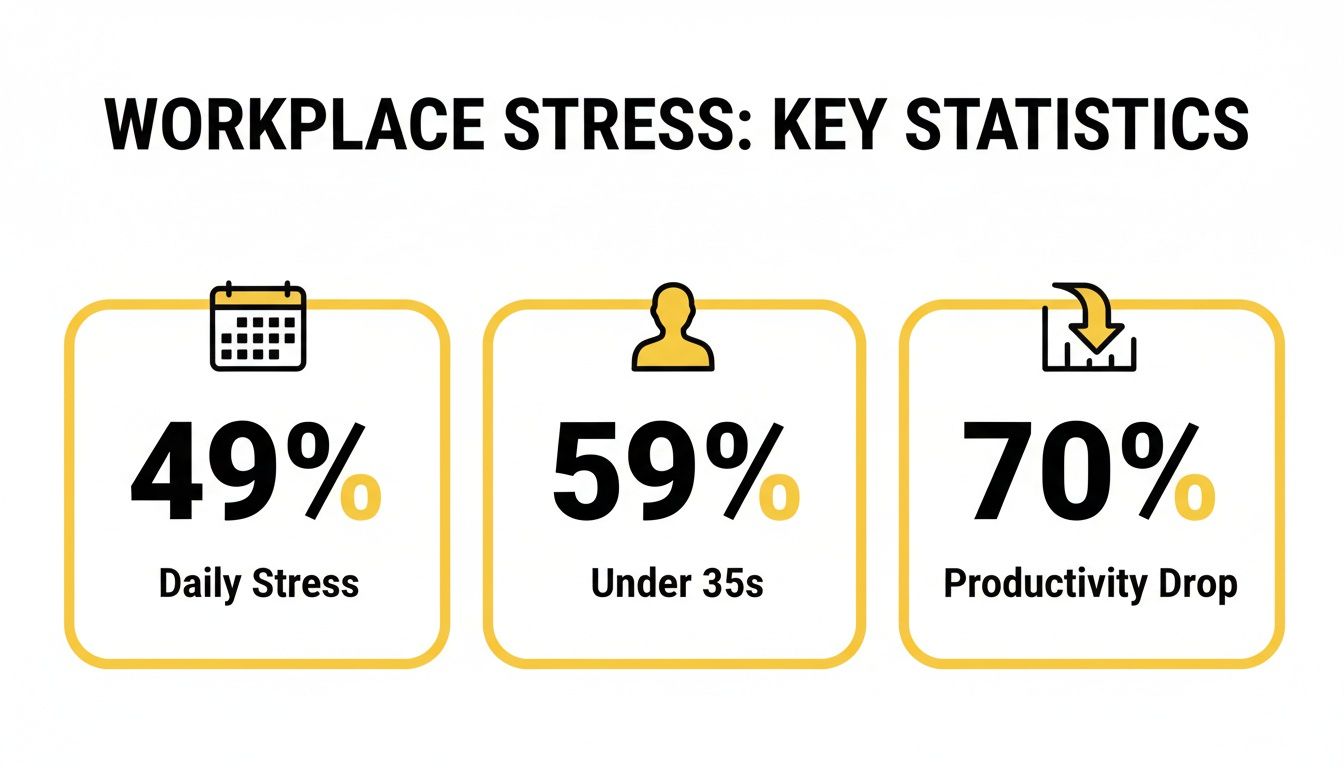
The data is clear: daily stress is hammering productivity, and it's hitting younger workers the hardest.
Across Canada, work-related stress has become the baseline. Recent data shows a staggering 49% of employees feel work-related stress every single day. That number jumps to 59% for workers under 35.
This isn't just about "feeling stressed," either. It has real consequences. 70% of employees report that their productivity has tanked because of their worsening mental health.
For professionals here in Edmonton—juggling those long winters, frustrating commutes, and the volatility of key sectors like energy and health care—these aren't just statistics. They're our daily reality.
We’re not just imagining it—the combination of professional pressure and our northern latitude creates a perfect storm for burnout. Acknowledging this is the first step toward managing it effectively.
This guide is built on that understanding. Every tip and strategy has been designed to be relevant to an Edmontonian's real life, helping you build a sustainable approach to managing stress that actually works here.
Quick Resets for a Stressful Edmonton Workday

For more on this, see our manage stress edmonton guide.
Let's get real. When the pressure is on at work—the inbox is exploding, another team drops an urgent request, and deadlines are piling up—you don't need a lecture on "work-life balance." You need something that works right now.
These are the in-the-moment resets, the practical tactics you can use at your desk or on a quick break that are built for our Edmonton reality.
After all, the standard advice to "just go for a walk" is completely useless in a January deep freeze or during a smoky August afternoon. But that doesn't mean you're stuck. We've got pedways, quiet corners, and a different kind of resilience built right in.
This is about managing that rising tide of stress without anyone even noticing you're doing it. These are the quick, discreet, and effective moves that pull you back from the edge when you feel overwhelmed.
Master the Micro-Break, Edmonton Style
The key to stopping burnout is catching stress before it snowballs into a full-blown avalanche. A micro-break isn't about mindlessly scrolling through your phone; it's a deliberate, short pause designed to interrupt the stress cycle.
Instead of trying to power through until you’re completely fried, you take a tactical five-minute break. This could be a quick walk to grab a coffee from Credo if you're downtown, using the pedway system to get your legs moving without wrestling with a parka.
Or maybe it's just stepping away from your screen to look out the window and soak in some of that precious, low-hanging winter sun. These small pauses aren't lazy; they’re strategic. They give your brain a moment to reset, which studies show can significantly boost focus and dial down that "I'm drowning" feeling.
Here are a few options that actually work for us here:
- The Pedway Power Walk: If you work downtown, use our indoor network for a brisk five-minute loop. It gets your blood flowing without needing to bundle up.
- The Window Gaze: Especially in winter, find a south-facing window. A few minutes of sunlight on your face can make a surprising difference to your mood and energy.
- The Stairwell Sprint: Can’t get outside? A few flights of stairs will get your heart rate up and release endorphins—the body's natural stress relievers. It’s surprisingly effective.
Ground Yourself Without the Awkwardness
Mindfulness techniques are powerful, but let’s be honest: sitting cross-legged and chanting in an open-plan office isn't going to happen. The good news is you don't need to. Try a simple grounding technique that’s completely invisible to your coworkers.
The 5-4-3-2-1 method is a perfect example. Silently, right from your desk, identify:
- 5 things you can see (your monitor, a plant, the colour of the carpet).
- 4 things you can feel (your feet on the floor, the fabric of your chair, the cool surface of your desk).
- 3 things you can hear (the hum of the lights, typing, distant traffic).
- 2 things you can smell (your coffee, hand sanitizer).
- 1 thing you can taste (the lingering taste of your lunch or a mint).
This simple exercise yanks your focus away from anxious thoughts and plants it firmly in your immediate surroundings, which has a real calming effect on your nervous system. Another fantastic tool is controlled breathing. You can learn more about the best breathing exercises for anxiety in our detailed guide, which covers techniques you can do without leaving your chair.
You don't need a quiet room or a yoga mat. You just need 60 seconds and your senses to bring yourself back to the present moment, breaking the cycle of a stress spiral.
Sometimes you just need a quick, structured idea to pull you out of a spiral. Here are a few reliable resets you can lean on during a hectic day.
Quick Stress Resets for the Edmonton Workday
| Technique | Time Required | Where to Do It | Best For |
|---|---|---|---|
| Box Breathing | 2-3 minutes | At your desk | Calming racing thoughts before a meeting |
| The 5-4-3-2-1 | 1-2 minutes | At your desk | Breaking a cycle of anxious, looping thoughts |
| Stairwell Climb | 5 minutes | Office stairwell | Releasing physical tension and getting a quick energy boost |
| Pedway Loop | 5-10 minutes | Downtown pedway system | Getting movement in during extreme weather (cold or smoke) |
| Look Outside | 2 minutes | By any window | Resetting tired eyes and getting a dose of natural light |
| Cold Water Splash | 1 minute | Washroom | A quick sensory shock to snap you back to the present |
These quick resets are your first line of defence. They're about having a few tools in your back pocket to help you stay in control on even the most demanding Edmonton workday.
Building a Stress-Proof Seasonal Routine

Quick resets are your lifeline on a tough day, but real, lasting resilience comes from building habits that buffer you against stress before it even hits. Here in Edmonton, that means creating routines that work with our seasons, not against them. Fighting our city's natural rhythm is a losing battle that just piles more pressure onto your work life.
Instead, we can learn to lean into the unique energy of each season. This proactive approach helps manage work stress by building a stronger, more stable foundation at home. It’s all about structuring your days to feel more in control, whether you’re facing a dark January morning or a sweltering August afternoon.
Harnessing Our Extreme Light Cycles
Our relationship with the sun is, to put it mildly, complicated. The wild swing from short winter days to the midnight sun of summer has a real, physiological impact. It can throw off our circadian rhythms—the internal clock regulating sleep, mood, and energy—making workplace pressures feel much heavier.
The key is to anchor your body's internal clock, especially during the darker months.
- Morning Light is Non-Negotiable: Even on a cloudy winter day, getting outside for 10-15 minutes within an hour of waking up is a game-changer. The specific blue light wavelengths your brain needs are strongest in the morning, sending a clear signal that it's time to be alert. A quick walk around your Parkallen block or coffee on the balcony is all it takes.
- Embrace the Glorious Summer Evenings: Our 17-hour summer days are a gift. Instead of letting work bleed into them, make a firm rule to shut down and get outside. A bike ride through the river valley trails or a walk around your Windermere neighbourhood actively resets your mind and burns off the day's stress.
This isn’t just about feeling good; it’s about regulating the hormones that manage stress. Consistent light exposure helps fight the fatigue and low mood associated with Seasonal Affective Disorder (SAD), which many of us experience to some degree.
By intentionally aligning your daily routine with natural light, you’re not just managing stress—you're building a biological defence against it. It's one of the most powerful and accessible tools we have as Edmontonians.
Weaving Movement Into Your Edmonton Week
When work gets overwhelming, exercise is usually the first thing to get cut. We all know it’s one of the best ways to burn off cortisol, the primary stress hormone. The trick is to make it so convenient that it’s harder to skip than it is to just do it.
Luckily, our city is basically a giant, year-round gym.
Winter Movement:
The cold is a reality, not an excuse. We're Edmontonians; we know anything warmer than -20°C is practically patio weather.
For more on this, see our edmonton fall weather guide.
- Lunchtime Skates: Most communities have an outdoor rink. A quick 20-minute skate at lunch is an incredible mental and physical reset.
- Embrace the Cold Walk: Dressed properly, a brisk walk in the crisp winter air can be incredibly refreshing. Mill Creek Ravine is sheltered from the wind and absolutely beautiful in the snow.
Summer and Shoulder Seasons:
Our good-weather months are for soaking it all in.
- Post-Work Decompression: Instead of sitting in traffic on the Henday, detour to Hawrelak Park for a 30-minute walk before heading home.
- Festival Season Fitness: Walk or bike to the Fringe or Folk Fest instead of driving. You'll get some movement in and save yourself the headache of finding parking.
Finding the drive to get moving can be tough when you're already drained. For more practical advice, check out our guide on how to stay motivated to exercise when the couch is calling your name.
Setting Boundaries and Fuelling Your Body
A resilient routine isn’t just about what you do; it’s also about what you don’t do. Setting firm boundaries around your workday is critical. That means defining clear start and end times and fighting the urge to check emails late into the evening.
This boundary is much easier to hold when your body is properly fuelled. The daily stress of figuring out what to eat just adds to your cognitive load.
- The Sunday Meal Prep: It’s a classic for a reason. Spending two hours on a Sunday afternoon prepping lunches and chopping veggies for dinners frees up a surprising amount of mental energy all week.
- Hydration Station: Keep a large water bottle on your desk at all times. Even mild dehydration can increase cortisol levels and leave you feeling foggy and irritable.
Building a stress-proof routine isn't about adding more to your plate. It's about being intentional with your time and energy, using the unique rhythm of our city to your advantage. By creating these small, consistent habits, you build a buffer that makes the inevitable stresses of work much easier to handle.
How to Address Stress at its Source in Your Job

Quick resets and seasonal routines are vital for managing the day-to-day pressure. But let’s be real—sometimes, they're just band-aids. What happens when the problem isn’t the pressure, but the source of it? The crushing workload, the vague expectations, the constant feeling of spinning your wheels—that’s when you need to go to the source.
This isn’t about confrontation or complaining. It's about professional self-advocacy. It’s about learning to have a calm, constructive conversation with your manager to build a healthier, more sustainable way of working for yourself and, often, for your whole team.
Preparing for a Constructive Conversation
Walking into your manager's office to say "I'm overwhelmed" can feel incredibly daunting. The key is to reframe it. You aren’t dropping a problem in their lap; you’re proposing a solution to a business challenge. Your burnout is a risk to productivity, and you’re taking the initiative to fix it.
Before you even book the meeting, do a little prep work. Get specific about what’s actually causing the stress. Is it the sheer volume of tasks? Conflicting deadlines from different departments? Or a lack of clarity on what success even looks like in your role?
- Gather evidence, not emotions. For a week, track your time. Make a note of which tasks consistently push you into overtime or cause the most friction.
- Identify the 'why'. Is a process broken? Are you under-resourced for a key project? Pinpointing the systemic issue makes the conversation about fixing a process, not just about your feelings.
- Draft some solutions. Come to the table with one or two potential fixes. Maybe it's re-prioritizing your Q3 goals, delegating a recurring task, or getting more clarity on a project's scope before you start.
Having this data turns a vague complaint like "I have too much work" into a specific, solvable business case: "I'm spending 10 hours a week on administrative tasks that are delaying Project X. Could we explore delegating those?"
Framing the Conversation for Success
The language you use really matters here. Your goal is to be a partner in finding a solution, not an adversary. Frame the conversation around shared goals like efficiency, project success, and team well-being.
Start by acknowledging your commitment. A good opener might be something like, "I'm really committed to our team's success, and I'd like to talk about how we can make sure my work is as effective as possible."
Then, present your observations calmly, using the data you gathered. "I’ve noticed that my workload has increased by about 20% over the last quarter. To keep delivering high-quality work and avoid burnout, I'd like to discuss how we might prioritize my current projects."
This isn't about blaming or demanding. It's about collaborative troubleshooting. By focusing on outcomes and processes, you depersonalize the issue and invite your manager to problem-solve with you.
This isn't just a hunch; the data backs it up. Detailed Canadian surveys show that heavy workloads and long hours are the top drivers of burnout. For 39% of professionals, this was the primary cause. But those surveys also highlight the power of a good workplace culture. Employees in high-trust environments report 76% more engagement and significantly less stress. Management practices have a direct and measurable impact on well-being.
What to Do When the Conversation Is Hard
Let's be honest: not every manager will respond perfectly. If you get pushback or feel dismissed, don't give up. The conversation itself is a step forward—it documents your attempt to proactively manage the situation.
If an initial chat doesn't lead to change, you have other options. You could follow up in writing, summarizing your concerns and proposed solutions. If the stress becomes unmanageable and starts affecting your health, it may be time to look for external support. Our guide on mental health clinics in Edmonton can help you find professional resources to navigate these tougher situations.
For more on this, see our finding footing guide. For more on this, see our health wellness edmonton guide. For more on this, see our finding footing guide. For more on this, see our health wellness edmonton guide.
Addressing stress at its source is one of the most powerful things you can do for your long-term well-being. It’s a skill that builds confidence and helps create a work environment where you can not only survive but actually thrive.
Your Edmonton Toolkit for Mental Wellness
Knowing a few breathing exercises is one thing. Knowing exactly where to go in Edmonton when you need an immediate reset after a brutal meeting—that’s practical power. This is your curated, no-fluff list of local resources.
Think of it as your go-to toolkit for managing the pressures of work right here in our city. Whether you need a quiet trail to walk off a frustrating conversation, an affordable yoga class to untangle your shoulders, or professional support to navigate a tougher period, the answer is in YEG.
Finding Your Calm in the City
Sometimes the most effective stress management tactic is a change of scenery. Our city is packed with spots that feel a world away from the office buzz, offering a genuine chance to breathe and recalibrate. You just have to know where to look.
Here are a few specific ideas that go beyond the obvious:
- For a Quick Decompression Walk: Skip the busiest parts of the river valley and head for the quieter trails in Mill Creek Ravine south of Argyll Road. The tree cover is dense, it’s sheltered from the wind, and the sound of the creek does a remarkable job of drowning out office noise.
- For a Green Escape in Deep Winter: A membership to the Muttart Conservatory is one of the best mental health investments an Edmontonian can make. When it's -30°C and you haven't seen a living leaf in months, stepping into the humid, vibrant air of the tropical pyramid is a powerful reset. It’s a vital dose of green therapy.
- For Affordable, Accessible Movement: You don't need a pricey studio membership to find your zen. Look for drop-in classes at community hubs. Places like the Strathcona Community League or smaller studios around Old Strathcona often have affordable yoga or meditation sessions perfect for unwinding after the workday.
Don't underestimate the power of a "third place"—a spot that isn't work or home where you can simply exist. Finding your go-to park bench, coffee shop, or library corner can be a powerful tool for creating mental separation from work stress.
Many City of Edmonton recreation centres also offer great, low-cost fitness options. If cost is a barrier, it's absolutely worth exploring the Leisure Access Program for affordable options to get into these facilities.
For more on this, see our workplace wellness program guide.
Local and Accessible Professional Support
While a walk in the park can work wonders, sometimes it’s not enough. Reaching out for professional help isn’t a sign of weakness; it’s a sign that you’re taking your well-being seriously. Thankfully, Edmonton has a strong network of resources, many of which are both accessible and affordable.
Navigating the system can feel overwhelming, so here’s a straightforward starting point.
When to Consider Professional Help
It might be time to seek support if:
- Your stress feels constant, and nothing you do seems to make a dent.
- It's starting to mess with your sleep, appetite, or relationships.
- The coping strategies you've been using just aren't working anymore.
- You're seeing signs of burnout, like deep exhaustion, cynicism about your job, or feeling like you can't get anything right.
Your Edmonton Mental Health Resource List
Here are some key local and provincial organizations that can connect you with counsellors, psychologists, and other mental health pros.
- Psychologists' Association of Alberta (PAA): This is the best place to start if you're looking for a registered psychologist. Their "Find a Psychologist" tool is brilliant—you can search by location, specialty (like workplace stress or anxiety), and even by the type of therapy offered.
- 211 Alberta: This free, confidential service is a lifeline, available 24/7. You can call or text 211 to get connected to a huge range of community and social services, including non-profit counselling agencies that often offer services on a sliding scale based on your income.
- Access 24/7: Operated by Alberta Health Services, this is the central intake for addiction and mental health support in the Edmonton area. They can provide immediate support over the phone and direct you to the most appropriate AHS-funded programs.
- Momentum Counselling: This is a fantastic Edmonton-based organization that provides accessible and affordable therapy. They offer walk-in sessions and use a sliding fee scale, making them a great option if your benefits coverage is limited or non-existent.
Just knowing these resources exist is half the battle. Taking that first step to reach out—whether it's for a quiet walk or a confidential conversation—is how you start to take back control from workplace stress.
It All Comes Down to Our Edmonton Resilience
If you live here, you know what it means to be resilient. It’s a core part of being an Edmontonian, something baked into our identity by long winters and a culture of just getting things done. But real, lasting resilience isn’t about gritting your teeth and pushing through indefinitely. It’s about being smart, strategic, and using the right skills to navigate the unique pressures of our city.
The goal here isn't to pretend we can eliminate stress. That's a fantasy. The real work is learning to manage the pressure with the incredible tools and community we already have right here in our own backyard.
Building Your Personal Toolkit
What really moves the needle are the small, consistent actions you take every day. It’s knowing that a quick walk through the river valley after a tense meeting can completely reset your nervous system. It's the simple act of getting that bright morning sunlight on your face to push back against the winter blues.
It’s also about learning to align with our seasons instead of fighting them. We can use those gloriously long summer evenings to decompress and bank energy for the darker months ahead. Think of this seasonal awareness as a uniquely Edmonton superpower for managing your well-being over the long haul.
True resilience isn't about ignoring the strain; it's about building a toolkit so effective that the strain becomes manageable. It's about knowing you have options, from advocating for yourself at work to knowing which quiet park will bring you back to centre.
And finally, don't forget the power of advocating for yourself. A straightforward, constructive conversation with your manager about workload isn’t a complaint; it’s a proactive step toward building a more sustainable work environment. It’s about fixing problems at their source, not just trying to cope with the fallout.
We have a powerful advantage here. Leveraging our city’s incredible natural spaces—from the single-track trails in Terwillegar to the quiet corners of our neighbourhood parks—and tapping into local professional resources gives us everything we need. We can build a work life that feels less overwhelming and more in our control. We are, after all, in this together.
Your Questions, Answered
We get it—managing work stress in Edmonton comes with its own unique set of challenges. Here are some answers to the most common questions we hear from people trying to find a better balance in this city.
How Can I Cope When Wildfire Smoke Traps Me Inside?
Wildfire smoke season adds a whole other layer of stress, especially when our usual escape—getting outside—is suddenly off the table. It’s frustrating. When the air quality tanks, you have to pivot to indoor resets.
This is a perfect time to explore Edmonton’s indoor “third places.” Head to the Muttart Conservatory for a dose of green, humid air that feels a world away from the haze. Find a quiet corner at the Stanley A. Milner Library downtown. Even a quick trip to a local recreation centre for a swim can break that cooped-up feeling and reset your nervous system.
My Workplace Avoids Mental Health Talk. What Can I Do?
This is a tough, and frankly, all-too-common situation. If your workplace culture is resistant to talking about mental health, you have to start small and focus on what you can control. The key is to reframe the conversation.
Instead of talking about "mental health," use business language. Frame your suggestions around outcomes like improving “productivity,” increasing “efficiency,” and “preventing burnout.”
Suggesting a team workshop on better time management or advocating for clearer project briefs are subtle ways to tackle common stressors without using words that might make management uncomfortable. And don't underestimate the power of leading by example. Taking your scheduled breaks and setting clear boundaries can slowly, but surely, start to shift your team's norms.
When an organization actually gets serious about managing workplace stress, the results are massive. Canadian data shows that in workplaces that prioritize prevention, the burnout rate plummets from 47% down to 27%. You can explore the full economic case for why employers should invest in these supports—something that’s especially vital for keeping good people in Alberta's competitive job market.
Where Can I Find Free or Low-Cost Support in Edmonton?
Getting professional support shouldn't be a luxury, and in Edmonton, it doesn't have to be. You just need to know where to look.
- Momentum Counselling: A fantastic resource for accessible, affordable therapy. They offer walk-in sessions and use a sliding fee scale based on what you can afford.
- 211 Alberta: Just call or text 211 anytime. Think of them as a switchboard for help—they can connect you to non-profit counselling services that charge based on income.
- Access 24/7: This is AHS's central intake for mental health support. They’re the gateway to publicly funded programs and services and can help you navigate the system.
At Edmonton Wellness Guide, we're committed to providing practical, science-backed strategies to help you thrive right here at home. For more personalized guidance on building resilience, check out our resources at https://www.edmontonwellnessguide.com.
Related Reading
- How to Prevent Seasonal Wellness Routine Breakdowns in Edmonton: A…
- 10 Workplace Wellness Program Ideas That Actually Work in Edmonton
- A Wellness Guide to the Edmonton Alberta Climate, from a Lifelong…