

Beating the winter blues in Edmonton isn't about ignoring our northern reality; it’s about embracing it. As a lifelong Edmontonian who’s spent years in the wellness and event world, I’ve learned the key is to get proactive with light exposure, find ways to stay active when it’s truly cold, lean on our community, and sync our food and sleep with the extreme seasonal shifts we all know so well.
For more on this, see our manage stress edmonton guide. For more on this, see our manage stress edmonton guide.
Why Our Winter Blues Are Different
Let’s be honest. Most of the advice you read online about beating the winter blues just doesn’t land right for us. An article cheerfully telling you to “take a sunny walk” feels a little out of touch when it’s -30°C and the sun ducked below the horizon before you even finished work.
Our winters are a marathon, not a sprint. The challenge isn't just the bitter cold; it’s the profound, bone-deep darkness that settles in for months. This isn’t just a feeling—it’s a physiological reality tied directly to our northern latitude. That dramatic swing from our glorious 17-hour summer days down to barely seven hours of daylight in December throws our internal clocks completely out of whack. It messes with our energy and can absolutely tank our motivation. You can learn more about how our city's specific climate patterns affect daily life in our guide to the Edmonton, Alberta climate.
For more on this, see our vitamin edmonton during guide. For more on this, see our vitamin edmonton during guide.
A Shared Local Experience
If you feel that heavy lethargy creep in around November and hang on until the muddy spring thaw, you are not alone. It’s a collective experience woven into the very fabric of being an Edmontonian. That urge to just hibernate from the world is a perfectly normal response to the environmental signals our bodies are getting.
This experience has a name, often called Seasonal Affective Disorder (SAD), but for many of us, it’s just “the winter blues.” And it isn’t all in our heads. A report from ParticipACTION revealed that a staggering 67% of Albertans feel the effects of the winter blues—the highest rate in the entire country. That number is important. It confirms that what we feel is real and directly connected to where we live.
For us, managing winter isn't about pretending the darkness doesn't exist. It's about finding smart, practical ways to live well within it, leveraging the unique rhythm of our city—from its quiet, snowy trails to its vibrant festival culture.
The good news? We’re a city built for this. We’re resilient, and we instinctively know how to find light and warmth when we need it. That same report found that 80% of us already know that physical activity is one of the best ways to shake off the gloom. We have the river valley, a sprawling, all-season gym right in our backyard. We have a culture that actually celebrates winter with festivals like Silver Skate and Flying Canoë Volant.
This guide is about tapping into that innate Edmonton spirit with real strategies that actually work for our lives, right here, right now.
Get Smart About Edmonton's Winter Sun
The endless dark is easily the toughest part of an Edmonton winter. But we have a secret weapon that a lot of other northern cities don’t: our brilliant, sunny skies. It sounds a bit backward, but learning to beat the winter blues here is really about becoming a pro at chasing light.
Living in Edmonton means dealing with some serious cold, but we're also one of the sunniest spots in the country—about 50% of our winter days are clear and bright. That natural light is a powerful defence, especially when you consider that across Canada, major depressive episodes can jump by as much as 70% in January compared to August.
I want to be clear: this isn't just about feeling a little "meh." The struggle is physiological, and it has a predictable rhythm.
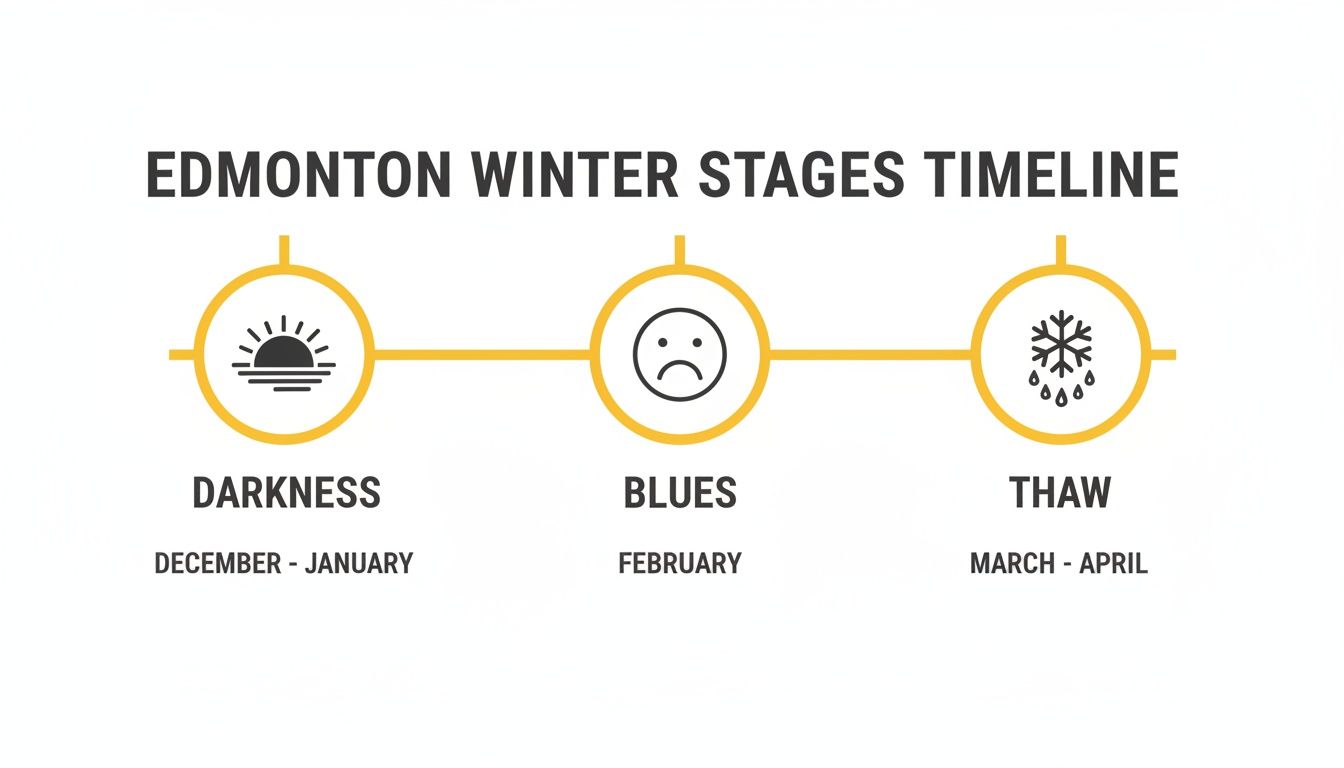
This timeline really shows the emotional arc many of us ride through the season. Knowing these stages can help you prepare for them.
Your At-Home Sunshine Strategy: The SAD Lamp
For years, my SAD lamp has been as essential to my morning routine as my coffee. If you're thinking about getting one, don't get lost in the fancy features. Honestly, only two things truly matter: it needs to provide 10,000 lux of light and it must be UV-filtered for safety.
To get the real benefit, you have to be consistent. Here’s the simple, effective routine that works:
- Timing is everything: Use it for 20-30 minutes within the first hour after you wake up. This is critical for anchoring your circadian rhythm and telling your brain the day has officially started.
- Position it properly: Place the lamp about an arm's length away and slightly to the side, so the light enters your eyes indirectly. You don't need to stare right into it. I keep mine on my kitchen counter while I pack my lunch or on my desk as I check my first emails.
This daily dose of bright light is one of the most powerful tools we have to fight the biological effects of our short winter days. For a deeper look at the science and more practical tips, check out our winter light guide to managing SAD in Edmonton.
For more on this, see our winter light guide.
Combining Your Lamp With Natural Light
A SAD lamp is a fantastic tool, but it works best when you combine it with any natural light you can find. Think of it as a one-two punch against the winter gloom. Here's a sample daily plan that shows how you can layer these strategies for the biggest impact.
Your Daily Edmonton Light Exposure Plan
| Time of Day | Actionable Strategy | The Edmonton Advantage |
|---|---|---|
| 7:00 AM | Use your 10,000 lux SAD lamp for 20-30 mins while eating breakfast or checking emails. | Kicks off your circadian rhythm before the sun is even up, fighting that deep morning grogginess. |
| 10:00 AM | If working, position your desk by the brightest window. Take a 5-minute "sun break" to stand by the window. | The sun is climbing higher, and even ambient light through a window helps. |
| 12:30 PM | Get outside for a 15-minute walk. Even on cloudy days, you're getting more beneficial light than indoors. | This is our peak sun window. The light reflecting off the snow actually intensifies your exposure. |
| 3:00 PM | Feeling a slump? Instead of coffee, face a sunny window for a few minutes. | Catches the last strong rays of the day to help carry you through the late afternoon as darkness approaches. |
This isn't about finding hours of extra time; it's about making the most of the minutes you already have.
Hunt for Natural Light in the Wild
Beyond technology, this is about shifting your mindset—thinking less about the cold and more about the light. Even on a frigid -20°C day, that sun feels incredible on your face.
Small tweaks to your daily life can make a monumental difference. If you work from home, setting up your desk by the sunniest window is a total game-changer. It sounds almost too simple, but consciously orienting your life toward the light has a profound impact on your mood and energy.
Think of yourself as solar-powered. Your job during an Edmonton winter is to find your charge wherever you can, even if it’s just for ten minutes. This isn't a luxury; it's essential maintenance.
Here are some practical, Edmonton-specific ways to chase those photons, even when it’s seriously cold:
- Time your errands for midday. Need to hit the grocery store in Windermere or grab something in Strathcona? Plan it for between 11 AM and 2 PM to catch the strongest rays.
- Pick your coffee shop strategically. Skip the cozy basement café and opt for a place with massive windows like Credo on 124th Street or Lock Stock Coffee downtown. Grab a window seat and soak it in.
- Plan sun-drenched walks. Our river valley is full of trails, but some are sunnier than others. The wide-open paths in Hawrelak Park or the top of the bank in MacKinnon Ravine offer incredible, direct light on a clear day. Even a quick loop around the Legislature grounds provides a powerful dose of sunshine.
These small, intentional acts of light-seeking add up. Each one helps reset your internal clock and reminds your body that even in the heart of winter, the sun is still with us.
Embracing Movement When Hibernation Calls
Let’s be real. When it’s a frigid -30°C morning in January, the magnetic pull of a warm bed is a powerful force. Our natural instinct is to burrow in and hibernate until the spring thaw, but movement is one of our most effective tools for fighting back against winter lethargy.

The key is to find joyful, sustainable ways to move that feel good, not like a punishment. Forget gruelling workouts; the goal is simply to get your blood pumping, release some endorphins, and break the cycle of stillness that can settle in during the darkest months.
Getting Outside Without Freezing
Braving the “Edmonton cold” (anything below -20°C) is a badge of honour, but it requires the right approach. The biggest barrier isn't the temperature itself, but improper layering. Getting it right means you can actually enjoy the crisp air and sunshine without feeling like a walking marshmallow.
The secret is a three-layer system:
- Base Layer: A moisture-wicking fabric (like merino wool or a synthetic blend) that pulls sweat away from your skin. Cotton is your enemy here—it holds moisture and makes you cold.
- Mid Layer: An insulating layer to trap heat. A fleece jacket or a light down vest works perfectly.
- Outer Layer: A windproof and waterproof (or at least water-resistant) shell to protect you from the elements.
This system lets you add or remove layers to regulate your temperature, keeping you comfortable whether you’re working up a sweat or taking it easy. Good wool socks, a warm toque, and insulated gloves or mittens are non-negotiable.
Once you’re properly dressed, the city is your playground. A brisk walk through the river valley can completely change your outlook on a winter day. For some of the best groomed trails and stunning scenery, explore our full guide to the River Valley Edmonton trails.
For me, a perfect winter afternoon involves grabbing my snowshoes and heading to Gold Bar Park. The trails are well-maintained, the chickadees are friendly, and the quiet of the snow-covered trees feels a world away from the city bustle.
Other fantastic spots include the wide, sunny paths in Terwillegar Park or taking the funicular down to the river for some of the best views of our winter skyline. It’s all about finding those little pockets of beauty that make you forget the cold.
Finding Your Indoor Groove
Sometimes, heading outside just isn't in the cards, and that's okay. Edmonton has plenty of options for staying active indoors without spending a fortune. The city’s recreation centres offer affordable drop-in fitness classes, swimming lanes, and weight rooms.
If you’re looking for something with a bit more community feel, local studios can be a warm refuge. A cozy yoga class on a cold evening at a studio in Strathcona or a high-energy spin class in Windermere can be a great way to combine movement with much-needed social connection. Many places offer introductory passes, so you can try a few to find the right fit.
Don't underestimate the power of an at-home routine either. You don’t need a fancy home gym. A simple routine of stretching, bodyweight exercises like squats and push-ups, or following a free online yoga video can make a huge difference. The goal is consistency, not intensity.
Make It Social, Make It Fun
The easiest way to stick with any kind of winter movement plan is to make it enjoyable. Tying your activity to social connection is a powerful motivator when the urge to hibernate is strong.
Consider these ideas:
- Join a club: Groups like the November Project or local running clubs meet year-round, offering a supportive and energetic community that makes getting out the door so much easier.
- Schedule walking dates: Instead of meeting a friend for coffee, suggest a walk-and-talk through a scenic neighbourhood like Glenora or along Ada Boulevard.
- Try a new winter sport: Rent some cross-country skis or snowshoes with a friend and explore a new park. Sharing the experience (and the occasional tumble) makes it fun.
By reframing exercise as an opportunity for connection and joy, you can transform it from a winter chore into a vital part of your strategy to not just survive, but truly thrive through our longest season.
Fueling Your Body for the Long Winter
Our bodies are smart. They try to sync up with the environment, which is great when we’re soaking up 17 hours of summer sun but becomes a real challenge in the deep dark of an Edmonton winter.
That powerful craving for heavy, carb-rich foods? The urge to sleep in? Those aren't signs of weakness; they're biological responses to the season. The key isn't to fight these instincts, but to work with them. It’s about making smart choices with food and sleep that support our energy and mood when the world outside feels designed to drain them.
This isn’t about a restrictive diet or a perfect sleep schedule—that’s just not realistic when life is busy and it's -28°C outside. Instead, we’re focusing on comforting, nourishing foods and simple, consistent routines that can anchor our bodies when our environment feels a bit chaotic.
Eat Like an Edmontonian in Winter
In the cold months, our bodies naturally crave fuel that provides lasting energy. This is the perfect time to lean into hearty, warming foods that are both comforting and packed with the nutrients we really need. Think less about fad diets and more about what’s local, accessible, and deeply satisfying.
For more on this, see our manage anxiety naturally guide. For more on this, see our manage anxiety naturally guide.
My go-to strategy is loading up on root vegetables. A weekend trip to the Old Strathcona Farmers' Market or Bountiful Market provides everything I need for a week of amazing stews and roasted dishes. Parsnips, carrots, squash, and potatoes are not only affordable and store well, but they're also complex carbohydrates.
Unlike sugary snacks that lead to a quick energy crash, complex carbs provide a slow, steady release of fuel. This helps stabilize both your mood and your blood sugar levels throughout the day.
Here are a few practical ways to align your eating with the season:
- Prioritize Protein at Every Meal: Including a good source of protein—like eggs, lentils, chicken, or tofu—with breakfast, lunch, and dinner helps you feel full longer. It’s your best defence against the energy slumps that often trigger cravings for less healthy options.
- Focus on Vitamin D-Rich Foods: We can't make Vitamin D from the sun here between October and April, so a supplement is a must for most of us. You can also support your levels by eating fatty fish like salmon, fortified milk, and egg yolks.
- Make One Big, Healthy Dish Weekly: I like to cook a huge batch of lentil soup or a beef and barley stew on Sunday. Having something delicious and ready to heat up makes it so much easier to avoid takeout on those dark evenings when you're too tired to cook. And if you're looking for inspiration, our guide to healthy food restaurants in Edmonton can help when you need a break from the kitchen.
Taming Your Circadian Rhythm
The wild swings in daylight between our summer and winter can wreak havoc on our sleep-wake cycle, or circadian rhythm. When it’s dark when you wake up and dark when you leave work, your brain gets legitimately confused about when it should be alert and when it should be winding down.
This confusion is a huge factor in why so many of us feel perpetually groggy from November to March.
The most powerful tool for resetting this internal clock is consistency. I know it sounds boring, but going to bed and waking up at roughly the same time every day—yes, even on weekends—is the single best thing you can do for your winter sleep quality. This consistency sends a clear, powerful signal to your body, helping regulate the hormones that control sleepiness and wakefulness.
It really does help you fall asleep faster and wake up feeling more rested, even when the sun isn't cooperating.
Creating a solid wind-down routine is also a game-changer. An hour before bed, dim the lights, put your phone away, and do something genuinely relaxing. Reading a book, gentle stretching, or listening to quiet music tells your brain that sleep is coming. It’s a simple but profoundly effective way to reclaim control over your sleep in a season that feels anything but predictable.
Staying Connected in a City Built for Winter
Winter has a way of shrinking our world. When the days get short and the nights feel endless, the urge to retreat and hibernate is strong. But here in Edmonton, we know that leaning into our community is one of the most powerful tools we have against the winter blues.

This isn’t about forcing yourself to be a social butterfly or packing your calendar until you’re exhausted. It’s about finding simple, sustainable ways to maintain the social ties that act as a buffer against the season’s gloom. Neglecting that connection, especially during a long winter, can take a real toll on our mental well-being.
Lean Into Our Festival City Spirit
One of the best things about Edmonton is that we don’t just tolerate winter; we actively celebrate it. Our incredible winter festivals offer the perfect, low-stakes excuse to get out of the house and feel like part of something bigger, even if you only go for an hour.
These events are designed for us. They’re built with the cold in mind and provide a vibrant, shared experience that reminds us we’re all in this together.
- Flying Canoë Volant: Bundle up and explore the illuminated trails of the Mill Creek Ravine. There’s something truly magical about being in the woods at night, surrounded by art, stories, and the warmth of a bonfire.
- Silver Skate Festival: Held in scenic Hawrelak Park, this festival is a beautiful mix of sport, art, and culture. You can wander through the snow sculpture garden, catch some live music, or simply skate on the pond.
- Deep Freeze A Byzantine Winter Fête: Celebrating the cultural diversity of the Alberta Avenue district, this is a wonderfully eclectic festival with street hockey, ice carving, and amazing food.
These aren't just events; they're community gatherings that inject light and energy right when we need it most.
Create Your Own Warmth
While festivals are fantastic, sometimes what you really need is a cozier, more intimate connection. The key here is to keep it simple and pressure-free. Don’t overthink it.
Hosting doesn’t have to be a big production. A pot of chili simmering on the stove and an invitation for a friend to “come as you are” is often more meaningful than an elaborate dinner party. It’s about presence, not perfection.
If getting out is more your style, suggest a meetup in a warm, vibrant public space. A walk through the lush, tropical paradise of the Muttart Conservatory can make you forget it’s -25°C outside. Or, spend an afternoon wandering through the incredible exhibits at the Royal Alberta Museum—it’s a perfect way to connect with a friend while also getting a dose of culture and history.
The Power of a Simple Check-In
Never underestimate the impact of a small act of connection. We all know how isolating an Edmonton winter can feel, and a simple text message asking, “Hey, how are you holding up with all this cold?” can make someone’s entire day.
I remember one particularly bleak February a few years back when I was feeling really low. A neighbour I barely knew knocked on my door with an extra serving of soup she’d made. That small gesture of kindness completely shifted my perspective. It was a reminder that even when we feel alone, we are part of a community that looks out for one another.
This is the real secret to getting through an Edmonton winter. It’s not about grand gestures; it’s about the small, consistent efforts we make to stay connected to each other, sharing warmth and light until the spring thaw finally arrives.
Knowing When to Seek Professional Support in Edmonton
All the strategies we’ve covered—light, movement, food, and connection—are powerful tools for taking the edge off a typical Edmonton winter. They work. But sometimes, what you're feeling is more than just a seasonal slump that a good walk in the river valley can fix.
It’s so important to recognize when that heavy, persistent low mood might be something more, like Seasonal Affective Disorder (SAD) or clinical depression.
Reaching out for professional help isn't a sign of failure. In fact, it's the opposite—it’s a proactive and incredibly strong move. Acknowledging you need more support is the first, most critical step toward feeling better, and thankfully, our city has solid resources to turn to.
When to Talk to Someone
It can be tough to tell the difference between just having a hard winter and dealing with something that needs clinical attention. The key is to look for a pattern that just won’t lift, rather than focusing on a single bad day or a tough week.
Here are some signs that it’s probably time to talk to a doctor or therapist:
- Your low mood has been a near-constant companion for two weeks or more.
- You’ve lost interest in activities you normally love, whether it’s hobbies, seeing friends, or just things you used to look forward to.
- Your sleep or appetite has changed in a big way—either much more or much less than usual.
- You’re dealing with feelings of hopelessness, worthlessness, or overwhelming guilt.
- You’re so drained of energy that it’s seriously impacting your work, your relationships, or just getting through the day.
Think of these signs as signals from your body telling you that your own resources are running low. A professional can help you refill your tank with strategies and supports that are tested and effective.
Edmonton-Based Mental Health Resources
Trying to navigate the mental health system can feel overwhelming, especially when you’re already not feeling great. You don’t have to do it alone. The goal is just to find the right starting point for you.
Here in Edmonton, we have a few key places to begin.
Alberta Health Services (AHS) provides a central hub for addiction and mental health support. This is often the best first call to make.
- Access 24/7: This is your primary, city-wide service. You can call 780-424-2424 anytime—day or night—for help, information, and referrals. They are trained to listen and can connect you with the right AHS program or community resource for your specific needs.
Beyond AHS, there are many excellent private clinics and individual therapists throughout the city. Finding the right personality fit is important, and many offer sliding scale fees or direct billing to insurance to make it more accessible.
To help narrow down your search, you can explore our detailed guide to the top-rated mental health clinics in Edmonton for more options. And don't forget, your family doctor is also an excellent first point of contact who can provide a diagnosis, offer advice, and make a referral.
We get asked all the time about the best ways to get through an Edmonton winter. Below are a few of the most common questions, with practical, local advice that actually works for our longest season.
Frequently Asked Questions
A quick rundown of the questions we hear most often, answered with Edmonton-specific context.
| Question | Answer |
|---|---|
| How long should I use a SAD lamp each day? | Most people find 20-30 minutes each morning, shortly after waking, is the sweet spot. Consistency is key. Position a 10,000-lux lamp about 16 to 24 inches away, off to the side, so the light hits your eyes indirectly. I have mine on my desk while I drink my morning coffee. |
| Is taking Vitamin D really that important here? | Yes, it’s non-negotiable in Edmonton. Our northern latitude means we can't produce Vitamin D from sun exposure between October and April. Low levels are directly linked to low mood. Your doctor can recommend the right dose for you, but Health Canada suggests a daily supplement for all adults during our winters. |
| What are some easy winter activities for a total beginner? | Absolutely. A great place to start is snowshoeing in the river valley—you can rent gear from places like Totem Outdoor Outfitters. The groomed trails in Terwillegar Park are scenic and mostly flat. Skating at the Victoria Park Oval is another classic; it’s beautifully lit at night and has a great atmosphere. |
These are just starting points, of course. The key is finding what fits into your life and building a routine around it before the deepest part of winter sets in.
At Edmonton Wellness Guide, we're committed to providing you with realistic, science-backed strategies to thrive in every season. Explore our full range of resources and personalized plans at https://www.edmontonwellnessguide.com.
Related Reading
- Best Hot Springs Near Edmonton for Winter Wellness Escapes: Your…
- How to Deal with Seasonal Depression in an Edmonton Winter
- Finding Your Footing: A Real-Talk Guide to Mental Health Clinics…