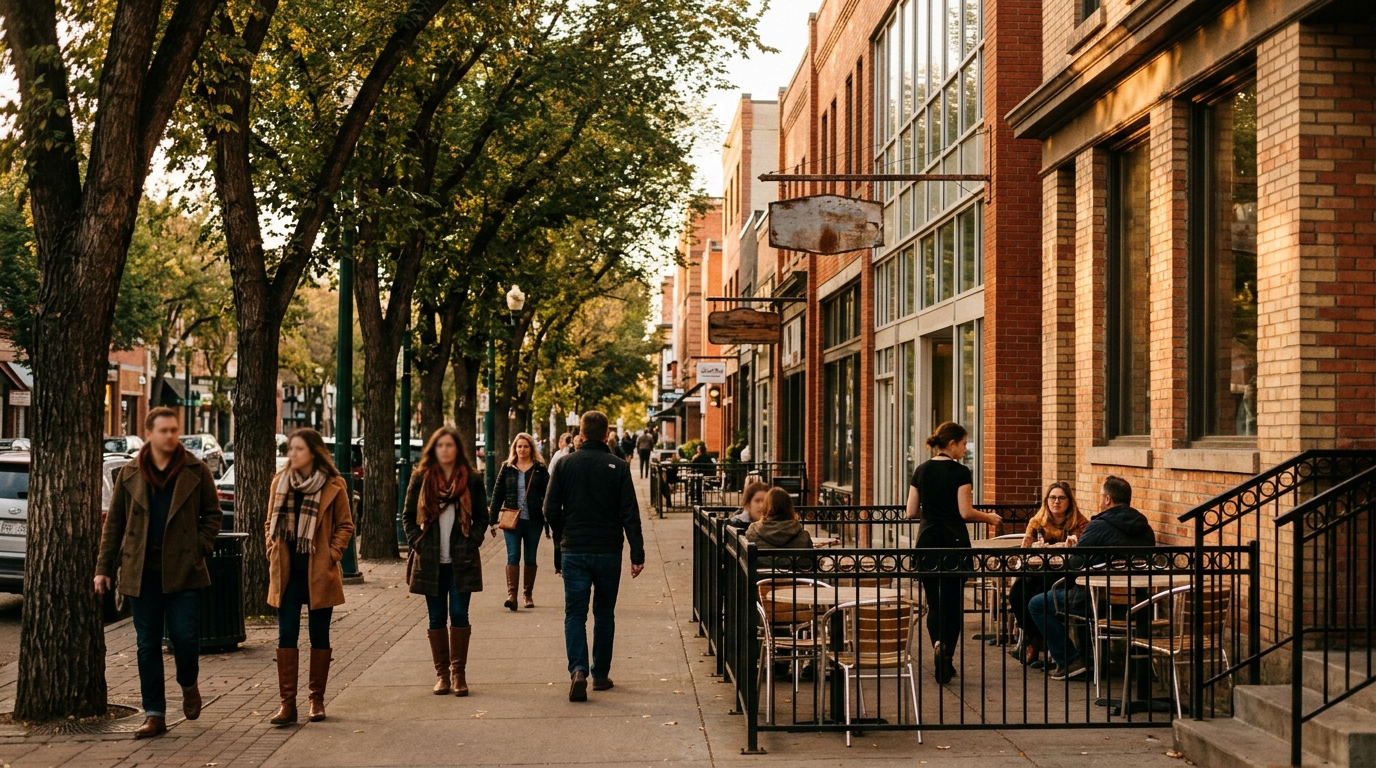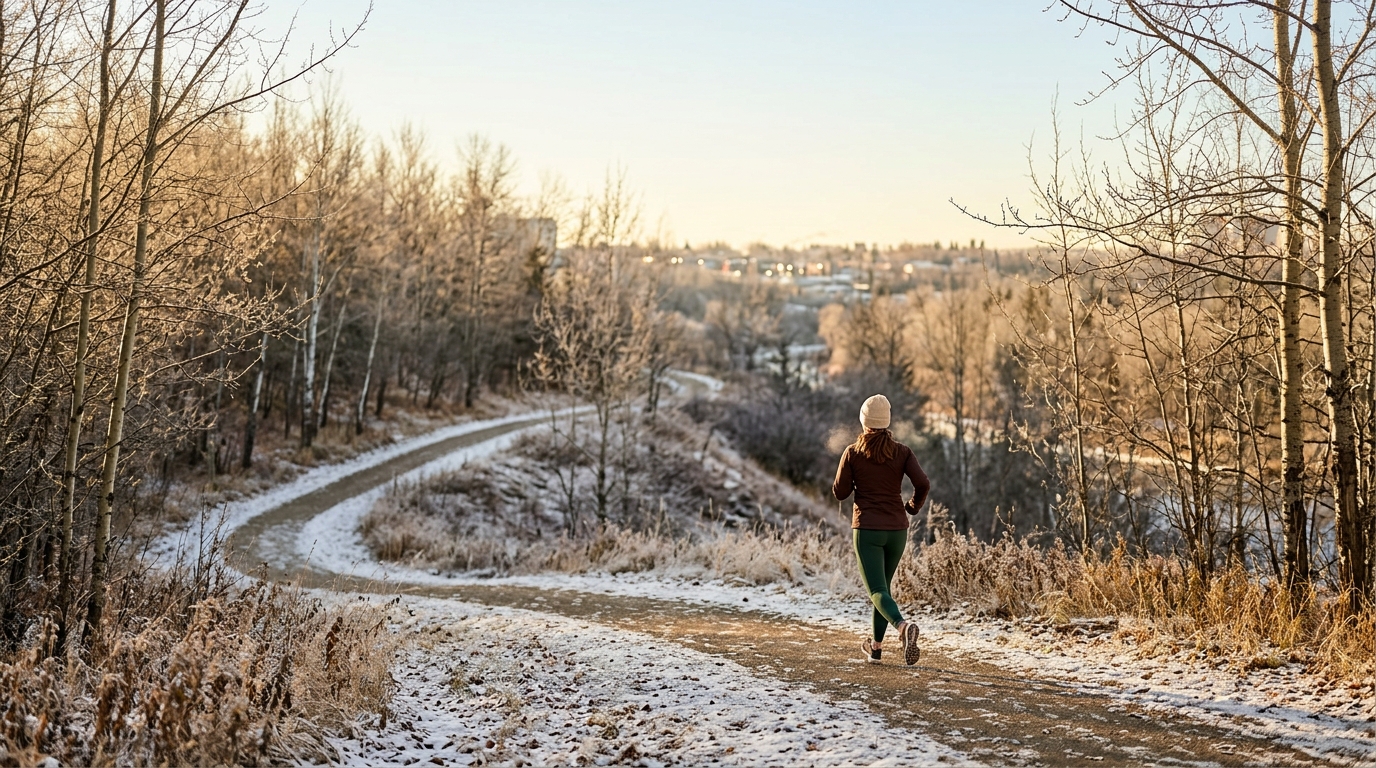
Running in Edmonton means dealing with a 60-degree temperature swing between seasons. Your favorite summer route along the North Saskatchewan River becomes an ice-covered obstacle course by December. That smooth Whyte Ave pathway turns into a sidewalk glacier. The Mill Creek Ravine trail that offers shade in July becomes a wind tunnel in January.
For more on this, see our prevent running injuries guide.
Last reviewed:
Edmonton runners face unique challenges. Summer brings construction detours, wildfire smoke, and 18-hour daylight. Winter delivers black ice, -30C windchill, and sunset at 4 PM. Understanding how each route performs across seasons helps you maintain consistency year-round.
For more on this, see our year round fitness guide.
This outdoor running routes Edmonton summer vs winter comparison breaks down the city’s most popular trails by seasonal conditions. We cover everything from surface changes to wildlife encounters, parking availability to washroom access. Whether you’re training through your first Edmonton winter or looking for smoke-season alternatives, this guide maps out what actually works.
River Valley Trail System: Season by Season
The River Valley trail network spans 160 kilometers, making it North America’s largest urban parkland. But seasonal conditions change these paths dramatically between June and January.
Outdoor Fitness Classes Edmonton Summer covers this in more detail.
Summer River Valley Running
Summer mornings start early in the River Valley. By 5 AM, you’ll spot runners taking advantage of cool temperatures before the heat builds. The main paved trails from Victoria Park to Hawrelak Park stay busy until 10 PM during peak summer.
How To Prevent Seasonal Wellness Routine Breakdowns In Edmonton covers this in more detail.
Best summer sections:
- Louise McKinney to Dawson Bridge: 5km of riverside running with water fountains every 2km
- Hawrelak Park Loop: 3.2km paved circuit with portable washrooms May through September
- Terwillegar Footbridge to Fort Edmonton: 8km with minimal elevation change
- Gold Bar to Capilano Bridge: 6km through shaded forest sections
Summer challenges include cyclist traffic during peak hours (7-9 AM and 5-7 PM weekdays). The Groat Road stairs attract fitness groups that can create bottlenecks. Construction often closes sections without warning – check the City of Edmonton construction updates before heading out.
Edmonton Spring Allergies Wellness Guide For Seasonal Relief covers this in more detail.
Parking fills quickly at popular trailheads. Hawrelak Park charges $7 for parking May through September. Louise McKinney offers free parking but fills by 8 AM on weekends. Consider starting from less popular access points like Laurier Park or Buena Vista.
Winter River Valley Conditions
Winter changes the River Valley into a different world. The city maintains select trails, but coverage varies wildly. Main arteries get plowed within 48 hours of snowfall. Secondary trails might not see equipment for weeks.
Reliably maintained winter routes:
- Victoria Park Promenade: Cleared and sanded regularly
- Kinsmen Park to 105 Street Bridge: Usually passable within 72 hours of snow
- Mill Creek Ravine paved trail: Plowed but icy patches common
- MacKinnon Ravine main trail: Maintained but narrow after plowing
Skip these sections December through March: Dawson Bridge stairs (dangerous ice buildup), unpaved single-track trails (become impassable), and any trail marked “natural surface” on city maps. The Capilano footbridge closes during extreme cold warnings.
Winter parking becomes easier as casual users disappear. But snow removal can eliminate half the spots at popular lots. Kinsmen Sports Centre offers reliable heated indoor parking for $3/hour. Many runners park at LRT stations and run to the valley.
Seasonal Wildlife and Safety
Summer brings increased coyote activity, especially dawn and dusk in Whitemud Ravine and Terwillegar areas. Carry noise makers. Bear sightings occur 5-10 times annually, mostly in outlying areas like Big Lake.
Winter wildlife concerns shift to ice fishing holes along the river (unmarked hazards) and aggressive Canada geese protecting nesting areas. Beaver damage creates trip hazards on natural trails – more visible in summer but more dangerous when snow-covered in winter.
Emergency call boxes exist at major bridges and parking areas. Cell coverage drops in ravine bottoms year-round. Tell someone your route, especially for winter solo runs.
Neighborhood Running Routes: Pavement vs Ice
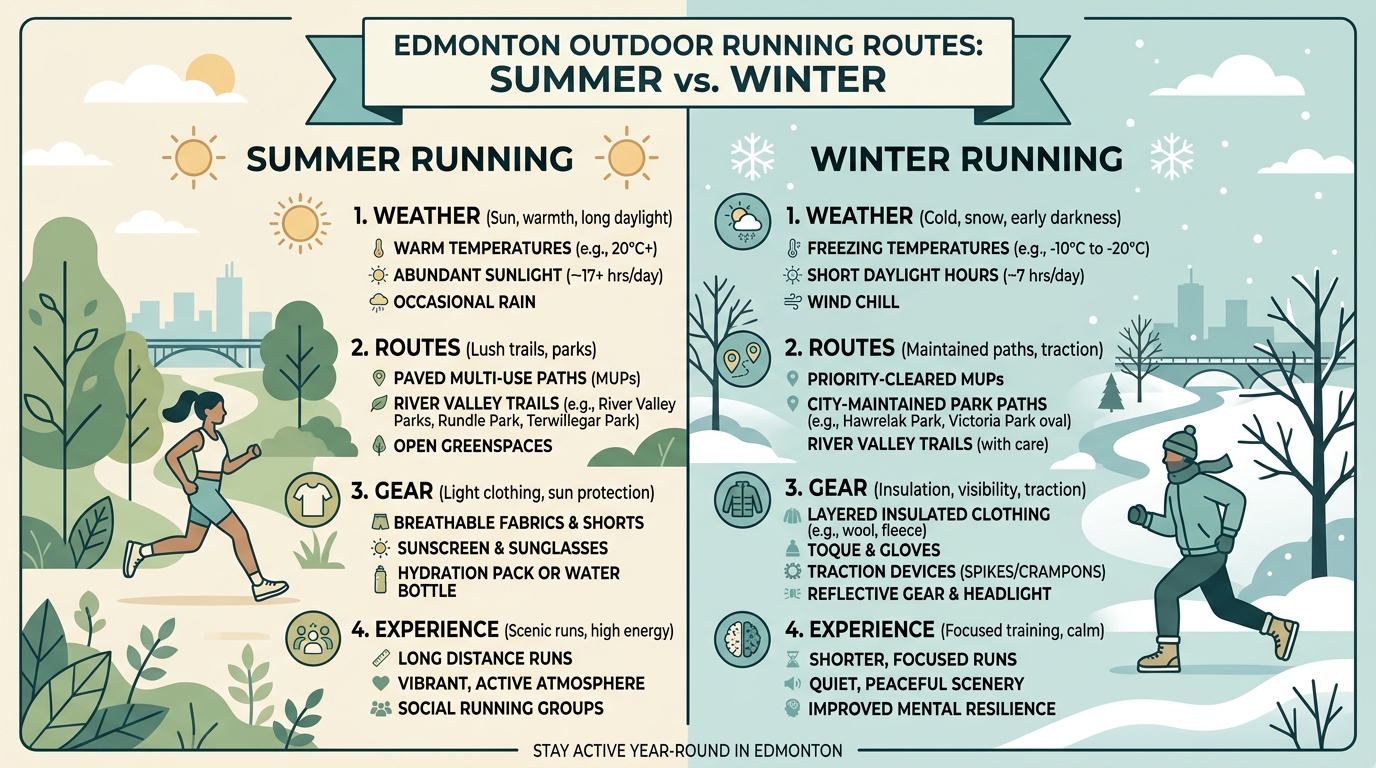
Residential running offers more predictable conditions than trails. But neighborhood routes bring their own seasonal challenges.
Top Summer Neighborhood Circuits
Old Strathcona Grid: The streets between 99 Street and 109 Street, from Whyte Ave to 72 Avenue, offer flat terrain with mature tree coverage. Morning runs stay cool thanks to elm canopy. Multiple coffee shops for post-run fuel. Street parking usually available before 9 AM.
Glenora Loop: Start at 142 Street and Stony Plain Road. Run through the crescents to River Valley Road. Wide sidewalks, minimal traffic, and historic architecture for distraction. The loop measures exactly 10km if you include the ravine dip.
Mill Woods Recreation Circuit: Connect Jackie Parker, Mill Woods, and Millbourne Lake parks via neighborhood paths. 15km of connected trails and sidewalks. Water fountains at each rec centre (operational May-September).
Summer neighborhood hazards include sprinkler overspray creating slippery sidewalks, construction zones forcing street running, and unleashed dogs in unfenced yards. The outdoor fitness classes throughout Edmonton in summer can crowd popular routes between 6-8 PM.
Winter Neighborhood Realities
Neighborhood running in winter depends entirely on homeowner compliance with snow clearing bylaws. Quality varies block by block. Some areas maintain bare pavement. Others become packed snow ruts until April.
Most reliable winter neighborhoods:
- Downtown and Oliver: Business owners clear early and often
- University area: Campus crews maintain adjacent sidewalks
- 124 Street corridor: Business improvement association ensures clearing
- Windermere: Newer communities with stricter bylaw enforcement
Avoid these areas after snow:
- Older mature neighborhoods with absentee landlords
- Industrial areas (no sidewalk priority)
- Crescents and cul-de-sacs (plow windrows block sidewalks)
Winter street running often becomes necessary. Choose residential roads over arterials. Run facing traffic. Wear reflective gear – drivers struggle to see runners against snow banks. Battery-powered LED armbands work better than reflective strips in Edmonton’s long darkness.
Seasonal Route Planning Tools
The City of Edmonton snow clearing map shows plow priority routes – use this for winter planning. Strava’s global heatmap reveals which routes locals actually run in each season. AllTrails comments section provides recent condition updates for River Valley routes.
Join the Edmonton Running Community Facebook group (8,000+ members) for real-time trail conditions. Members post daily updates on ice, construction, and hazards. The YEG Run Crew Instagram stories show current conditions on popular routes.
Weather-Specific Gear Requirements
Edmonton’s extreme temperature range demands completely different gear setups for summer versus winter running.
Summer Running Essentials
July temperatures hit 30C by noon, with UV index reaching extreme levels. Early morning runs still require sun protection – Edmonton’s northern latitude means intense sun from 5 AM onward in peak summer.
Non-negotiable summer gear:
- Lightweight cap with neck flap or bucket hat
- Sunglasses (wraparound style for River Valley bugs)
- Moisture-wicking shirt – cotton becomes a sweat sponge
- Handheld water bottle or hydration vest for runs over 45 minutes
- Bug spray (DEET-based for River Valley mosquitoes)
- Sweat-proof sunscreen SPF 30+ (reapply every 90 minutes)
Smoke season (typically late July through August) requires additional consideration. N95 masks designed for exercise help during moderate smoke days. Download the AQHI Canada app for hourly air quality readings. When levels exceed 7, consider indoor alternatives to maintain your wellness routine.
For more on this, see our prevent seasonal wellness guide.
Summer shoes need breathable uppers and moderate cushioning. Trail runners work for both paved and gravel River Valley routes. Replace shoes every 500-600km – summer heat breaks down midsole foam faster.
Winter Running Armor
Winter running in Edmonton requires strategic layering. The temperature might read -15C, but windchill along the river drops it to -25C. Your outfit for a neighborhood run won’t work for exposed River Valley routes.
Base winter kit for -5C to -15C:
- Merino wool base layer (avoid cotton completely)
- Wind-resistant outer shell
- Fleece-lined tights or winter running pants
- Insulated gloves with touchscreen capability
- Thermal headband covering ears
- Neck warmer or balaclava
- Wool running socks (never cotton)
Extreme cold additions (below -20C):
- Second base layer or fleece mid-layer
- Mittens over glove liners
- Full balaclava with minimal eye opening
- Ski goggles for wind protection
- Chemical hand warmers
- Petroleum jelly on exposed skin
Winter footwear makes the biggest difference. Ice cleats (Yaktrax or Kahtoola NANOspikes) provide traction on packed snow and ice. Trail shoes with aggressive lugs work for fresh snow. Some runners keep multiple pairs: road shoes for cleared pavement, trail shoes for snow, and cleated shoes for ice.
Transition Season Challenges
March through May and September through November create unique gear challenges. Morning temperatures might start at 2C and climb to 18C by afternoon. Layering becomes critical.
Spring gear tips: Pack extra socks for puddle encounters. Wear a lightweight rain jacket – April showers arrive without warning. Choose darker colors to hide inevitable mud splatter from melting trails.
Fall preparation: Invest in a good headlamp by September. Quality matters – cheap lights fail in cold temperatures. Choose models with red light options to preserve night vision. Always carry backup batteries.
Safety Considerations by Season
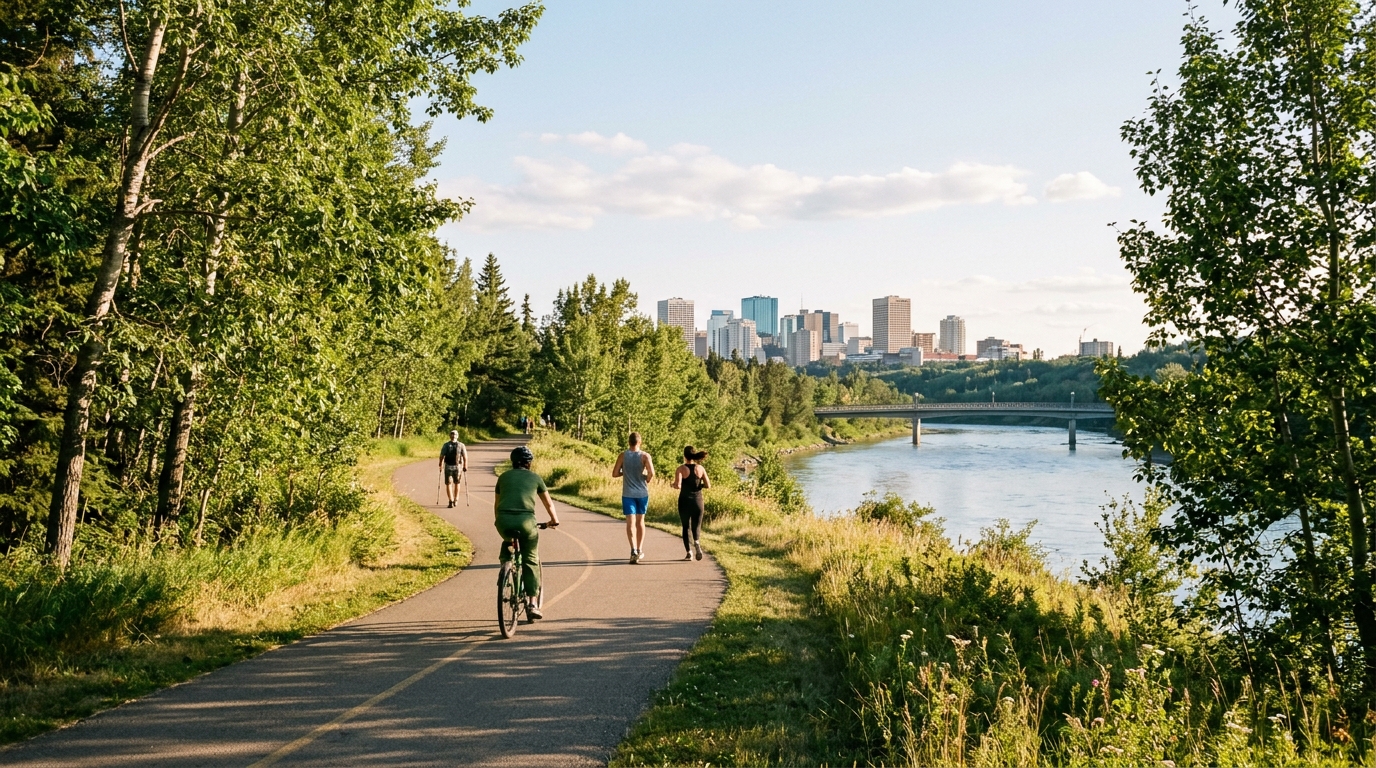
Running safely in Edmonton requires different strategies for summer versus winter conditions.
Summer Safety Protocols
Long daylight hours create a false sense of security. Most summer running incidents happen due to dehydration, wildlife encounters, or getting lost on unfamiliar trails.
Heat management strategies:
- Run before 8 AM or after 7 PM during heat waves
- Plan routes passing water fountains or convenience stores
- Slow pace by 30-60 seconds per kilometer above 25C
- Know heat exhaustion symptoms: nausea, dizziness, excessive sweating stopping
Wildlife activity peaks at dawn and dusk. Make noise on single-track trails. Coyotes rarely bother adults but become aggressive protecting dens April through June. If confronted, maintain eye contact, back away slowly, and throw objects if approached.
Construction season means constantly changing routes. Scaffolding creates blind corners. Temporary fencing forces road running. Check route conditions on recent Strava activities or Google Street View (updated annually).
Summer crime considerations: Avoid isolated trails alone after 10 PM. The LRT bridge underpass areas see increased camping activity in summer. Carry minimal valuables. Program ICE (In Case of Emergency) contacts in your phone.
Winter Survival Basics
Winter running in Edmonton can turn dangerous quickly. What starts as a light jog can become a survival situation if you slip, injure yourself, and can’t generate warmth.
Cold weather rules:
- Tell someone your exact route and expected return time
- Carry a fully charged phone in an inner pocket (cold kills batteries)
- Run loops near warm-up spots rather than out-and-back routes
- Never run during extreme cold warnings (below -30C)
- Watch for hypothermia signs: shivering stops, confusion, slurred speech
Ice presents the biggest winter hazard. Black ice forms where snow melts and refreezes – common on bridges and shaded areas. Intersection corners develop polished ice from spinning tires. Assume every surface is slippery until proven otherwise.
Frostbite prevention requires vigilance. Check extremities every 15 minutes in extreme cold. Numbness means immediate action needed. Public buildings along your route provide warming stops: libraries, rec centres, Tim Hortons.
According to Alberta Health Services winter safety guidelines, exposed skin can freeze in under 10 minutes at -28C with wind. Plan accordingly.
Year-Round Emergency Preparedness
Carry identification always. Road ID bracelets work better than carrying cards that can get soaked or lost. Include name, emergency contacts, medical conditions, and blood type.
Download offline maps for your running areas. Cell towers don’t cover all River Valley sections. Screenshot your planned route before heading out. Share location with trusted contacts using phone tracking features.
First aid basics: carry adhesive bandages for blisters, alcohol wipes for cuts, and emergency cash for taxi fare. In winter, add chemical heat packs and an emergency blanket (weighs 50 grams).
Training Adaptations: Summer vs Winter Programs
Successful year-round running in Edmonton means adjusting training plans for seasonal realities.
Summer Training Opportunities
Long summer daylight enables flexible training schedules. You can run at 5 AM or 9 PM with full visibility. This flexibility helps avoid peak heat and accommodate work schedules.
Summer training advantages:
- Track workouts possible at any public school
- Hill repeats on dry, stable surfaces
- Long runs without gear weight
- Recovery runs at conversational pace (no breathing restrictions)
- Group runs easier to coordinate with extended daylight
Heat acclimatization takes 10-14 days. Start summer training with reduced intensity. Increase duration before pace. Morning runs work better than evening for heat adaptation – temperature rises throughout the day stress the body more effectively.
Race season peaks May through September. The Edmonton Marathon, Servus Edmonton Half, and numerous 5K/10K races happen in optimal conditions. Train specifically for race day temperatures – if your event starts at 8 AM in July, do key workouts at that time.
Summer base building sets up winter success. Focus on aerobic development when conditions allow easy running. Build weekly mileage by 10% maximum. The consistent surfaces and weather reduce injury risk compared to winter’s variable conditions.
Winter Training Realities
Winter running requires adjusted expectations. Your summer 5K pace might become your winter tempo pace. This isn’t fitness loss – it’s physics. Cold air requires more energy to warm. Bulky clothing creates drag. Unstable footing reduces efficiency.
Winter training modifications:
- Replace track workouts with treadmill intervals or fartlek on cleared roads
- Reduce weekly mileage by 20-30% to account for increased stress
- Focus on effort over pace – use heart rate or perceived exertion
- Schedule rest days after extreme weather (body needs recovery)
- Move long runs to afternoon when possible for warmer temperatures
Maintain fitness with cross-training. Edmonton’s rec centres offer indoor tracks (usually 200m) for speed work. Hot springs near Edmonton provide active recovery that helps winter training adaptation.
Treadmill training becomes necessary some weeks. Set 1-2% incline to simulate outdoor effort. Open windows or use fans to avoid overheating. Many runners find podcasts or streaming services essential for longer treadmill sessions.
Seasonal Periodization Strategies
Smart runners plan training cycles around Edmonton’s seasons. Build base fitness April through June when conditions optimize consistency. Peak for fall races in ideal September weather. Maintain fitness through winter with reduced volume. Begin rebuilding in March as conditions improve.
This natural periodization prevents burnout and injury. Winter’s forced recovery period allows tissue repair and mental refreshment. Spring’s gradual return to full training reduces injury risk compared to year-round high mileage.
Consider joining seasonal training groups. The River Valley Runners meet year-round but adjust locations seasonally. Edmonton Running Room stores organize free group runs adapting to conditions. Having committed partners improves winter consistency.
Route-Specific Seasonal Comparisons

Let’s examine how specific popular routes perform across seasons with detailed comparisons.
Mill Creek Ravine: Summer Paradise to Winter Challenge
Summer conditions: Mill Creek Ravine offers 8km of shaded running from Argyll to downtown. The paved trail stays cool even on hot days. Creek sounds mask traffic noise. Wooden bridges provide scenic variety. Parking available at multiple access points.
Winter transformation: The ravine becomes a wind tunnel December through February. Bridges ice over first and worst. The city plows inconsistently – sometimes bare pavement, sometimes packed snow ruts. Steep sections near Connor’s Hill become treacherous. Many runners avoid completely December through March.
Seasonal tip: In winter, run the neighborhoods above Mill Creek (Bonnie Doon, Ritchie) and drop into the ravine only at Mill Creek Pool for washroom access.
Whyte Avenue Corridor: Year-Round Urban Option
Summer scene: Whyte Ave from 75 Street to 119 Street provides urban running with distractions. Early morning offers quiet sidewalks. Multiple coffee shops for pre/post run fuel. Gateway Boulevard alternative when sidewalks get crowded. Construction disrupts sections annually.
Winter reliability: Business owners maintain sidewalks better than residential areas. Salt and sand create grimy but safe surfaces. Increased vehicle exhaust at intersections. Windchill factor high on open stretches. 24-hour establishments provide emergency warm-up options.
Best approach: Use Whyte Ave as a winter backbone route, adding residential loops based on conditions. Summer offers more scenic alternatives.
Terwillegar Park: Seasonal Transformation
Summer offerings: Mix of paved paths, gravel trails, and single track. Off-leash areas mean dog encounters. Fort Edmonton footbridge enables longer loops. Portable toilets operational May through October. Parking lots fill weekend mornings.
Winter reality: Only main paved trail gets winter maintenance. Single track becomes impassable. Off-leash areas turn into ice rinks. Footbridge closes during extreme cold. Parking lot snow removal varies. Many sections suitable only for snowshoeing.
Seasonal strategy: Enjoy full trail network May through October. Stick to Terwillegar Drive sidewalks and maintained paths November through April.
Maximizing Your Seasonal Running Experience
Success with outdoor running routes Edmonton summer vs winter comparison comes from embracing each season’s unique character rather than fighting it.
Summer Optimization Strategies
Take advantage of summer’s gifts. Extended daylight means flexibility – find your optimal running time. Early birds enjoy empty trails and cool temperatures. Night owls can run at 9 PM in full daylight. Test different times to find your preference.
Explore beyond your usual routes. Summer conditions open trails closed in winter. Drive to Elk Island for trail running. Try the Strathcona Science Park loops. Run point-to-point routes using Edmonton Transit (bikes allowed on buses/LRT).
Summer also brings community. Spring allergy season might limit some runners, but most thrive. Join charity runs, parkrun events, or informal group runs. The social aspect improves motivation during hot weather.
Build heat tolerance gradually. Your first 25C run will feel terrible. By August, the same temperature feels comfortable. This adaptation carries into fall, extending your outdoor season.
Winter Resilience Building
Winter running builds mental toughness unmatched by any other training. Heading out at -20C when you could stay inside develops discipline that transfers to all life areas.
Start winter running before winter arrives. Run through October and November as temperatures drop. This gradual adaptation works better than starting cold turkey in January. Your body and mind adjust incrementally.
Celebrate small victories. Running 5K on ice deserves more credit than 10K on perfect pavement. Distance and pace matter less than consistency. Showing up counts most when conditions discourage it.
Find winter running partners. Misery loves company, but shared accomplishment builds bonds. The accountability helps on dark mornings. Plus, someone notices if you slip and need help.
Year-Round Mindset Shifts
Successful Edmonton runners think seasonally. They don’t expect July performance in January. They plan training around weather windows. They own appropriate gear for all conditions. Most importantly, they find joy in each season’s unique aspects.
Summer brings speed and distance. Winter develops strength and character. Spring rewards patience with perfect running days. Fall offers ideal racing conditions. Each season serves a purpose in the annual cycle.
Remember why you run. Fitness, mental health, and accomplishment don’t depend on perfect weather. Some of your most memorable runs will happen in challenging conditions. The runner who masters all seasons becomes truly resilient.
Sources & References
Related Reading
- How to Stay Active During Edmonton’s Winter Smoke Season: A…
- How to Stay Active During Edmonton Winter Months: A Survival Guide…
- How to Prepare Your Body for Edmonton’s Extreme Temperature…
Related Reading
Frequently Asked Questions
What are the best winter running shoes for Edmonton’s icy conditions?
For Edmonton winters, you need shoes with aggressive lugs and room for thick socks. The Salomon Speedcross series and Saucony Peregrine ICE+ perform well on packed snow and light ice. For serious ice, add Yaktrax Run or Kahtoola NANOspikes to any trail shoe. Running Room on 109 Street stocks winter-specific models and staff can recommend based on your typical routes.
How do I stay motivated to run outside during Edmonton’s long winter?
Join a winter running group like the November Project YEG (free, meets 6 AM Wednesdays at Legislature grounds) or sign up for a winter race series. Set process goals (days run per week) rather than pace goals. Reward consistency with non-food treats – maybe a massage at Unity Wellness on Whyte Ave or new winter gear. Track your runs to see progress over time.
Are there any 24-hour indoor running alternatives for extreme weather days?
GoodLife Fitness locations at South Edmonton Common and Windermere offer 24-hour access with indoor tracks (membership required). The University of Alberta Butterdome has public running hours but limited schedule. During extreme cold warnings, many runners use parkade stairwells downtown – try Edmonton City Centre or Manulife Place. Always inform security of your presence.
What’s the air quality threshold for switching from outdoor to indoor running during smoke season?
Alberta Health Services recommends avoiding outdoor exercise when the Air Quality Health Index exceeds 7. Download the AQHI Canada app for real-time readings. During typical August smoke events, air quality often improves overnight – early morning runs (before 7 AM) usually see better conditions. Keep N95 masks designed for exercise as backup.
How early in spring can I typically return to River Valley trails after winter?
Main paved River Valley trails usually clear by early April, though shaded sections hold ice longer. Natural surface trails take until mid-May to fully dry out. Check the YEG Running Community Facebook page for real-time trail conditions. Victoria Promenade and Louise McKinney Riverfront typically clear first due to sun exposure and priority maintenance.