When it comes to staying active as we get older, the most effective exercises are the ones that build on four key pillars: endurance, strength, balance, and flexibility. But for us here in Edmonton, there’s a fifth pillar: adaptability.
Our fitness has to work with our city's wildly different seasons. What’s good for a long summer evening in the river valley is useless during a deep freeze in February.
An Edmonton Approach to Year-Round Senior Fitness

Let’s be honest—staying active as an older adult in Edmonton presents a unique set of challenges. A beautiful July stroll through Mill Creek Ravine is a completely different world from trying to navigate an icy sidewalk in Windermere come January.
So, this guide isn't about generic advice that assumes sunny, 20-degree weather. This is for us—Edmontonians over 55 who want practical, safe, and effective ways to keep moving, no matter what the forecast says. We’re going to focus on what actually works right here in our city.
For more on this, see our edmonton fall weather guide.
Embracing Our Climate, Not Fighting It
Our city’s entire rhythm is dictated by its seasons, and our fitness routines should be, too. The long, dark winters can take a real toll, not just on motivation but also on our mood and vitamin D levels. On the flip side, those glorious 17-hour summer days are a fantastic opportunity to get outside and soak it all in.
For more on this, see our summer winter running guide. For more on this, see our summer winter running guide.
A successful plan for staying active here involves a few core ideas:
- A Solid Indoor Game: Having a go-to indoor routine is non-negotiable for those -30°C days. This could be anything from mall walking at Southgate, using the indoor track at a city rec centre, or having a simple strength routine you can do right in your living room.
- Making the Most of Summer: When the sun is out, we get out. This means enjoying our incredible park system. We're lucky that the river valley is your gym, and it's free, offering endless opportunities for walking and light activity.
- Navigating the 'Shoulder Seasons': Spring mud season and unpredictable fall weather demand flexibility. This is the time for waterproof footwear and choosing paved paths over potentially muddy trails.
The goal isn't to become a super-athlete; it's to build sustainable habits that improve our quality of life. It’s about having the stamina for a full day at the Folk Fest, the balance to feel steady during the spring melt, and the strength to carry groceries home from the Strathcona market.
To help you plan, here's a quick look at how the four pillars of fitness can be adapted for our local climate.
The Four Pillars of Senior Fitness An Edmonton Seasonal Approach
| Fitness Pillar | Winter Focus (Indoors) | Summer Focus (Outdoors) | Why It Matters Here |
|---|---|---|---|
| Balance | Tai Chi, seated yoga, standing on one foot near a counter. | Walking on uneven ground (grass, gentle trails), gardening. | Prevents falls on icy sidewalks—a critical skill for Edmonton winters. |
| Strength | Bodyweight exercises (squats to a chair), resistance bands. | Carrying groceries from the farmers' market, stair climbing. | Helps with everything from shovelling a bit of snow to getting up from a park bench. |
| Endurance | Mall walking, stationary bike, swimming at a rec centre. | Brisk walking in the river valley, cycling, aquasize in an outdoor pool. | Builds stamina for enjoying our long summer days and big city festivals. |
| Flexibility | Gentle stretching, chair yoga, mobility routines at home. | Stretching after a walk, outdoor yoga in the park. | Improves range of motion, making daily movements easier year-round. |
This table is just a starting point. Throughout this guide, we’ll dive deeper into each of these pillars—balance, strength, endurance, and flexibility—with specific, Edmonton-centric examples. We’ll show you how to build a routine that works for your body and our city.
Build Foundational Strength and Endurance at Home

Let's be real: when it hits -30°C in January or wildfire smoke settles into the valley in August, the idea of "going out for a walk" is off the table. But that doesn’t mean your fitness goals have to go on hiatus. Building a solid foundation of strength and endurance can happen right in your living room in Rossdale or your condo in Windermere.
You absolutely don't need a fancy gym membership to build the practical strength required for a vibrant life. This is all about functional fitness—the kind that helps you carry a heavy bag of groceries from the Strathcona Farmers' Market without a second thought. It's the stamina that gets you through a full day wandering around the Heritage Festival.
Simply put, it’s the strength that makes everyday life easier and safer.
Starting with Strength: The Bodyweight Basics
Often, the best exercises use the one piece of equipment we all have: our own body weight. These movements are incredibly effective, require no special gear, and can be done almost anywhere.
-
The Sit-to-Stand (Chair Squat): This is the gold standard for lower-body strength. It directly translates to getting up from a chair, a car, or a park bench with confidence.
- How to do it: Sit on the edge of a sturdy, non-rolling chair (a kitchen chair is perfect). Place your feet flat on the floor, about hip-width apart. Without using your hands, stand up straight. Then, slowly and with control, lower yourself back down. Aim for 8 to 12 repetitions.
-
Wall Push-ups: This is a fantastic, joint-friendly way to build the upper-body strength needed for pushing open heavy doors or lifting yourself up.
- How to do it: Stand facing a clear wall, about arm's length away. Place your palms flat against the wall at shoulder height and width. Slowly bend your elbows and lean your body toward the wall, keeping your back straight. Push back to the starting position. Try for 8 to 12 repetitions.
A Quick Tip: The key to these exercises is control. Avoid plopping down into the chair or rushing through the movement. A slower, more deliberate motion builds more strength and is far safer.
Boosting Endurance Without Leaving the House
Cardiovascular health is crucial, especially when our long winters can lead to more sedentary periods. Even gentle movement can elevate your heart rate, improve circulation, and give your mood a welcome boost—a big deal when you're dealing with SAD.
Chronic inactivity is a real concern for older adults. While data from California shows physical inactivity affects 24.7% of their seniors, we know our Edmonton climate presents even greater challenges. This makes having accessible indoor options essential. You can find more details on how communities are tackling this in this insightful report on aging populations.
For more on this, see our prevent running injuries guide. For more on this, see our prevent seasonal wellness guide.
Here are a few simple ways to get your heart rate up indoors:
- Marching in Place: It sounds simple, but it works. Marching in place while watching the news or listening to the radio is a great way to accumulate active minutes. Lift your knees high to engage more muscles. Try doing it for 5-10 minutes at a time.
- Stair Stepping: If you have stairs, use the bottom step. Step up with your right foot, then your left, then step back down with your right, then your left. Be sure to hold onto the railing for support. This is excellent for both endurance and leg strength.
- Seated Cardio: For those who need a non-weight-bearing option, seated cardio is perfect. While sitting tall in a chair, you can "punch" your arms forward, tap your toes quickly, or perform seated "jumping jacks" by extending your arms and legs out to the sides.
Adding Simple Tools for Better Results
Once you're comfortable with bodyweight exercises, adding light resistance can take your strength training to the next level. You don’t need an expensive home gym to see benefits.
- Resistance Bands: These are affordable, versatile, and easy to store. You can use them for bicep curls, seated rows, and leg extensions to add a gentle challenge.
- Light Hand Weights: Even 1-3 pound dumbbells can make a difference. In a pinch, canned goods from your pantry also work perfectly! Use them during your sit-to-stands or for bicep curls to build arm strength.
Building this foundational strength also plays a big role in your overall wellness. For instance, regular, gentle exercise is one of the most effective ways to manage chronic inflammation. You can learn more by checking out our guide on how to reduce inflammation naturally right here on our site.
Improve Balance and Flexibility to Prevent Falls
Let's talk about something every Edmontonian understands on a gut level: ice. One minute you're walking on a clear sidewalk in Strathcona, the next you're on a skating rink. Between our notorious winter ice and the uneven, thawing ground of spring, having good balance isn't a "nice-to-have"—it's an essential survival skill.
It’s the same with flexibility. It's what lets you bend down to tie those winter boots without a groan, or spend an afternoon in the garden once the snow finally melts in Pleasantview.
These two pieces, balance and flexibility, work together to dramatically reduce the risk of a fall. And that's one of the biggest threats to our independence as we get older. The good news? Improving both is entirely achievable, right in your own home.
Simple Exercises for Better Stability
You don't need any fancy equipment to get started. The goal is simply to gently challenge your body's ability to maintain its centre of gravity. Consistency is far more important than intensity here.
-
Single-Leg Stance: While holding onto a sturdy kitchen counter or the back of a chair for support, just lift one foot off the floor. Try to hold it for 10-15 seconds. As you get more confident, you can try holding on with just one hand, then maybe a few fingers. Eventually, you might even let go for a second or two. This simple act trains all the small stabilizer muscles in your ankles and legs.
-
Heel-to-Toe Walk: Think of this as a sobriety test in your own hallway. Place the heel of one foot directly in front of the toe of the other, taking slow, deliberate steps. Try to look forward, not down at your feet. Use a wall for light support if you feel a bit wobbly. This directly improves your dynamic balance—the kind you need when navigating a crowded festival like the Fringe.
Gentle Stretches for Everyday Flexibility
Stiffness is a common complaint, especially during our long, cold winters when we tend to be less active. Gentle, regular stretching can keep your muscles pliable and your joints moving freely. Just remember to never stretch into sharp pain; a mild pull is all you need to feel.
Key Stretches to Try:
-
Hamstring Stretch: Sit on the edge of a sturdy chair. Extend one leg straight out in front of you with your heel on the floor, toes pointing up. Keeping your back straight, slowly lean forward until you feel that gentle stretch in the back of your thigh. Hold for 20-30 seconds, then switch legs.
-
Hip Flexor Stretch: Stand tall, holding onto a counter for support. Step one foot back into a small lunge, keeping both feet pointing forward. Gently bend your front knee and press your back hip forward until you feel a stretch in the front of your hip. Hold for 20-30 seconds before switching sides. This one is a game-changer for anyone who sits for long periods.
Think of balance and flexibility as your personal fall-prevention toolkit. Every time you practice a single-leg stand or do a gentle stretch, you're making a deposit in your long-term health and independence account. It’s the foundation for staying active and engaged in our community.
Finding Community and Support
While home exercises are fantastic, sometimes being in a group provides that extra push. Across Edmonton, community leagues and seniors' centres offer excellent, low-cost options that combine physical activity with social connection—a powerful duo for well-being.
Programs like Tai Chi and gentle yoga are particularly effective. Research shows that activities emphasizing balance and strength training can significantly reduce fall risks. For us in Edmonton, this means adapting proven concepts to our climate. While data from other regions is useful, we translate it into practical, local solutions like indoor Tai Chi classes at a community hall. You can discover more insights about how physical activity programs are making a difference across the country.
Of course, building any new habit can be a challenge, especially during those dark November days. Finding what works for you is what matters most. If you're looking for practical strategies to get going and stick with it, you might find our guide on how to stay motivated to exercise helpful.
Your Practical Edmonton Seasonal Fitness Plan
Let's be honest: trying to follow the same fitness routine all year in Edmonton is setting yourself up for failure. Our city has four very real seasons, and each one demands a different approach. A smart fitness plan here isn’t about toughing it out; it’s about knowing how to adapt to whatever our climate decides to do next.
This is about creating a blueprint that works with our city, not against it. It means having a plan for when it’s -30°C and icy, when it’s a perfect +25°C and sunny, and for all those muddy, unpredictable days in between.
The Deep Freeze Winter Plan
When "Edmonton cold" really settles in—we're talking below -20°C—staying active means moving indoors. For many of us, this is the toughest season for motivation. The short, dark days can really sap your energy. But staying inside doesn't have to mean staying still.
Our indoor options are actually pretty great:
- Mall Walking: A classic for a reason. West Edmonton Mall and Southgate Centre offer huge, flat, and warm spaces to get your steps in. You can walk for kilometres without a toque and grab a coffee with a friend afterwards.
- City Recreation Centres: These are incredible community hubs. A membership or drop-in pass gives you access to indoor walking tracks (like at Commonwealth or Clareview), pools for low-impact aquafit, and a wide variety of senior-friendly classes.
- At-Home Routines: On those days when even getting to the car feels like an ordeal, a solid at-home routine is your best friend. This is where the foundational strength and balance exercises we've talked about become the heart of your fitness plan.
This infographic breaks down two key areas—balance and flexibility—that are absolutely crucial for preventing falls, a major concern during our icy winters.
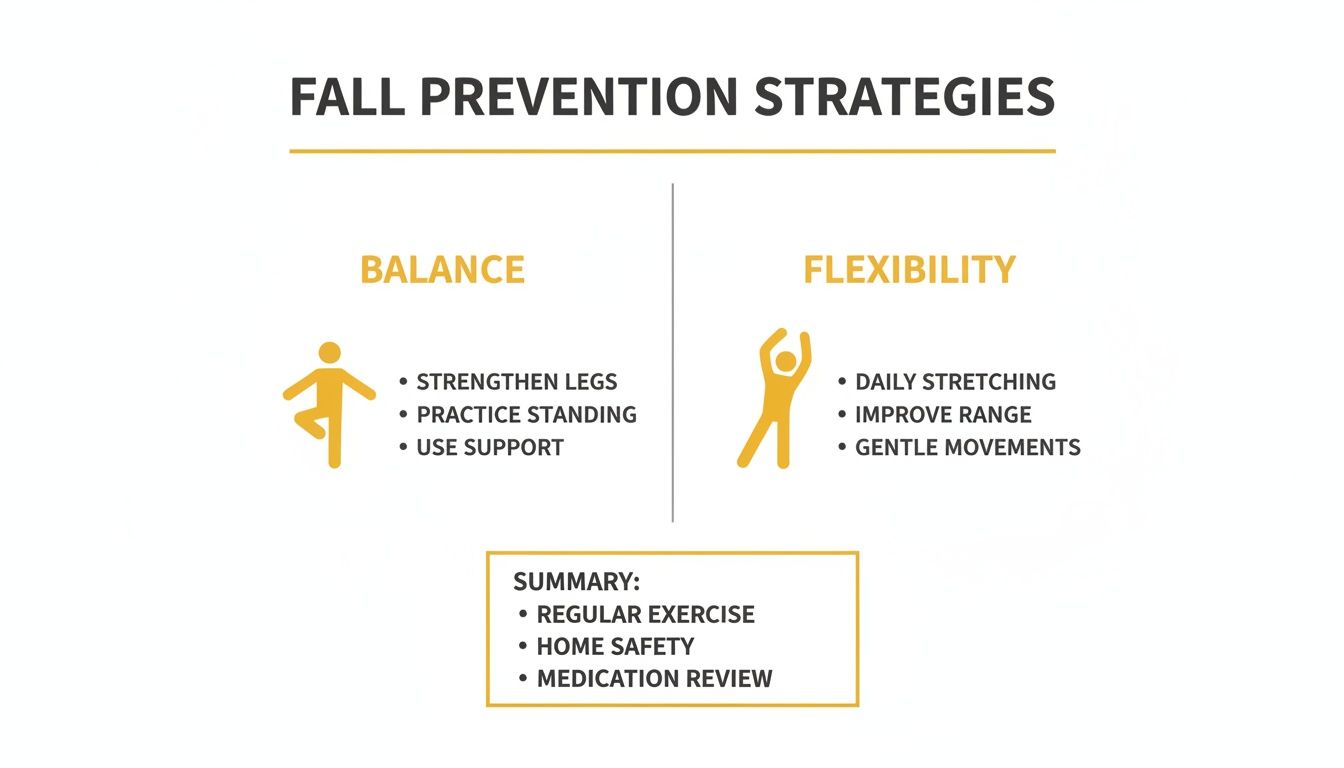
As you can see, dedicating just a few minutes each day to both balance and flexibility builds a powerful defence against the slips and trips our winter makes all too common.
Making the Most of Our Glorious Summer
Edmonton summers are a gift. With those long, 17-hour days, we have plenty of opportunity to get outside and move. The river valley is our city's sprawling, beautiful gym, offering endless options.
The key is picking the right spots and being mindful of the conditions.
Our summer strategy is all about soaking up every bit of good weather, but doing it safely. That means being ready for heat, sun, and the occasional smoky day.
Accessible River Valley Trails:
For a comfortable walk without steep hills, stick to the paved, flatter parts of the trail system.
- Hawrelak Park: The main loop is mostly flat and offers lovely scenery, washrooms, and plenty of benches for a quick rest.
- Buena Vista Park: You’ll find wide, paved paths here with gentle slopes and fantastic views of the river and downtown. It's also a great spot for dog walking.
- Rundle Park: Another excellent choice with extensive paved trails that are perfect for walking or a leisurely bike ride.
During heat waves, plan your walks for the early morning or later in the evening. And on days when wildfire smoke makes the air quality poor, it's best to shift back to your indoor plan. It’s worth reading up on the potential wildfire smoke health effects to understand why exercising indoors is the safer choice on those days.
Navigating the In-Between Seasons
Spring and fall in Edmonton are famously unpredictable. One day it’s sunny, the next it’s snowing. The biggest challenge during these shoulder seasons is often the ground itself—from spring mud to icy patches hiding under autumn leaves.
This is where a little preparation makes all the difference.
- Footwear is Everything: A good pair of waterproof shoes with excellent grip is your most important piece of gear. It gives you the confidence to navigate wet leaves or muddy patches on trails in neighbourhoods like Mill Woods or Terwillegar.
- Layer Up: Dress in layers you can easily add or remove. A light, waterproof jacket is perfect for blocking wind and surprise rain showers without making you overheat.
- Stick to Pavement: When the trails are a muddy mess, stick to paved community paths. Most neighbourhoods, from Griesbach to Windermere, have fantastic sidewalk and path networks that are safer and cleaner during the melt or a wet fall.
Here’s how you might pull all of this together into a practical weekly plan that flexes with our city's distinct personality.
Edmonton Seasonal Activity Planner for Seniors
| Season | Strength Activity | Endurance Activity | Balance/Flexibility | Local Tip |
|---|---|---|---|---|
| Winter | Bodyweight exercises at home (squats, wall push-ups) | Mall walking at Southgate Centre or WEM | Daily indoor stretching & seated yoga | Drop into a City of Edmonton rec centre for an aquafit class. |
| Spring | Light gardening (raking, planting) | Walking on paved community paths to avoid mud | Tai Chi in the living room on rainy days | Wear waterproof shoes with good grip—trails can be icy in the shade! |
| Summer | Carrying groceries from a farmers' market | Walking a flat loop at Hawrelak Park | Gentle yoga or stretching in a shady park spot | Go early in the morning to avoid the heat and the crowds. |
| Fall | Raking leaves (great for core strength!) | Exploring the river valley trails as they dry out | Standing balance exercises while waiting for the kettle to boil | The colours in Mill Creek Ravine are spectacular for a brisk walk. |
This table isn’t a rigid prescription, but a set of ideas. The goal is to have a go-to activity no matter what the forecast says. By having a simple plan for each of Edmonton's seasons, you remove the guesswork and make it easier to stay active and enjoy this city to its fullest, all year long.
How to Stay Safe and Motivated Through the Year
Having a plan is one thing. Sticking to it when it’s dark at 4:30 p.m. in November is something else entirely.
A consistent fitness routine isn't just about the exercises; it’s about learning to listen to your body, understanding its signals, and finding a rhythm that works for you, right here in Edmonton. The real goal is to build a positive, lasting relationship with movement—one that supports your long-term well-being and independence, not one that has you pushing through pain.
Tuning In To Your Body
Developing the skill to tell the difference between "good" muscle soreness and the kind that signals a problem is crucial. It’s the difference between feeling your muscles after a satisfying walk and a sharp pain that stops you in your tracks.
-
Warm-ups are non-negotiable. Before any activity, even a walk around the neighbourhood, spend five minutes getting your body ready. Marching in place, gentle arm circles, or slow shoulder rolls will do the trick. This prepares your muscles and joints for movement, which is especially important in our cold, dry climate.
-
Cool-downs are your friend. After you finish, take another five minutes to cool down with some light stretching. It helps improve flexibility and can cut down on next-day stiffness. Think of it as a small thank-you to your body for the work it just did.
What's Normal Soreness vs. a Warning Sign?
| Type of Feeling | What It Likely Means | What to Do |
|---|---|---|
| Dull, achy muscle fatigue | Delayed Onset Muscle Soreness (DOMS). This is normal after working your muscles. | Rest, gentle stretching, maybe a warm bath. It should fade in a day or two. |
| Sharp, sudden, or persistent pain | This could be a sign of a strain, sprain, or other injury. | Stop the activity immediately. If it continues, it's time to chat with your doctor or a physiotherapist. |
The old "no pain, no gain" mentality has no place in a healthy fitness routine. Listening to your body and respecting its limits is a sign of strength, not weakness.
Finding Your Motivation When the Sun Disappears
Let's be direct: staying motivated through an Edmonton winter is tough. The darkness, the cold, and the sheer effort of bundling up can make a simple walk feel like a major expedition. This is where having a few solid strategies becomes essential.
The reality is that very few of us are hitting the national fitness guidelines consistently. Nationally, just 13.9% of adults aged 65 and over met the recommendations for both aerobic and muscle-strengthening activities in 2022. This shows that staying active is a widespread challenge, not a personal failing. You can learn more about these national activity findings and see we’re not alone in this.
Practical Ways to Stay Consistent
Instead of relying on willpower, it's better to build systems that make staying active easier.
-
Find a Buddy: This is probably the most powerful tool there is. Arrange to meet a friend for a walk, whether it's on the paved paths in Terwillegar Park or indoors at Southgate Centre. Knowing someone is waiting for you is a huge motivator.
-
Join a Group: Signing up for a class at a seniors’ centre like Central Lions or a City of Edmonton facility creates structure. It puts a recurring, social activity right into your calendar, making it harder to skip.
-
Make Indoor Exercise Enjoyable: If you’re working out at home, pair it with something you love. Listen to a great podcast or an audiobook while you use a stationary bike. Put on your favourite music while you do your strength routine.
Spending more time indoors during our long winters means air quality can become a factor in your overall health. You can learn more about how to improve indoor air quality in our detailed guide.
Ultimately, safety and motivation are tied together. When you feel safe and confident in your movements, you’re more likely to enjoy them. And when you enjoy what you're doing, you're far more likely to do it consistently—no matter what the Edmonton forecast throws at us.
Common Questions About Senior Fitness in Edmonton
We hear a lot of the same questions from folks in our community who are looking to get more active. It makes sense—navigating fitness as an older adult in a city with four very distinct seasons comes with its own unique set of challenges.
Here are the answers to a few of the most common queries we get.
I Have Arthritis. What Are the Best Low-Impact Exercises?
This is a big one. It feels like everyone knows someone whose joints start to ache when the cold, damp Edmonton weather sets in. The key is to find activities that cushion your joints instead of jarring them.
Water-based exercises are fantastic for this. The natural buoyancy of the water supports your body weight, taking all that pressure off your hips, knees, and ankles. Many of the City of Edmonton's pools, like the one at the Kinsmen Sports Centre, offer excellent senior-friendly aquafit classes that are worth checking out.
Gentle yoga or Tai Chi are also wonderful for improving flexibility and balance without putting stress on sensitive joints. And for days you're stuck at home, you'd be surprised how effective seated exercises can be—using a sturdy chair, you can still build strength safely and comfortably.
The most important rule? Always listen to your body. If something hurts, ease off or stop.
Where Can I Find Affordable Fitness Classes for Seniors?
You don’t need an expensive private membership to find a great class in Edmonton. The city actually has some fantastic, budget-friendly options if you know where to look.
- Seniors' Centres: Places like the Central Lions Seniors Association or the Westend Seniors Activity Centre are community hubs. They offer a huge variety of reasonably priced classes, from line dancing to gentle strength training.
- City of Edmonton Recreation: Our city rec centres have specific drop-in rates and passes just for seniors. These give you access to pools, indoor tracks, and a wide range of fitness classes.
- Community Leagues: Don't forget to check with your local community league. They often host volunteer-led walking groups or low-cost yoga programs right in your own neighbourhood. It’s a great way to meet your neighbours, too.
In the summer, keep an eye on the City's 'Move Learn Play' website. They sometimes list free outdoor programs in local parks, which are a fantastic way to enjoy the good weather while it lasts.
A Quick Tip: Affordability isn't just about the class fee. Choosing a location close to home in your own neighbourhood, whether that's Terwillegar or Griesbach, saves you money on gas and precious time. That convenience makes it far more likely you'll stick with it.
How Can I Stay Safe Exercising Alone in Winter?
That's a very smart question. Winter isolation is a real challenge for us Edmontonians, and safety has to be the top priority when you’re heading out on your own, especially with icy sidewalks.
Mall walking is a tried-and-true solution for a reason. West Edmonton Mall and Southgate Centre are popular because they’re large, warm, totally flat, and secure. You can get a great walk in without ever having to worry about a patch of ice.
Another great strategy is to build a routine that naturally involves other people. Joining a program at a city rec centre or a seniors' centre gives you a scheduled, supervised, and social activity that helps beat back the winter blues.
If you prefer to exercise at home, think about setting up a simple check-in system. Just arrange a daily call with a friend or family member to let them know you've done your activity for the day. It’s a simple way to stay connected, motivated, and safe.
At Edmonton Wellness Guide, our goal is to provide you with practical, locally-focused advice to help you live your healthiest life in the city we all call home. We believe that good health information should be clear, accessible, and tailored to the realities of being an Edmontonian.
To discover more resources, seasonal tips, and evidence-based guidance designed for our unique climate, visit us at https://www.edmontonwellnessguide.com.
For more on this, see our prevent seasonal wellness guide.
Related Reading
- Best Outdoor Fitness Classes Edmonton Summer: Where to Train in…
- Indoor Cycling vs Outdoor Biking Edmonton: Which Works Better…
- Why Does Smoke Season Affect Outdoor Fitness Edmonton: The Science…