Every September, Edmonton gyms see the same pattern. Parking lots fill up. Classes book solid. New running shoes hit the River Valley trails. By November, half those people have vanished. Come February, when temperatures hit -30°C, even the diehards start making excuses. Sound familiar? You’re not alone. Most Edmontonians cycle through this pattern year after year, building momentum in good weather only to watch their wellness routines collapse when conditions get harsh.
For more on this, see our prevent running injuries guide. For more on this, see our prepare body edmonton guide.
Last reviewed:
The problem isn’t willpower. It’s planning. How to prevent seasonal wellness routine breakdowns in Edmonton requires understanding our city’s unique challenges. We’re not Vancouver with its mild winters. We’re not Calgary with its frequent chinooks. We deal with six months of winter, wildfire smoke that can last weeks, and summer days so long they mess with sleep schedules. Your wellness routine needs to account for all of it.
This guide breaks down exactly how to maintain your fitness and wellness habits through every Edmonton season. No generic advice about “staying motivated.” Just practical strategies that work when your car won’t start, when smoke makes outdoor exercise dangerous, and when seasonal depression hits hard in January.
Understanding Edmonton’s Wellness Saboteurs
The Four Seasonal Challenges
Edmonton throws four distinct challenges at your wellness routine throughout the year. First comes the winter lockdown effect. From November through March, temperatures regularly drop below -20°C. Sidewalks turn into skating rinks. Parking becomes a nightmare. Simple tasks like getting to the gym require 15 extra minutes just for warming up the car and scraping ice. Statistics Canada data shows that Albertans’ physical activity drops by 40% during winter months.
Edmonton Spring Allergies Wellness Guide For Seasonal Relief covers this in more detail.
Second is spring fatigue. By April, you’ve been fighting winter for five months. You’re vitamin D deficient. Your energy reserves are shot. The gym feels like a chore, not a refuge. This is when many people abandon their routines entirely, telling themselves they’ll restart “when it gets nice out.”
Third comes summer smoke season. Just when outdoor exercise becomes appealing, wildfire smoke rolls in. Air quality advisories make running dangerous. The River Valley trails you’ve been waiting to use all winter become health hazards. Indoor alternatives become essential during these unpredictable periods.
Fourth is the autumn restart trap. September feels like January for wellness goals. Everyone’s motivated. Classes are full. But without proper planning, this energy fizzles out by Halloween, setting up another failed cycle.
Why Generic Wellness Advice Fails Here
Most wellness content comes from warmer climates where “just go for a morning jog” works year-round. In Edmonton, that advice is useless for half the year. When it’s dark at 5 PM and -25°C, telling someone to “find an accountability buddy for outdoor runs” is laughable. We need Edmonton-specific strategies.
The city’s boom-bust economy also affects wellness habits. When oil prices tank, stress levels spike. Gym memberships become luxuries. Free alternatives like River Valley walks become more important, but they’re weather-dependent. Understanding these local factors is important for building a routine that lasts.
Our isolation doesn’t help either. Edmonton sprawls. Getting from Windermere to a specialized class in Oliver might take 45 minutes in rush hour. Unlike denser cities where you can walk to multiple fitness options, we’re car-dependent. When winter driving becomes treacherous, that 45-minute drive becomes a dealbreaker.
The Cost of Routine Breakdown
Starting and stopping wellness routines costs more than just gym membership fees. Physical deconditioning happens fast. After just two weeks off, cardiovascular fitness drops measurably. After a month, you’ve lost muscle mass. The psychological impact hits harder. Each failed restart makes the next attempt feel more futile.
Financially, the stop-start pattern drains resources. January gym memberships that go unused by March. Yoga class packages that expire. Home equipment that becomes expensive clothes hangers. The average Edmontonian wastes $800 annually on abandoned wellness investments, according to local fitness industry estimates.
Building Weather-Proof Movement Habits
Winter Movement Strategies That Actually Work
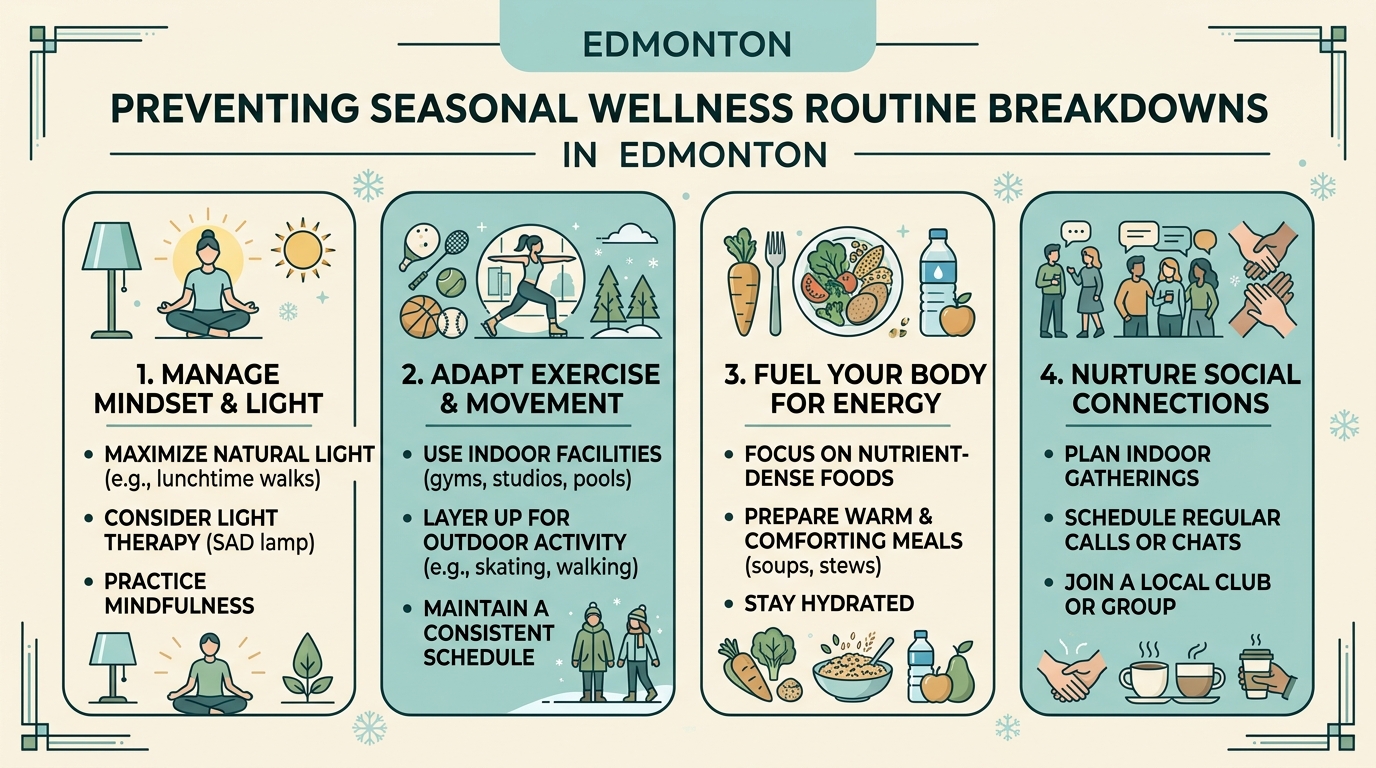
Forget outdoor running from December through February unless you’re truly hardcore. Instead, focus on location-agnostic workouts. The best winter wellness routines in Edmonton don’t depend on leaving your house when it’s -30°C.
Start with bodyweight circuits you can do in your living room. No equipment needed. 20 squats, 15 push-ups, 30-second plank, 20 lunges per leg. Rest 60 seconds. Repeat 4 times. Total time: 15 minutes. Do this three mornings per week before coffee. It’s not fancy, but it maintains baseline fitness when getting to the gym feels impossible.
For those needing more structure, invest in winter-specific home equipment. A used spin bike from Kijiji ($200-400) pays for itself in two months of avoided gym fees. Resistance bands ($30) provide full-body strength training. A yoga mat and free YouTube videos beat driving to expensive studio classes on icy roads.
If you must leave home for exercise, choose facilities with good parking. West Edmonton Mall’s walking corridors open at 7 AM for walkers. Free parking before 9 AM. Climate controlled. Safe surfaces. Groups of seniors have been meeting there for decades – they know something. World Health Club inside the mall offers day passes when you need equipment access without commitment.
Summer Smoke Season Adaptations
Wildfire smoke has become Edmonton’s fifth season. When air quality drops, outdoor exercise becomes dangerous. The solution isn’t to stop moving. It’s to pivot quickly to indoor alternatives.
Keep a smoke season backup plan ready. Map out three indoor locations within 10 minutes of your home or work. Know their drop-in rates. Have a home workout downloaded on your phone. When smoke rolls in, you switch immediately instead of losing momentum while “waiting for clear air.”
Good smoke season facilities include the Kinsmen Sports Centre (central, good air filtration), Terwillegar Recreation Centre (south side, multiple activity options), and the Meadows Recreation Centre (east end, newer HVAC systems). All city facilities monitor air quality and adjust ventilation accordingly.
Swimming becomes ideal during smoke season. Indoor pools offer cardio without breathing stress. The Peter Hemingway Fitness and Leisure Centre has lap swimming from 6 AM. Mill Woods Recreation Centre runs aquafit classes throughout the day. Both have ample parking and reasonable drop-in rates ($7-10).
Transition Season Momentum Maintenance
Spring and fall are when routines typically fail. The weather’s unstable. One day it’s beautiful, the next it’s snowing. You can’t rely on either indoor or outdoor activities exclusively. This inconsistency kills habits.
The solution: hybrid planning. Every week from March-May and September-November needs both indoor and outdoor options scheduled. Tuesday might be River Valley trails if it’s above 5°C and dry. If not, it’s automatically the gym or home workout. No decision fatigue. No weather-checking paralysis.
Use Edmonton’s shoulder season amenities wisely. The Muttart Conservatory pyramids offer plant-filled walking when it’s too cold outside but you need nature. U of A’s Butterdome has a track when outdoor running isn’t viable. Both stay busy during transition seasons for good reason.
Nutrition Consistency Through Seasonal Changes
Winter Nutrition Pitfalls
Edmonton winters trigger specific nutritional challenges. Vitamin D deficiency hits almost everyone by February. Comfort eating increases as daylight decreases. Fresh produce quality drops while prices spike. Your summer salad habit becomes unappealing when it’s dark at 4:30 PM.
Combat winter nutrition breakdown with batch cooking Sundays. Dedicate three hours weekly to preparing warming, nutrient-dense meals. Chili, stews, and curries pack vegetables while satisfying cold-weather cravings. Portion into containers immediately. Label with dates. Your tired Tuesday self will thank you.
Supplement strategically. Alberta Health Services recommends 1000-2000 IU of vitamin D daily for adults during winter months. Add a quality omega-3 supplement to combat seasonal mood dips. Get bloodwork done in November to catch deficiencies early.
Shop local greenhouses for better winter produce. Salisbury Greenhouse in Sherwood Park grows greens year-round. Riverbend Gardens at the Old Strathcona Farmers’ Market has greenhouse tomatoes that actually taste like something. The extra cost beats eating cardboard supermarket vegetables shipped from Mexico.
Summer Barbecue Season Balance
Edmonton’s brief summer brings opposite challenges. Festival season, Fringe celebrations, patio culture, and backyard barbecues can derail nutrition goals. The key isn’t avoiding social events. It’s planning around them.
Use the 80/20 summer rule. Eat well 80% of the time so festival food and patio drinks don’t destroy progress. Prep healthy options for regular meals. Save indulgences for actual special events, not every Tuesday patio session.
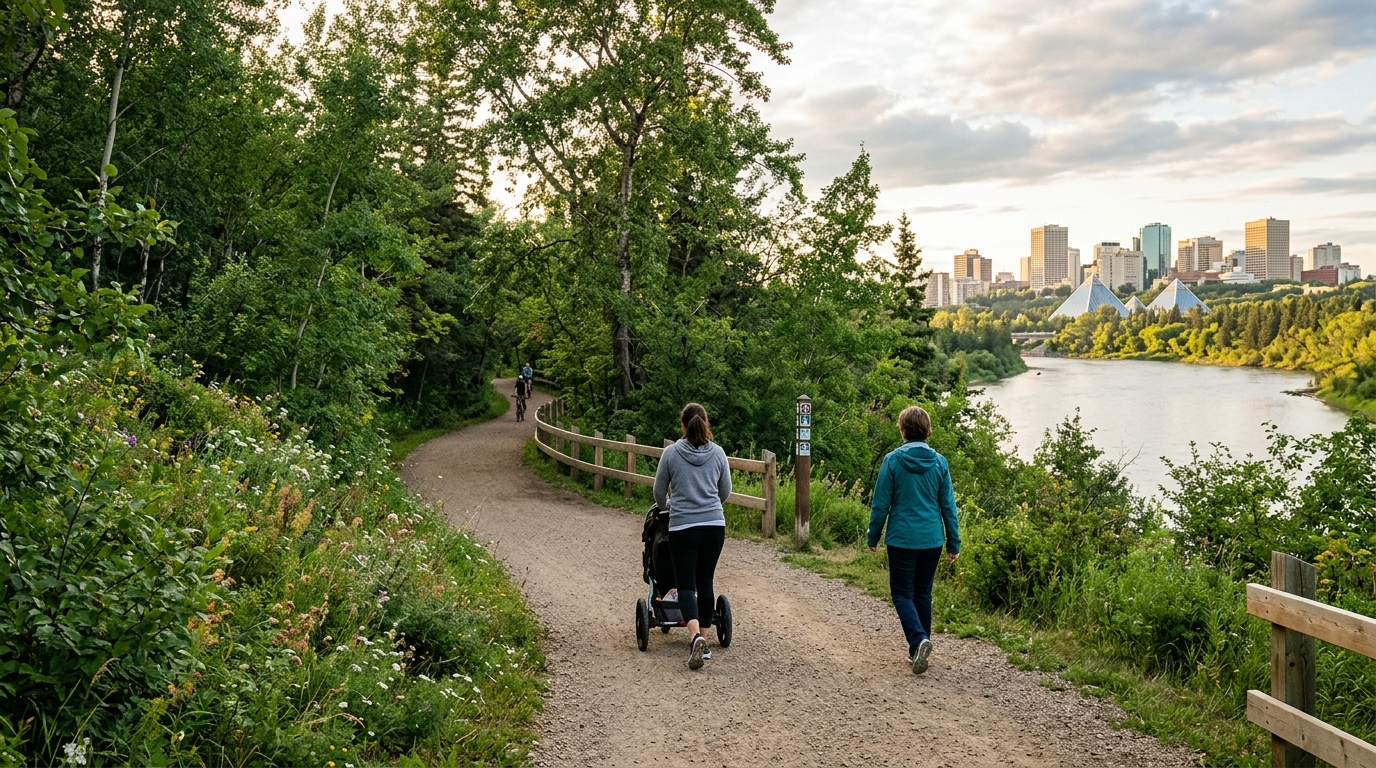
Take advantage of farmers’ market abundance. The Old Strathcona Market (Saturdays) and City Market Downtown (Saturdays) overflow with local produce from June through September. Buy extra and freeze for winter. Saskatoon berries, local corn, and Alberta vegetables freeze beautifully.
Stay hydrated during long summer days. Edmonton’s extended daylight (17+ hours in June) disrupts normal eating and drinking patterns. Keep water bottles in your car, at work, and by your bed. Add electrolytes if you’re active outdoors. Dehydration masquerades as hunger and triggers poor food choices.Meal Prep for Seasonal Transitions
Transition seasons require flexible meal planning. You can’t rely on summer’s quick salads or winter’s slow-cooker meals exclusively. Build a roster of temperature-neutral recipes that work whether it’s -5°C or 15°C outside.
For more on this, see our edmonton summer daylight guide.
Focus on versatile proteins you can prep once and use multiple ways. Rotisserie chickens from Costco ($8) provide meat for salads, wraps, soups, and grain bowls. Hard-boiled eggs last a week and add protein to any meal. Cooked lentils work hot or cold.
Stock your freezer strategically in August for the coming winter. Buy corn at the Salisbury Greenhouse corn maze and freeze kernels. Get pounds of saskatoon berries from U-pick farms near Edmonton and freeze in meal-sized portions. These summer flavors boost winter nutrition and morale.
Mental Health and Seasonal Wellness
Combating Winter Blues Before They Start
Seasonal Affective Disorder (SAD) affects 15% of Albertans, with symptoms typically starting in October. By the time most people recognize the problem in January, they’re deep in the pit. Prevention beats treatment.
Start light therapy in September, not January. Quality SAD lamps (10,000 lux) cost $100-200 at London Drugs or online. Use for 30 minutes each morning while having coffee. The Chapters on Whyte Ave has a bright cafe perfect for morning light exposure if you prefer getting out.
Book winter activities in advance for accountability. Register for that November yoga series at Bliss Yoga Studio in Oliver now. Put deposits on January hot springs trips. Having concrete plans prevents hibernation mode.
Create a winter wellness squad by October. Three to five people who commit to weekly activities regardless of weather. Meet at Remedy Cafe on 124 Street every Wednesday at 6 PM for accountability, then walk the High Level Bridge if weather permits or do mall walks if not. The social connection matters more than the activity.
Summer Energy Management
Edmonton’s endless summer days create different mental health challenges. When sunset hits after 10 PM, sleep schedules suffer. Energy drinks and coffee consumption spike. People burn out trying to maximize every hour of good weather.
Install blackout curtains by May. Complete darkness is essential for quality sleep when it’s bright until 11 PM. The Home Depot on 34th Ave carries good options for $40-80 per window. Worth every penny for better rest.
Set summer boundaries. Just because it’s light doesn’t mean you need to be active until 10 PM. Choose three weekly outdoor activities and stick to them. More isn’t better if it leads to exhaustion by August.
Use temperature-controlled spaces strategically. When it’s 30°C, forcing outdoor workouts causes unnecessary stress. The Commonwealth Recreation Centre’s air conditioning makes afternoon workouts pleasant. Save outdoor activities for cooler mornings and evenings.
Building Year-Round Mental Resilience
Mental health stability requires consistent self-care practices that adapt to seasons without disappearing. Meditation works year-round but might move from the backyard in summer to a warm bath in winter.
Find therapists who understand seasonal challenges. The College of Alberta Psychologists directory lists practitioners specializing in seasonal mood disorders. Many offer video sessions, eliminating winter driving stress. Book ahead – December and January appointments fill quickly.
Track your patterns to predict vulnerable times. Most Edmontonians hit low points in late January and during spring’s false starts. Knowing your danger zones lets you book extra support, plan trips, or schedule wellness activities preemptively.
Creating Your Seasonal Wellness Calendar

January Through March: Deep Winter Strategies
Winter’s darkest months require the most structure. Start January with achievable indoor goals. Not “get in shape” but “attend 12 fitness classes” or “do home workouts 3x weekly.” Specific targets beat vague intentions.
Book these activities for winter months:
- Weekly swim sessions at any city pool (Jasper Place Pool has great senior discounts)
- Lunch-hour walks at West Edmonton Mall or Kingsway Mall
- Saturday morning yoga at home via YouTube (Yoga with Adriene is free and excellent)
- Twice-monthly float sessions at Float Wellness Spa in south Edmonton ($65/float with packages)
Plan one February escape, even if it’s small. A night at the Fairmont Jasper Park Lodge with hot springs access. A long weekend in Canmore. Even a staycation at the Matrix Hotel downtown with pool and steam room use. Breaking up winter matters.
Stock up on winter wellness supplies in January sales: vitamin D, protein powder, resistance bands, bath salts, tea, and books. Having resources on hand prevents excuse-making when motivation dips.
April Through June: Spring Renewal Planning
Spring wellness planning starts before the snow melts. By April 1st, have outdoor activities researched and equipment ready. Don’t wait for perfect weather – it might not come until June.
Register for these spring programs:
- River Valley running clinics through Running Room (multiple locations)
- Outdoor boot camps in Hawrelak Park (various operators, $15-20/class)
- Bike tune-ups at Revolution Cycle (book early, they get swamped)
- Community garden plots through the City of Edmonton (applications open in March)
Address spring allergies proactively. Start antihistamines two weeks before your typical symptom onset. Stock up on indoor workout options for high-pollen days. The Enjoy Centre in St. Albert has excellent air filtration if city facilities trigger reactions.
Use May’s energy burst wisely. This is when to try new activities, join summer leagues, or start ambitious goals. But build in rest days. Spring enthusiasm leads to overtraining injuries if unchecked.
July Through September: Maximizing Summer
Summer requires different planning than winter. Instead of fighting weather, you’re managing abundance. Too many festivals, activities, and options can paradoxically reduce consistent wellness habits.
Create a summer wellness budget – both time and money. Allocate specific amounts for activities, events, and equipment. When Folk Fest, Heritage Days, and Fringe all demand attention, having preset limits prevents overextension.
Essential summer bookings:
- Sunset yoga in the River Valley (various operators, $20/class)
- Early morning River Valley walks before work (free, beat the heat)
- Weekend trips to Elk Island for hiking and lake swimming
- Outdoor pools schedule – check city website for lane swim times
Prepare for smoke season during clear-air weeks. When wildfire smoke arrives, you won’t have time to research alternatives. Have indoor facility passes ready. Download home workout apps. Stock N95 masks for necessary outdoor time.
October Through December: Strategic Slowdown
Fall is when next year’s wellness success gets determined. Use October’s energy to set up winter systems. Don’t wait until January’s resolution rush.
October tasks:
- Research and visit three winter workout locations
- Buy quality winter exercise gear during sales
- Schedule winter wellness activities through March
- Find an accountability partner for dark months
November shifts focus to maintenance and stress management. Holiday prep starts. Daylight disappears. This is when routines typically break. Combat it by lowering expectations while maintaining consistency. Three 20-minute workouts beat abandoned hour-long gym sessions.
December needs special attention. Between work parties, family stress, and financial pressure, wellness often vanishes. Book self-care appointments in advance: massage at Elements Physical Therapy & Wellness in Old Strathcona, float sessions, or even just coffee with supportive friends. Guard this time fiercely.
Technology and Tools for Seasonal Success
Apps and Tracking for Accountability
Technology can bridge seasonal gaps in motivation. The right apps provide structure when weather disrupts plans. But choose carefully – app overload creates more stress than solutions.
Essential apps for Edmonton wellness:
- Weather Network app – Check air quality alongside temperature for workout planning
- Nike Training Club – Free home workouts requiring minimal equipment
- Strava – Connect with local runners and cyclists, find River Valley routes
- Headspace – Meditation for winter blues and summer sleep issues
Use phone reminders strategically. Set alerts for vitamin D in winter, sunscreen in summer, and workout times year-round. But limit notifications – constant pinging creates stress, not wellness.
Join Edmonton-specific fitness Facebook groups or Reddit communities. Local knowledge about trail conditions, facility closures, and weather workarounds proves invaluable. The “YEG River Valley Runners” group shares real-time path conditions all winter.
Equipment Investments That Pay Off
Smart equipment purchases prevent seasonal workout gaps. But Edmonton’s storage limitations (who has garage space?) require selective buying.
Year-round essentials under $500 total:
- Adjustable dumbbells from Canadian Tire ($200-300)
- Quality yoga mat from Lululemon or MEC ($80-120)
- Resistance band set from Amazon ($30-50)
- Foam roller from Sport Chek ($40-60)
- Jump rope for small-space cardio ($20-30)
Seasonal gear worth the investment: proper winter running shoes with carbide studs ($150-200), moisture-wicking base layers for winter outdoor activities ($100-150 per set), and a good headlamp for dark morning or evening workouts ($50-80).
Avoid trendy equipment that requires too much space or setup. Peloton bikes look appealing but need dedicated room. Complex home gyms often become expensive clothing racks. Simple tools used consistently beat elaborate setups.
Creating Digital Wellness Communities
Isolation kills wellness routines faster than bad weather. Digital communities provide support when getting together physically isn’t feasible.
Start a neighborhood wellness WhatsApp group. Keep it small (8-10 people) and local. Share workout plans, healthy recipes, and encouragement. When someone mentions skipping their workout, others can offer support or company.
Use video calls for accountability. Weekly Zoom check-ins with workout buddies maintain connection through winter isolation. Schedule them like real appointments. Sunday evening planning sessions work well for setting weekly intentions.
Document progress digitally but don’t obsess. Photos, measurements, or workout logs provide objective data when motivation lags. But avoid daily weigh-ins or constant progress checking. Monthly reviews suffice for most goals.
Sources & References
Related Reading
- Year-Round Fitness Exercises for Seniors in Edmonton
- Why Edmonton Fall Weather Triggers Fitness Motivation Shifts:…
- Edmonton Spring Allergies Wellness Guide: Natural Relief for…
Related Reading
Related Reading
Related Reading
Related Reading
Frequently Asked Questions
What’s the biggest mistake Edmontonians make with seasonal wellness routines?
Starting too aggressively in September without planning for winter. Most people join gyms and classes with summer energy, then abandon everything when temperatures drop in November. Instead, start with sustainable indoor habits and add outdoor activities as weather permits. The Terwillegar Community Recreation Centre offers varied programs that work year-round, making consistency easier than weather-dependent activities.
How much should I budget for maintaining wellness through all seasons?
Budget $150-200 monthly for a flexible wellness routine that survives seasonal changes. This covers a basic gym membership ($50), drop-in classes for variety ($50), seasonal equipment or clothing ($30), and supplements or wellness services ($20-70). City of Edmonton recreation centres offer the best value with their multi-facility passes at $65 monthly, giving access to pools, tracks, and fitness equipment across the city.
When should I start preparing for seasonal wellness transitions?
Start preparing six weeks before each major seasonal shift. Book winter fitness programs by mid-September. Plan summer activities by early May. This timeline allows you to research options, budget appropriately, and avoid the rush when everyone else realizes seasons are changing. Explore neighborhood wellness options during transition periods to find weather-appropriate alternatives near home.
What’s one wellness habit that works in every Edmonton season?
Morning movement for 20 minutes, regardless of weather or location. This could be living room yoga, mall walking, gym time, or River Valley trails depending on conditions. The consistency matters more than the activity. Starting each day with movement creates momentum that carries through seasonal challenges and prevents seasonal wellness routine breakdowns in Edmonton more effectively than any complex program.
Should I join a gym or invest in home equipment for Edmonton winters?
Do both if possible, but start with a gym membership that includes multiple locations. Good Life Fitness and City of Edmonton facilities let you access various sites, important when your usual location becomes inaccessible due to weather or parking issues. Add basic home equipment gradually as you identify workout gaps. The YMCA offers financial assistance programs if budget is a concern, ensuring winter wellness stays accessible.