Every April, Edmonton runners, cyclists and gym converts make the same mistake. The snow melts, the sun is out until 8 p.m., and months of base-building get squeezed into two weekends. This guide shows you how to ramp up spring training without overuse injuries in Edmonton. It is for anyone coming off a winter of treadmills, short walks or not much at all. You will build a baseline, set load rules, add strength work, handle thaw-season surfaces, and follow an 8-week plan. Start the prep now in November. The ramp itself takes about eight weeks once the trails clear.
Last reviewed:
- Tools needed: A running or training log (paper or app), a pair of shoes with fewer than 800 km on them, a resistance band, a step or sturdy stair, traction cleats for icy days, and a calendar
- Time: About 8 weeks of training, plus a 4 to 12 week base period before it. Expect 3 to 5 hours per week of training, plus 20 minutes of strength work twice a week
- Difficulty: Beginner to Intermediate
Step 1: Measure Your Winter Baseline

You cannot ramp up from a number you do not know. Most people guess. They remember the fall, when they ran 10 km on the river valley trails in September, and they plan spring around that. Winter erased most of it. Tendons, bones and connective tissue adapt more slowly than your lungs and legs do. That mismatch causes the classic overuse injuries: shin splints, Achilles pain, runner’s knee and plantar fasciitis.
Count what you actually did
Look back over the last four weeks. Write down the following.
Edmonton Spring Allergies Wellness Guide For Seasonal Relief covers this in more detail.
- Total minutes of exercise per week, including walking
- Number of sessions per week
- Longest single session
- Any twinges, stiffness or pain that lasted more than a day
Your starting load is the average of those four weeks. Not your best week. If you did 90 minutes a week on a treadmill at the U of A Van Vliet Centre or a rec centre, that is your starting number. If you did nothing, your starting number is a 20-minute walk three times a week. That is fine. Everyone starts somewhere.
How To Prevent Running Injuries Edmonton Climate covers this in more detail.
Run a quick movement check
Before adding load, test the joints that take the beating in spring. Do these in your living room.
How To Prevent Seasonal Wellness Routine Breakdowns In Edmonton covers this in more detail.
- Single-leg balance: Stand on one foot for 30 seconds with eyes open. Wobbling hard means weak stabilizers.
- Single-leg calf raise: Aim for 15 clean reps per side. Fewer than 10 is a flag for Achilles trouble.
- Step-down: Lower slowly from a stair on one leg. If your knee caves inward, add hip work in Step 4.
- Ankle dorsiflexion: Kneel facing a wall and see how far your knee travels past your toes with your heel down. Stiff ankles push stress up the chain to your knees.
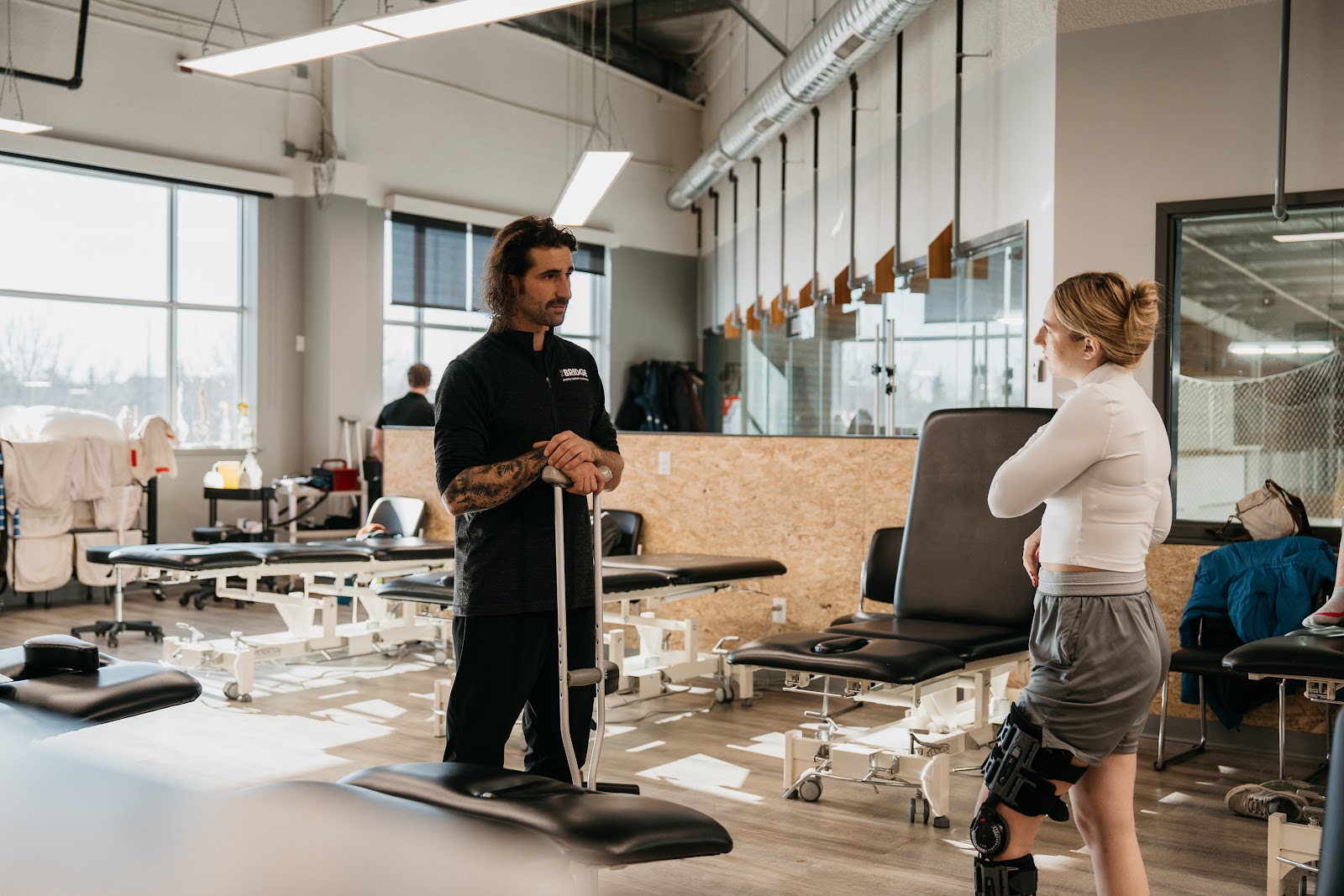
Watch out: Do not skip this step because you feel fine. Overuse injuries rarely hurt on day one. They build quietly for two to three weeks and then show up as pain that will not quit. If any test causes sharp pain, book a physiotherapist before you ramp up. Several clinics on Whyte Avenue, 124 Street and in Windermere take direct bookings. Most direct-billing and out-of-pocket visits run roughly $90 to $130 for an initial assessment.
Edmonton Wellness Reset Guide Spring Outdoor Activities Checklist covers this in more detail.
Step 2: Build a Base Through the Winter
If you are reading this in November, you have an advantage. The best spring ramp-up starts in winter. You are not training for a race yet. You are keeping your tissues loaded often enough that March does not feel like a shock. Our own guide on a How To Prevent Seasonal Wellness Routine Breakdowns In Edmonton covers how to keep momentum when it is dark at 4:30 p.m.
Spring Wellness Reset After Edmonton Winter covers this in more detail.
Pick a winter minimum and protect it
Set a number you can hit even in a -30°C cold snap. Three sessions of 30 minutes works for most people. Make it indoor-proof.
- Treadmill or indoor track: The Commonwealth Community Recreation Centre, Kinsmen Sports Centre and Terwillegar Recreation Centre all have indoor options. Drop-in adult admission generally runs around $8 to $13. Check each facility’s current rates on the City of Edmonton website.
- Walking at West Edmonton Mall: It is free, heated and has plenty of parking. Do laps before stores open if you want space.
- Stationary bike or rowing machine: These build aerobic fitness with less pounding on shins and feet.
Aim to keep at least 60 to 70 percent of your fall volume through the winter. If you dropped far below that, rebuild slowly from January.
Start outdoor winter running on the right terms
Winter running on packed snow is not bad for you. It is slower, and the softer surface can be easier on joints. Ice is the problem. Slip-and-catch motions strain hamstrings and hips. Use traction cleats (about $30 to $60 at local running stores) and shorten your stride. When it is colder than about -20°C, move indoors. Cold dry air irritates the airways, and stiff muscles tear more easily. For more on this, read How To Prevent Running Injuries Edmonton Climate.
Use February as a test month
By late February, aim to handle one session of 40 to 50 minutes of continuous easy activity without pain the next day. If you can, you are ready for the structured ramp. If not, spend another two to three weeks building before you start Step 5.
Step 3: Set Your Load Rules Before You Train
Injuries come from doing too much, too soon, too often. Rules written down in advance beat judgment in the moment. In March, when the sun is warm and your legs feel springy, your judgment will be bad.
Use the 10 percent guideline as a ceiling, not a target
A common guideline says to increase weekly volume by no more than about 10 percent. It is a rule of thumb, not a law. Research on running injuries has not found one magic number, and the evidence behind it is mixed. You can find studies on training load and injury risk by searching PubMed’s database of peer-reviewed research. For beginners and anyone coming off a layoff, treat 10 percent as the most you add in a week. Smaller increases are safer.
Here is how it works. If your starting load is 150 minutes per week, week two is no more than 165 minutes. Week three is no more than 180. It feels slow. It is supposed to.
Follow the three-up, one-down pattern
Every fourth week, drop your volume by 20 to 30 percent. This is a deload week. Your tendons and bones adapt during recovery, not during the work. Skipping deloads is how people reach week six with nagging heel pain.
Change only one thing at a time
Increase distance, or speed, or frequency, or hills. Not all four. The week you add a new route with the Mill Creek ravine stairs is not the week you also add a speed session.
Watch out: Your cardiovascular system adapts in weeks. Your tendons take months. You will feel ready long before your body is. Trust the plan, not the feeling.
Step 4: Add Strength and Mobility Twice a Week
Strength work is the most underused injury-prevention tool for spring athletes. It also fits indoors, which suits Edmonton in the months before the trails open. A couple of 20-minute sessions are enough. You can find general guidance on safe strength training at Mayo Clinic’s fitness resources.
The core exercise list
Do two to three sets of the following, two days a week, not on your hardest training days.
- Single-leg calf raises: 3 sets of 10 to 15, slow lowering over 3 seconds. This loads the Achilles and calf, the tissues most hurt in spring.
- Split squats or step-ups: 3 sets of 8 to 10 per leg. Builds quads and glutes in a running-like pattern.
- Glute bridges with a band: 3 sets of 12. Supports the pelvis and takes load off the knees.
- Side planks: 3 holds of 20 to 40 seconds per side. Trains the hip and trunk stabilizers.
- Hamstring bridges or Romanian deadlifts: 3 sets of 8 to 10. Hamstrings strain easily when speed returns.
Where to get coached help
If you have never lifted, a few sessions with a coach pays off. Many gyms in Oliver, Downtown and Old Strathcona offer personal training at roughly $70 to $110 per session. Group strength classes cost less, usually $15 to $25 drop-in. Parking varies. Downtown and Whyte Avenue have paid street parking and lots. Most suburban rec centres have free lots. LRT users can reach Corona, Grandin and Health Sciences stations in minutes, which helps in January when you do not want to scrape a windshield.
Mobility on rest days
Spend 10 minutes on calves, hip flexors and thoracic spine. Foam rolling and gentle stretching will not prevent injury on their own. They keep you moving well enough to do the strength work properly. Yoga studios across the city, including ones in Old Strathcona and on 124 Street, offer classes in the $18 to $25 drop-in range that double as mobility sessions.
Step 5: Adapt to Edmonton’s Spring Surfaces
Spring in Edmonton is not a clean start. It is freeze, thaw, slush, mud, gravel, and then a sudden week of dry pavement. Each surface loads your body differently. Plan for it. Our Spring Wellness Reset After Edmonton Winter guide covers the broader seasonal shift. Here, focus on what your legs will feel.
Know the surface and what it does
- Pavement and sidewalk: Predictable but hard. Repeated impact is the main driver of shin and foot overuse. Alternate with softer surfaces.
- Packed gravel and crusher-dust paths: Gentler on joints. Good for easy days.
- Thawing dirt trails: Muddy trails demand more ankle stability and balance. They are also vulnerable to damage when wet. Check the City of Edmonton’s trail status updates before heading into the river valley, and stay off closed paths.
- Black ice under slush: Common in March and early April, especially in shaded ravines. Keep your cleats on until the ice is clearly gone.
Pick routes with a progression in mind
In weeks 1 to 3, stay on flat, cleared routes. The Kinsmen Sports Centre area, the Capital City Recreation Trail along the river, and the flat paths around Hawrelak Park suit this stage. Add rolling terrain in weeks 4 to 6. Save steep climbs, like the stairs near Rossdale or the Mill Creek ravine, for week 6 onward. Hills load calves and Achilles tendons hard.
Plan around allergies and air quality
Spring pollen and early-season wildfire smoke can cut a workout short. If you struggle with allergies, check the Edmonton Spring Allergies Wellness Guide For Seasonal Relief for timing and symptom management. Check the Air Quality Health Index before every outdoor session. Move indoors when the rating is high. The Alberta Health Services website has health guidance for poor air days.
Gear checks
Check your shoes. Most running shoes wear out somewhere between 500 and 800 km. Look at the midsole for creases and compression. If your shoes are from two summers ago, replace them. Local running stores in Old Strathcona, Downtown and Southgate will do a gait check, and shoes typically cost $150 to $230.
Step 6: Follow the 8-Week Ramp-Up Plan
Now the training itself. The plan below assumes a starting load of about 150 minutes of exercise per week, spread over three sessions. Adjust the numbers to match your own baseline from Step 1. Keep each increase near 10 percent and never skip the deload.
The weekly schedule
| Week | Weekly Minutes | Sessions | Focus |
|---|---|---|---|
| 1 | 150 | 3 | Easy pace on flat, cleared routes. Strength twice. |
| 2 | 165 | 3 | Same routes. Add 5 minutes to the longest session. |
| 3 | 180 | 3 to 4 | Add a fourth short session (20 minutes, very easy). |
| 4 | 130 | 3 | Deload. Drop volume about 25 percent. Keep strength work. |
| 5 | 190 | 4 | Add gentle rolling terrain. |
| 6 | 210 | 4 | Add one short hill session or 4 x 1 minute faster efforts. |
| 7 | 230 | 4 | Longest session reaches 60 to 70 minutes. |
| 8 | 160 | 3 to 4 | Deload. Test your fitness with an easy benchmark route. |
This is a general template. It is not medical advice. If you have a previous injury, heart condition or health concern, talk to your doctor or a physiotherapist first.
How a typical week looks
In week 5, for example, a schedule might run like this.
- Monday: 40 minutes easy, flat route
- Tuesday: Strength and mobility, 20 minutes
- Wednesday: 35 minutes easy
- Thursday: Rest or 20 minutes walking
- Friday: Strength and mobility, 20 minutes
- Saturday: 55 to 60 minutes easy, rolling route
- Sunday: Rest
Keep most sessions easy
About 80 percent of your training should feel conversational. You should be able to speak a full sentence. Easy running builds tendon strength and aerobic base without large recovery costs. Intensity can wait until week 6 at the earliest, and only in small doses.
Cross-train when the weather turns
Spring storms happen. A late April snowfall can bury a trail. Swap in cycling on a stationary bike, a swim at a pool such as the Kinsmen Sports Centre pool, or a brisk walk at West Edmonton Mall. Cross-training counts toward your weekly total and keeps impact low. For a longer list of seasonal ideas, see the Edmonton Wellness Reset Guide Spring Outdoor Activities Checklist.
Step 7: Monitor Recovery and Respond to Warning Signs
A plan only works if you adjust it. Your body will tell you what is happening. You have to listen and respond early. Small adjustments in week 3 prevent a six-week layoff in week 7.
Track simple daily markers
Use your training log. After each session, write down the following.
- Effort level from 1 to 10
- Any pain, and where it is
- Sleep quality the night before
- Morning resting heart rate, if you track it
Look for patterns. Resting heart rate five or more beats above normal for several days, poor sleep and rising effort scores on easy runs all point to under-recovery. Back off for a few days. Edmonton’s long spring evenings can tempt you to train later. Protect your sleep. Aim for seven to nine hours, which is the general range recommended for adults by Mayo Clinic’s sleep guidance.
Sort normal soreness from a problem
Normal soreness is dull, symmetrical, and eases as you warm up. It fades within 48 hours. Warning signs are different.
- Sharp, pinpoint pain on a bone, especially the shin or top of the foot
- Pain on one side only that gets worse as you continue
- Pain that changes how you walk or run
- Pain that wakes you at night
- Swelling, warmth or visible bruising
If you notice any of these, stop running and take two to three days off. If it persists past a week, get assessed. Bone stress injuries need early attention and can turn into fractures if you push through. A sports medicine clinic or physiotherapist can help. Alberta residents can call 811 (Health Link) for general guidance on whether to seek care.
Use the 24-hour rule
If pain during a session is a 3 out of 10 or lower and settles within 24 hours, you can usually continue with caution. If it rises above 4, or still lingers the next morning, drop the session and reassess.
Watch out: Do not mask pain with anti-inflammatories to finish a training block. Pain is information. Hiding it lets the injury get worse.
Common Mistakes to Avoid

- Doing too much on the first warm weekend. The first plus-10°C Saturday is the busiest injury day of the year. Stick to week 1 numbers even if you feel great.
- Skipping the deload week. You will feel fine in week 4. That is exactly when tissue stress is quietly adding up.
- Raising speed, distance and hills at once. Change one variable per week.
- Training in old shoes. Worn midsoles lose shock absorption. Replace shoes between 500 and 800 km.
- Leaving strength work out. Cardio fitness arrives faster than tendon strength. Strength sessions close the gap.
- Ignoring surfaces. Slush, black ice and thawing mud all raise injury risk. Wear cleats, shorten your stride and choose routes carefully.
What’s Next
Mark your calendar now. Plan your base period for November to February, book a strength session or two, and replace your shoes in February so they are broken in by March. Then start week 1 when the paths are mostly clear, usually sometime in March or April depending on the year. Once you finish week 8, you can add events. Edmonton has plenty of spring and summer races, from 5 km fun runs through the river valley to longer distances. Choose one that is at least eight more weeks away. For ideas on what to do outdoors alongside training, browse the rest of Edmonton Wellness Guide.
Related Articles
- How to Stay Active During Edmonton’s Winter Smoke Season: Indoor Fitness Options That Work
- Best Indoor Wellness Activities When Edmonton Air Quality Drops: Your Complete Guide
- Why Does Edmonton Summer Daylight Affect Sleep Schedules: Understanding Our 17-Hour Days
Sources & References
Find Trusted Wellness Spots in Edmonton
Browse our independent guide to Edmonton’s spas, fitness studios, and wellness services. Local. Honest. Free.
Frequently Asked Questions
How early should I start preparing for spring training in Edmonton?
Start in November or December with a winter minimum of three 30-minute sessions per week. Add strength work twice weekly from January. By the time paths clear in March or April, your tendons will be ready for the 8-week ramp.
Is it safe to run outside in an Edmonton March?
Yes, with precautions. Wear traction cleats on packed or icy sections, shorten your stride, and avoid shaded ravines where black ice lingers. Move indoors to a rec centre track, such as at Commonwealth or Terwillegar, when temperatures drop below about -20°C or paths are glazed.
How do I know if shin pain is a problem or normal soreness?
Normal soreness is dull, spread across a muscle and eases as you warm up. Sharp pain on a specific spot on the bone, or pain that gets worse as you run, needs rest and a physiotherapy assessment. Initial visits in Edmonton typically run around $90 to $130.
How many days a week should I train when starting out?
Three to four days is plenty for the first four weeks. Include at least two non-consecutive rest days and two short strength sessions. Add a fourth or fifth training day only after you complete a deload week without pain.
What can I do on smoky or rainy spring days?
Move the session indoors. Walk laps at West Edmonton Mall, ride a stationary bike, or swim at a city pool. Check the Air Quality Health Index before heading out, and keep the same weekly minutes so your plan stays on track.