Indoor heated pools vs outdoor swimming in Edmonton by season is not a close call in January, and it is not a close call in July either. The question lives in the shoulder months, on smoky days, and in the gap between what you want to do and what the weather allows. This comparison is for Edmonton adults who swim for fitness, recovery, or mood, and for parents deciding where to spend the weekend. The short verdict: indoor heated pools win roughly eight months of the year because they are reliable. Outdoor swimming wins June to August on good air days because it gets you outside during our long daylight. The best setup is a rec centre pass plus a summer outdoor habit.
Last reviewed:
Here is the side-by-side before the detail. Prices and temperatures are approximate and change, so check the City of Edmonton recreation pages before you go.
| Criteria | Indoor Heated Pools | Outdoor Swimming |
|---|---|---|
| Usable season in Edmonton | 12 months, with occasional maintenance closures | Roughly late May or June to early September |
| Water temperature | About 28 to 30°C for lane pools, warmer in leisure pools | Follows the weather. Lakes can sit in the mid-teens early in summer |
| Typical cost per visit | Roughly $7 to $10 drop-in, less with a monthly pass | Roughly $6 to $9 at city outdoor sites, free at some lakeshores |
| Smoke season | Unaffected. Filtered air indoors | Poor choice when the air quality rating climbs |
| Lap swimming | Dedicated lanes, 25 m and 50 m pools | Limited. Open-water swimming has no lane lines |
| Winter cold exposure | Short dash from the car to the door | Not available outdoors in winter |
| Parking and transit | Large lots, several next to LRT stations | Smaller lots, weekend crowds, fewer direct transit routes |
| Best for | Training, rehab, kids, year-round routine | Mood, daylight, social swims, a change of scene |
Winter Swimming: November to March
It is November. The river valley has gone quiet, the first -20°C mornings are close, and daylight is shrinking toward roughly eight hours in December. the indoor pool earns its keep. There is no real outdoor option for a pool swim in Edmonton in winter, so this section is about how to get the most from indoor water when the air outside is brutal.
Why indoor pools win the deep-winter months
A heated pool is one of the few places in Edmonton where you can exercise at full effort and not think about frostbite. The water is warm, the building is humid, and your joints get a break from icy sidewalks. Mayo Clinic’s exercise guidance lists swimming as a low-impact option, which matters when slippery footing keeps you off running trails from December to March.
Edmonton Spring Allergies Wellness Guide For Seasonal Relief covers this in more detail.
Indoor pools also solve the daylight problem. Early morning and evening lane swims happen under bright lights, which is useful when the sun rises after 8:30 a.m. and sets before 4:30 p.m. in midwinter. Many people find a fixed swim time gives the day a spine when everything else feels grey.
The trade-off is the commute. Wet hair at -30°C is a real concern. Wear a toque with a dry liner, bring a spare hat, and let your hair dry before you go outside if you can. Parking close to the door helps more than anything else.
How To Prevent Seasonal Wellness Routine Breakdowns In Edmonton covers this in more detail.
Which Edmonton rec centres suit which swimmer
The city runs a network of aquatic centres, and they are not interchangeable.
Best Indoor Wellness Activities When Edmonton Air Quality Drops covers this in more detail.
- Commonwealth Recreation Centre (near Stadium Road): big lot, adjacent to Commonwealth Stadium LRT. Good for lane swimmers and families, but the lot fills on event days.
- Kinsmen Sports Centre (Walterdale Hill, river valley edge): a 50 m pool and diving facilities. Best for serious lap swimmers. Parking is workable, though weekday evenings are busy.
- Clareview Community Recreation Centre: sits beside Clareview LRT. A strong pick for northeast residents without a car.
- Terwillegar Recreation and Leisure Centre: plenty of parking and a modern leisure pool. Good for families in the southwest.
- Millennium Place in Sherwood Park: a strong option for east-side swimmers, with straightforward parking.
Check each facility’s schedule before you drive. Lane times, family swims and aquafit classes rotate, and some pools close for annual maintenance. Our Edmonton Wellness Guide homepage links to related winter wellness reading.
Mood, sleep and the winter swim routine
People who swim indoors in winter often say the warm, humid air is what keeps them coming back. A 30-minute swim after work lines up with the time of day when seasonal low mood tends to bite. Pair it with a sauna or hot tub if the facility has one and you have no heart or blood pressure concerns. Ask your doctor first if you do.
- Book two fixed swim slots per week. A set time beats a vague plan.
- Choose evening swims if you struggle to get out of bed before sunrise.
- Keep a gym bag in the car with a spare toque, flip-flops, and a towel that dries fast.
- Use the leisure pool or hot tub for ten minutes after lengths to warm up before heading outside.
Winner for winter: indoor heated pools, with no contest.
Shoulder Seasons: April, May, September and October
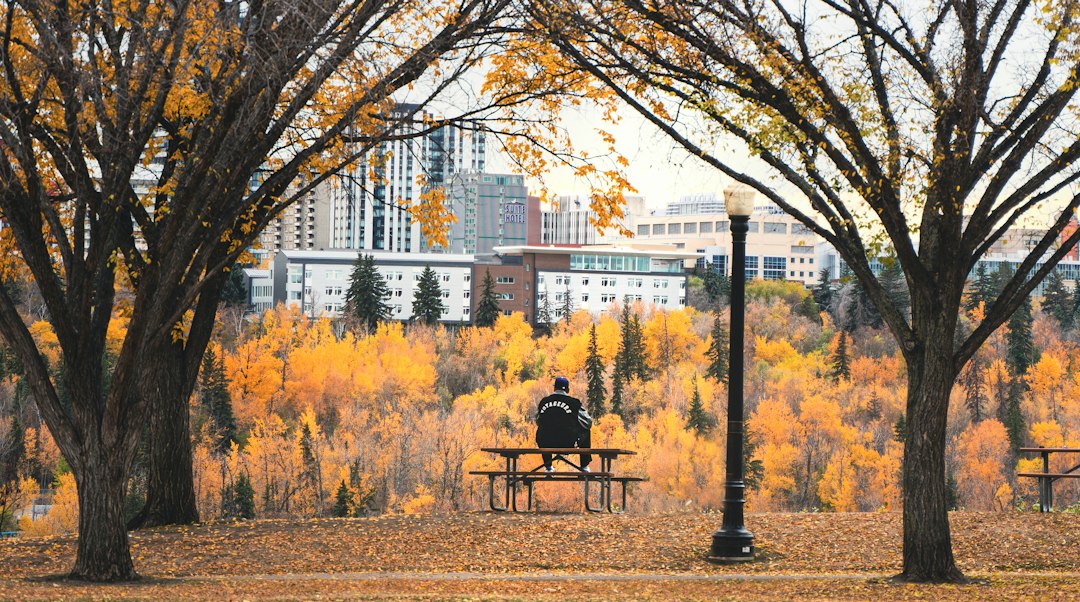
The shoulder months are where the comparison gets interesting. The river valley turns slushy in April, and by late May the first outdoor sites open. In September, the days are still warm but the water cools fast. This section covers what is realistic and what is wishful thinking.
Spring: April to mid-May
April is an indoor month. Snowmelt and cold nights keep lakes frigid, and outdoor pools typically stay closed until the season opens in late May or June. Use this window to build base fitness in a lane pool before summer.
Spring also brings pollen. Birch, then grass, and later poplar fluff can irritate the eyes and nose. Indoor pools offer some relief from outdoor pollen, though chlorine can bother sensitive airways. If your symptoms flare, read the Health Canada resources on seasonal allergies and speak to a pharmacist or doctor about timing medication before a swim.
- Rinse your hair and face after you leave the river valley, to remove pollen before you get in the pool.
- Shower before swimming. It keeps the pool cleaner for everyone and helps with chlorine irritation.
- Use goggles that seal well. They reduce eye irritation from both pollen and pool chemicals.
Fall: September to October
September can be a gift. Warm afternoons, clear air, and fewer crowds. Some outdoor sites may still run weekend hours, though many wind down after Labour Day. Natural bodies of water cool quickly. A lake at 20°C in August can drop below 15°C by late September, and cold water raises the risk of cold shock for anyone who is not used to it. Read the CDC’s healthy swimming guidance for general safety basics, and wear a flotation device if you swim open water in the cold months.
By October, indoor is the sensible default. Frost arrives, the days shorten, and swim programs restart on the rec centre calendar. If you plan to swim through the winter, this is the month to sign up for a pass at a lower introductory rate where one is offered.
The shoulder-season rule of thumb
Use this simple rule. If the daytime high is under 18°C or the water looks cloudy and cold, go indoors. If the high is above 22°C, the sky is clear, and the pool is open, take the outdoor swim. The exception is any day when smoke or poor air quality changes the calculation, which we cover next.
Winner for shoulder seasons: indoor pools in April and October. A split decision in May and September, depending on the weather and site opening dates.
Summer Swimming: June to August
Edmonton summers are short, bright, and busy. In June, the sun sets close to 10 p.m. and the sky stays light even later. Outdoor swimming is at its best here, and it is a real pleasure. It is also where the indoor-outdoor comparison gets the most honest.
Outdoor pools and the Borden Park natural pool
Edmonton’s outdoor options include city outdoor pools and the Borden Park Natural Swimming Pool, which uses a biological filtration system instead of chlorine. It runs in the summer only, and its water temperature follows the weather. Expect cooler water in early June and warmer water in July. Admission costs a few dollars and can change by year, so confirm on the City of Edmonton site.
The appeal is simple. You swim under open sky with trees nearby. The downside is crowds. On a hot Saturday, the pool and the grass around it can fill early, and capacity limits sometimes apply. Go on a weekday morning for a quieter experience.
Parking near Borden Park is limited on busy days, and street parking fills quickly. Transit is a good option here. Check the ETS trip planner for routes that reach the park from downtown and the northeast.
Lakes, reservoirs and open-water swimming
Outside the city, lakes such as Wabamun, Hastings Lake and Astotin Lake in Elk Island National Park offer open-water swimming. Water in early June is often cold, mid-teens in some years, and it warms through July. Water quality varies. Alberta Health Services posts advisories on some recreation waters, and blue-green algae can close beaches. Check Alberta Health Services before you go, especially in late summer.
- No lifeguard at many lakeshores. Swim with a buddy.
- Bring a bright swim cap or tow float so boats can see you.
- Expect a drive of 30 to 90 minutes from Edmonton. Gas and parking fees add to the cost.
- Check for algae advisories before every trip.
Open water gives you variety, but it is not a substitute for lane swimming. Lap pools give you measurable training. Lakes give you a good time.
Smoke season and the indoor pivot
Wildfire smoke is now a regular feature of Edmonton summers. When the Air Quality Health Index climbs into the high-risk range, Health Canada advises people to reduce strenuous outdoor activity. Swimming hard in smoky air means breathing deeply and often, which is exactly what you do not want. Indoor pools have filtered air, so a lane swim on a smoky day is often a better choice than a run or a ride.
Make the call each morning:
- Check the Air Quality Health Index before you leave.
- If the rating is moderate or higher and you have asthma or a heart condition, go indoors.
- If the rating is low risk, the outdoor option is fair game.
- Keep your rec centre pass active through summer as a backup. It costs little compared with a lost week of exercise.
Winner for summer: outdoor swimming on good air days. Indoor pools on smoke days, hot-and-humid weekends when outdoor sites are packed, and any day you want a measured workout.
Cost, Access and Getting There
Price rarely decides this comparison, but convenience does. A swim you can reach in 15 minutes happens. A swim that takes 90 minutes of driving does not happen twice a week.
What each option costs
At city rec centres, an adult drop-in swim costs roughly $7 to $10, and monthly or annual passes bring the per-visit cost down if you swim two or three times a week. A pass often covers the weight room and group classes as well. Some pools offer lower rates for seniors, youth and low-income residents, so ask at the desk.
Outdoor city pools and the natural pool usually charge a similar or slightly lower daily rate. Lakes cost nothing at some public beaches, but fuel and any park entry fees matter. Elk Island National Park charges an entry fee. Check Parks Canada for current rates.
- Budget swimmer, 2 swims a week all year: a monthly or annual indoor pass is the cheapest per visit.
- Summer-only swimmer: a few outdoor drop-ins and a lake trip or two costs less than a pass.
- Family of four: family passes or family-rate drop-ins at a rec centre usually beat paying four single admissions.
Parking and transit
Indoor rec centres generally have large lots, and several sit by LRT stations. Commonwealth is beside the stadium station, and Clareview is beside Clareview station. That is a real advantage on a -28°C morning when your car may not start. Terwillegar and Millennium Place work best by car.
Outdoor sites have a tougher time. Borden Park parking fills on hot weekends, and lakes require a vehicle. If you do not drive, indoor pools are far more accessible for the other nine months, and the natural pool is the best outdoor option by bus.
Crowds and the best time to go
Rec centre pools get busiest on weekday evenings between 5 and 7 p.m. and on weekend afternoons. Lane swims are quietest mid-morning and after 8 p.m. Outdoor pools are the reverse. They are quiet on cloudy mornings and packed on sunny afternoons. If you want space, pick off-peak hours at either.
Winner for access: indoor pools, because of transit, parking, and year-round hours.
Health, Safety and Comfort
Both options are good for you. The differences are in the details.
Water quality and chemicals
Indoor pools use chlorine or similar disinfectants and filtration, and staff test the water on a set schedule. The CDC notes that proper pool chemistry and good hygiene reduce the spread of illness. Chlorine can irritate eyes, skin and airways, particularly for people with asthma. Showering before getting in, and keeping the pool air well ventilated, reduces the problem. Ventilation is better at newer facilities.
Outdoor pools use similar treatment. The natural pool uses biology rather than chlorine, which some swimmers prefer for skin and eyes. Lakes have no treatment at all. Bacteria and algae are real concerns, and AHS advisories are worth reading.
Temperature and body response
Warm water (28 to 30°C) relaxes muscles and joints, which helps people with stiffness or arthritis. Therapy pools run warmer still. Cold water tests the heart and breathing. Cold shock can cause a gasp reflex and fast breathing in the first minute. If you want to try cold-water swimming, start with short dips and a buddy.
- Warm indoor water: best for rehab, older adults, pregnancy swims (after clearance from your care provider), and beginners.
- Cool outdoor water: invigorating for healthy swimmers, but risky for people with heart conditions.
- Sun exposure outdoors: apply broad-spectrum sunscreen and reapply after swimming.
Mental health and daylight
Outdoor swimming in June puts you in natural light and fresh air, both helpful for mood. Indoor swimming gives you a predictable routine during the dark months, which matters more because winter is when most Edmontonians struggle. A reasonable plan is to treat indoor swimming as your winter anchor and outdoor swimming as your summer reward.
For more on keeping a routine intact when the weather turns, see the guides on the Edmonton Wellness Guide.
Winner for health: a tie. Indoor for reliability and gentle conditions. Outdoor for light, fresh air and variety.
The Verdict: Which Should You Choose?
Indoor heated pools vs outdoor swimming in Edmonton by season comes down to one rule. Use indoor from September through May. Use outdoor in June, July and August when the air is clear. Here is how that plays out for different swimmers.
Best for budget
Indoor pool with a monthly pass. If you swim at least twice a week, a pass at a city rec centre costs less per visit than any drop-in, and it covers the whole year. It also gives you smoke-day insurance in summer.
Best for winter and mood
Indoor heated pool, scheduled in the evening. From November to March, it is the only practical option. Pick a rec centre close to home or on an LRT line, such as Commonwealth or Clareview, so the trip is short and the car-to-door dash is brief.
Best for serious training
Indoor lane pool. Kinsmen Sports Centre and other lap-friendly pools offer measurable distances, set lane times and consistent water temperature. Open water is a fun add-on, not a training base.
Best for summer and families
Outdoor swimming on clear days, with an indoor backup. The Borden Park natural pool is the easiest outdoor option for city residents. Lakes work for day trips. Always check the air quality rating and any water advisory first.
Best for smoke days
Indoor pool, every time. Filtered indoor air makes a lane swim a safer workout than an outdoor session when the air quality rating is poor.
If you are reading this in November, the practical next step is simple. Pick a rec centre, buy a pass, and book your first two swims this week. In May, check opening dates for outdoor sites. In June, take the first warm, clear morning and get in the water.
Related Articles
- How to Stay Active During Edmonton’s Winter Smoke Season: Indoor Fitness Options That Work
- Why Does Edmonton Summer Daylight Affect Sleep Schedules: Understanding Our 17-Hour Days
Find Trusted Wellness Spots in Edmonton
Browse our independent guide to Edmonton’s spas, fitness studios, and wellness services. Local. Honest. Free.
Frequently Asked Questions
Can you swim outdoors in Edmonton in winter?
Not in a regular outdoor pool. City outdoor pools close for the season, and lakes freeze. If you want winter swimming, use an indoor heated pool such as Commonwealth Recreation Centre or Kinsmen Sports Centre. Cold-water dipping at frozen lakes exists but carries serious risk and needs experienced guidance.
When do outdoor pools open in Edmonton?
Outdoor swimming sites usually open in late May or June and close around Labour Day, depending on weather and staffing. Dates change each year. Check the City of Edmonton recreation pages for current hours at the Borden Park natural pool and other outdoor sites.
Is it safe to swim outdoors during wildfire smoke?
Not when the Air Quality Health Index is in the higher-risk range, especially for people with asthma, heart disease or other respiratory conditions. Swimming is hard breathing, and smoke particles go deep into the lungs. Move your swim to an indoor pool and check the index each morning.
How much does an indoor pool cost compared with outdoor swimming?
Indoor drop-in swims at city rec centres run roughly $7 to $10, and monthly passes lower the cost per visit. Outdoor city pools charge a similar rate, and lakes are free or low cost apart from driving. If you swim twice a week or more all year, a pass is the cheaper choice.
What is the best way to stay warm walking out of the pool in winter?
Dry your hair well, wear a dry toque, and warm the car before you leave. Use the hot tub or steam room for a few minutes if the facility has one, then dress in layers. Park as close to the door as you can, and choose a rec centre near an LRT station if you do not want to scrape a windshield at night.