Every January, gyms across Edmonton fill up. By the second week of February, the parking lots empty out again. This isn’t a willpower problem. It’s a psychology problem, and understanding what wellness habits stick and which ones fail comes down to how your brain handles cues, rewards, and friction, not how badly you want to change. Edmonton makes this harder than most cities. Four months of real winter, weeks of wildfire smoke, and a summer so short you feel obligated to use every hour of daylight all interrupt the habit-building process in ways a mild climate never would. This guide breaks down the actual psychology of habit formation, why so many wellness routines collapse by week three, and what building habits that survive an Edmonton winter actually looks like.
Last reviewed:
The Psychology Behind Why Wellness Habits Fail

Most people blame themselves when a new routine falls apart. They shouldn’t. Behavioral researchers have spent decades mapping why habits fail, and the pattern is remarkably consistent. It rarely comes down to laziness. It comes down to design.
The Habit Loop Breaks Down Fast
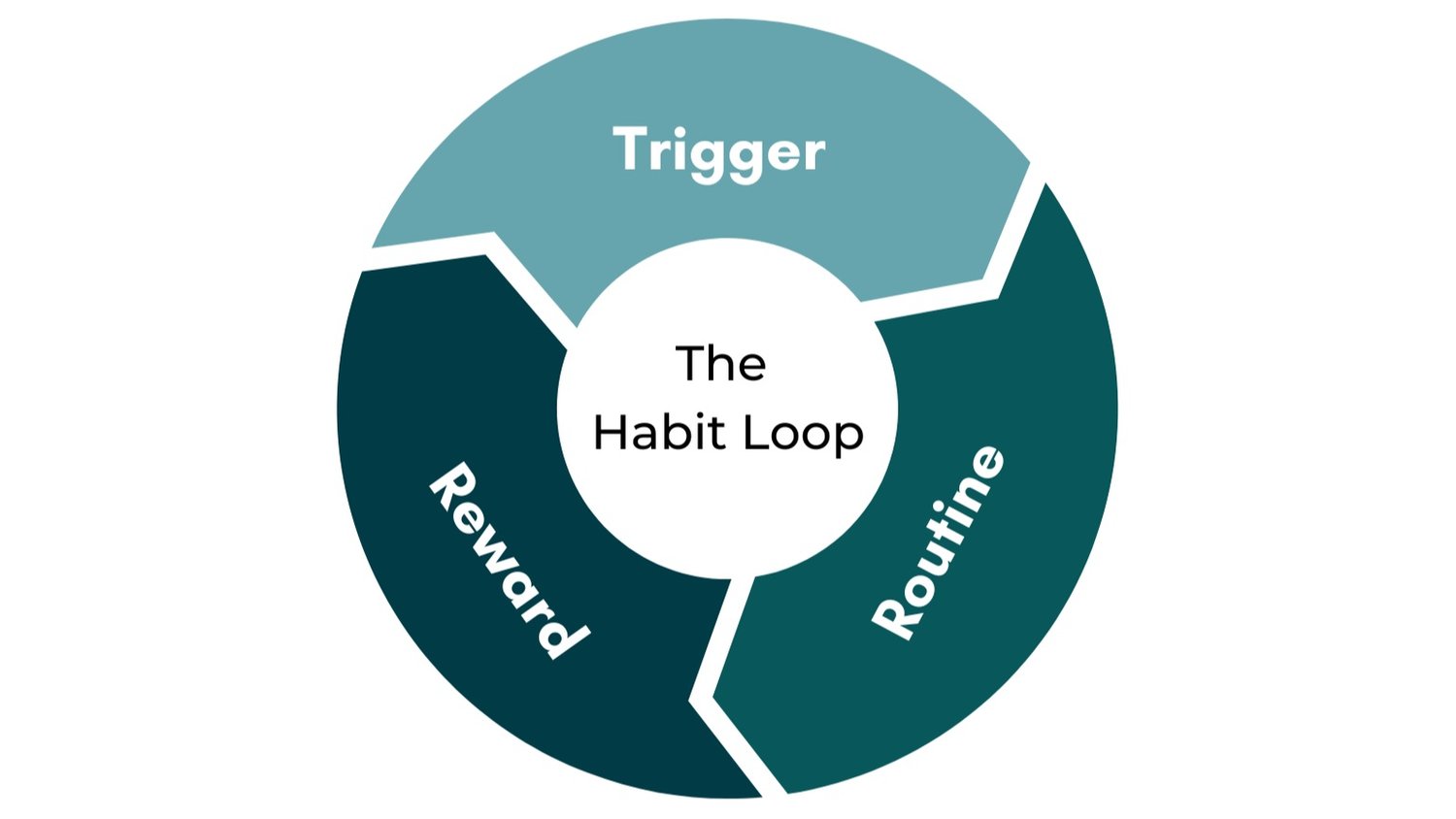
Every habit runs on a loop: cue, routine, reward. You see your gym bag by the door (cue), you go for a run (routine), you feel good afterward (reward). The loop only holds together if all three pieces stay consistent. Change your schedule, lose the cue, or delay the reward, and the loop breaks. This is why a habit that worked fine in October falls apart in November when it gets dark at 4:30pm and your usual after-work run cue disappears along with the daylight. The habit formation research published through the National Institutes of Health found that automaticity, meaning a behavior that no longer requires conscious effort, is what makes a habit durable. Without a stable cue, you never reach automaticity. You’re stuck making a decision every single day, and decisions are exhausting.
Willpower Runs Out Before Winter Does
Willpower behaves like a battery, not a personality trait. Psychologists call this ego depletion. You start the day with a full charge. Every decision, every stressful email, every traffic jam on Whyte Avenue drains it a little. By 6pm, when most people plan to hit the gym or cook a healthy dinner, the tank is close to empty. This is why habits scheduled for the end of the day fail at a much higher rate than morning habits. It’s not about discipline. It’s about timing your habit to when your willpower reserve is actually full.
All-or-Nothing Thinking Kills Momentum
Miss one workout and tell yourself the whole week is ruined. That single thought does more damage than the missed workout itself. Psychologists call this the abstinence violation effect, and it’s one of the most common reasons people abandon a routine entirely after a single slip. A missed Tuesday run doesn’t erase three weeks of consistency. But all-or-nothing thinking treats it like it does, and that’s usually the moment someone quits for good instead of just picking back up on Wednesday.
What Actually Makes Wellness Habits Stick
If failure comes down to design flaws, then sticking comes down to design fixes. The habits that survive long term share a few specific traits, and none of them require more motivation.
Health And Wellness Edmonton covers this in more detail.
Small Enough to Survive a Bad Day
The habit that sticks isn’t the ambitious one. It’s the one small enough to do even when you’re tired, busy, or it’s -28°C outside. A 10-minute walk beats a 60-minute gym session you’ll skip half the time. Once the small version becomes automatic, expanding it is easy. Starting big and hoping to sustain it rarely works, especially through an Edmonton winter when energy and daylight are both in short supply.
Edmonton Spring Allergies Wellness Guide For Seasonal Relief covers this in more detail.
Anchored to Something You Already Do
This is called habit stacking, and it’s one of the most reliable tools in behavioral psychology. Instead of trying to build a habit from nothing, you attach it to something you already do without thinking. Stretch for five minutes right after you brush your teeth. Do a breathing exercise while your coffee brews. The existing habit becomes the cue for the new one, which solves the exact problem that causes most habits to fail in the first place: an unreliable trigger. Implementation intentions work the same way. Instead of “I’ll exercise more,” you plan “I will walk the river valley trail near Hawrelak Park every Tuesday and Thursday at 7am.” Specificity removes the daily decision, and removing the decision is what protects the habit when willpower is low.
Identity Beats Outcome
People chasing an outcome (“lose 15 pounds”) quit more often than people building an identity (“I’m someone who moves every day”). Outcome-based goals are fragile because progress isn’t linear and motivation dips the moment results stall. Identity-based habits survive plateaus because the reward isn’t the result, it’s the act itself. This single shift explains a lot of what separates why wellness habits fail and how to prevent it from routines that quietly become part of someone’s normal week.
The Edmonton Factor: Climate, Darkness, and Habit Formation

Every habit-formation study gets written somewhere with a mild climate. None of them account for a city where it’s dark by 4:30pm in December and the air can turn orange with wildfire smoke in July. Edmonton adds real, physical obstacles that the psychology research doesn’t fully address on its own.
Winter Darkness and Your Circadian Rhythm
Edmonton gets under 8 hours of daylight at the winter solstice. That disruption to your circadian rhythm doesn’t just affect sleep, it affects motivation, mood, and the energy required to start any new habit. Alberta Health Services notes that seasonal affective disorder affects a meaningful share of Canadians living at northern latitudes, and even people who don’t meet the clinical threshold for SAD report lower energy and motivation between November and February. This is exactly why habits that depend on outdoor daylight, like an evening run, tend to collapse in winter no matter how committed someone was in July. For a full breakdown of what actually works when the sun disappears by mid-afternoon, see this guide on how to maintain wellness habits during Edmonton winter darkness.
Smoke Season Breaks Outdoor Streaks
Wildfire smoke has become a predictable summer disruption for Edmonton, often peaking in July and August. When the air quality health index climbs, outdoor habits like river valley runs or patio yoga sessions have to pause, sometimes for days at a stretch. A habit built entirely around outdoor conditions has no backup plan, and that’s a design flaw, not a personal failure. The fix is building an indoor equivalent into the plan from day one, not scrambling for one once the smoke rolls in.
The Short Summer Trap
Edmonton summers run roughly mid-May through early September, and the daylight hours during that stretch are genuinely long, often past 10pm in late June. That abundance creates its own problem. People overcommit, packing in Folk Fest, patio nights, camping trips, and River Valley hikes, and the structured habit gets pushed aside in favor of spontaneity. Then September hits and there’s no routine left to fall back into. A habit that only exists in winter, or only exists in summer, isn’t really a habit. It’s a seasonal activity wearing a habit’s clothing.
Habit Failures Unique to Edmonton (and Fixes)
Some habit failures are universal. Others show up specifically because of how this city is built and how its seasons work. Here’s where local wellness routines tend to break down, and what actually fixes each one.
| Common Edmonton Habit Failure | Why It Happens | Practical Fix |
|---|---|---|
| January gym membership drop-off | Motivation-driven start with no environmental backup once novelty fades | Pick a gym within a 10-minute drive or LRT stop of home, not one across the city |
| Outdoor running habit dies in November | Cue (daylight, mild temperature) disappears | Build an indoor track or treadmill backup into the plan from the start |
| Patio yoga stops after Labour Day | Habit tied to a single season with no indoor version planned | Book an indoor studio membership before the outdoor season ends |
| Smoke season halts River Valley walks | No contingency for poor air quality days | Keep a mall-walking or indoor track option ready for AQHI spikes |
| Solo habits fade by week four | No external accountability or social reward | Join a class or find one consistent workout partner |
The January Gym Membership Cliff
January sign-ups spike across Edmonton every year, from downtown chains to neighborhood studios in Oliver and Old Strathcona. Most of those memberships go unused by March. The psychology here is straightforward: a resolution built purely on motivation has nothing to fall back on once the initial excitement fades, which typically happens around week three. The fix isn’t a better resolution. It’s picking a location close enough to actual daily life, ideally walkable or a short LRT ride, that going doesn’t require extra motivation to overcome the commute itself.
The Solo River Valley Runner Problem
Edmonton has one of the largest connected urban park systems in North America, and the City of Edmonton’s river valley trail network spans more than 20 connected parks. It’s a genuine asset. But solo habits, run alone, no accountability, are among the most fragile according to behavioral psychology. The reward is entirely internal and easy to skip on a rough day. Runners who join a local run club or commit to a standing time with one other person report far higher consistency than solo runners, because the social cost of skipping becomes part of the cue system.
The Patio Yoga Season That Ends Too Soon
Studios across 124 Street and Old Strathcona run popular outdoor yoga sessions from June through August. They’re genuinely great and often run $15 to $25 a class. The problem is what happens after Labour Day, when the outdoor sessions stop and nothing replaces them. If the plan was always “yoga outside when it’s nice,” the habit was seasonal by design, not a real long-term routine. Booking an indoor studio membership before the outdoor season wraps up keeps the loop, and the habit, intact.
A Practical Framework for Habits That Last Through Edmonton Seasons

Understanding the psychology of what wellness habits stick and which ones fail only helps if it changes how you actually build a routine. Here’s a framework that accounts for Edmonton’s specific seasonal swings instead of ignoring them.
Design for Your Worst Week
Don’t build a habit around your best-case scenario, a sunny July evening with nothing else on the calendar. Build it around your worst realistic week: a -25°C Tuesday in January when you worked late and it’s already dark. If the habit survives that scenario, it survives most weeks. This usually means picking something shorter, closer to home, and less weather-dependent than your first instinct suggests.
Track Just Enough, Not Everything
Tracking creates a visible reward loop, which reinforces the habit. But tracking ten metrics across three apps creates its own friction and often becomes the reason people quit. One simple marker, a checkmark on a calendar or a basic streak counter, is usually enough to trigger the psychological reward without adding overhead. For a deeper look at which tracking methods actually hold up over months instead of weeks, this guide on how to track wellness habits that actually stick covers the specifics.
Rebuild Instead of Restart
When a habit breaks, and in Edmonton, something will eventually break it, a smoke advisory, a cold snap, a busy stretch at work, the instinct is to restart from scratch with a brand new plan. Don’t. Rebuilding means picking the habit back up at whatever scale is realistic that week, even if it’s smaller than before. Restarting from zero resets the psychological cost every time, which is exactly why so many people cycle through the same failed resolution every January instead of just picking the thread back up in February.
Common Mistakes Even Well-Intentioned Edmontonians Make
Most habit failures aren’t caused by a lack of effort. They’re caused by a handful of predictable mistakes that show up again and again, even among people who genuinely want the routine to work.
Stacking Five New Habits in January
New Year’s resolutions often bundle five changes at once: exercise more, eat better, sleep earlier, meditate, drink less. Each new habit draws from the same limited pool of willpower and attention, so stacking several at once dramatically increases the odds that all of them fail together. Behavioral research consistently shows that people who commit to one habit at a time have significantly higher success rates than those attempting several simultaneously. Pick one. Get it running on autopilot. Then add the next.
Ignoring Seasonal Allergy and Air Quality Triggers
Spring in Edmonton brings a real spike in tree pollen, typically peaking through April and May, and it derails a lot of outdoor habits that were working fine all winter. People assume they’re losing motivation when really they’re dealing with a runny nose and watery eyes every time they step outside. Planning around this instead of fighting through it protects the habit. For specifics on managing the seasonal shift without abandoning an outdoor routine altogether, see this Edmonton spring allergies wellness guide for seasonal relief.
Going It Alone When Accountability Would Help
Solo habits are harder to sustain than social ones, full stop. Statistics Canada’s data on physical activity levels shows participation in structured group activity correlates with higher long-term adherence compared to unstructured solo exercise. This doesn’t mean every habit needs a group class. It means building in some form of external accountability, a workout partner, a class schedule, even a friend who asks how it’s going, meaningfully improves the odds a habit survives past the six-week mark where most attempts quietly die. For a broader look at building sustainable routines around the resources actually available in this city, the Health and Wellness Edmonton resource page is a useful starting point.
Quick Reference: Is Your New Habit Built to Survive Winter
- Small enough to complete in under 15 minutes on a bad day
- Anchored to an existing daily routine, not floating on its own
- Not weather-dependent, or has a clear indoor backup ready
- Scheduled early in the day, before willpower reserves run low
- Tracked with one simple marker, not five different metrics
- Has some form of accountability, a partner, class, or standing commitment
- Tied to identity (“I’m someone who moves daily”) rather than a single outcome
Related Articles
- How to Build a Morning Wellness Routine for Beginners: An Edmonton Guide
- What Is a Sustainable Habit Loop and How Does It Work: Building Wellness Routines That Stick in Edmonton
- How to Start Yoga at Home in Edmonton: A Winter-Friendly Guide
Sources & References
Find Trusted Wellness Spots in Edmonton
Browse our independent guide to Edmonton’s spas, fitness studios, and wellness services. Local. Honest. Free.
Frequently Asked Questions
Why do most New Year’s wellness resolutions fail by February in Edmonton?
Most resolutions fail because they’re too big, too vague, and unanchored to an existing routine, and Edmonton’s dark, cold February makes every one of those weaknesses worse. Motivation naturally dips once the novelty wears off, usually within three weeks, and without a stable cue and a small enough scope, the habit has nothing holding it in place. Starting with one small habit tied to something you already do, rather than five ambitious changes at once, has a much higher success rate.
How long does it actually take to build a habit that sticks?
The commonly cited “21 days” figure isn’t accurate. Research from University College London found the average time to reach automaticity is closer to 66 days, and it varies widely depending on the habit’s complexity, sometimes taking over 250 days for more demanding routines. The practical takeaway is to expect a couple of months of conscious effort before a habit starts running on autopilot, not a few weeks.
Why do outdoor wellness habits fail more often in Edmonton than in other cities?
Outdoor habits rely on stable environmental cues, daylight, mild temperature, clear air, and Edmonton loses all three at different points in the year: darkness in winter, smoke in summer, allergens in spring. A habit with no indoor backup plan is really only a seasonal habit. Building an indoor equivalent from the start, whether that’s a treadmill session or an indoor studio class, keeps the routine intact when conditions turn.
Is it better to build one habit at a time or several at once?
One at a time, consistently. Willpower and attention are limited resources, and splitting them across five new habits at once dramatically raises the odds that all of them collapse together. Get one habit running on autopilot, generally a couple of months in, before layering on the next one.
What’s the single biggest predictor of whether a wellness habit will stick?
Whether it’s anchored to an existing routine. Habits with a stable, reliable cue, like stretching right after brushing your teeth, form automaticity far faster than habits that depend on remembering or feeling motivated each day. Removing the daily decision is what protects the habit when energy and willpower run low, which happens often during Edmonton winters.
Does tracking a habit actually help it stick, or is it just extra work?
Simple tracking helps because it creates a visible reward, seeing a streak build is genuinely motivating. But tracking becomes counterproductive when it’s overly complex, since managing multiple metrics across several apps adds friction that can end up being the reason someone quits. One straightforward marker, like a checkmark on a calendar, usually captures the psychological benefit without the overhead.