
When you live in Edmonton, you get pretty good at understanding shared responsibility. We shovel our neighbour's walk when they're out of town, we slow down to a crawl on the Henday when that first greasy snow hits, and we look out for each other. The MMR vaccine is a lot like that—it’s a routine, publicly funded shot that protects against measles, mumps, and rubella, and it’s one of the most important things we do for community health.
For more on this, see our finding gyms edmonton guide. For more on this, see our finding gyms edmonton guide.
Why the MMR Vaccine Matters for Alberta Families
Let’s get right to it. This isn't just another public health memo. It’s about keeping our kids safe in the playgrounds from Terwillegar to Clareview and protecting the fabric of our communities.
Measles, mumps, and rubella aren't distant, historical diseases. We've seen outbreaks pop up globally and, yes, even here in our province. These reminders are stark: when vaccination rates slip, these highly contagious illnesses can come roaring back.
Protecting Our Community Fabric
When enough of us are immunized, we build a powerful, invisible shield called herd immunity. Think of it as a community-wide firewall. It doesn't just protect you or your child; it protects everyone, especially the most vulnerable among us. This includes infants who are still too young for their first dose and our friends and neighbours with compromised immune systems who can’t get the vaccine.
Keeping that shield strong is something we do for each other. It ensures our daycares, schools, and the summer spray parks we all flock to are safer for every single child.
The core idea is simple: individual vaccination builds collective resilience. High immunization rates prevent isolated cases from turning into widespread outbreaks that can overwhelm our healthcare system and put vulnerable people at serious risk.
Following the Science-Backed Schedule
Alberta’s immunization plan isn't a guess—it's built on decades of solid evidence. Alberta Health Services (AHS) has carefully designed a schedule that gives our kids the best possible protection when they need it most.
This schedule is all about timing. The immune system is trained to respond most effectively at certain developmental stages, which is why the two-dose protocol is so critical for building long-lasting immunity.
Here’s a quick look at the standard schedule for kids in our province.
Alberta's Routine MMR Vaccine Schedule at a Glance
This table breaks down the standard immunization timing for children in Alberta, as recommended by AHS, to provide strong protection right from the start.
| Age of Child | Vaccine Administered | What It Protects Against |
|---|---|---|
| 12 months | MMR-Var (Dose 1) | Measles, Mumps, Rubella, and Varicella (Chickenpox) |
| 18 months | MMR-Var (Dose 2) | Measles, Mumps, Rubella, and Varicella (Chickenpox) |
Staying on this schedule is one of the most effective wellness decisions you can make for your family and your community. It’s a foundational piece of public health, right up there with getting enough Vitamin D to survive our long, dark winters. And while vaccines are our best defence against these specific viruses, it’s always a great idea to explore all the ways you can support your family's well-being, including learning more about how to boost immunity naturally.
Decoding the Alberta Immunization Schedule
Keeping track of your kids' immunization appointments can feel a lot like trying to plan a long weekend camping trip—you know the important dates, but life has a way of throwing curveballs. Thankfully, Alberta's schedule for the MMR vaccine is much more predictable than our weather. It’s designed to give our kids solid protection right when their developing immune systems are ready for it.
Here in Alberta, our public health approach is pretty practical. For infants, Alberta Health Services recommends a two-dose schedule using the combined MMRV vaccine, which also protects against varicella (chickenpox). This just makes sense; it means fewer needles for your little one while still delivering crucial immunity. The timing isn't random—it's based on decades of solid evidence about how a child's immune system matures.
The Two-Dose Timeline for Kids
The routine schedule is a straightforward two-step process that lines up with key milestones, getting your child protected before they start mixing with more kids at daycare or school.
- First Dose: Given at 12 months old. This is the initial introduction, teaching your child's immune system how to recognize and fight off the real viruses.
- Second Dose: Given at 18 months old. Think of this as a critical booster. It significantly ramps up their immunity, ensuring the protection is strong and long-lasting.
Following this schedule means your child has maximum protection by the time they're toddling around playgrounds in Mill Woods or joining playgroups in Oliver.
This decision tree helps visualize the recommended pathway for the MMR vaccine in Alberta based on age and specific risk factors.
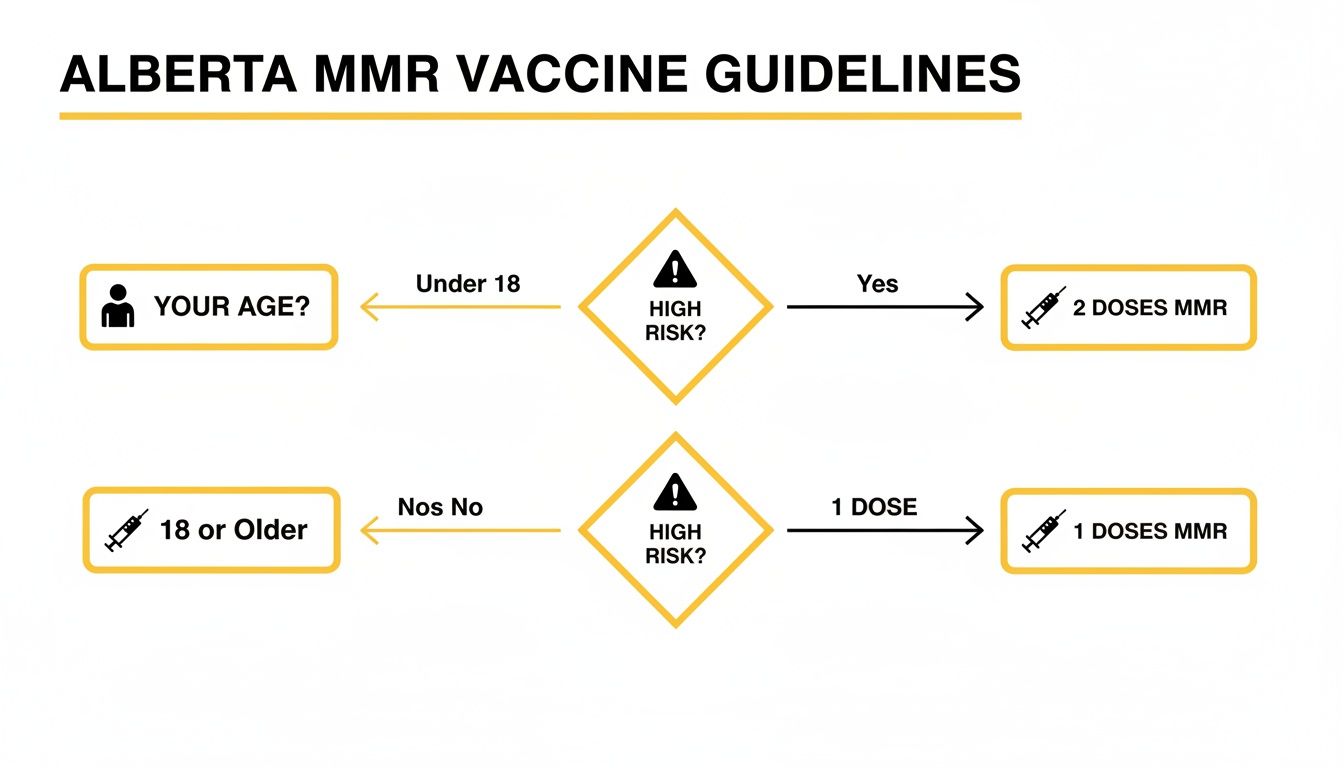
As the infographic shows, while the routine schedule is the standard, there are clear guidelines for catch-up doses and for people in high-risk situations.
What If a Dose Was Missed?
Life happens. Between navigating slushy spring roads and trying to pack in a year's worth of fun into our short, glorious summers, appointments can get missed. The good news is that it’s never too late to get back on track with the MMR vaccine in Alberta.
If your child, teen, or even you as an adult missed a dose along the way, don't sweat it. AHS has a clear "catch-up" plan. A public health nurse will simply create a personalized schedule to get you or your child fully immunized.
For anyone born in 1970 or later, two documented doses of a measles-containing vaccine are the gold standard for being considered fully protected in Alberta. It’s not about hitting the dates perfectly, but about making sure that two-dose protection is in place.
Your best first step is to call 811 Health Link or get in touch with your local community health centre. They’ll look at your records and guide you through what’s next, no judgment involved. The only goal is to make sure every Albertan has the protection they need to stay healthy.
How to Book Your MMR Vaccine Appointment
Alright, you’re ready to get the shot—for yourself or your kids. Now comes the practical part: figuring out where to go. This can feel like just one more task on an already long to-do list, but the good news is that booking an MMR vaccine in Alberta is straightforward, and for most of us, completely free.

Whether you're a new parent in Griesbach navigating the world of childhood immunizations for the first time or a university student in Strathcona needing to get your records up to date, the process is pretty much the same. AHS has made it simple to get the protection you need.
Finding and Booking an Appointment
Your main point of contact for both routine and catch-up immunizations will be an Alberta Health Services (AHS) Public Health Centre. These are the local hubs for publicly funded vaccines, staffed by nurses who can answer your questions and get you sorted out.
Here’s how you can set things up:
- AHS Online Booking Tool: This is usually the quickest way to find an appointment. You can see available time slots at various clinics across Edmonton and book what works for your schedule, whether it's near your home in Windermere or closer to work downtown.
- Call Health Link at 811: If you’d rather talk to a person, have specific questions, or aren’t sure about your immunization history, dialing 811 is your best bet. A registered nurse can walk you through the process, help find your records, and even book an appointment for you.
- Contact Your Local Public Health Centre Directly: You can also just call your nearest health centre to book. They handle everything from infant immunizations to adult catch-up doses.
No matter which way you book, have your Alberta Health Care card handy. It’s what confirms your eligibility for the publicly funded vaccine.
Understanding Eligibility and Cost
One of the best things about our healthcare system is how accessible preventative care like this is. So, let’s be perfectly clear about the cost.
If you are an Alberta resident with a valid Alberta Health Care card, the MMR vaccine is provided at no cost. This applies to both routine childhood immunizations and any necessary catch-up doses for adults.
This isn’t a new policy; it’s been a cornerstone of our province's health strategy for decades. The combined Measles/Mumps/Rubella vaccine became part of the routine program for children way back in October 1982. Today, Alberta requires a documented history of two doses for most adults to be considered fully protected. You can read more about the history and evidence of immunity requirements on the AHS website.
This commitment ensures that money doesn't stand in the way of community protection. It's a system designed to keep all of us safer, from the peak of summer festival season to those long winter months when we're all cooped up indoors. Keeping up with routine health measures is especially important when other environmental factors are at play—check out our guide on dealing with wildfire smoke health effects for more locally relevant tips.
For more on this, see our smoke season affect guide. For more on this, see our edmonton summer daylight guide. For more on this, see our finding footing guide. For more on this, see our wellness edmonton alberta guide. For more on this, see our smoke season affect guide. For more on this, see our edmonton summer daylight guide. For more on this, see our finding footing guide. For more on this, see our wellness edmonton alberta guide.
MMR Requirements for School, Travel, and Work
Your immunization record is more than just a piece of paper tucked away in a file folder. Think of it as a kind of passport—one that opens doors to school, international travel, and certain jobs right here in Edmonton.
If you’ve ever registered a child for school or daycare in the city, you’ve been through this drill. Providing their immunization history is a standard, and important, part of the process.
While Alberta doesn't have a law that stops unvaccinated children from attending school, sharing these records is a critical public health tool. If an outbreak happens, the school needs to know exactly who is vulnerable so they can act fast. This simple policy helps keep classrooms, playgrounds, and the entire community safer.
Understanding Proof of Immunity
So, when we talk about "proof of immunity," what does that actually mean here in Alberta? For most official purposes, Alberta Health Services (AHS) looks for a documented history of vaccination. They want to see the shots on record.
- For measles and mumps: AHS requires a record showing two valid doses of a vaccine containing measles and mumps for anyone born in 1970 or later.
- For rubella: One documented dose is usually considered enough to prove you’re protected.
Unlike in some other places, a blood test (serology) showing you have antibodies typically isn't accepted by AHS as a substitute for your vaccination records. The documented doses are the gold standard, especially for those of us working in high-risk fields.
For anyone working in healthcare, education, or childcare—from a nurse at the U of A Hospital to an educator at a local daycare—having up-to-date MMR immunizations is often a condition of employment. It’s a non-negotiable part of protecting both yourself and the vulnerable people you work with every day.
Travel and Work Abroad
Planning to escape one of our notorious -30°C winters? You'll want to check your vaccination status before you book that flight.
With recent measles outbreaks happening globally, many countries now require proof of MMR vaccination for entry. A quick check of the travel health advisories for your destination can save you from major headaches at the border. It's a simple step that's easy to overlook in the excitement of planning a trip.
If you’ve misplaced your or your child’s records, don’t panic. You can request a copy from the clinic where the shots were given or access them through your MyHealth Records account online. Keeping this information handy is just a smart move, much like ensuring our homes are healthy during those long winter months. If you’re spending more time cooped up inside, it’s a good idea to check out our guide on how to improve indoor air quality.
A Straightforward Look at Vaccine Safety
It's completely normal to have questions about your child's health. We live in a world with a firehose of information coming at us constantly, so let's take a breath and talk honestly about MMR vaccine safety, Edmonton-style—no nonsense, just the facts.

The first thing to know is that after the shot, it's very common for your little one to experience mild, short-term side effects. Think of it as their immune system booting up and learning what to do. These reactions are actually a good sign the vaccine is working.
This is a totally different ballpark than getting sick with actual measles, which can be incredibly serious. The vaccine uses a weakened version of the viruses—just enough to teach the body how to fight, not enough to cause the disease itself.
What to Expect After the Shot
Most reactions are no big deal and fade within a day or two. It’s the kind of stuff we’ve all managed as parents before.
- Soreness: The spot on the arm or thigh where they got the shot might be a bit red, swollen, or sore. A cool compress can help, just like for any other bump or bruise.
- Low-Grade Fever: A mild fever is also quite common. It’s a sign your child’s body is busy building its defences.
- Mild Rash: About a week to 10 days later, some kids might get a faint, non-contagious rash. It’s just their immune system finalizing its training.
- Fussiness: They might be a bit more irritable or tired than usual for a day. We all get that way, especially during a surprise spring snowstorm in Edmonton.
These responses are a normal part of building immunity. For managing minor discomfort and swelling, you can learn about some helpful strategies in our guide on how to reduce inflammation naturally.
The Science Behind MMR Safety
It’s easy to get lost in online noise, but the safety record of the MMR vaccine is incredibly strong. It's backed by decades of research involving millions of children all over the world. Here in Canada, both Health Canada and Alberta Health Services have rigorous processes for approving and continuously monitoring vaccines.
Serious side effects from the MMR vaccine are extremely rare. The risk of complications from measles, mumps, or rubella itself is vastly higher than any risk from the vaccine. It’s not even a close comparison.
Ultimately, choosing to vaccinate is a decision grounded in overwhelming scientific evidence. It’s one of the most reliable tools we have to protect our kids and our community, ensuring they can safely enjoy everything our city offers—from the crowds at Folk Fest to a packed Oilers game at Rogers Place.
Your MMR Vaccine Questions Answered
We get it. Even with all the official information out there, sometimes you just have a direct question and want a straight answer. Here are some of the most common things we hear from fellow Edmontonians about getting the MMR vaccine in Alberta.
Is the MMR Vaccine Free in Alberta?
Yes, absolutely. For any resident with a valid Alberta Health Care Insurance Plan card, the MMR vaccine is provided free of charge as part of our province's publicly funded routine immunization program.
This applies to both the standard doses for kids and any catch-up shots needed for eligible adults. When you go to an AHS Public Health Centre, you won't pay for the vaccine itself. It’s a core part of our public health system, making sure cost isn't a barrier to keeping our community protected.
What If My Child Missed a Dose of the MMR Vaccine?
First off, don't worry. Life in Edmonton is busy, from navigating muddy spring parkas to squeezing in every last drop of our 17-hour summer days. It's completely understandable for an appointment to get missed.
It's never too late to get back on track. If your child has missed one or both doses of their MMR, just get in touch with your local AHS Public Health Centre or call 811 Health Link. A nurse or healthcare provider will look at their immunization history and map out a simple, personalized catch-up schedule. The only goal is to get them fully protected.
Can I Get a Blood Test to Prove Immunity Instead?
This is a great question, and the answer is specific to how things work here in Alberta. For public health purposes, proof of immunity to measles and mumps is based almost entirely on having a documented record of vaccination.
AHS doesn't typically accept blood tests (serology) as a substitute for your vaccination records, especially for things like school entry or healthcare job requirements. If you can’t find your records, the official recommendation will almost always be to get the vaccine doses to ensure you’re protected.
For anyone born in 1970 or later, that means having two documented doses on file. This approach is considered the most reliable and consistent way to confirm protection across the whole population.
What Is the Difference Between the MMR and MMRV Vaccine?
This one is just a matter of what’s included in the shot. The two vaccines are very similar, but a small difference makes the immunization process a bit easier for our little ones.
- MMR Vaccine: This vaccine protects against three diseases: Measles, Mumps, and Rubella. Adults getting a catch-up dose will usually receive this version.
- MMRV Vaccine: This one protects against four diseases: Measles, Mumps, Rubella, and Varicella (that’s chickenpox).
In Alberta, the routine schedule for children at 12 and 18 months typically uses the combined MMRV vaccine. It’s a practical choice that reduces the total number of injections a child needs while delivering the same robust protection—a small thing that can make the experience a little less stressful for both kids and parents.
While vaccination is a cornerstone of preventing illness, supporting your body's natural defences is always a smart move. For more ideas on how to stay healthy through our long winters, check out our guide on the best foods to boost your immune system. It’s packed with practical tips for eating well right here in Edmonton.
At Edmonton Wellness Guide, we're here to help you navigate your health journey with practical, locally focused advice. Explore our resources to find science-backed wellness strategies that fit your life. Learn more at https://www.edmontonwellnessguide.com.
Related Reading
- The River Valley Is Your Gym (And It’s Free)
- How to Boost Immunity Naturally Through an Edmonton Year
- How to Deal with Seasonal Depression in an Edmonton Winter