
Let's get straight to it: managing seasonal depression in Edmonton requires a specific game plan. It’s not about generic wellness advice; it's about intentional habits built for our northern reality. The core of it comes down to managing light exposure, locking in a consistent daily routine, staying physically active, and refusing to let the cold and dark isolate us. This isn't about willpower. It’s about building a practical system to counteract the very real biological and psychological toll of our long, dark winters.
For more on this, see our edmonton spring allergies guide. For more on this, see our prevent seasonal wellness guide. For more on this, see our edmonton spring allergies guide. For more on this, see our prevent seasonal wellness guide.
That Familiar Feeling of the Edmonton Winter Shift
You know the feeling. It creeps in around late October, right when the sun starts setting before you’ve even packed up your desk for the day. Suddenly, the energy of Folk Fest and those 10 PM sunsets feels like a memory from another lifetime. The light changes, the air gets a sharp edge, and something inside you shifts, too.
That dip in mood and energy isn't just in your head. It’s a shared reality for those of us living this far north.

Seasonal Affective Disorder (SAD), or what most of us just call the winter blues, is a real challenge baked right into our geography. That extreme swing from 17-hour summer days down to just a handful of dim winter ones can throw our internal clocks and brain chemistry for a serious loop.
This guide isn't about generic advice you could find anywhere. It's about managing the season with intention and local know-how. Think of it as camaraderie—a recognition that yes, this is hard, but we're Edmontonians. We're built for this. We know how to dress for -30°C, and we know how to find the quiet joy in a crisp, sunny winter morning in the river valley.
We're not framing this as a personal failing to overcome, but as an environmental reality to manage. It's about building a practical, Edmonton-proof toolkit for the months ahead.
To get us started, here’s a quick overview of the core strategies we'll be diving into. Think of this as your winter game plan.
Your Edmonton Winter Wellness Toolkit At a Glance
| Strategy | Why It Matters in Edmonton | Simple First Step |
|---|---|---|
| Light Management | Our latitude means weak, limited winter sun, directly impacting mood and sleep hormones. | Get 15-20 minutes of natural light within the first hour of waking up. Stand by a window or step outside. |
| Consistent Schedules | Erratic sleep and meal times worsen the disruption caused by changing daylight. | Pick a non-negotiable wake-up time for every day of the week (yes, even weekends). |
| Indoor Activity | It's easy to become sedentary when it's -25°C. Movement is a powerful antidepressant. | Find one fun, accessible indoor option near you—like a rec centre, climbing gym, or yoga studio. |
| Strategic Nutrition | Cravings for carbs are real. Eating seasonally can help stabilize energy and mood. | Add one winter root vegetable (squash, sweet potato) to your dinner plate three times this week. |
| Social Connection | The cold encourages isolation, which is a major risk factor for depression. | Schedule one low-key coffee or phone call with a friend before you feel like canceling. |
This guide will walk you through actionable tactics that actually work here. We'll cover everything from harnessing light to staying active when it’s colder than your freezer. Since sleep is one of the biggest pieces of the puzzle, you might also want to check out our deep dive on why sleep in Edmonton is so complicated and what to do about it.
Let's get started on building your plan.
Making Light in the Darkest Months
Our biggest challenge in an Edmonton winter is the profound lack of sunlight. When the sun hangs low and vanishes before 5 PM, it’s not just in your head—our bodies feel that absence. This is where we have to get intentional, and our most effective tool is deliberate light exposure. It's how we start to push back against seasonal depression right where it begins.
For more on this, see our stay active during guide.
The foundation of this approach is light therapy, usually with what’s known as a SAD lamp. This isn’t just a bright desk light; it's a specific wellness tool built to mimic the sun's powerful effects on our brain chemistry.
How a SAD Lamp Actually Works
Think of a SAD lamp as your own personal sunrise, one you can switch on during a pitch-black December morning. For it to actually work, though, you need to pay attention to a specific measurement of brightness called lux.
The therapeutic standard is a lamp that provides 10,000 lux of broad-spectrum light while filtering out harmful UV rays. Anything less just won't have the impact you need on your internal clock and mood.
Using one is simple, but consistency is everything. The standard practice is to sit in front of the lamp for 20-30 minutes each morning, ideally within the first hour of waking up. You don't have to stare into it. Just place it off to the side, about an arm’s length away, while you have your coffee, check emails, or eat breakfast.
This blast of morning light sends a powerful signal to your brain. It helps regulate the production of melatonin (the sleep hormone) and serotonin (a key mood chemical). You’re essentially telling your body, "Hey, it's daytime now, even if it looks like the middle of the night outside."
Making It an Edmonton Habit
Trying to cram one more thing into a busy morning can feel like a tall order. The trick is to pair it with something you already do.
- Your Morning Coffee Companion: Put the lamp right next to your coffee maker or kettle. While it brews and you take those first few sips, you're getting your light therapy in.
- The Breakfast Boost: Set it up at the kitchen table. By the time you’ve finished your oatmeal or toast, your session is done.
- The Pre-Commute Power-Up: If you drive to work, you could even use it while you’re gathering your things before heading out into the cold.
The goal isn't to add another chore to your list. It’s to seamlessly slide this powerful tool into a routine you've already got. Think of it like plugging in your car when it hits -15°C—just another non-negotiable part of a successful winter morning in this city.
Don't Forget the Real Thing
As good as light therapy is, it’s a supplement, not a replacement for actual sunlight. Getting outside, even on a frigid but bright day, is absolutely critical. Our bodies are designed to respond to the full spectrum of natural light in a way no lamp can perfectly replicate.
This means we have to be opportunistic. We have to grab sunlight whenever and wherever we can find it.
- The Lunchtime Lap: Even a quick 15-minute walk can make a world of difference. Head out for a loop around your office building or take a brisk walk down a sunny street in a neighbourhood like Oliver or Old Strathcona.
- Embrace the River Valley: On a weekend, commit to a walk on the trails. The sun reflecting off the snow in Mill Creek Ravine or near Hawrelak Park actually amplifies the light exposure and adds the well-documented mood boost of being in nature.
- Find Your Sunny Spot: Take your coffee break on a south-facing bench. If you can, position your desk at home or work to face a window.
Even on overcast days, the light you get outdoors is significantly more powerful than anything you'll get inside. So, bundle up and get out there. Combining a daily SAD lamp session with snatched moments of real sunlight creates a powerful, two-pronged strategy for managing your light intake and keeping the winter blues from settling in.
Building a Winter-Proof Routine That Works for You
When the sun punches out at 4:30 PM, it feels like our entire city just flips a switch. That sudden plunge into darkness can throw our internal clocks—our circadian rhythms—completely out of sync, leaving us feeling sluggish and disconnected. Building a solid daily routine isn't about becoming a rigid scheduler; it's about giving your body the consistent cues it needs to navigate the dark months.
Think of that structure as an anchor in a storm. It helps regulate the hormones that control your sleep and mood, giving you a predictable rhythm when the natural one from the sun is gone. Without it, we're far more vulnerable to the deep fatigue and low motivation that define seasonal depression.
This flow chart breaks down a simple, effective way to structure your light intake all day.
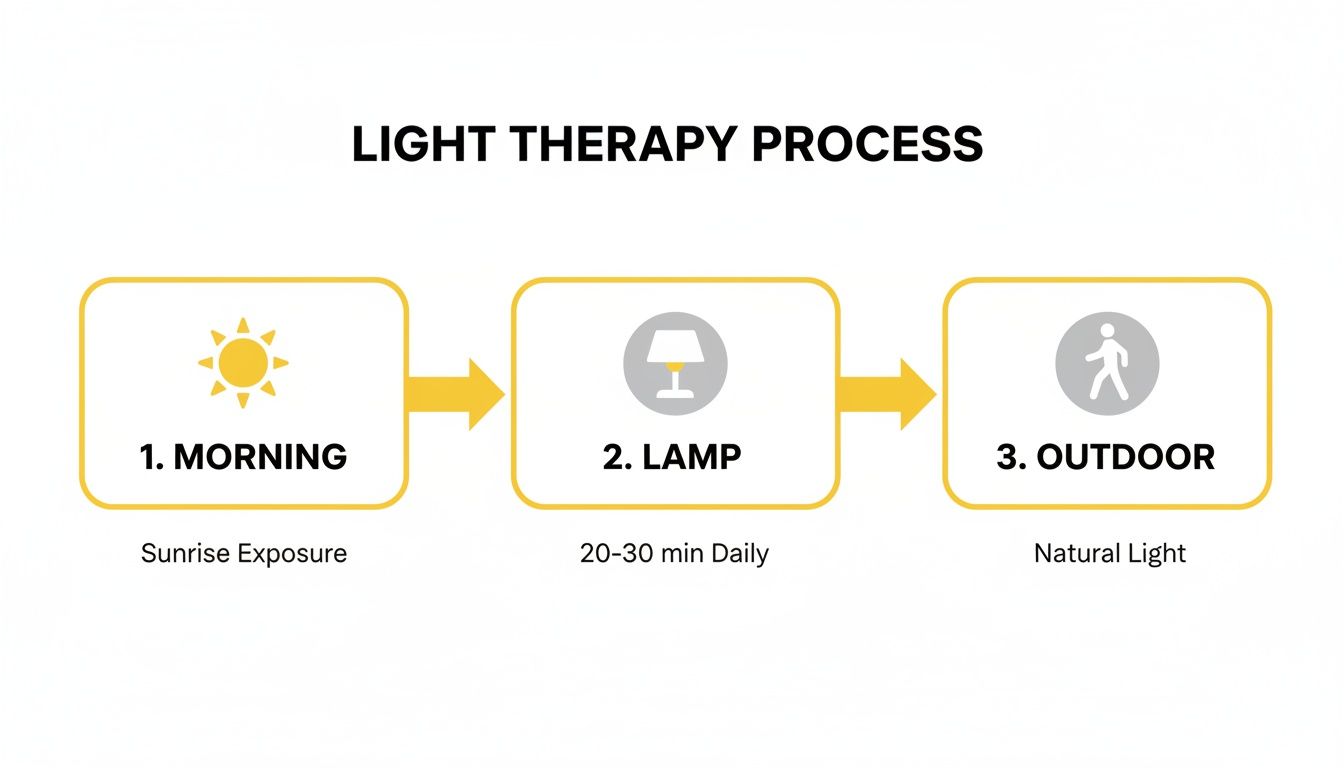
The big idea here is that a multi-layered light strategy gives you the strongest defence against circadian disruption. You combine natural morning light, targeted lamp therapy, and any outdoor exposure you can grab.
Anchor Your Day with a Consistent Sleep Schedule
The single most powerful tool you have is a consistent sleep-wake cycle. I know, I know. When it's dark and cold, the urge to hit snooze—or just write off the entire weekend morning—is massive. But that very inconsistency is what confuses your body the most.
Going to bed and waking up at the same time every single day, even on Saturdays, stabilizes your internal clock. It’s a simple act, but it can dramatically improve your energy levels and mood.
This isn't about forcing yourself to become an early bird if you're a night owl. It’s about consistency. Pick times that actually work for your life and then stick to them relentlessly from October through March.
How you wind down is just as crucial. An hour before your set bedtime, put the screens away. The blue light from phones and TVs messes with your body's melatonin production, making it much harder to fall asleep and get the kind of rest that actually restores you. Read a book, listen to a podcast, or just sit and relax.
Structure Your Energy and Your Meals
Once your sleep is anchored, you can start building the rest of your day around managing your energy. Try tackling your most demanding mental work in the morning when your brain is freshest. Save the simpler, more administrative tasks for that inevitable afternoon slump. This small shift means you’re working with your body's natural energy dips, not fighting against them.
Nutrition plays a huge role here, too. This isn’t about chasing some trendy superfood; it’s about eating hearty, nutrient-dense meals that give you stable, long-lasting energy. Just think about the incredible local produce you can find at the Old Strathcona or Bountiful Farmers' Markets, even in the colder months.
- Embrace Root Vegetables: Squash, sweet potatoes, beets, and carrots are loaded with complex carbohydrates. They provide slow-release energy that helps you dodge that classic 3 PM sugar crash.
- Prioritize Quality Protein: Local meats, eggs, and legumes keep you feeling full and help stabilize your blood sugar, which is tied directly to your mood.
- Don't Fear Healthy Fats: Foods rich in omega-3s, like salmon and walnuts, are essential for brain health. They’ve been shown to help with depressive symptoms.
Even in places with much milder winters, routine and light are seen as critical. For instance, research on university students in California—a place we don't exactly associate with harsh winters—found that 10,000 lux lamps for 30 minutes daily could reduce SAD symptoms in 70% of users. This was often paired with structured social routines where group sunlight exposure helped 65% of participants lower their anxiety scores.
Of course, spending so much time indoors means the air we breathe matters a lot more. As we seal our homes tight against the Edmonton cold, indoor pollutants can build up and affect our well-being. Taking a moment to think about how to improve indoor air quality is a practical step that supports your overall health all winter long.
Staying Active When It’s -30°C Outside
Let's be real: the idea of going for a run when the forecast is colder than Mars is a tough sell for anyone. When you're already feeling the weight of seasonal depression, mustering that energy can feel downright impossible. But we know that movement is one of the most powerful, immediate tools we have to fight back against the winter blues.
The trick is to be realistic and Edmonton-proof your plan. It's about decoupling exercise from fair-weather dependency and finding ways to move that actually feel good, even when the wind chill is biting.

Embrace the Edmonton Cold (When You Can)
There's a certain point—we all know it, somewhere around -20°C with a stiff wind—when staying inside is just the smart call. But on those crisp, sunny days that Edmonton does so well, learning to embrace the cold is a total game-changer. The key is dressing properly. Good base layers, insulated outer layers, and warm gear for your head, hands, and feet are non-negotiable.
Once you’re geared up, the city opens up.
- Cross-country skiing in Gold Bar Park or snowshoeing through Terwillegar Park gets your heart rate up while surrounding you with the quiet beauty of a winter landscape.
- A brisk walk through a neighbourhood like Glenora or Highlands offers beautiful scenery and a dose of that precious, low-angle sunlight.
- Fat biking along the river valley trails provides a serious workout and a totally different perspective on our city’s best asset.
The combination of physical activity and sunlight is a potent antidepressant. Even places with much milder climates recognize this; studies show that prioritizing outdoor activity and getting just 30 minutes of morning sunlight can boost serotonin levels by up to 20%. By leveraging their geography, residents in sunnier locales report 25% fewer SAD symptoms than those in northern states. You can discover more insights about how geography impacts SAD on berkeleyhighjacket.com.
Find Your Indoor Sanctuary
Some days, the answer is a firm "no" to going outside. That’s okay. In fact, that's normal. Having a list of go-to indoor options is essential for staying consistent. This isn't just about logging time on a treadmill; it's about finding movement that re-energizes you and gets you out of the house.
Think beyond the big-box gym and explore what our city has to offer.
- Climb the walls at the Wilson Climbing Centre at the U of A or Vertically Inclined. Bouldering is a fantastic full-body workout that’s as much a mental puzzle as a physical one.
- Join a drop-in class at a local yoga or spin studio. Places like YEG Cycle or the many studios around Strathcona and 124th Street offer a great sense of community and a serious sweat.
- Go for a skate at an indoor community league rink. It’s a classic Edmontonian pastime that barely feels like exercise.
- Walk laps at the mall. Don’t knock it! West Edmonton Mall and Southgate Centre offer warm, bright, and free places to get your steps in when the sidewalks are a sheet of ice.
The goal isn't to become a winter athlete. It's simply to find a few enjoyable ways to move your body regularly, ensuring that your mental and physical health don't get put on hold until the spring thaw.
The river valley remains our city’s greatest wellness resource, a true four-season gym that costs nothing to use. For a deeper look at how to make the most of it all year round, you can read our guide on how the river valley is your gym, and it's free.
Building a mix of both outdoor and indoor activities into your week is the most sustainable way to keep moving—and manage your mood—until the days get long again.
Staying Connected When You Just Want to Hibernate
Winter's biggest trap is isolation. I see it every year. When the temperature drops and darkness falls before the end of the workday, the urge to cancel plans, retreat to the couch, and hibernate until April is incredibly strong. This social withdrawal is a core feature of seasonal depression, and actively fighting it is one of the most important things you can do for your mental health.
It’s about intentional connection, even when every bone in your body is telling you to just stay home.

This isn’t about forcing yourself to be the life of the party when you feel completely drained. It's about finding low-stakes, manageable ways to remind yourself you're part of a community. The research is clear on this: social connection is a powerful buffer against depression, acting as a crucial counterbalance to the isolating effects of our long Edmonton winters.
Use Edmonton's Winter Culture to Your Advantage
One of the best things about our city is that we don't shut down when it gets cold; we just put on another layer. Our festival culture thrives year-round, offering a perfect antidote to that hibernation instinct. Instead of seeing winter as a barrier, you can use these events as a destination.
- Embrace the Festivals: Actually make a plan to visit Ice on Whyte or the Flying Canoe Volant. Having a specific, exciting event on the calendar gives you a concrete reason to get out and connect with the city's energy.
- Keep It Casual: Connection doesn't have to be a big production. Suggest grabbing a coffee or hot chocolate at a cozy spot on 124th Street or in Ritchie Market. The simple act of sharing a warm drink with a friend can be enough to break the cycle of isolation.
- Start a Low-Energy Tradition: A weekly board game night, a potluck dinner, or a movie marathon with a small group of friends can be an absolute lifeline. It’s predictable, low-pressure, and provides a standing appointment for social interaction you don't have to muster the energy to plan.
The goal is to create a social rhythm that feels restorative, not draining. Planning ahead is key here, because it’s much harder to say no to something already in your calendar than it is to decline a last-minute invitation when you're feeling low.
How to Talk About It with Friends and Family
A huge part of staying connected is being honest about what you can handle. It’s perfectly okay to tell your loved ones that your social battery is lower in the winter. This isn't about making excuses; it's about managing expectations so you can maintain connections in a way that actually works for you.
You can say something like, "My energy is pretty low in the winter, so I might not be up for big nights out. But I'd love to just come over and hang out, or we could grab a quick coffee. I still really value our time together."
This kind of communication is a game-changer. It lets people know you care, even if you can't show up in the same way you do in July. It reframes the situation from "I'm canceling on you" to "I'm finding a way to connect that I can manage right now." It invites support rather than creating distance.
To help you match an activity to your energy level, here's a simple planner with some local ideas.
Edmonton Winter Social Planner
Sometimes the hardest part is just figuring out what to do. This table breaks down a few ideas based on how you're feeling and what you're willing to spend.
| Activity Idea | Energy Level | Cost | Why It Works |
|---|---|---|---|
| Walk the Legislature Grounds | Low | Free | The lights are beautiful, and a short, gentle walk combines light exposure, movement, and conversation. |
| Visit a Board Game Café | Low-Medium | $ | Provides a structured, low-pressure activity. Places like The Hexagon or Board N Brew are perfect. |
| Try a Drop-in Art Class | Medium | $$ | Engaging your creative side at a local studio can be incredibly therapeutic and provides a new way to socialize. |
| Go to an Oilers Game | High | $$$ | The energy in Rogers Place is electric and can be a fantastic mood-booster if you're feeling up to it. |
Ultimately, fighting the urge to hibernate is about choosing connection, even in small doses. It's about remembering that we're all in this long, cold season together, and sometimes just showing up is the biggest win you can have.
Where to Find Professional Support in Edmonton
Sometimes, the SAD lamp, the river valley walks, and the best-laid social plans just aren't enough to lift the weight. Let's be very clear: that is completely okay.
Reaching out for professional support isn't a sign of failure. It's a smart, proactive move when winter starts to feel like more than you can manage on your own.
Knowing when to take that step is the most important part. If your low mood is starting to seriously get in the way of your work, your relationships, or just your ability to get through the day, it's time.
If you've lost interest in things you usually love or you're feeling a sense of hopelessness that just won't budge, that's your cue to talk to someone.
Starting the Conversation
For a lot of us, the best first stop is our family doctor. They can help rule out any other physical culprits for your symptoms (like low iron or thyroid issues) and are a great gateway to other mental health resources.
You can be direct. Something as simple as, "I've been struggling with my mood this winter, and I think it might be seasonal depression. I'd like to talk about my options," is a perfect way to start. From there, your doctor can walk you through different paths, including therapy or medication, and provide referrals if they're needed.
Accessible Edmonton and Alberta Resources
Figuring out the mental health system can feel overwhelming, but there are some fantastic, accessible options right here in our city and province. You don't have to do this alone.
- Alberta Health Services: AHS offers a range of mental health services. You can call the Mental Health Help Line at 1-877-303-2642 to find programs and support right here in the Edmonton zone.
- Momentum Walk-In Counselling: This is a phenomenal local resource. They offer affordable, single-session counselling that's perfect if you need to talk to someone right away without getting stuck on a long waitlist.
- 211 Alberta: Just dial 211. This service connects you to a huge database of community and social services, including non-profit counselling agencies that often have subsidized rates.
Taking that first step to ask for help is often the hardest part of the entire process. These resources are here for us. You deserve to feel well, even in the dead of an Edmonton winter.
It's worth remembering that accessing care is a challenge everywhere, not just in places with long winters. A study from California, for example, found that two-thirds of adults with mental health conditions go untreated. Read the full research about California's mental health care access. It's a reminder that being proactive about finding support is a universal need.
Finding the right therapeutic fit is crucial. If you want to explore the different kinds of practitioners working in our city, our guide to Edmonton wellness services can help you sort through the options. The goal is to build a support system that works for you, giving you the confidence to navigate Edmonton’s toughest season.
Your Questions About SAD in Edmonton, Answered
Every year, as the days shrink and the sun gets shy, the same questions start popping up. Here are some straightforward, practical answers to what we hear most often from Edmontonians trying to navigate the winter months.
For more on this, see our vitamin edmonton during guide.
Does Vitamin D Really Help with Seasonal Depression?
It absolutely plays a crucial supportive role. Think of it less as a cure and more as a non-negotiable part of your winter foundation.
Given our northern latitude, Health Canada pretty much assumes most of us are deficient in Vitamin D from October to April. While popping a supplement won't single-handedly fix SAD, there's a ton of research showing a clear link between low Vitamin D levels and depression. It works hand-in-hand with things like light therapy and exercise.
The key is getting the right amount for you, so have a quick chat with your doctor or pharmacist to figure out the best dosage.
Are the "Happy Lights" from Amazon Any Good?
This is a great question, and the answer has nothing to do with the brand name and everything to do with the specs. You could buy the most expensive lamp out there, but if it doesn't have the right output, it's just a desk light.
The magic number you're hunting for is 10,000 lux.
That's the intensity of light that's been clinically shown to be effective. The other critical feature is a filter for harmful UV light. Many lamps marketed as "happy lights" are seriously underpowered and simply won't trigger the biological response you need.
So, when you're shopping, ignore the flashy marketing and go straight to the technical details. Find that 10,000 lux rating from a reputable brand and follow the instructions—usually 20-30 minutes each morning is the sweet spot.
How Can I Get More Natural Light If I'm Stuck Indoors at Work All Day?
This is the classic Edmonton dilemma, isn't it? You commute in the dark and head home in the dark. The solution is to become a bit of a light opportunist—grabbing every chance you can get.
- Move your desk. If you have any control over your workspace, getting it closer to a window makes a surprising difference over the course of a day.
- Weaponize your breaks. A brisk 15-minute walk around the block at noon is huge. Instead of taking a call at your desk, put on a jacket and take it while walking outside.
- Make weekends count. Don't save your outdoor time for the dim light of late afternoon. Make it the first thing you do in the morning to soak up those precious peak daylight hours.
Every little bit of exposure helps your body's internal clock stay on track. We often prioritize eating well for energy, and it helps to think of light exposure as another essential nutrient for your mood. On that note, if you want to learn more about eating for wellness this season, check out our guide on the best foods to boost your immune system.
At Edmonton Wellness Guide, we're here to provide practical, locally-focused advice to help you feel your best, no matter the season. Explore our guides and resources to build your personalized wellness plan. https://www.edmontonwellnessguide.com
Related Reading
- Best Hot Springs Near Edmonton for Winter Wellness Escapes: Your…
- How to Prepare Your Body for Edmonton’s Extreme Temperature…
- How to Manage Work Stress in Edmonton (Without Just “Surviving”…