When Edmonton Fire Rescue Services calls a fire ban, it’s a temporary, city-wide pause on open-air fires. This is done to prevent wildfires when our prairie weather gets dangerously dry and windy. In practice, that usually means no backyard wood fire pits, no fires in river valley parks, and no fireworks.
What an Edmonton Fire Ban Really Means for Us
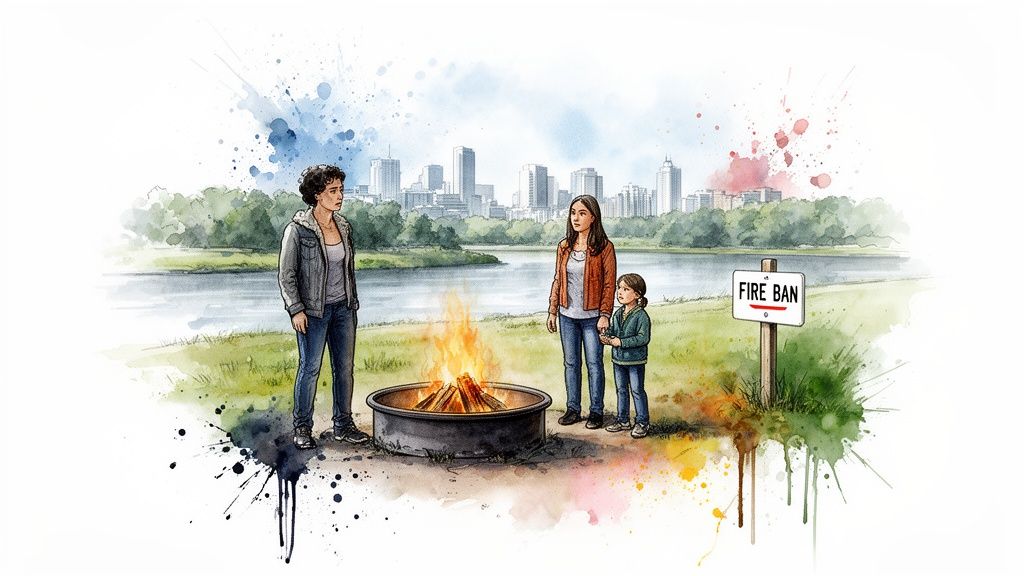
As Edmontonians, we live for our summers. Those glorious, 17-hour days are a hard-earned reward for making it through another -30°C winter. For many of us, a backyard fire is a core part of that summer ritual, whether we're in Strathcona or Windermere.
For more on this, see our edmonton summer daylight guide. For more on this, see our edmonton summer daylight guide.
But when the words "Edmonton fire ban" appear, it isn’t about taking away the fun. It's about protecting everything we love about our city. A fire ban isn't some random rule; it’s a direct response to our environment when the risk of a grassfire or wildfire gets dangerously high.
The Why Behind the Ban
Think about our local landscape for a second. The river valley—our city’s sprawling gym and green lung—can become a tinderbox almost overnight. A quick spring melt followed by a week of sun and wind can dry out last year’s dead grass, creating the perfect fuel for a fire. The same thing happens during those long, hot, dry spells we often get in late July and August.
An Edmonton fire ban gets called when a few specific factors line up to create extreme risk:
- Low Humidity: The air gets so dry that moisture is wicked out of grass, leaves, and wood, making them highly flammable.
- High Winds: A strong gust can carry a single ember from a backyard fire pit in Terwillegar across a field or into a ravine in seconds.
- Lack of Recent Rain: Long stretches without precipitation leave the entire landscape vulnerable.
These conditions are a signature of our prairie climate, which makes fire bans a necessary part of city life. You can learn more about how our distinct four seasons shape these safety protocols in our guide to the Edmonton, Alberta climate.
More Than Just a Suggestion
We've all seen how quickly conditions can turn. Take early May 2018, when the city issued a ban after a long stretch of hot, dry, and extremely windy weather. The risk was just too high. That meant no open burning, no fireworks, and no backyard fire pits, all to protect homes and lives. You can read about how fire rescue services handled that situation in past coverage from Global News about the 2018 fire ban.
A fire ban is our collective agreement to press pause on one activity to protect our shared spaces—from Mill Creek Ravine to the quiet walking trails in our newest neighbourhoods. It's a small trade-off for community safety.
How to Check the Current Fire Ban Status
Knowing whether an Edmonton fire ban is active can feel a bit like trying to predict our spring weather—one minute it’s clear, the next it’s completely changed. Conditions shift quickly, and the last thing you want is to plan a backyard get-together only to realize you’re breaking the rules.
Luckily, staying informed is straightforward. The most reliable and immediate source is always the City of Edmonton itself. This should be your first and best stop before you even think about lighting a fire.
Your Go-To Official Sources
The City of Edmonton and Edmonton Fire Rescue Services (EFRS) are the definitive authorities for fire bans within city limits. They provide real-time updates based on current conditions, so the information is never out of date.
Here are the primary resources you should bookmark:
- City of Edmonton Fire Bans Page: This is the official hub. It will state clearly if a ban is in effect, what level it is, and exactly what’s restricted.
- EFRS Social Media: Following Edmonton Fire Rescue Services on platforms like X (formerly Twitter) is a great way to get instant notifications and updates right in your feed.
Edmonton's Fire Rescue Services maintains this system vigilantly. History shows they don’t hesitate to activate bans during our peak dry periods, managing everything from open burning to backyard fire pits, even when there isn't a major wildfire right next door. You can learn more about how Edmonton's bans are managed on their official page.
The Bigger Picture: Provincial Status
While the city makes its own call, it’s wise to keep an eye on the regional picture, especially once wildfire smoke starts rolling in. A provincial fire ban in the surrounding counties is a major red flag that conditions are dangerous everywhere.
The Alberta Wildfire status map is an excellent tool for this.
This colour-coded system gives you an at-a-glance feel for the risk level across the province. It helps put into context why Edmonton might be considering a ban even on a day that feels perfectly fine here.
This broader view is also crucial for our health. The same dry, windy conditions that lead to fire bans often coincide with poor air quality from distant wildfires. Keeping an eye on the provincial status can give you a heads-up on potential smoke events. To better understand this connection, you can explore our resources on the Air Quality Index.
For more on this, see our indoor wellness activities guide.
Checking these sources isn't just about following rules; it's a simple, practical habit that protects our homes, our beautiful river valley, and our neighbours. It takes less than a minute and ensures we can all enjoy our precious summer safely.
By using these official resources, you can confidently know the current Edmonton fire ban status. Make it a habit to check before you light, every single time.
Understanding the Rules: Permitted vs. Prohibited Activities
When an Edmonton fire ban is declared, it’s easy to feel a bit of confusion. The word “ban” sounds so final, but the rules often have important nuances. What can you actually do when the fire risk is high? Knowing the specifics means we can still enjoy our backyards safely without any guesswork.
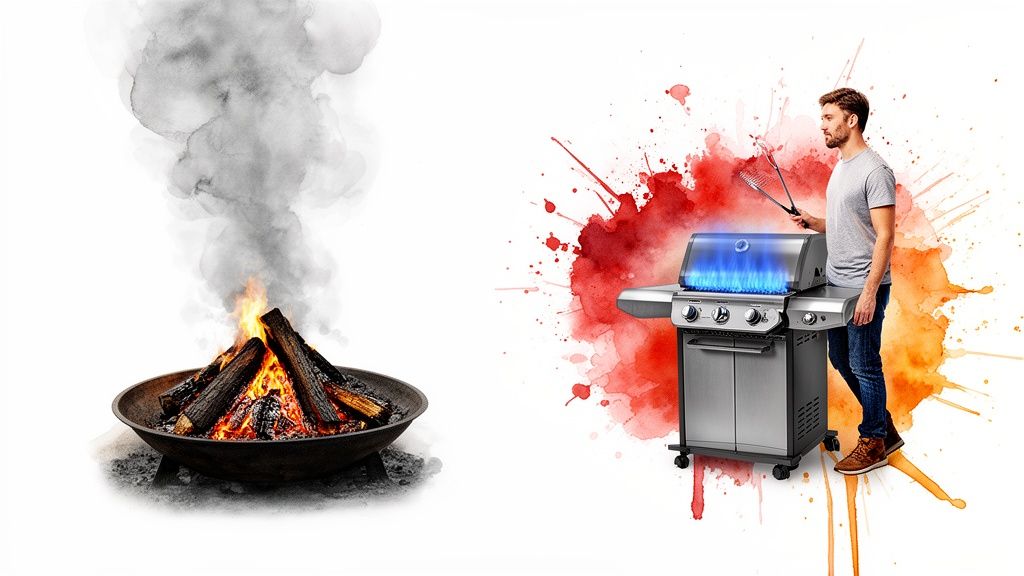
The most common point of confusion comes down to the heat source. A full fire ban in Edmonton is laser-focused on stopping sparks and embers from open flames that use solid fuels like wood or charcoal. This is because those little glowing bits can easily be carried by our prairie winds into dry grass or foliage—a real danger for anyone living near the river valley or a ravine.
But this doesn't mean all outdoor cooking or heating is off-limits. Let's break down what's usually okay versus what's definitely prohibited during a typical city-wide ban.
What You Can and Cannot Use
The key distinction usually lies in whether an appliance has a switch or a valve to instantly kill the flame. Appliances that run on gaseous fuels like propane or natural gas are generally considered much safer because they don't produce those unpredictable, travelling embers.
Here’s a straightforward look at common backyard equipment:
- Prohibited: Wood-burning fire pits—both in backyards and designated park sites—are the number one restriction. Their open flames and flying embers are the primary risk we’re trying to avoid.
- Prohibited: All charcoal barbecues and smokers fall under the ban. Just like wood, charcoal produces embers that can travel a surprising distance.
- Prohibited: Any device that burns solid fuel, including briquettes or wood pellets, is typically not allowed. This also includes tiki torches and other decorative open-flame lighting.
- Prohibited: Fireworks are always a no-go during a fire ban. The risk of starting a grass fire is simply too high, which is why Canada Day displays are often cancelled when conditions are dangerously dry.
The core principle is simple: if it produces a lingering ember or an unpredictable spark, it’s off-limits during an Edmonton fire ban. This is why even the designated fire pits at Hawrelak or Kinsmen Park are shut down.
So, what can you still use? Thankfully, there are several safe alternatives that let us enjoy our short but sweet summer season.
This helpful flowchart provides a simple 3-step checklist for staying updated on any Edmonton fire ban.
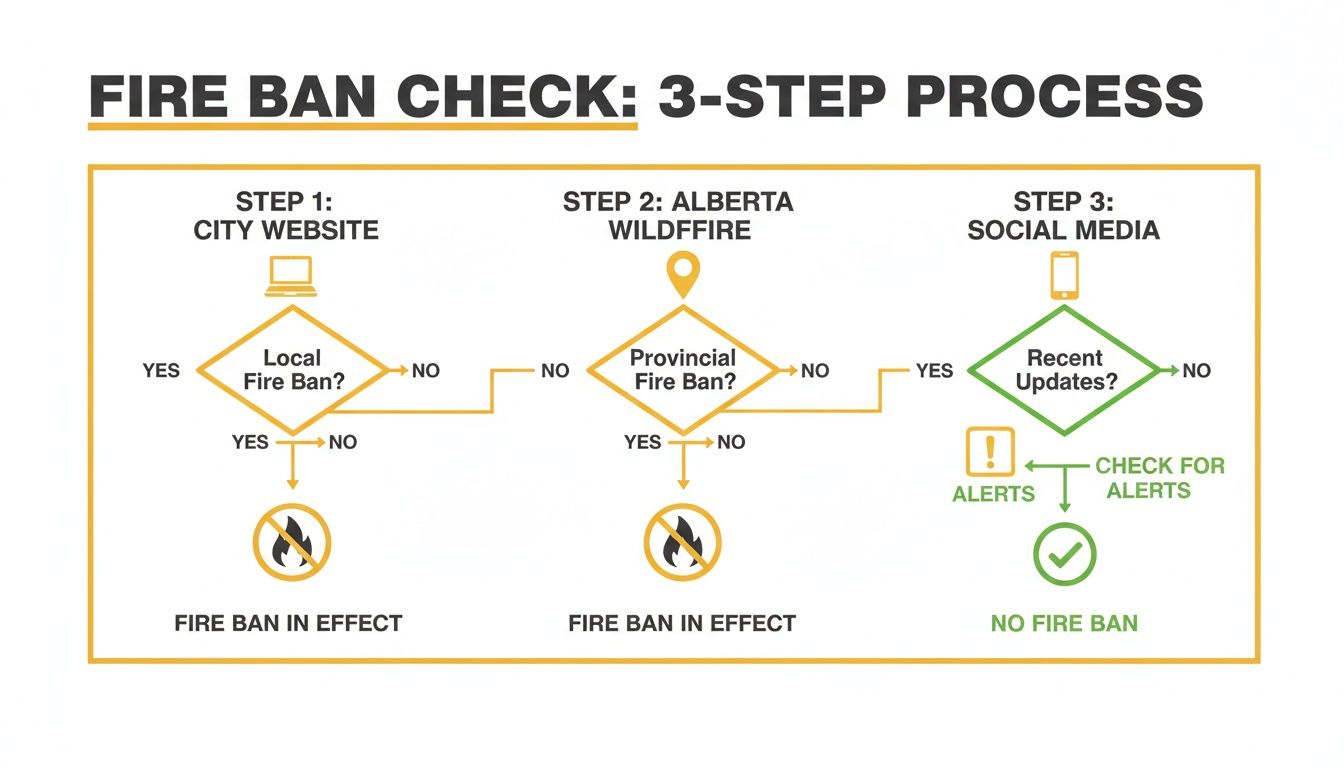
It’s a great visual reminder to check the official city website first, then look at the provincial context on Alberta Fire Bans, and finally monitor social media for the very latest news.
Green-Lighted Activities and Exemptions
Even during a full ban, life doesn't come to a complete halt. You can still have that barbecue on your deck in Windermere or Oliver—as long as you're using the right equipment.
Typically Permitted Appliances:
- Propane and Natural Gas Barbecues: These are almost always allowed. CSA-approved or ULC-certified gas grills are exempt because their fuel source is controlled and can be shut off instantly.
- Gas and Propane Fire Pits/Tables: As long as they are certified, these popular patio accessories are usually fine to use. They provide the ambiance of a fire without the risk of airborne embers.
- Propane Heaters: Standing patio heaters are also permitted, offering a safe way to stay warm on a cool evening.
To make things even clearer, here’s a quick guide to what’s generally allowed and what isn’t during a City of Edmonton fire ban.
Fire Ban Activity Guide: What's Allowed and What's Not
| Activity or Device | Typically Permitted? | Important Notes |
|---|---|---|
| Propane/Natural Gas BBQ | ✅ Yes | Must be CSA- or ULC-certified and used according to manufacturer's instructions. |
| Charcoal BBQ | ❌ No | Produces embers that can easily travel in windy conditions. |
| Wood-Burning Fire Pit | ❌ No | The primary target of a fire ban due to open flames and flying sparks. |
| Propane/Gas Fire Table | ✅ Yes | Permitted if certified (CSA/ULC). Provides ambiance without the risk of solid fuel. |
| Patio Heater (Propane) | ✅ Yes | Considered safe as the flame is contained and can be shut off instantly. |
| Fireworks | ❌ No | Always prohibited during a fire ban due to the high risk of starting a grass fire. |
| Smokers (Charcoal/Pellet) | ❌ No | These use solid fuel and are not permitted during a ban. |
| Tiki Torches | ❌ No | Open flames with fuel are considered a significant risk. |
This table should help clear up any confusion, but always remember to check the city's official channels for the most current information, as restrictions can change based on conditions.
It's crucial to remember that these exemptions are for approved appliances only. Makeshift or uncertified devices are not safe and are definitely not exempt from the ban. The rules are designed with our collective safety in mind, protecting our homes and shared green spaces from the very real threat of urban wildfires. By understanding these distinctions, we can all do our part.
How Fire Bans and Wildfire Smoke Affect Our Health

When an Edmonton fire ban is announced, it’s a clear signal that our environment is stressed. The dry, windy conditions that make our river valley a tinderbox are the exact same conditions that allow wildfire smoke from hundreds of kilometres away—think B.C. or northern Alberta—to settle over our city like a heavy, grey blanket.
For us, this means fire bans and smoke season are two sides of the same coin. The ban is a proactive step to prevent fires here, but it's also a warning that our air quality is vulnerable. That hazy sky isn't just an aesthetic issue; it has real, tangible effects on our health, from downtown to the suburbs.
For more on this, see our stay active during guide.
What That Haze Does to Our Bodies
Wildfire smoke is a nasty cocktail of fine particulate matter (often called PM2.5), gases, and water vapour. These microscopic particles are small enough to get deep into our lungs and even enter our bloodstream, which is why a smoky day can leave you feeling so drained and unwell.
The immediate symptoms are often obvious:
- Scratchy throat and coughing
- Irritated, stinging eyes
- Headaches and sinus congestion
- Shortness of breath, especially during exertion
For many Edmontonians, the effects are more serious. This includes our kids playing soccer in Strathcona, seniors enjoying a walk through the legislature grounds, and anyone with existing health conditions like asthma or heart disease. During a heavy smoke event, emergency room visits for respiratory issues often spike.
For more on this, see our stay active during guide.
It’s not just in your head—that feeling of fatigue, brain fog, and general blah-ness during smoke season is a real physiological response to your body working overtime to deal with airborne pollutants.
For more on this, see our transition outdoor fitness guide.
The impact isn't just physical. Living under a grey, smoky sky for days or weeks on end can be tough on our mental health. It can feel claustrophobic and disrupt our precious few months of summer—impacting everything from our sleep to our mood, especially when we’ve just come out of a long, dark winter where SAD is a real issue for many of us.
For a deeper dive into the specific ways smoke affects us, you can read more about wildfire smoke health effects in our detailed guide.
Reading the Air: The AQHI Explained
The number one tool we have is the Air Quality Health Index (AQHI). It’s a simple scale from 1 to 10+ that measures the health risk from air pollution.
- 1-3 (Low Risk): Business as usual. Go enjoy that river valley run.
- 4-6 (Moderate Risk): A good time for most of us to take it a bit easier. Maybe a walk instead of a hard workout.
- 7-10 (High Risk): Time to move activities indoors. Avoid strenuous exercise outside.
- 10+ (Very High Risk): Stay inside as much as possible, especially if you're in a vulnerable group.
Alberta has seen some of the most severe fire seasons on record, directly influencing our local protocols. The 2019 season, for example, burned over 880,000 hectares, leading to widespread smoke infiltration in Edmonton. These major events are exactly why our fire ban system is so data-driven today.
Practical Ways to Protect Yourself
We can’t stop the smoke from arriving, but we can absolutely build resilience and protect our health when it does. It’s all about adapting our routines to what our environment is throwing at us.
1. Move Your Movement Indoors: When the AQHI hits 7 or higher, it’s time to swap that outdoor run for a session at a city rec centre or an at-home workout. Exercising outdoors in smoky air just pulls those harmful particles deeper into your lungs.
2. Create a Clean Air Sanctuary: Your home should be your safe zone. Keep windows and doors closed. A high-quality air purifier with a HEPA filter can make a world of difference, especially in the bedroom, to ensure you get a clean night's sleep.
3. Stay Hydrated: Drinking plenty of water helps your body flush out toxins and keeps your respiratory system moist, which can soothe irritation.
4. Wear the Right Mask (If You Must Go Out): A cloth or surgical mask won't do much against PM2.5 particles. If you have to be outside for an extended period in very smoky conditions, a well-fitted N95 or KN95 mask is your best bet for filtering the air you breathe.
By staying informed and taking these practical steps, we can navigate smoke season safely, protecting our bodies and minds until our clear, blue prairie skies return.
Safe and Smart Alternatives for Your Backyard
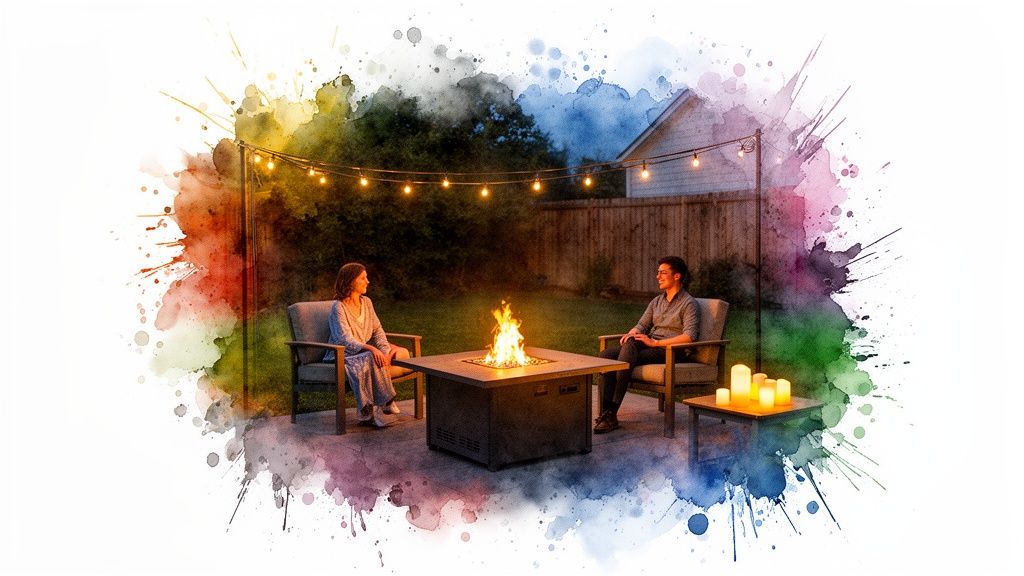
Let’s be honest, an Edmonton fire ban can feel like a major blow to our short but glorious summer season. Those long, 17-hour days are made for backyard gatherings, and a wood fire is often the centrepiece of the evening. But just because wood-burning is off the table doesn’t mean we have to pack it in and head indoors.
We’re a resourceful bunch. We know how to adapt to -30°C winters, and we can certainly adapt to a fire ban. The key is to shift our thinking from creating fire to creating atmosphere, and thankfully, there are plenty of safe, approved ways to do just that.
Embracing the Gas-Powered Glow
The most direct—and popular—alternative to a wood fire is a propane or natural gas fire pit or table. These are almost always permitted during a fire ban because they are CSA- or ULC-certified and don't produce the dangerous sparks and embers that are the primary concern.
They offer a fantastic blend of convenience and ambiance.
- Instant On/Off: No more fussing with kindling or waiting for logs to burn down. You get instant flames with the turn of a knob, and you can shut it off completely the second you’re done.
- No Smoke: This is a huge bonus, especially on those still nights when smoke seems to follow you no matter where you sit. It's also a kinder choice for neighbours in dense areas like Oliver or Old Strathcona.
- Cleanliness: Forget about ash, soot, and that lingering campfire smell on your clothes. Gas fire pits are clean-burning and require minimal cleanup.
Of course, it's not a perfect one-to-one replacement. The initial cost can be a significant investment, and some people miss the classic crackle and smell of a real wood fire. But for sheer ease of use and compliance during a fire ban, they are an unbeatable option for keeping the backyard cozy.
The goal during a fire ban isn’t to replicate the exact experience of a wood fire. It's about adapting to safely extend our time outdoors, creating new rituals for our precious summer evenings.
Creating Ambiance Without a Flame
If a gas fire pit isn't in the cards, you can still create a warm, inviting atmosphere. This is where a little creativity comes in, turning your backyard into a welcoming space perfect for those long twilight hours. Sometimes, the best summer memories have nothing to do with a fire at all.
Think about layering different sources of soft light to create depth and warmth.
- String Lights: Edison-style bulb string lights are a classic for a reason. Draped over a deck, along a fence line, or through tree branches, they cast a beautiful, warm glow that instantly makes a space feel special.
- Solar-Powered Lanterns: Modern solar lights have come a long way. Place them along pathways, hang them from hooks, or cluster them on a patio table to add pockets of light without any wiring.
- Flameless LED Candles: High-quality LED candles can mimic the flicker of real candlelight with surprising accuracy. Group different sizes together for a safe, worry-free centerpiece that won't blow out in a breeze.
Combining these elements can transform a simple yard into an inviting outdoor living room. It allows us to continue enjoying our outdoor spaces in a way that’s both safe and beautiful.
The Barbecue Question
For many of us, cooking over a flame is a core part of summer. The good news is that an Edmonton fire ban doesn't mean you have to put your tongs away. As we covered earlier, CSA-approved propane and natural gas barbecues are permitted.
However, it's critical to remember that charcoal barbecues and pellet smokers are strictly prohibited during a ban. They use solid fuel and produce the exact kind of embers the ban is designed to prevent. So, while your gas grill is good to go, that classic Weber kettle will have to wait until the ban is lifted.
When an Edmonton fire ban is called, it’s an all-hands-on-deck situation for the whole city. But for those of us with properties backing onto ravines in places like Mill Creek or Terwillegar, our responsibility goes a bit deeper than just not lighting a fire. It’s about actively managing our own backyards to protect the entire community.
This is where the idea of being FireSmart really comes into play. It’s a set of simple, practical things we can all do to lower the fire risk around our homes. Think of it as hardening your property against a grassfire, which can move with terrifying speed in dry, windy conditions.
Being prepared isn’t just about protecting your own shingles; it's a shared responsibility. It’s a collective agreement to look out for each other and the beautiful green spaces that make Edmonton what it is.
Simple Steps to Make Your Home FireSmart
You don’t need a massive budget or a full-on landscaping project to make a real difference. Honestly, most of the best FireSmart principles are just good home maintenance habits, especially during our dry spring and late summer seasons. These small actions add up, lowering the risk for everyone in your neighbourhood.
Here are a few key tasks to focus on:
- Clean Your Gutters: Dry leaves, pine needles, and twigs jammed in your eavestroughs are the perfect kindling for airborne embers. Keeping them clear is one of the single most important things you can do.
- Manage the Zone Closest to Your Home: Take a rake and clear away dead leaves and dry grass from within 1.5 metres (about 5 feet) of your home's foundation. This simple step creates a crucial non-combustible barrier.
- Store Firewood Safely: That woodpile stacked conveniently against your house for the winter? It needs to move. Get it at least 10 metres away from your home or any other building.
- Prune Trees and Shrubs: Trim any tree branches that hang over your roof or get within a few metres of your walls. It’s also a good idea to clear out any dead or overly dry shrubs.
Taking these steps isn't just about protecting your own house. It’s about breaking the chain a fire could follow, preventing it from having an easy path from one property to the next. It’s a fundamental part of being a good neighbour in a city built around so much natural space.
Community Vigilance and Reporting
Our role as stewards doesn't stop at our property line. When conditions are tinder-dry, we all need to be the eyes and ears for our community. A small puff of smoke seen in a ravine can escalate into a serious situation in just a few minutes.
If you see smoke or fire, don't ever assume someone else has already reported it. Call 911 immediately. Give them a clear location and let Edmonton Fire Rescue Services take it from there. This kind of vigilance is absolutely vital for protecting our shared community spaces, from the local park down the street to the entire river valley.
Answering Your Questions About Edmonton Fire Bans
We get a lot of questions from fellow Edmontonians trying to do the right thing when the weather gets dry. Here are some quick, no-nonsense answers to the most common ones.
Can I Actually Get Fined for Having a Fire During a Ban?
Yes, absolutely. And it can be expensive.
While Edmonton Fire Rescue Services often tries to educate people first, they have the authority to issue serious fines for violations. More importantly, if your illegal fire gets out of hand and requires an emergency response, you could be on the hook for the full cost of putting it out. It's just not worth the risk to your wallet or our neighbourhoods.
If There's a Provincial Ban, Does That Automatically Mean There's One in Edmonton?
Not always, but you should pay close attention. The City of Edmonton has its own authority to declare a fire ban based on conditions measured right here within city limits.
Think of it this way: a provincial ban is a massive warning sign that the whole region is dangerously dry. While the City makes the final call for us, a provincial ban means we’re likely on the verge of a local one, if not already in one. Always check the official City of Edmonton sources to be sure.
What Should I Do If I See My Neighbour Having a Fire During a Ban?
This is a tough one. If you see an open flame that looks unsafe or is clearly breaking an active Edmonton fire ban, the best thing to do is report it. Please don't confront the person yourself, as it rarely ends well.
For a non-emergency complaint about a fire pit, you can call 311. If the fire looks like it could spread or poses an immediate threat to people or property, call 911 without a second thought.
Are There Exemptions for Smudge Ceremonies or Other Cultural Fires?
This is a really important question. During a full fire ban, the risk is so high that there are typically no blanket exemptions for cultural or ceremonial fires.
However, Edmonton Fire Rescue Services understands the importance of these practices. The key is to communicate well in advance. If your group is planning a cultural fire, contact EFRS ahead of time to discuss safety protocols. They can assess the specific location and current conditions to see if a special, supervised permit is possible. Early planning makes all the difference.
At Edmonton Wellness Guide, we're dedicated to providing practical, locally-focused advice to help you and your family thrive in our unique city. For more insights tailored to our seasons and lifestyle, visit us at https://www.edmontonwellnessguide.com.
Related Reading
- How to Maximize River Valley Activities During Edmonton’s Short…
- Best Indoor Yoga Studios for Edmonton’s Smoke Season: Your…
- Wildfire Smoke Health Effects Explained for Edmontonians