Setting a wellness goal in Edmonton is the easy part. Deciding you will walk the river valley three times a week, hit a Whyte Avenue yoga class every Tuesday, or finally get eight hours of sleep takes about five minutes to decide and roughly zero effort. Sticking with it through a minus 30°C February or a smoke-hazed August week is where most plans quietly fall apart. This guide covers how to create accountability for wellness goals in Edmonton using local resources, seasonal checkpoints, and systems built to survive the months that make quitting easy. It works whether you last exercised regularly at the University of Alberta or you are restarting after a rough winter. Budget two to three hours to set up your system, then about 15 minutes a week to run it.
Last reviewed:
- Tools needed: A notebook or notes app, a wall calendar or phone calendar, one committed accountability partner or group, and a way to track weekly check-ins (paper log, spreadsheet, or a habit-tracking app).
- Time: About 2 to 3 hours to build the system, then 15 minutes a week to maintain it.
- Difficulty: Beginner
Step 1: Define One Specific, Measurable Wellness Goal

Accountability only works when there is something clear to be accountable to. “Get healthier” cannot be tracked, so nobody, including you, can say whether you succeeded on a random Tuesday in November. Start by turning your goal into a number with a deadline attached to it. “Walk 30 minutes, four days a week, through the river valley” is trackable. “Be more active” is not.
Turn a vague wish into a number
Write your goal in this format: [action] + [amount] + [frequency] + [timeframe]. For example, “attend two yoga classes a week for eight weeks” or “cook dinner at home five nights a week for one month.” Health Canada’s 24-Hour Movement Guidelines recommend at least 150 minutes of moderate to vigorous activity a week for adults, which breaks down neatly into five 30-minute sessions. Use that as a floor if your goal is fitness-related, then adjust based on your actual schedule and Edmonton’s weather realities.
How To Create A Winter Wellness Checklist For Edmonton covers this in more detail.
Write the goal somewhere you cannot avoid seeing it
A goal saved in a notes app you never open does nothing. Write it on an index card taped to your bathroom mirror, or set it as your phone lock screen for the first two weeks. The point is friction. You want the goal in your line of sight before you have a chance to talk yourself out of it.
Watch out: Do not set more than one major wellness goal at a time. Trying to overhaul sleep, diet, and exercise simultaneously in the same month is how most people quit by week three. Pick one. Add a second goal once the first one runs on autopilot.
Health And Wellness Edmonton covers this in more detail.
Step 2: Pick One Accountability Method That Fits Your Personality
Not every accountability method works for every person. Some people keep promises to other humans far more reliably than promises to themselves. Others respond better to money on the line. Knowing which type you are before you build your system saves weeks of frustration.
Edmonton Spring Allergies Wellness Guide For Seasonal Relief covers this in more detail.
Match the method to what actually motivates you
Be honest about what has worked before. If you have quit a gym membership without ever using it, financial accountability alone is not enough for you. If you have skipped solo workouts but never missed a scheduled run with a friend, social accountability is your lever.
Best Nutrition Habits For Busy Edmonton Professionals covers this in more detail.
| Method | Best For | Typical Cost | Edmonton Example |
|---|---|---|---|
| Social accountability | People who keep promises to others more easily than to themselves | Free to $20 per class | A Saturday run group in the river valley, a weekly class at a Whyte Avenue studio |
| Financial accountability | People motivated by not wanting to waste money already spent | $5 to $200 or more per month | A prepaid 10-class pack at a 124 Street or Oliver studio, an app like Beeminder |
| Public accountability | People who respond to social pressure and visibility | Free | A weekly progress post in a neighborhood group or with a coworker |
| App-based tracking | People who like data, streaks, and visual progress | Free to $15 per month | Strava for river valley runs, a habit-tracker app with daily check-ins |
Combine two methods for the goals that matter most
For a goal you have failed at before, stack two methods. Pair a prepaid class pack (financial) with a standing appointment alongside a friend (social). Losing money and letting someone down are two very different reasons not to skip, and together they cover more of your excuses.
Step 3: Build a Weekly Check-In Ritual

A goal without a review schedule drifts. You need one fixed moment a week where you actually look at what happened, not just a vague sense that things are going fine.
Choose a fixed day and time that already exists in your week
Attach your check-in to something that already happens every week, like Sunday grocery shopping or a Friday commute home. Fifteen minutes is enough. Ask three questions: What did I actually do this week? What got in the way? What is one adjustment for next week?
Use a tracking method you will actually open
The best tracker is the one you will use in month three, not the fanciest one. A paper calendar taped to the fridge with an X for every completed session works as well as any app, and it is visible to everyone in the house, which adds a little social pressure for free. If you prefer digital, a basic habit-tracking app with a streak counter works fine. Research on habit formation found that consistency, not intensity, is what turns an action into an automatic habit, with average formation time landing around 66 days according to a widely cited habit-formation study. Plan your check-ins to run at least that long before judging whether the system is working.
Watch out: Do not switch tracking methods every few weeks because a new app looks better. Constant tool-switching resets your sense of progress and makes it harder to spot patterns.
Step 4: Recruit an Accountability Partner or Group in Edmonton
Solo accountability works for some people. Most people do better with at least one other person checking in. Edmonton has no shortage of options, and you do not need to drive across the city to find one.
Where to find a partner in your own neighborhood
Look close to home first. Old Strathcona and Whyte Avenue have running groups and studio communities that meet weekly. Windermere and Sherwood Park have suburban gyms with class-based memberships where the same faces show up at the same time slot, which builds accountability without anyone having to ask for it. Downtown and Oliver have lunchtime run clubs that use the river valley trail system right from the office. If you want a wider view of what is available across the city, Edmonton Wellness Guide’s overview of the city’s health and wellness scene is a good starting point for finding studios and groups by neighborhood.
Set three ground rules before your first check-in
- Agree on exactly when and how you will check in (text every Sunday night, coffee every second Wednesday).
- Agree on what happens if one of you misses a session, including whether missed sessions get rescheduled or just logged.
- Agree to be honest about off weeks instead of going quiet, since silence is what actually kills most accountability partnerships.
Parking and transit matter here too. A downtown lunchtime run club near Jasper Ave means paying for a parkade or metered street parking, usually $12 to $20 a day downtown. A neighborhood group in Windermere or Sherwood Park usually means free surface parking. If you are relying on transit, check that your group’s meeting spot sits near an LRT stop like Health Sciences/Jubilee or Century Park, since a 20-minute walk in January will kill attendance fast.
Step 5: Build Seasonal Checkpoints Into Your Plan
Edmonton’s calendar has four distinct accountability problems: dark winter mornings, spring allergy season, wildfire smoke in summer, and the general chaos of the holidays. A system that only accounts for June will not survive November. Build checkpoints for each season before you need them.
Winter checkpoint: keep accountability going through the dark months
Alberta Health Services notes that seasonal affective disorder and general low mood are more common during Edmonton’s short winter days, and low motivation is exactly when accountability systems matter most. Set a specific winter version of your goal that accounts for fewer daylight hours and rougher commutes, and lean on indoor options during the worst cold snaps. For a full seasonal plan, Edmonton Wellness Guide’s winter wellness checklist covers what to prep before the cold hits, and the guide on maintaining wellness habits during Edmonton’s winter darkness has specific strategies for the months when leaving the house feels harder than usual.
Spring checkpoint: adjust for allergy season and longer days
By April, outdoor accountability gets easier because of the light, but pollen becomes its own obstacle for a lot of Edmontonians. If sneezing and watery eyes are wrecking your outdoor sessions, adjust your plan rather than abandoning it. Edmonton Wellness Guide’s spring allergy guide covers timing outdoor activity around pollen counts so allergy season does not quietly end your streak.
Summer checkpoint: use the river valley while you have the daylight
Edmonton’s river valley park system runs over 160 kilometres of connected trails according to the City of Edmonton’s river valley parks information, and long summer daylight hours make early morning or late evening sessions easy to schedule around work. Smoke season is the wrinkle. On heavy smoke days, move outdoor commitments indoors rather than skipping them entirely, whether that is a studio class or a mall-walk lap through West Edmonton Mall.
Step 6: Stack Accountability Onto Habits You Already Have

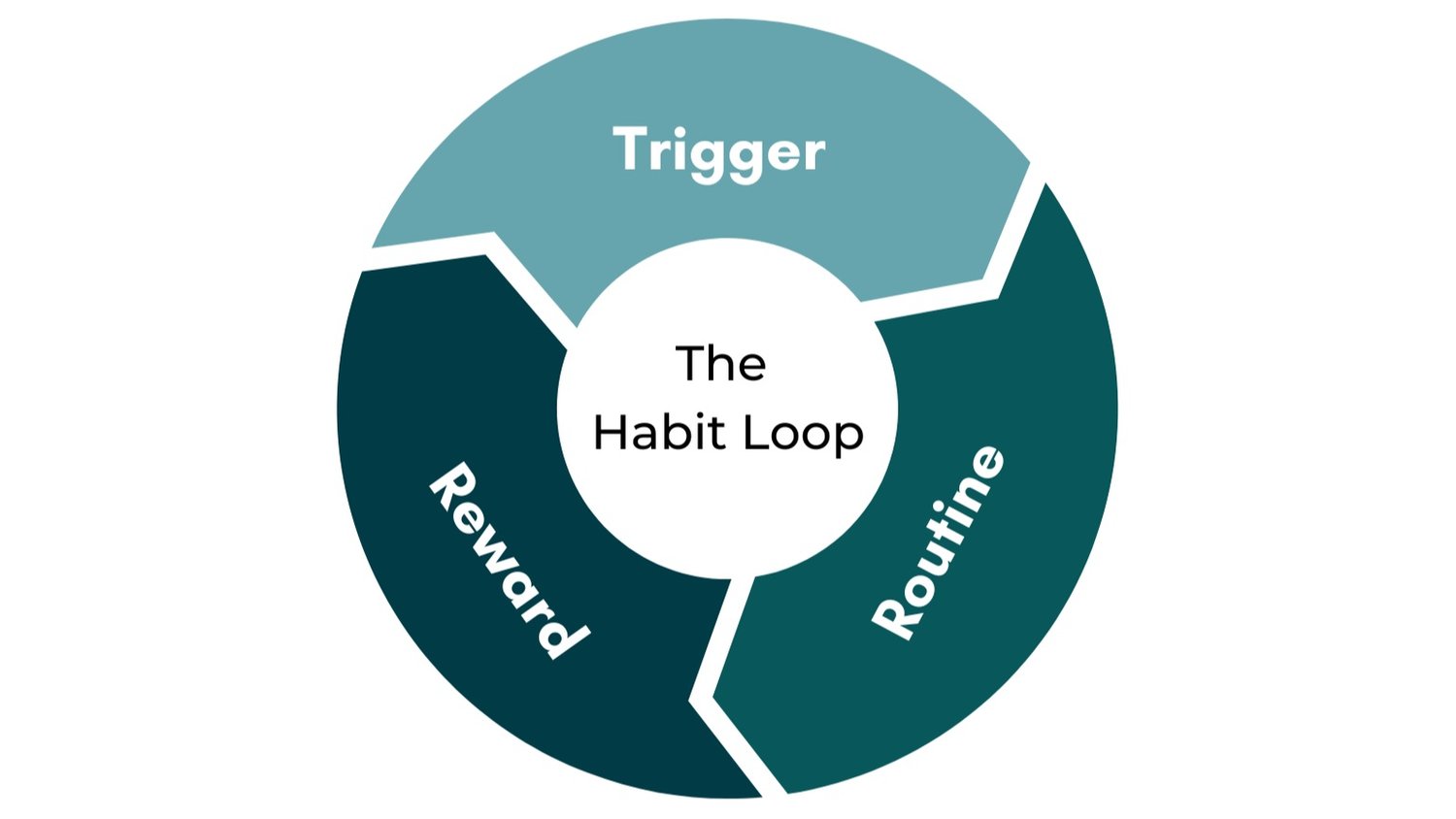
New habits survive longer when they attach to something already automatic. This is called habit stacking, and it removes the need to remember your goal from scratch every day.
Pair the new goal with something you already do daily
If you already make coffee every morning, do five minutes of stretching while it brews. If you already drive past a park-and-ride LRT station, park one stop earlier and walk the extra distance. The existing habit becomes the trigger for the new one, so you stop relying on willpower alone.
Fix your nutrition accountability at the same time
Wellness goals rarely live in isolation. A fitness goal without a food plan tends to stall out around week four. If nutrition is part of your goal, build it into the same weekly check-in rather than tracking it separately. Edmonton Wellness Guide’s nutrition habits guide for busy professionals has practical meal-prep routines that fit around a full work schedule, which makes the food side of accountability far less overwhelming.
Step 7: Review Progress Every 30 Days and Adjust
Weekly check-ins catch small slips. Monthly reviews catch whether the whole system still makes sense. Set a recurring calendar reminder for the same date each month and treat it like an appointment you cannot skip.
What to actually measure
- Completion rate: how many of your planned sessions actually happened, as a percentage.
- Consistency, not just totals: three sessions every week beats six sessions crammed into one week and zero the next.
- How you feel, in plain terms: energy, sleep, mood, using a simple 1-to-10 scale so you can compare month to month.
When to change the method, not the goal
If your completion rate drops below 60 percent for two months running, the goal itself might still be right, but the accountability method probably is not. Swap a solo app-tracking approach for a social one, or vice versa, before you decide the whole goal was unrealistic.
Watch out: Do not quietly lower the goal every time you miss a week. That is how a 30-minute daily walk goal becomes a “walk sometimes” goal by March. Adjust the method first, and only touch the goal itself at a planned 30-day review.
Common Mistakes to Avoid

- Setting a goal with no number attached, which makes it impossible to know if you succeeded.
- Choosing an accountability partner who is unreliable themselves, which sinks both people’s progress.
- Ignoring Edmonton’s seasons in the plan, then being surprised when a cold snap or smoke week derails everything.
- Checking in only when things are going well and going quiet during off weeks.
- Trying to fix diet, sleep, and exercise all in the same month instead of picking one goal at a time.
- Abandoning the whole system after one missed week instead of just resetting for the next one.
What’s Next
Once your accountability system has run for a full 30-day cycle, add a second goal using the same structure. Keep the weekly check-in day fixed even as the specific goals change, since the ritual itself is what carries you through Edmonton’s roughest months. For more neighborhood-specific studios, gyms, and seasonal guides, Edmonton Wellness Guide keeps an updated local directory worth bookmarking.
Related Articles
- How to Build a Morning Wellness Routine for Beginners: An Edmonton Guide
- What Is a Sustainable Habit Loop and How Does It Work: Building Wellness Routines That Stick in Edmonton
- How to Start Yoga at Home in Edmonton: A Winter-Friendly Guide
Sources & References
Find Trusted Wellness Spots in Edmonton
Browse our independent guide to Edmonton’s spas, fitness studios, and wellness services. Local. Honest. Free.
Frequently Asked Questions
How long does it take to build a wellness habit in Edmonton’s climate?
Plan on roughly two to three months of consistent effort before a new habit feels automatic, based on the average habit-formation window found in behavioral research. Give yourself extra runway if your goal involves outdoor activity through a winter stretch, since cold snaps and dark mornings add friction that a summer habit does not face. Track completion rate weekly rather than judging progress by how automatic it feels yet.
What if my accountability partner cancels on me during winter?
Have a backup plan before winter arrives, not after the first cancellation. Keep a short list of two or three drop-in classes or indoor options, like a Windermere or Oliver studio with flexible class times, so one person’s no-show does not end your session entirely. A prepaid class pack also removes the partner dependency altogether since the studio schedule becomes the accountability structure.
Do I need to pay for an app to stay accountable?
No. A free paper calendar on the fridge or a shared notes app with a friend works just as well as a paid tracker, as long as you actually check it weekly. Paid tools like Beeminder or a prepaid class pack add financial accountability for people who need money on the line, but they are not required to build a working system.
How do I stay accountable during smoke season when I can’t be outside?
Build an indoor backup into your plan before smoke season starts rather than scrambling once air quality drops. Swap outdoor sessions for an indoor studio class, a mall-walk loop through West Edmonton Mall, or a home workout, and log it the same way you would log an outdoor session so your streak stays intact. Check Alberta’s air quality index each morning during smoke season and default to the indoor plan any day it reads high.