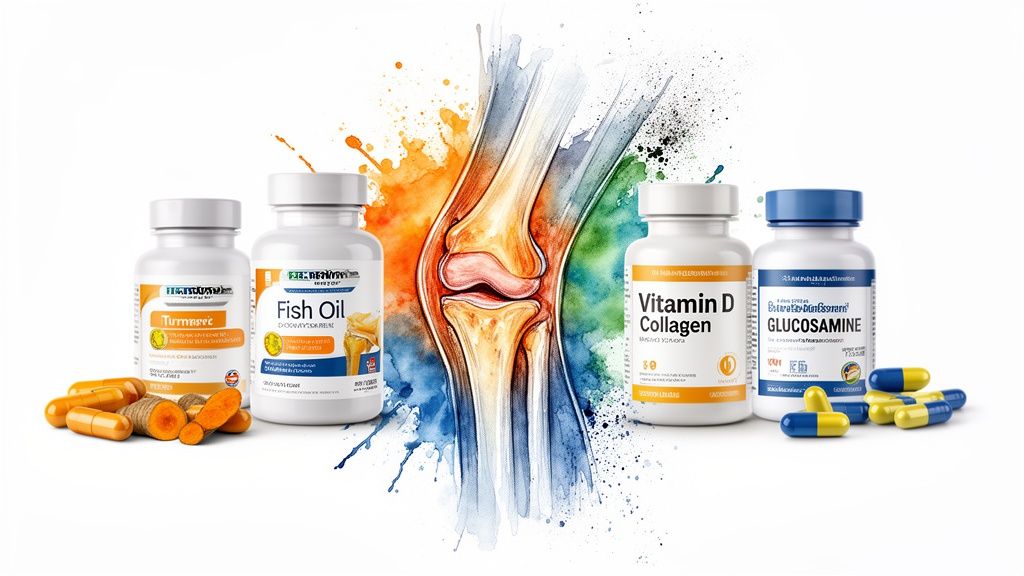
When it comes to joint health, the supplement aisle can feel overwhelming. You’ll see bottles promising to rebuild cartilage, fight inflammation, and restore mobility. Some of the most common players include foundational supports like glucosamine and chondroitin, inflammation-coolers like Omega-3s and curcumin, and crucial nutrients like Vitamin D.
For more on this, see our wildfire smoke health guide. For more on this, see our wildfire smoke health guide.
But the best supplement isn’t a one-size-fits-all answer. The right choice depends entirely on your body, your lifestyle, and believe it or not, where you live.
Keeping Joints Healthy from River Valley Trails to Icy Sidewalks
Let's be real: living in Edmonton is uniquely demanding on our joints. We swing wildly from one extreme to the other. One month we’re soaking up 17 hours of glorious daylight, hiking every trail we can find, and the next, we're navigating a sheet of ice in Windermere during a -30°C cold snap.
This cycle of go-go-go summers followed by more hunkered-down winters puts a very specific kind of strain on our bodies.

This guide is for us—the people who know that feeling when the cold seems to settle deep in your bones. It’s not about miracle cures or trendy fads. Instead, this is a practical, evidence-based look at which joint supplements might actually be worth considering, why they work, and how they fit into our very specific, season-driven lives here in Edmonton.
From Festival Season to Shovelling Season
Think about what our bodies go through every year. That sudden explosion of activity in May, when we emerge from winter hibernation and dive headfirst into running Mill Creek Ravine or biking through Hawrelak Park, can be a shock to the system. It often highlights stiffness and aches we didn't even know we had. For those of us who love being active, it's amazing that the river valley is your gym, and it's free, but we have to support our bodies to enjoy it fully.
For more on this, see our health wellness edmonton guide.
Then, winter hits. The "Edmonton cold" that settles in below -20°C often means less movement, more time indoors, and the constant, low-grade tension of trying not to slip on an icy path in Strathcona. That relative inactivity can bring its own set of joint issues.
Our unique Edmonton lifestyle creates a cycle of intense activity followed by periods of relative stillness. Supporting our joints through these shifts isn't a luxury; it's a practical strategy for staying mobile and pain-free year-round.
We’re going to cut through the marketing hype and focus on what the clinical evidence actually says. This is about helping you decide if adding a supplement is a sensible next step for keeping you moving—whether you’re training for the River Valley Revenge or just trying to shovel the walk without wincing.
Let's dig into what actually works for us, right here at home.
A Quick Look at Top Joint Health Supplements
Here's a quick overview of the most common joint supplements, what they do, and how they relate to life in Edmonton. Think of this as your starting point before we dive deeper into the evidence for each one.
| Supplement | Primary Role | Edmonton Context |
|---|---|---|
| Glucosamine & Chondroitin | Building blocks for cartilage; may slow cartilage breakdown. | Foundational support for wear and tear from summer activities like running and cycling. |
| Omega-3 Fatty Acids | Powerful anti-inflammatory; reduces joint pain and stiffness. | Helps manage inflammation from both high-impact summer fun and winter inactivity. |
| Turmeric (Curcumin) | Potent natural anti-inflammatory, similar to some NSAIDs. | Useful for managing flare-ups after a long hike or a bout of snow shovelling. |
| Collagen | Provides structural protein for cartilage, bones, and tendons. | May support tissue repair and resilience through our seasonal activity swings. |
| MSM | Sulphur compound that may reduce pain and inflammation. | Often combined with other supplements to offer broad support for joint discomfort. |
| Vitamin D | Essential for bone health and immune function. | Crucial for Edmontonians, as we can't produce it from sun exposure for about half the year. |
This table is just a snapshot. Now, let’s get into the specifics of what the research says about each of these and who might benefit most.
1. The Foundation: Glucosamine and Chondroitin
If you've ever walked down the supplement aisle looking for something to help with joint pain, glucosamine and chondroitin were probably the first names you saw. They’re the original power couple of joint health, found in just about every pharmacy and grocery store.
Think of them as the basic building blocks for your cartilage—that smooth, rubbery tissue cushioning your joints, keeping bones from grinding together. For many people, this duo is the logical starting point. They've been around for decades and are incredibly well-known. The big question, though, is do they actually work? The answer, it turns out, is a bit complicated.
What the Evidence Really Says
The research on glucosamine and chondroitin is frustratingly mixed. Some large studies have shown they can offer modest pain relief for people with moderate-to-severe osteoarthritis, especially in the knee. Other studies, however, have found they perform no better than a placebo.
This doesn't mean they're useless, but it does mean we need to have realistic expectations. They aren’t a miracle cure that will rebuild a worn-out joint overnight. Instead, for some people, they may help slow the breakdown of cartilage and ease discomfort over several weeks or months. You have to be consistent; this isn't something you take for a weekend and expect to feel a difference.
For the right person, glucosamine and chondroitin can be a valuable part of a long-term strategy for managing joint wear and tear. But for others, especially those with mild aches or different types of joint pain, they may not offer much benefit.
Across Canada, these supplements are still incredibly popular and are the most common choice for those dealing with osteoarthritis. Health Canada has established clear guidelines for them, and most products you’ll find on shelves here follow a standard therapeutic dose of 1,500 mg of glucosamine sulfate. This reflects just how widespread and standardized their use has become.
Not All Glucosamine Is Created Equal
When you're scanning labels, you’ll likely see two main forms: glucosamine sulfate and glucosamine hydrochloride. This small difference in wording actually matters quite a bit.
Most of the positive clinical research points to the sulfate form. The theory is that it's more easily absorbed and used by the body. While the hydrochloride version is out there, glucosamine sulfate is generally seen as the more reliable choice based on the available evidence.
So, who are these supplements best for? They seem to have the most potential for people with existing osteoarthritis who are looking for a foundational supplement to pair with other strategies. This could be particularly relevant for older Edmontonians who want to stay active.
Combining this kind of support with gentle movement is crucial. A supplement alone is never the whole picture. That's why exploring resources like our guide on fitness exercises for seniors in Edmonton can help create a more complete approach to joint care. This is less about a quick fix and more about steady, long-term maintenance to keep you walking those river valley trails for years to come.
Fighting Inflammation with Omega-3s, Collagen, and Curcumin
While glucosamine and chondroitin are about rebuilding, managing the daily grind of inflammation is a different battle—and one every Edmontonian knows well. It’s that deep, persistent ache that sets in when the temperature plummets or after you've spent a summer weekend at the Fringe Festival on your feet for 12 hours straight. This is where a different class of supplements comes into play.
If glucosamine is the brick and mortar for your joint cartilage, think of Omega-3s, collagen, and curcumin as the anti-inflammatory and repair crew. They tackle the soreness, stiffness, and swelling that often cause the most discomfort. For many of us, this inflammatory response is the real problem, especially as our activity levels swing wildly from a sedentary January to an active July.
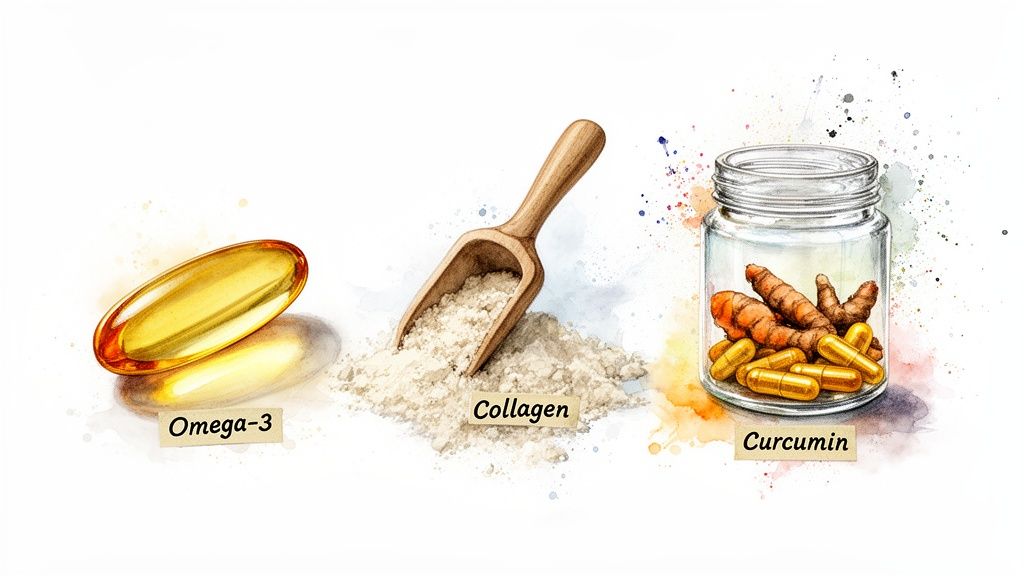
Let's break down how each of these works to cool things down.
Omega-3s: The Internal Anti-Inflammatory
Omega-3 fatty acids, typically found in fish oil, are powerful anti-inflammatory agents. They work by getting involved in the body's inflammatory pathways, helping to dial back the production of molecules that trigger pain and swelling.
- What they do: Think of Omega-3s as a way to internally calm down irritated joints. They can help ease that morning stiffness that makes getting out of bed on a dark winter morning so difficult.
- What to look for: The key is to focus on the amounts of EPA (eicosapentaenoic acid) and DHA (docosahexaenoic acid) on the label. A combined dose of around 1,000 mg of EPA and DHA daily is often the therapeutic target for joint health.
This isn't just a niche product; consumers across the country are catching on. Market research shows a rising uptake of both omega-3s and collagen for joint comfort, contributing to a Canadian dietary supplements market valued at nearly USD 15.27 billion in 2024. This highlights a clear trend toward using these types of targeted supplements for managing joint health. You can read the full research on the Canadian supplements market here.
Collagen: Providing Raw Materials for Repair
Collagen is the most abundant protein in our bodies, acting as the primary building block for skin, tendons, ligaments, and cartilage. As we age, our natural production declines, which can affect joint resilience and how well we bounce back.
Supplementing with collagen, particularly hydrolyzed collagen peptides, provides your body with the specific amino acids needed to repair and maintain these connective tissues. It's less about building new cartilage from scratch and more about providing the essential raw materials to keep existing structures strong and flexible. This can be especially helpful for those of us putting our joints through the wringer, from trail running in Mill Creek Ravine to shovelling a mountain of snow off the driveway.
Curcumin: A Potent Antioxidant from Turmeric
Curcumin is the active compound in turmeric, the bright yellow spice that gives curry its colour. It’s a potent antioxidant and anti-inflammatory that has been shown in some studies to be as effective as over-the-counter pain relievers for easing osteoarthritis discomfort.
Curcumin works by targeting specific inflammatory pathways in the body. However, it's notoriously difficult for the body to absorb on its own.
To get the real benefits, you need a supplement formulated for enhanced bioavailability. Look for products that include piperine (black pepper extract) or are formulated with specific technologies like phytosomes or micelles, which help your body actually use the curcumin you’re taking. This is a perfect example of why just buying the cheapest option isn't always the best strategy.
These three supplements offer a powerful toolkit for managing the inflammatory side of joint pain. Of course, they are just one part of a bigger picture. To get a better handle on a holistic approach, check out our guide on how to reduce inflammation naturally in Edmonton, which covers diet and lifestyle factors that work alongside supplementation.
Why Vitamin D Is Non-Negotiable for Edmontonians
Let's talk about our unique relationship with the sun here in Edmonton. We all love those endless summer evenings, but we also know the reality of our winters: short days, weak sunlight, and a whole lot of time spent indoors. This isn't just a minor inconvenience; it has a direct impact on Vitamin D, a critical nutrient for our joint and bone health.
For more on this, see our finding footing guide. For more on this, see our finding footing guide.
From about October to April, the sun's angle is simply too low for our skin to produce any Vitamin D, no matter how much time we spend outside. While many people link this to mood—and it definitely plays a role there—it's also fundamental for our joints. Vitamin D has one very specific job: it lets our bodies absorb and use calcium.
Without enough Vitamin D, we can't maintain strong, dense bones. Think of your bones as the foundation of a house. When that foundation weakens, more stress gets transferred to the cartilage and connective tissues in your joints, which can speed up wear and tear.
The Bedrock of Your Body's Structure
While supplements like glucosamine or curcumin focus on cartilage and inflammation, Vitamin D is all about long-term structural integrity. This is especially important for older adults navigating icy sidewalks in neighbourhoods like Windermere or Oliver for half the year.
Strong bones and good muscle function, both supported by Vitamin D, are your best defence against a fall that could cause a serious joint injury.
For us, supplementing with Vitamin D isn't just a suggestion—it's pretty much a necessity. This is reflected in public health guidance across the country. In fact, surveys show that around 86% of Canadian adults used supplements in the past year, with older adults frequently choosing Vitamin D and calcium specifically for bone support. You can discover more insights about Canadian supplement trends if you're curious.
For more on this, see our finding vitamin supplements guide. For more on this, see our finding vitamin supplements guide.
How Much Is Enough?
So, how much should you actually take? General recommendations often start at 1,000 to 2,000 IU (International Units) per day during the fall and winter months. But this isn't a one-size-fits-all number. Your age, skin tone, and current levels all play a role.
The only way to know for sure if you're getting enough is to get your levels checked. A simple blood test from your doctor can tell you if you're deficient and help guide a personalized supplementation plan. Don't guess—get the data.
This is more than just another pill. It's a fundamental part of a wellness strategy designed for our northern latitude. It supports not only our physical structure but also our mental well-being during the darker months. Low Vitamin D levels have been linked to low mood and fatigue, key symptoms of seasonal affective disorder. If you'd like to understand this connection better, you can learn more about Seasonal Affective Disorder in our detailed guide.
Think of Vitamin D as the unsung hero in your joint health toolkit. It may not provide the immediate pain relief of other supplements, but its role in keeping your entire skeletal system strong is non-negotiable for staying active and resilient in our city.
How to Choose a Quality Supplement That Actually Works
Walking into a supplement store, whether it’s a big box in Windermere or a local health shop in Strathcona, can be a sensory overload. Bright labels and big promises all compete for your attention, and it’s tough to know what’s actually good versus what’s just clever marketing.
Let’s cut through the noise. Becoming a smart supplement shopper isn't about memorizing complex chemistry; it's about learning to spot a few key markers of quality. This is how you make sure your hard-earned money is going toward something that can actually help you feel better.
The Most Important Acronym: NPN
Here in Canada, we have a huge advantage when it comes to supplement safety, and it comes down to three little letters: NPN.
An NPN, or Natural Product Number, is an eight-digit number you'll find on the label of any licensed natural health product sold in Canada. Think of it as a seal of approval directly from Health Canada.
If a supplement has an NPN, it means Health Canada has reviewed the product and confirmed that it's safe, it contains what the label says it contains, and the health claims being made are supported by actual evidence.
No NPN? Don't buy it. It’s that simple. This single step weeds out a massive number of questionable, unregulated products and is your first and most critical quality check.
Reading Between the Lines on the Label
Once you've spotted the NPN, your next step is to look closer at the ingredients and dosage. It's not just about what's in the bottle, but how much and in what form.
A quality supplement will always be transparent. Be wary of products hiding behind vague terms like "proprietary blend," which is often a way to avoid telling you the exact amount of each ingredient. You need to know if you're getting a dose that’s been shown to be effective in studies.
For example, as we’ve discussed, research often points to 1,500 mg of glucosamine sulfate for joint support. If a product contains a "blend" with only 200 mg of glucosamine, it's very unlikely to do much good.
Going the Extra Mile: Third-Party Testing
While an NPN is a strong guarantee of basic safety and efficacy, some brands go a step further by getting third-party certifications.
Look for logos from independent organizations like NSF International or USP (United States Pharmacopeia) on the label. These groups test products to verify that they’re pure, potent, and free of harmful contaminants. It’s an extra layer of assurance that you're getting exactly what the label promises.
Navigating the supplement aisle doesn't have to be confusing. With a few key things to look for, you can make informed choices that are right for your health and your wallet.
I've put together a simple checklist to help you evaluate supplements you might find on shelves here in Canada.
Your Canadian Supplement Quality Checklist
Use this quick checklist to cut through the marketing hype and focus on what really matters when choosing a high-quality supplement.
| What to Check For | Why It Matters for You | How to Spot It |
|---|---|---|
| A Natural Product Number (NPN) | This is non-negotiable. It's your proof that Health Canada has reviewed the product for safety, quality, and valid health claims. | Look for an eight-digit number on the label, often preceded by "NPN." You can verify it in Health Canada's online database. |
| Clear, Specific Dosages | "Proprietary blends" hide the amounts of key ingredients. You need to know if you're getting an effective, evidence-based dose. | The label should list each active ingredient with its exact amount in milligrams (mg) or International Units (IU). Avoid vague "complexes." |
| The Right Form of the Ingredient | The form matters. For example, glucosamine sulfate has more robust evidence for joint pain than glucosamine hydrochloride. | The ingredient list should specify the exact form, not just the base ingredient. E.g., "Curcumin (from Turmeric Rhizome)" or "Magnesium Bisglycinate." |
| Third-Party Certification Logos | These seals from groups like NSF or USP mean the product has been independently tested for purity and potency. It's an extra layer of quality control. | Look for small, official logos on the front or back of the bottle. Common ones include NSF Certified for Sport®, USP Verified, or Informed-Sport. |
| No Unrealistic Claims | Be skeptical of promises like "cures arthritis" or "instant pain relief." Quality brands make responsible, evidence-supported claims. | If it sounds too good to be true, it probably is. Stick to products with modest, specific claims like "helps relieve joint pain." |
This isn’t about finding a "perfect" supplement; it's about being an informed consumer. By using this framework, you can confidently choose products that are safe, properly dosed, and more likely to actually help.
Creating Your Personal Joint Health Action Plan
All this information is great, but it’s what you do next that really counts. The goal isn’t to fill your cupboards with bottles. It’s to build a smart, sustainable plan that keeps you moving and enjoying everything our city has to offer, from a sunny day at the Fringe to a crisp winter walk in the river valley.
Let’s be clear: supplements are just one piece of the puzzle. The real cornerstones of joint health will always be movement, good nutrition, and proper rest. Think of supplements as helpers that can support those foundational efforts, not replace them.
Supplements Are The Support Crew, Not The Stars
The most effective strategy always starts with the basics. Gentle, consistent movement is crucial—even when it’s the last thing you feel like doing on a dark, -20°C January morning. It strengthens the muscles that support your joints and keeps them lubricated.
This is often the hardest part, especially during our long winters. If you're struggling to get started, our guide on how to stay motivated to exercise in Edmonton has practical tips that actually work for our climate and lifestyle.
Remember, a daily walk around your neighbourhood is more beneficial than a punishing workout you only do once a month.
How To Talk To A Professional
Before you start any new supplement, the most critical step is to have a conversation with a healthcare professional. Your family doctor or a local pharmacist is an excellent, accessible resource.
They can help you:
- Confirm a diagnosis: Is your pain from osteoarthritis, or is something else going on?
- Check for interactions: Supplements can interfere with prescription medications. This is a serious safety concern that you can't overlook.
- Recommend a starting point: Based on your specific symptoms and health history, they can guide you toward the supplements most likely to actually help you.
This isn’t about asking for permission; it's about making a safe, informed decision. Think of it as a partnership for your health.
Using Local Edmonton Resources
You don't have to figure this all out alone. Here in Edmonton, we have some fantastic resources that can provide support and guidance.
Many of our Primary Care Networks (PCNs) offer free workshops and programs on managing chronic conditions like arthritis. These sessions provide evidence-based information on exercise, nutrition, and pain management strategies that go far beyond just supplements. They’re a great way to get expert advice tailored to your needs, right in your community.
Your personal action plan is about creating a multi-faceted approach. It combines professional medical advice, foundational lifestyle habits, and targeted, high-quality supplements to help you stay active and resilient through all four of our very distinct seasons.
This decision tree gives you a simple flow to follow when you're standing in the pharmacy aisle, focusing on the key quality markers that matter.
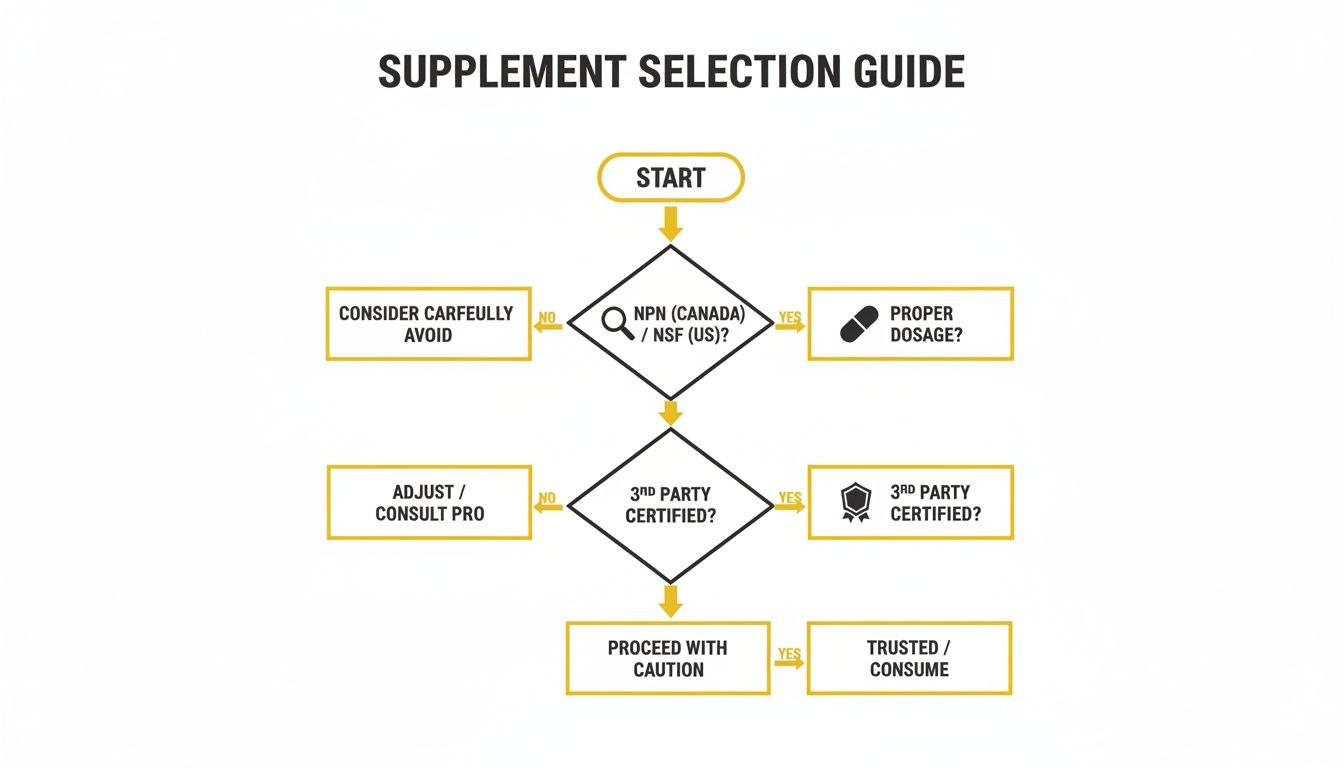
The visualization lays out a clear hierarchy: start by verifying its official approval (NPN), then check the dosage against what the evidence suggests, and finally, look for those extra third-party certifications as a bonus seal of quality.
A Few Common Questions About Joint Supplements
You've got questions, and that's a good thing. It means you're thinking critically about what you put into your body. We hear these ones a lot, especially from folks trying to stay active in and around Edmonton. Let's clear a few things up.
How Long Until I See a Difference?
This is probably the toughest part: patience. Unlike a painkiller that works in under an hour, most joint supplements are playing a long game. They’re working on a deeper level, trying to manage chronic inflammation or support the slow process of cartilage health.
For most of these supplements, you need to be thinking in terms of four to eight weeks of consistent, daily use before you can fairly judge if they’re helping. It’s an investment in your future mobility, not a quick fix for today's ache. Giving up after a week is like planting a seed and then digging it up the next day to see if it’s grown.
Can’t I Just Get This Stuff From My Diet?
A healthy diet is non-negotiable—it's the foundation of everything. You absolutely should be eating fatty fish like salmon for its anti-inflammatory Omega-3s or making a good bone broth for its collagen and other nutrients. That's your first line of defence.
But getting a truly therapeutic dose of some of these compounds from food alone is next to impossible. To get enough curcumin to have a real anti-inflammatory effect, for example, you'd have to eat an amount of turmeric that's just not practical for most people's kitchens or stomachs. This is where a high-quality, targeted supplement can be a valuable reinforcement.
Think of it this way: Food is your daily defence, while supplements are your targeted reinforcements. You need both working together for the best results.
Do I Have to Take These Supplements Forever?
Not necessarily. The right answer really depends on your specific situation, and it’s a perfect conversation to have with your doctor or pharmacist.
Your needs might change with our Edmonton seasons. Maybe you find a supplement helps you recover after a particularly active summer of hiking in the river valley, and you can ease off in the fall. For someone managing a chronic condition like osteoarthritis, however, a particular supplement might become part of a long-term strategy to stay comfortable and mobile year-round. It’s completely fine to reassess and adjust as your body and activity levels change.
Are There Any Supplements I Should Flat-Out Avoid?
Absolutely. The single most important thing is to be a skeptical and informed consumer. Be deeply suspicious of any product that promises a "miracle" cure or instant pain relief—those are massive red flags.
Your best bet is to stick to a few simple rules:
- Look for the NPN: Only buy products that have a Natural Product Number (NPN) from Health Canada. It’s your single best guarantee that what's on the label is what's in the bottle and that it's been reviewed for safety.
- Avoid "proprietary blends": Steer clear of labels that hide specific ingredient amounts behind this vague term. You need to see the exact dosage to know if it has a chance of being effective.
- Talk to a professional: Before starting anything new, check with your pharmacist or doctor, especially if you take other medications. They are the best resource for spotting potential interactions and helping you choose the best supplements for your joint health.
Related Reading
- Finding the Best Probiotics for Gut Health in Canada: An Edmonton…
- Can You Get Vitamin D in Edmonton During Winter Months: A Local’s…
- How to Prepare Your Body for Edmonton’s Extreme Temperature…