
That first tickle in your throat hits differently when it’s -25°C and the sun dipped out at 4:30 PM. Let’s be real, the fastest way to shore up your immune system isn't a magic pill—it's about giving your body what it needs to fight its own battles, starting immediately. And for us in Edmonton, that means dealing with a unique set of challenges, from the bone-dry air in our houses to the mental grind of a long winter.
For more on this, see our prepare body edmonton guide.
When you feel that dip, the first things to tackle are sleep, hydration, and stress. They aren't glamorous, but they are your body's most powerful first responders, and they work right now.
An Edmontonian's First Response Guide to Immunity
We’ve all been there—feeling a bit off and immediately googling "how to strengthen immune system fast." The problem is, most of that advice is written for people who don't know what an "Edmonton cold" feels like, where -20 is just the point you start to properly layer up. Our bodies are constantly adapting—from those deep-freeze winters to the sudden shift into a smoke-filled summer during festival season.
For more on this, see our summer winter running guide. For more on this, see our vitamin edmonton during guide. For more on this, see our summer winter running guide.
Forget complicated plans. When you need to act fast, focus on the foundational pillars that give your body the resources it needs to fight back right now. This is your immediate action plan, built for the reality of life in our northern city.

Here's a quick-reference guide to the most impactful first steps you can take the moment you feel "off."
| Action | Why It Works Fast | Edmonton-Specific Tip |
|---|---|---|
| Prioritize Sleep | Your body produces and releases infection-fighting proteins called cytokines during deep sleep. Skimping on rest directly reduces these defenders. | Go to bed early. With our extreme light shifts, using blackout curtains (for 10 PM summer sun) or avoiding bright screens before bed (winter) helps regulate melatonin for better sleep. |
| Increase Hydration | Water helps your lymphatic system transport immune cells and flush toxins. Dehydration slows this process, weakening your response. | Forced-air heating is incredibly drying. Aim for more than you think you need. Herbal teas, clear broths, and even soups contribute to your total fluid intake. |
| Reduce Stress | Chronic stress keeps cortisol levels high, which actively suppresses your immune system's effectiveness. | A slushy Whitemud commute is stressful enough. Take 5 minutes for intentional deep breathing. It's a simple, free way to lower cortisol and give your immune cells a fighting chance. |
This isn't about a total lifestyle overhaul overnight. It's about making immediate, tactical choices when you feel your defences dropping.
Tactical Rest and Prioritizing Sleep
Nothing cripples your immune response faster than a lack of sleep. It's during those deep sleep cycles that your body actually does its repair work, producing and releasing cytokines. These proteins target infection and inflammation, effectively creating your immune response. Skimping on sleep—even for a single night—can tank the number of these crucial immune cells.
For us, this gets complicated by extreme light variations. Those 17-hour summer days during Folk Fest and Fringe season can disrupt our circadian rhythms just as much as the prolonged darkness of winter.
For more on this, see our winter light guide.
Key Takeaway: Aiming for 7-9 hours of sleep isn’t a luxury; it’s a non-negotiable part of your immune defence. If you're feeling rundown, it's the single most effective thing you can do immediately.
Supercharge Your Hydration
Hydration is about so much more than just quenching thirst. Water is the transport system that carries oxygen to your body's cells, allowing them to function properly. It’s also what helps flush toxins from your body.
When you're dehydrated, the movement of lymph—a fluid packed with infection-fighting immune cells—slows right down. This can directly lead to a weakened immune system, right when you need it most. In our dry climate, especially with forced-air heating blasting all winter, we lose moisture constantly. Think about adding herbal teas, broths, or water with a squeeze of lemon to make it more appealing.
Calm Your Stress Response
Chronic stress is the enemy of a strong immune system. When we’re stressed, our body produces cortisol. In short bursts, that’s fine. But sustained high levels of cortisol can suppress the effectiveness of your immune system by lowering the number of lymphocytes (a type of white blood cell).
Juggling a demanding job, a messy commute on the Henday, and the mental load of a long winter can keep that stress response on high alert. Taking even five minutes to intentionally calm your system can make a real difference. Exploring some of the best breathing exercises for anxiety can be a simple, powerful way to lower cortisol and support your body’s defences.
Fueling Your Body Through Edmonton’s Seasons
What you eat is a powerful tool for your immune system, but let’s be realistic—our grocery hauls look very different in August versus February. A vibrant haul from the Strathcona Farmers' Market is one thing; navigating the aisles of Save-On-Foods during a deep freeze is another. The key is knowing how to keep your immune system firing on all cylinders with foods that are always available to us, year-round.
You don't need to completely overhaul your diet. Instead, think about consistently including a few key players. These are the staples you can find anywhere, from a big Superstore in Windermere to a smaller grocery store downtown.

Year-Round Immune Staples
The goal is to focus on nutrients that are absolutely critical for your immune cells to do their job properly. You can easily find these powerhouse ingredients any time of year:
- Zinc: This is essential for developing immune cells and for helping them communicate with each other. You'll find it in lean meats, shellfish, legumes (like chickpeas and lentils), and seeds. A simple chicken and lentil soup is pretty much a perfect meal for a cold Edmonton night.
- Vitamin C: It’s the famous one for a reason. This antioxidant supports a whole range of cellular functions in both the innate and adaptive immune systems. While fresh local berries are a summer treat, frozen berries are just as nutritious and work perfectly in smoothies all winter long. Citrus fruits are also a reliable go-to.
- Selenium: This mineral plays a crucial role in preventing infections. Brazil nuts are an incredibly rich source—seriously, just one or two a day is all you need.
For a deeper dive into specific ingredients, our guide on the best foods to boost your immune system has more detailed ideas and recipes that make sense for our local climate.
For more on this, see our boost immunity naturally guide. For more on this, see our foods boost immune guide. For more on this, see our boost immunity naturally guide. For more on this, see our foods boost immune guide.
The Gut Health Connection
A huge portion of your immune system—something like 70%—actually lives in your gut. A healthy gut microbiome, which is the community of trillions of bacteria in your digestive tract, is your body's first line of defence.
Supporting it is simpler than it sounds.
Fermented foods introduce beneficial bacteria (probiotics) that help keep everything in balance. Think about adding things like yogurt with live active cultures, sauerkraut, or even a locally made kombucha to your routine. This isn't about chasing some wellness trend; it's about reinforcing one of your body’s most fundamental support systems.
A healthy gut is a gatekeeper. It helps absorb the good stuff from your food while preventing harmful substances from entering your bloodstream, which directly impacts your immune response.
The Non-Negotiable Supplement for Edmontonians
There is one supplement that is practically mandatory for us living this far north: Vitamin D. Our bodies make it from sunlight, but from about October to April, the sun's rays are just too weak here in Edmonton for that process to happen. It's a simple matter of physics and latitude.
Low vitamin D levels are directly linked to an increased susceptibility to infection. Since we can't get enough from the sun for half the year and it’s tough to get enough from food alone, supplementation is the most reliable strategy.
Look for Vitamin D3 (cholecalciferol), as it's the form our bodies produce naturally from the sun. A standard dose is often between 1,000 to 2,000 IU per day, but it’s always a good idea to chat with your doctor or a pharmacist to find the right amount for you. It’s a simple, effective step to support your immunity through our long, dark winters.
Smart Movement When It Is -30°C Outside
That urge to hibernate when it gets dark at 4:30 PM is real. But strategic movement is a powerful weapon for your immune system, and sitting still for months on end just isn't an option. Generic advice like "go for a run" is totally useless when the river valley trails are a sheet of ice and it’s a true Edmonton-cold -30°C.
So, how do we keep moving without freezing our lungs? The key is finding a sustainable rhythm that actually feels good and supports your health, not some gruelling fitness regimen that just adds more stress to your body.
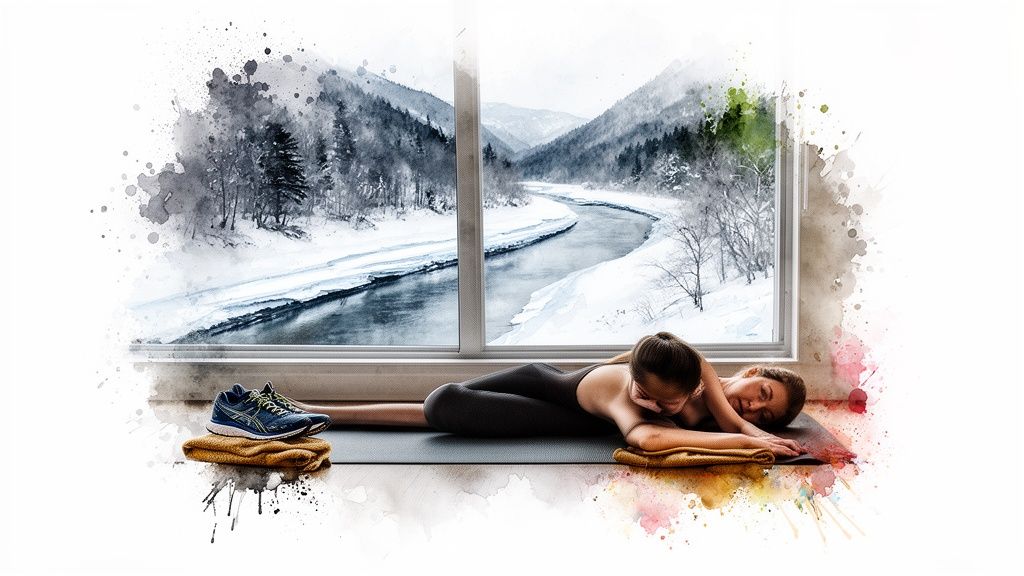
Find Your Winter Rhythm
Moderate, consistent exercise helps your immune cells—like your natural killer cells—become more active and effective at surveillance. Think of it as sending more patrols out to look for trouble before it starts. But pushing too hard, especially when you’re already feeling rundown, can completely backfire by jacking up stress hormones and inflammation.
This is about balance, not beast mode. Finding a way to move your body consistently is one of the best ways to strengthen your immune system fast, even when it feels like the last thing you want to do.
Our Local Reality: The goal isn't to train for a marathon in January. It's to avoid the deep-freeze slump that leaves our immune systems vulnerable. A brisk walk when a chinook mercifully rolls in is just as valuable as an intense workout.
Embrace Indoor Sanctuaries
When the weather is truly unforgiving, we’re lucky to have some incredible indoor options that feel more like a mini-escape than a chore. These activities give you a fantastic immune boost without the very real risk of frostbite.
- Community Rec Centres: A swim in the warm, humid air at the Kinsmen Sports Centre or Terwillegar Rec Centre can feel amazing when your skin is dry and the air is frigid. That low-impact movement is also brilliant for circulation.
- Yoga and Movement Studios: From a hot yoga class in Strathcona to a gentle flow session in Sherwood Park, the combination of movement, focused breathing, and stress reduction is a triple-win for immune function.
- A Good Old-Fashioned Gym Session: Sometimes you just need to lift something heavy or zone out on a cardio machine. If you're looking for a new spot, our guide to the best gyms in Edmonton can help you find one that fits your vibe and your neighbourhood.
Seize the Good Days and Move at Home
We all know those glorious, sunny winter days when the temperature climbs to a balmy -5°C. These are the days to seize! A bundled-up walk through Mill Creek Ravine or a skate at Hawrelak Park gets you vital sunlight and fresh air, both of which are in short supply.
On the days when you're truly snowed in, don't underestimate the power of short bursts of at-home movement. Just 15-20 minutes of stretching, bodyweight exercises, or even just dancing in your living room is enough to get your blood flowing and wake up your immune cells. When it comes to winter wellness, consistency always trumps intensity.
Navigating Edmonton's Unique Environmental Stressors
Beyond the cold, our immune systems have to contend with environmental challenges unique to our northern city. From smoke-filled summer skies to the profound darkness of winter, these external factors place a real, measurable stress on our bodies. Understanding and mitigating them is a key part of building a strong immune defence.

Unfortunately, "smoke season" has become a predictable part of our summers. When that haze rolls in, it's more than just an inconvenience; it's a direct assault on our respiratory and immune health. The fine particulate matter in wildfire smoke triggers inflammation, forcing our immune system to work overtime.
This is where local data becomes incredibly useful. The Air Quality Health Index (AQHI) from Alberta's environmental health network is an essential tool for us. For anyone living in Edmonton, this is current, regionally-specific health intelligence that can directly inform your day-to-day choices. You can check the latest health statistics on the Government of Alberta's website.
When the AQHI is high, it’s time to adapt:
- Move workouts indoors. Skip the river valley run and hit a local rec centre instead.
- Keep your windows closed to prevent the worst of the smoke from settling in your home.
- Use an air purifier. A good HEPA filter can make a massive difference in your indoor air quality, capturing the fine particles that cause the most irritation.
For more detailed strategies on this, our guide on how to improve indoor air quality is a great local resource.
Battling the Darkness and the Light
Our extreme light variations are another major stressor. The long, dark winters can lead to Seasonal Affective Disorder (SAD), which is more than just "winter blues." It’s a form of depression linked to a lack of sunlight that can suppress immune function.
Conversely, our 17-hour summer days can completely wreck sleep patterns, messing with our circadian rhythm and weakening our defences right when we should be feeling our best.
Our internal clocks are fundamental to immune regulation. When our sleep-wake cycle is thrown off by extreme light, it can directly impact how effectively our immune cells function.
To counteract this, we have to be proactive. In winter, using a light therapy lamp for 20-30 minutes each morning can help reset your circadian rhythm and boost your mood. It’s a game-changer.
In summer, blackout curtains are a non-negotiable for getting quality sleep when the sun is still up at 10 PM. Maintaining a consistent sleep schedule year-round, as challenging as it is here, provides a stable foundation for your immune system to thrive, no matter what’s happening outside.
Taking It a Step Further: Advanced Support and Local Resources
Sometimes, all the good sleep, healthy food, and vitamin D in the world just don’t feel like enough. If you’re dealing with back-to-back illnesses, chronic stress that won’t quit, or a general feeling that you can’t get your energy back on track, it might be time to bring in some professional support.
This is about knowing when to move beyond the DIY approach and tap into the excellent healthcare resources we have right here in Edmonton. Learning the basics of immune support is one thing, but building real, long-term resilience sometimes requires a more guided strategy.
When to See a Professional
It’s one thing to nurse a common cold with tea and rest. It’s entirely another to ignore symptoms that just won’t go away. If you feel like you’re catching every bug that goes around, are plagued by unusual fatigue, or have concerns that feel bigger than a simple seasonal sniffle, it’s time to make an appointment.
- Your Family Doctor: This should always be your first call. They can run blood work to check for common culprits behind low immunity, like deficiencies in iron or vitamin D. This is the fastest way to rule out underlying issues or get a referral to a specialist if one is needed.
- A Registered Naturopathic Doctor: For those looking for a complementary perspective, a licensed ND can offer a different lens on how diet, supplements, and lifestyle habits are impacting your immune function. They often take a deep, holistic dive into your health history to connect dots you might have missed.
- Registered Dietitians: If you have a hunch that your diet is the weak link in your chain, a dietitian is your best bet. They provide evidence-based, personalized advice that cuts through the noise of online health trends, helping you build a nutritional foundation that actually works for you.
Edmonton’s Immune Research is World-Class
It’s easy to forget that our city is a major player in medical innovation. The work happening right here isn't just abstract science—it’s a powerful testament to the incredible potential of the human immune system.
Take the groundbreaking immunotherapy research at the Cross Cancer Institute. Their work with CAR-T cellular therapy—a process that uses a patient's own re-engineered immune cells to hunt down and attack cancer—is genuinely remarkable. In complex cases, this treatment has achieved a 52% remission rate just six months after treatment. This is an incredible local success story that shows the profound defensive power locked inside our own bodies. You can read more about this incredible Edmonton-based cancer care.
This kind of research is a powerful reminder that our immune system, when properly supported and directed, is our most sophisticated defence mechanism.
Practical Local Health Tools
Beyond booking appointments, there are several practical, no-nonsense resources every Edmontonian should have on their radar as we head into cold and flu season.
Get Your Flu Shot
Honestly, this is one of the simplest and most effective things you can do to support your immunity through the winter. It’s free, it’s fast, and it’s widely available. You can book an appointment at:
- Most local pharmacies (like Shoppers Drug Mart or Rexall)
- Your family doctor's office
- Alberta Health Services (AHS) public health clinics
Stay Informed on What's Going Around
AHS maintains the Respiratory Virus Dashboard, an online tool that gives you a clear picture of influenza, COVID-19, and RSV rates across the province. Checking this once in a while can help you make informed decisions about things like masking or avoiding large crowds when local cases are spiking.
Staying active is also key, and the city offers programs to make it easier. Our guide to the Leisure Access Program in Edmonton explains how eligible residents can get free or low-cost access to city-run fitness and recreation facilities—a smart way to keep moving all winter long.
Your Questions About Boosting Immunity in Edmonton Answered
Living in our unique northern city brings up a lot of questions about health. We get it. From trying to figure out which supplements actually work to understanding how our wild seasons mess with our bodies, it can be a lot.
Here are some clear, practical answers to the questions we hear most from fellow Edmontonians.
Can I Actually Boost My Immune System "Fast"?
The honest answer is yes and no.
You can definitely take immediate steps that give your immune system a helping hand right now. Things like getting a solid night's sleep, drinking enough water, and taking a breath to manage stress. Think of it like making sure your firefighters are rested and have a full water tank before a fire starts—it makes a huge difference in how they respond.
But building a truly tough, resilient immune system is a long game. That comes from consistent good nutrition, regular movement, and managing stress over weeks and months. It’s about both giving your body what it needs today and investing in its strength for tomorrow.
Do I Really Need All Those Supplements?
Walk into any health food store and the immunity section is, frankly, overwhelming. While a diet built on whole foods is always your best bet, a few supplements are particularly relevant for us here in Edmonton.
As we’ve covered, Vitamin D is non-negotiable from October to April. Beyond that, a few others have solid evidence to back them up:
- Zinc: Can be really helpful if you feel that first tickle of a cold coming on, since it’s vital for your immune cells to function properly.
- Vitamin C: It probably won't stop you from getting a cold, but some studies show it can help shorten how long you're stuck with it.
- Probiotics: These are all about supporting your gut health, which is basically the command centre for your entire immune system.
The key is to be strategic. Don't just grab a handful of everything. Focus on what addresses a specific need, especially one that comes from living at our northern latitude.
How Do I Stay Healthy When Everyone Else Is Sick?
It’s tough out there during peak cold and flu season, especially if you’re packed onto the LRT or sharing an office. Beyond the obvious stuff like washing your hands, your best defence is a well-supported body.
This is where all the pieces—sleep, nutrition, movement, stress—really come together to form a protective shield.
Recent research drives this home, especially when looking at immune resilience. One study on long COVID found a clear link between factors like maintaining a healthy weight and managing mental wellness and stronger immune outcomes. Vaccination also played a major part in that resilience, significantly lowering the odds of lingering symptoms. If you want to dive into the details, you can explore the full long COVID study. It just goes to show that our daily choices really do add up.
At Edmonton Wellness Guide, our goal is to give you practical, local health info that actually makes sense for your life here. Explore our resources to build a wellness routine that works for you, through every single Edmonton season at https://www.edmontonwellnessguide.com.
Related Reading
- Best Indoor Yoga Studios for Edmonton’s Smoke Season: Your…
- Does Edmonton’s Long Summer Daylight Improve Mental Wellness? The…
- How to Prevent Seasonal Wellness Routine Breakdowns in Edmonton: A…