Swedish massage and Thai massage sit side by side on almost every spa menu in Edmonton, from Whyte Avenue day spas to wellness studios tucked into strip malls in Windermere. Both get filed under “massage.” They are not the same service, and picking the wrong one means paying $120 for an hour that does not fix what actually hurts. Swedish massage is passive: you lie on a table, oil goes on, long strokes work over sore muscles while you doze off. Thai massage is active: you stay clothed, lie on a mat, and a practitioner moves your body through stretches and compressions that look closer to assisted yoga than a spa treatment. If you are trying to settle the Swedish massage vs Thai massage question before you book, here is the short version: Swedish wins for stress relief, sleep, and first-timers who just want to relax. Thai wins for stiff hips, tight shoulders from shoveling, and anyone who wants more mobility, not just less tension.
Quick answer: Swedish massage vs Thai massage comes down to what you want out of the hour. Book Swedish massage for stress relief, sleep, and a first massage experience. Book Thai massage for stiff hips, tight shoulders, and mobility work that passive strokes cannot reach.
Last reviewed:
Swedish Massage vs Thai Massage: The Quick Comparison

| Factor | Swedish Massage | Thai Massage |
|---|---|---|
| Setting | Massage table, undressed under a sheet | Floor mat, loose clothing provided |
| Oil used | Yes, usually unscented or light almond/grapeseed | No |
| Pressure style | Gentle to moderate gliding strokes | Firm, rhythmic compression and assisted stretching |
| Typical session length | 30, 60, or 90 minutes | 60 to 120 minutes |
| Edmonton price range | $85 to $150 per session | $90 to $160 per session |
| Covered by extended health/RMT billing | Usually, if done by a Registered Massage Therapist | Rarely, unless performed by a registered practitioner |
| Best for | Relaxation, stress, sleep, first-time clients | Stiffness, tight hips and shoulders, mobility, athletes |
| Post-session feeling | Calm and drowsy | Loose and stretched out, sometimes a bit worked over |
What’s the Difference Between Thai Massage and Swedish Massage
The names describe where each style came from, and the origin actually explains the technique. Thai massage developed as part of traditional Thai medicine, built around pressing along energy lines and moving joints through their range of motion. Swedish massage was developed in the 1800s in Europe as a system of strokes meant to increase blood flow and relax muscle tissue. According to Mayo Clinic’s overview of massage therapy, both styles fall under the broader umbrella of therapeutic massage, but the mechanics diverge quickly once you are on the table or the mat.
The Thai Massage Technique: Assisted Stretching on a Mat
You keep your clothes on, or change into the loose cotton pants and top the studio provides. There is no oil. The practitioner uses their hands, forearms, elbows, knees, and sometimes feet to apply firm, rhythmic pressure along the body, then moves into stretches that look a lot like partner yoga. Expect your hips opened, your spine twisted gently, your shoulders pulled back. It is a full-body session, and a good practitioner will check in about pressure and range of motion before pushing further. You do not need to be flexible already. A skilled practitioner works within your current range of motion, and flexibility typically improves over repeated sessions, so the first appointment is usually the most conservative one. If you have ever wondered whether massage can genuinely loosen a stiff back rather than just relax it, this breakdown of whether massage therapy helps with chronic pain relief digs into the evidence.
The Swedish Massage Technique: Oil, Strokes, and a Table
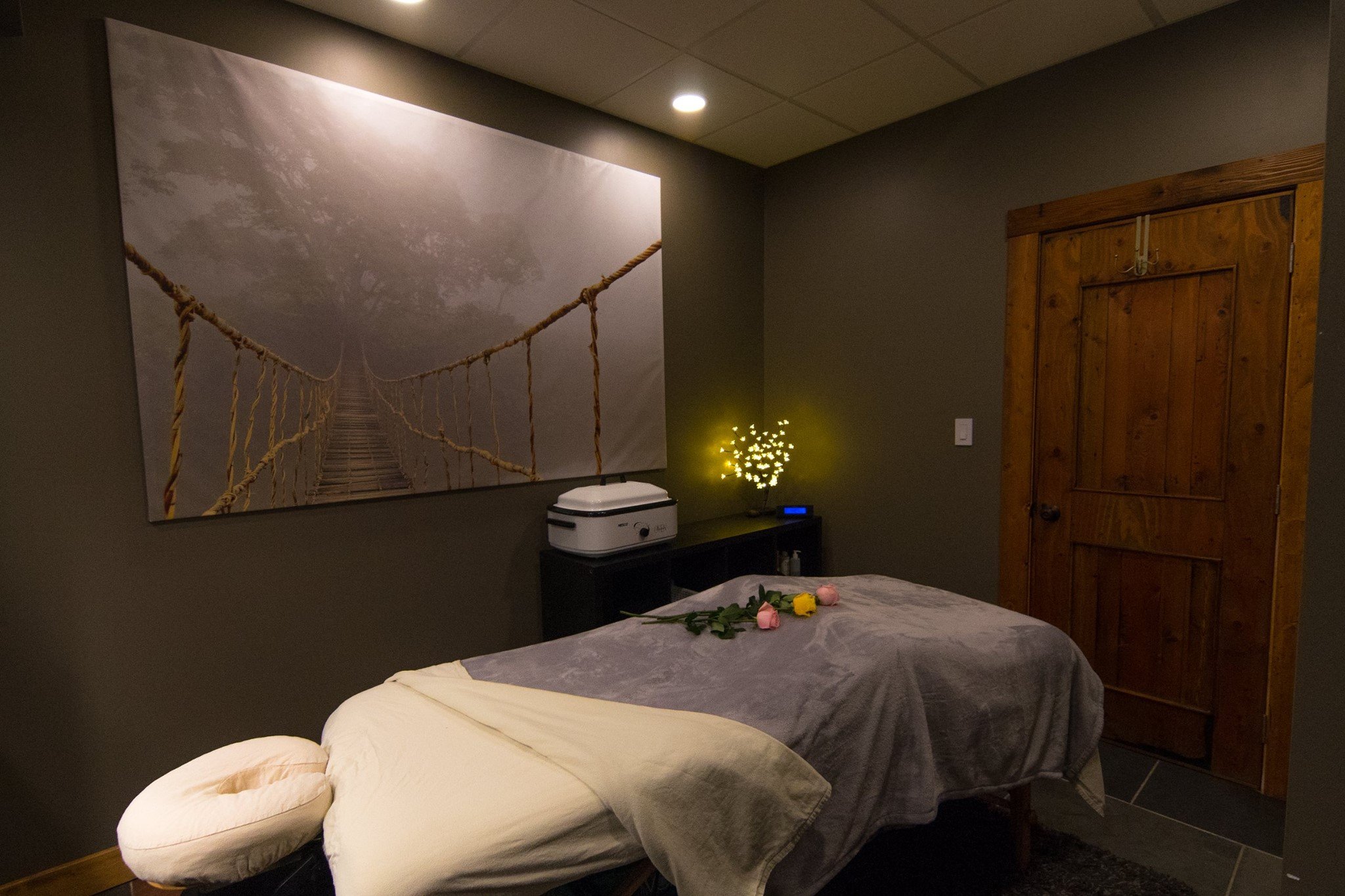
Swedish massage is what most Edmontonians picture when they book “a massage.” You undress to your comfort level, lie under a sheet on a heated table, and the therapist uses oil to perform long effleurage strokes, kneading, and light tapping. Pressure ranges from feather-light to firm, but it stays passive. You are not moved through stretches. The goal is circulation, muscle relaxation, and a nervous system reset, not joint mobility. It is the gateway massage for people who are nervous about bodywork in general.
Pressure, Pain, and How Each Technique Feels

This is where the Swedish massage vs Thai massage decision usually gets made. People who want to feel soothed lean Swedish. People who want to feel worked on lean Thai.
Pressure Levels: Firm and Active vs Gentle and Passive
Thai massage runs firmer by default. Compression through the calves, forearms pressed along the IT band, and body weight used to deepen a hip stretch are all standard. Swedish massage can be requested at any pressure, from a light relaxation touch to something closer to deep tissue, but the technique itself stays gliding and passive. If you want firm work without any stretching component, ask specifically for deep tissue, which we compare directly in this hot stone massage vs deep tissue massage comparison.
Pain During and After: What’s Normal
A Thai massage session can involve moments of genuine discomfort, especially around tight hip flexors or a locked-up neck. That is normal, and it should ease within a breath or two. Soreness the next day is common, similar to how you feel after a hard stretch class. Swedish massage should not hurt during the session. Mild tenderness afterward, especially if you asked for firmer pressure, is normal but should fade within a day. If either style leaves you in sharp pain that lasts more than 48 hours, that is a signal to switch approaches or talk to a physiotherapist instead.
Who Each Massage Style Is Best For
Neither style is objectively better. The right pick depends on what your body actually needs this week, not what sounds more exotic on a spa menu.
Thai Massage Is Built for Movement and Chronic Tightness
If you run the River Valley trails, ski at Snow Valley, or spend eight hours a day at a desk in a downtown tower, Thai massage addresses restricted movement directly. Runners with tight hip flexors, cyclists with locked-up hamstrings, and anyone who feels physically shorter by 4 p.m. tend to notice a bigger mobility difference from Thai work than from Swedish strokes. It is also a reasonable option for people managing long-term stiffness rather than acute injury. For a wider view of how Thai massage fits alongside physio and stretching, see this guide to recovery options in Edmonton covering massage, physio, and stretching.
Swedish Massage Is Built for Stress and First-Timers
If your main issue is stress, poor sleep, or general nervous system overload, not a specific mobility problem, Swedish massage is the better starting point. It is also the safer choice for anyone who has never had bodywork done before, since there is no unfamiliar stretching involved and pressure is fully adjustable in the moment. Edmonton’s long winters and short daylight hours from November through February push a lot of people toward Swedish massage specifically for the calming effect, not the physical fix.
Pricing and Where to Book Each in Edmonton

Price differences between the two styles are smaller than people expect, but insurance coverage is where things really diverge.
Thai Massage Pricing and Studios Around Edmonton
Expect $90 to $110 for a 60-minute Thai massage and $130 to $160 for 90 to 120 minutes, which is the more common booking length since the technique works better with time to move through the whole body. Old Strathcona and the Whyte Avenue strip have a handful of dedicated Thai bodywork studios, and there are a few tucked into strip malls along 124 Street and in Windermere. Street parking on Whyte Avenue means meters until 6 p.m., so budget for that or use one of the pay lots off Gateway Boulevard. Because most Thai practitioners are not Registered Massage Therapists, this service is rarely covered by extended health benefits. Confirm credentials before booking if you plan to submit a claim.
Swedish Massage Pricing and Spas Around Edmonton
Swedish massage runs $85 to $110 for 60 minutes and $120 to $150 for 90 minutes at most Edmonton spas and RMT clinics, whether you are booking in Oliver, downtown, or out in Sherwood Park. Because Swedish massage is the standard offering at Registered Massage Therapy clinics, it is the style most likely to qualify for direct billing through extended health plans, which effectively drops your out-of-pocket cost to a copay or nothing at all. Downtown clinics near Jasper Ave tend to run slightly higher rates and come with parkade or meter costs, while Sherwood Park and Windermere locations usually offer free lot parking, which matters more than it sounds like in a January deep freeze.
What to Expect in a Typical Session
Knowing the format ahead of time matters more for Thai massage, since it is the less familiar experience for most Edmontonians.
A Typical Thai Massage Session Start to Finish
You arrive, change into provided loose clothing, and lie on a padded mat on the floor. The practitioner works methodically from your feet upward, alternating compression with stretches, often using their own body weight and leverage rather than just hand pressure. There is no need to remove clothing or worry about draping. Sessions typically run 90 to 120 minutes because the format needs time to work through the whole body’s range of motion. You should communicate throughout if a stretch feels like too much. This is one of the areas where choosing the right recovery modality for your specific needs actually changes the outcome, since Thai massage rewards clear communication more than a passive Swedish session does.
A Typical Swedish Massage Session Start to Finish
You undress to your comfort level in private, lie on a heated table under a sheet, and the therapist works with oil in long strokes, only uncovering the area currently being worked on. Sessions run 30, 60, or 90 minutes, and most people book 60. The room is usually dim, with quiet music, and many clients fall asleep partway through. There is little required of you beyond breathing and telling the therapist if pressure needs adjusting.
Recovery, Injuries, and When to Choose One Over the Other

This is the part people skip and then regret. Both styles carry real considerations if you are dealing with an injury, a chronic condition, or recent surgery.
When Thai Massage Isn’t the Right Call
Skip Thai massage if you have a herniated disc, recent joint surgery, osteoporosis, or an acute soft tissue injury. The stretching component can aggravate all of these. It is also not the right pick immediately after an intense training session, since your muscles need rest, not more range-of-motion work. Athletes managing ongoing soreness often do better pairing lighter bodywork with tools like the ones covered in this explainer on how red light therapy supports muscle recovery, rather than jumping straight into deep stretching.
When Swedish Massage Is the Safer Choice
Swedish massage is generally the safer default during pregnancy (with a therapist trained in prenatal positioning), after recent injuries, or for anyone with a condition like fibromyalgia where lighter, passive pressure is better tolerated than active stretching. Health Canada’s guidance on chronic pain management notes that gentle, consistent therapies tend to be better tolerated long-term than high-intensity interventions, which lines up with why Swedish massage is often the entry point for people managing chronic conditions before layering in anything more active.
Verdict: Which Should You Book
Best for chronic tightness and athletes: Book Thai massage. If shoveling, skiing, or River Valley running has left your hips and shoulders locked up, the assisted stretching addresses restricted range of motion in a way passive strokes cannot. A study referenced through the National Library of Medicine’s research database on traditional Thai massage points to measurable improvements in flexibility and reduced muscle tension after repeated sessions, which supports what most regular clients already notice.
Best for stress relief and first-timers: Book Swedish massage. It requires nothing from you beyond showing up, and the passive, oil-based strokes are the gentlest entry point into regular bodywork. Anyone anxious about being touched by a stranger for the first time will find Swedish far less intimidating than being moved through stretches on a mat.
Best for winter recovery in Edmonton: Alternate between the two. Swedish massage in December and January counters the mental weight of short daylight hours, while Thai massage in late winter and early spring helps undo the stiffness that builds up from months of hunched shoulders and tense driving in icy conditions.
Best for budget and insurance coverage: Swedish massage, hands down, since it is the style most commonly billed directly through extended health plans when performed by a Registered Massage Therapist. Thai massage almost always comes out of pocket in Edmonton.
Sources & References
Find Trusted Wellness Spots in Edmonton
Browse our independent guide to Edmonton’s spas, fitness studios, and wellness services. Local. Honest. Free.
Related Reading
Frequently Asked Questions
Swedish massage vs Thai massage: which one should I book first?
If you have never had bodywork before, or you are dealing with stress rather than a specific mobility problem, book Swedish massage first. It is passive, oil based, and every Edmonton spa offers it, so there is no unfamiliar stretching to navigate. Once you know how your body responds to touch, add a Thai massage session to work on hip and shoulder stiffness that oil strokes alone will not fix.
Can I get Thai massage covered by my extended health benefits in Edmonton?
Usually not, unless the practitioner is a Registered Massage Therapist billing the session as massage therapy rather than Thai bodywork specifically. Swedish massage from an RMT clinic is far more likely to qualify for direct billing. Check with your insurer and ask the studio about practitioner credentials before booking if coverage matters to you.
Which one is better for lower back pain?
It depends on the cause. Muscular tightness and restricted hip mobility often respond well to Thai massage’s stretching component, while inflammation-driven or acute back pain usually responds better to the gentler, passive approach of Swedish massage. If pain has lasted more than a few weeks, see a physiotherapist first to rule out a structural issue before booking either.
Is Thai massage more painful than Swedish massage?
Thai massage generally involves more intense, momentary pressure because of the compression and stretching, while Swedish massage stays gentle unless you specifically request firm pressure. Neither should leave you in sharp pain during the session. If a Thai stretch feels too intense, say so immediately, since the practitioner can adjust the depth right away.
Which massage is better after a hard workout or a day of skiing?
Swedish massage is the better immediate choice right after intense activity, since your muscles need circulation and calm, not more stretching. Thai massage works better a day or two later, once acute soreness has settled, to restore range of motion that tightened up during recovery.